
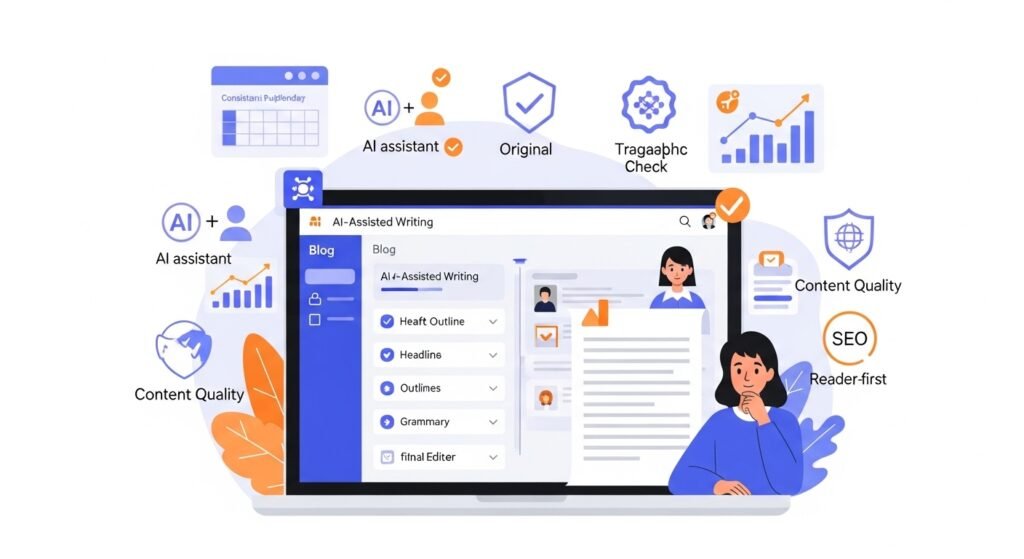
AI-generated content has rapidly moved from experimentation to everyday use for small businesses in 2026. With rising content demands, tighter budgets, and increasing competition for online visibility, small business owners are under constant pressure to publish high-quality blog content consistently. AI tools offer a practical solution by helping businesses create drafts, ideas, outlines, and even SEO-optimized articles in a fraction of the time it would take manually. However, as AI adoption grows, so do concerns around ethics, originality, trust, and search engine compliance. The key question is no longer whether small businesses should use AI—but how they can use it responsibly and effectively.
AI-generated content refers to text created with the help of artificial intelligence tools trained on vast amounts of language data. When used correctly, AI can assist with research, keyword planning, content structuring, and even tone refinement. For small business blogs, this means faster publishing cycles, improved consistency, and better scalability without hiring large content teams. But AI is not a replacement for human insight, experience, or brand voice. Search engines and readers still value authenticity, expertise, and originality.
Ethical use of AI content focuses on transparency, fact-checking, originality, and value creation. In 2026, Google and other search engines prioritize helpful, people-first content—regardless of whether it is AI-assisted or human-written. Small businesses that treat AI as a productivity tool rather than a shortcut are seeing stronger SEO performance and deeper audience engagement.
This article explains what AI-generated content really is, ethical considerations for small businesses, practical ways to use AI for blogging, step-by-step implementation, real case studies, success stories, video content ideas, a proven framework, and frequently asked questions—helping you create blog content that is scalable, ethical, and SEO-friendly.
What Is AI-Generated Content?
AI-generated content is text created or assisted by artificial intelligence tools.
For blogs, AI can help with:
- Topic research
- Outlines and drafts
- SEO optimization
- Headline variations
- Content repurposing
Human review and refinement remain essential.
Why Small Businesses Are Using AI for Blogging
AI helps small businesses:
- Save time and resources
- Publish consistently
- Improve SEO structure
- Scale content production
Used wisely, AI enhances productivity without sacrificing quality.
Ethical Considerations When Using AI Content
Originality and Plagiarism
Always ensure content is unique and rewritten in your brand voice.
Accuracy and Fact-Checking
AI can make mistakes—verify all facts before publishing.
Transparency
Avoid misleading claims about authorship or expertise.
Value-First Content
AI should add value, not create filler content.
Practical Ways to Use AI for Small Business Blogs
Content Ideation and Planning
Generate topic ideas, content clusters, and blog calendars.
Draft Creation
Use AI for first drafts, then edit for clarity and tone.
SEO Optimization
Improve headings, keyword placement, and readability.
Content Updates
Refresh old blog posts with current information.
How to Use AI Content Step by Step
Step 1: Define Your Blog Goals
Decide whether the focus is traffic, leads, or authority.
Step 2: Use AI for Research and Structure
Let AI assist with outlines and supporting points.
Step 3: Add Human Expertise
Include real examples, opinions, and business insights.
Step 4: Optimize for SEO and Readability
Ensure content meets search intent and user experience standards.
Step 5: Review Before Publishing
Proofread, fact-check, and align with brand guidelines.
Scaling Blog Content with AI Assistance
A small service business used AI to assist with blog drafting.
Results in 3 months:
- 2x increase in published content
- Improved organic traffic
- Reduced content creation time
Human editing ensured quality and originality.
From Inconsistent Blogging to Authority
A solo entrepreneur struggled to publish regularly. With AI assistance:
- Content consistency improved
- Search visibility increased
- Audience engagement grew
AI helped maintain momentum without burnout.
Video Content Ideas Around AI Blogging
A strong video idea is “How Small Businesses Can Use AI for Blogs Without Hurting SEO”, covering:
- Ethical guidelines
- Live content examples
- Editing workflows
This content performs well on YouTube, LinkedIn, and Instagram.
AI Content Framework for Small Businesses
A simple framework:
- Plan content strategy
- Use AI for support
- Add human expertise
- Optimize for SEO
- Publish responsibly
Best Practices
- Never publish raw AI output
- Maintain brand voice
- Focus on helpful content
- Monitor performance
FAQs: AI-Generated Content for Blogs
Is AI-generated content allowed by Google?
Yes, if it is helpful, original, and people-first.
Can AI replace human writers?
AI supports writers but does not replace expertise.
Is AI content considered plagiarism?
Only if used without originality or editing.
Do readers trust AI-assisted blogs?
Trust depends on value, accuracy, and transparency.
Which businesses benefit most from AI blogging?
Small businesses with limited resources and high content needs.
Final Thoughts
AI-generated content is a powerful tool for small business blogs in 2026—when used ethically and strategically. It enables consistency, scalability, and efficiency while still requiring human creativity and judgment.
Small businesses that succeed with AI content:
- Treat AI as an assistant, not a shortcut
- Focus on originality and value
- Combine AI efficiency with human insight
- Follow ethical and SEO guidelines
At Kanity Solutions, we help small businesses use AI responsibly to create high-quality, search-optimized blog content.
🌐 www.kanity.in
📞 9454784602

Amit Tyagi is a seasoned Digital Marketing and SEO Consultant with extensive experience helping businesses improve online visibility through SEO, AI Search Optimization (AIO/GEO), content strategy, and performance marketing. He regularly shares practical insights, industry updates, and data-driven strategies, empowering brands and marketers to achieve sustainable digital growth in an evolving search landsca