
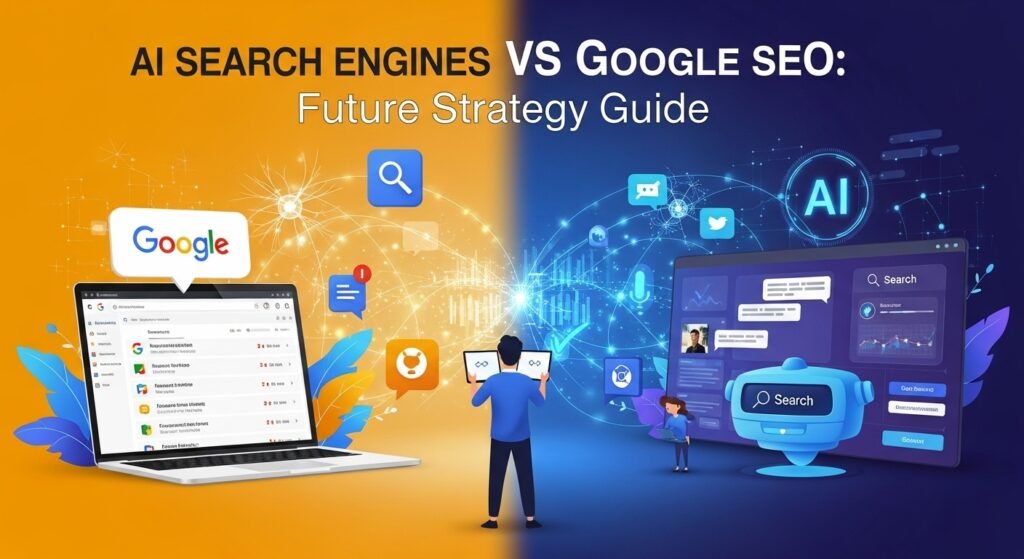
Introduction to AI Search Engines and Google SEO
As a digital marketing strategist and SEO consultant, I have witnessed the evolution of search engines and their impact on online businesses. The rise of Artificial Intelligence (AI) has transformed the search engine landscape, and Google SEO has had to adapt to these changes. In this section, we will delve into the world of AI search engines and Google SEO, exploring their differences, similarities, and the future strategies that businesses can employ to stay ahead in the game.
The traditional search engine model, dominated by Google, has been based on keyword-driven algorithms that rely on relevance, authority, and user experience to rank websites. However, with the advent of AI-powered search engines, the rules of the game are changing. AI search engines use natural language processing (NLP) and machine learning algorithms to understand the context and intent behind a user’s search query, providing more accurate and personalized results.
For instance, AI search engines like Bing and DuckDuckGo are using AI-powered algorithms to improve their search results. Bing’s AI-powered chatbot, for example, can understand the nuances of human language and provide more relevant results. Similarly, DuckDuckGo’s AI-powered search engine can learn from user behavior and adapt to their search preferences. These AI-driven innovations are forcing Google to evolve its SEO algorithms to keep pace with the changing landscape.
Google, on the other hand, has been incorporating AI and machine learning into its search algorithms, with the introduction of RankBrain and BERT (Bidirectional Encoder Representations from Transformers). These AI-powered algorithms enable Google to better understand the context and intent behind search queries, providing more accurate and relevant results. However, this increased reliance on AI has also raised concerns about the future of traditional SEO strategies.
As a business owner or digital marketer, it is essential to understand the implications of AI search engines on Google SEO. The traditional SEO strategies that focused on keyword optimization, link building, and content creation are still relevant, but they need to be adapted to the AI-driven landscape. In the following sections, we will explore the future strategies that businesses can employ to stay ahead in the game, including the use of Generative Engine Optimization (GEO) and performance-driven digital strategies.
To better understand the differences between AI search engines and Google SEO, let’s take a look at the key characteristics of each:
- AI Search Engines: Use NLP and machine learning algorithms to understand the context and intent behind a user’s search query, providing more accurate and personalized results.
- Google SEO: Relies on traditional algorithms that focus on relevance, authority, and user experience to rank websites, with the incorporation of AI and machine learning to improve search results.
As we move forward in this guide, we will delve deeper into the world of AI search engines and Google SEO, exploring the strategies and techniques that businesses can use to stay ahead in the game. From the use of AI-powered tools and platforms to the importance of high-quality content and user experience, we will cover it all. So, let’s get started on this journey to explore the future of search and discover the strategies that will drive success in the AI-driven landscape.
In conclusion, the introduction of AI search engines has marked a significant shift in the search engine landscape, and Google SEO has had to adapt to these changes. As a digital marketing strategist and SEO consultant, I believe that it is essential for businesses to understand the implications of AI search engines on Google SEO and to develop strategies that incorporate the use of AI-powered tools and platforms. In the following sections, we will explore these strategies in more detail, providing businesses with the insights and knowledge they need to stay ahead in the game.
For example, businesses can use AI-powered tools like Ahrefs and SEMrush to analyze their website’s performance and identify areas for improvement. These tools use machine learning algorithms to analyze large datasets and provide insights into keyword optimization, link building, and content creation. By leveraging these tools, businesses can develop a data-driven approach to SEO, one that incorporates the use of AI and machine learning to drive results.
Additionally, businesses can use AI-powered platforms like Content Blossom and WordLift to create high-quality content that resonates with their target audience. These platforms use NLP and machine learning algorithms to analyze user behavior and adapt to their search preferences, providing businesses with the insights they need to create content that drives engagement and conversion. By leveraging these platforms, businesses can develop a content strategy that incorporates the use of AI and machine learning, one that drives results and helps them stay ahead in the game.
In the next section, we will explore the future strategies that businesses can employ to stay ahead in the game, including the use of Generative Engine Optimization (GEO) and performance-driven digital strategies. We will also delve deeper into the world of AI search engines and Google SEO, exploring the implications of AI on traditional SEO strategies and the role of AI-powered tools and platforms in driving results. So, let’s get started on this journey to explore the future of search and discover the strategies that will drive success in the AI-driven landscape.
Understanding AI Search Engines and Their Algorithmic Differences
As a digital marketing strategist and SEO consultant, I have witnessed the evolution of search engines and their algorithms over the past 15 years. The advent of AI search engines has brought about a significant shift in the way search results are ranked and displayed. In this section, we will delve into the world of AI search engines, their algorithmic differences, and how they impact Google SEO strategies.
The traditional search engine algorithm, as used by Google, relies heavily on keyword matching, link equity, and content quality to determine search rankings. However, AI search engines take a more holistic approach, incorporating natural language processing (NLP), machine learning, and deep learning to understand the context and intent behind a search query. This allows AI search engines to provide more accurate and personalized results, often surpassing the capabilities of traditional search engines.
One of the key differences between AI search engines and traditional search engines is their ability to understand nuances in language. AI search engines can recognize synonyms, antonyms, and related concepts, enabling them to capture the intent and context of a search query more effectively. For example, if a user searches for “best Italian restaurants in New York City,” an AI search engine can understand that the user is looking for high-quality Italian restaurants in a specific location, rather than just a list of restaurants that serve Italian food.
Another significant difference is the way AI search engines handle entity-based searches. Entity-based searches involve searching for specific entities, such as people, places, or organizations, rather than just keywords. AI search engines can recognize and understand the relationships between entities, allowing them to provide more accurate and relevant results. For instance, if a user searches for “Elon Musk,” an AI search engine can recognize that Elon Musk is a person, and provide results that are relevant to his biography, career, and achievements, rather than just listing web pages that mention his name.
AI search engines also have the ability to learn and adapt over time, allowing them to improve their search results and ranking algorithms continuously. This is made possible through machine learning and deep learning algorithms, which enable AI search engines to analyze vast amounts of data and identify patterns and trends that may not be apparent to human analysts. For example, an AI search engine can analyze user behavior, such as click-through rates and dwell time, to determine the relevance and accuracy of search results, and adjust its ranking algorithm accordingly.
The algorithmic differences between AI search engines and traditional search engines have significant implications for Google SEO strategies. While traditional SEO techniques, such as keyword optimization and link building, are still relevant, they may not be enough to guarantee high rankings in AI search engines. Instead, SEO strategies need to focus on creating high-quality, contextually relevant content that addresses the user’s intent and needs. This may involve using more natural language and conversational tone, as well as incorporating entity-based optimization techniques to help AI search engines understand the relationships between entities and concepts.
Some of the key strategies for optimizing for AI search engines include:
- Using natural language and conversational tone in content creation
- Incorporating entity-based optimization techniques to help AI search engines understand relationships between entities and concepts
- Creating high-quality, contextually relevant content that addresses the user’s intent and needs
- Using semantic markup and schema to help AI search engines understand the structure and meaning of content
- Optimizing for user experience and behavior, such as click-through rates and dwell time
By understanding the algorithmic differences between AI search engines and traditional search engines, and incorporating these strategies into Google SEO efforts, businesses and organizations can improve their search visibility and ranking, and stay ahead of the competition in the ever-evolving world of search engine optimization.
It’s also important to note that AI search engines are not a replacement for traditional search engines, but rather a complementary technology that can enhance and improve the search experience. As AI search engines continue to evolve and improve, we can expect to see even more advanced features and capabilities, such as personalized search results, voice-activated search, and augmented reality search. By staying at the forefront of these developments, businesses and organizations can ensure that they are well-positioned to take advantage of the latest advancements in search technology and stay ahead of the competition.
In conclusion, the emergence of AI search engines has brought about a significant shift in the way search results are ranked and displayed. By understanding the algorithmic differences between AI search engines and traditional search engines, and incorporating strategies such as natural language and conversational tone, entity-based optimization, and semantic markup, businesses and organizations can improve their search visibility and ranking, and stay ahead of the competition in the ever-evolving world of search engine optimization. As a digital marketing strategist and SEO consultant, I will continue to monitor the developments in AI search engines and provide guidance and expertise to help businesses and organizations navigate the complex and ever-changing landscape of search engine optimization.
Furthermore, it’s essential to recognize that AI search engines are not a one-size-fits-all solution. Different AI search engines have different strengths and weaknesses, and may be better suited to specific use cases or industries. For example, some AI search engines may excel at handling complex, technical queries, while others may be more adept at understanding natural language and conversational tone. By understanding the unique characteristics and capabilities of different AI search engines, businesses and organizations can tailor their SEO strategies to optimize for the specific search engines that are most relevant to their target audience.
In addition, the rise of AI search engines has also led to new opportunities for businesses and organizations to differentiate themselves and establish their brand as a thought leader in their industry. By creating high-quality, contextually relevant content that addresses the user’s intent and needs, businesses and organizations can establish their authority and expertise, and increase their visibility and credibility in the eyes of their target audience. This, in turn, can lead to increased brand loyalty, customer engagement, and ultimately, revenue growth.
However, it’s also important to acknowledge the challenges and limitations of AI search engines. For example, AI search engines may struggle to understand nuances in language, or may be biased towards certain types of content or perspectives. By recognizing these limitations, businesses and organizations can take steps to mitigate their impact, such as using diverse and inclusive language, and creating content that is accessible and usable by all.
Ultimately, the future of search engine optimization will be shaped by the continued evolution of AI search engines and their algorithms. As AI search engines become more advanced and sophisticated, we can expect to see even more innovative and effective SEO strategies emerge. By staying at the forefront of these developments, and incorporating the latest advancements in AI search engines into their SEO efforts, businesses and organizations can ensure that they remain competitive and relevant in the ever-changing landscape of search engine optimization.
In the next section, we will explore the implications of AI search engines on Google SEO strategies in more detail, and provide guidance on how to optimize for these changes. We will also examine the role of Generative Engine Optimization (GEO) in the context of AI search engines, and discuss the opportunities and challenges that it presents for businesses and organizations.
Future-Proofing Your SEO Strategy for AI Search Engines
As a digital marketing strategist and SEO consultant, I have witnessed the evolution of search engines and their impact on online visibility and revenue growth. The rise of Artificial Intelligence (AI) has transformed the search landscape, and it is essential to adapt your SEO strategy to stay ahead of the competition. In this section, we will explore the future of AI search engines and how to future-proof your SEO strategy for maximum online visibility and revenue growth.
The integration of AI in search engines has revolutionized the way we search and interact with online content. AI-powered search engines can understand the context and intent behind a search query, providing more accurate and personalized results. For instance, Google’s BERT algorithm update uses natural language processing (NLP) to better understand the nuances of search queries and provide more relevant results. This shift towards AI-driven search engines requires a new approach to SEO, one that focuses on creating high-quality, user-centric content that resonates with both humans and machines.
To future-proof your SEO strategy, it is essential to understand the key differences between traditional SEO and AI-driven SEO. Traditional SEO focuses on optimizing content for specific keywords, whereas AI-driven SEO focuses on creating content that is relevant, informative, and engaging for the user. AI search engines use machine learning algorithms to analyze user behavior, search patterns, and content quality to determine the relevance and authority of a website. Therefore, it is crucial to create content that is optimized for user experience, rather than just keyword optimization.
One of the most significant challenges of AI search engines is the increasing importance of content quality and relevance. AI algorithms can analyze the content’s intent, tone, and style to determine its relevance to the search query. To create high-quality content, it is essential to focus on the following factors:
- Content depth and breadth: Create comprehensive and in-depth content that covers all aspects of a topic, providing value to the user.
- Content freshness and updates: Regularly update and refresh your content to ensure it remains relevant and accurate.
- Content readability and accessibility: Ensure your content is easy to read, understand, and access, using clear language, concise sentences, and proper formatting.
- Content engagement and interaction: Create content that encourages engagement and interaction, such as through comments, social sharing, and feedback mechanisms.
Another critical aspect of AI-driven SEO is technical optimization. AI search engines use machine learning algorithms to analyze the technical aspects of a website, such as page speed, mobile responsiveness, and SSL encryption. To ensure your website is technically optimized for AI search engines, focus on the following factors:
- Page speed and loading time: Ensure your website loads quickly, ideally under 3 seconds, to provide a seamless user experience.
- Mobile responsiveness and usability: Ensure your website is optimized for mobile devices, with a responsive design and easy-to-use interface.
- SSL encryption and security: Ensure your website has a valid SSL certificate and follows best practices for website security.
- XML sitemaps and schema markup: Use XML sitemaps and schema markup to help AI search engines understand your website’s structure and content.
In addition to content quality and technical optimization, link building and authority remain crucial for AI-driven SEO. AI search engines analyze the quality and relevance of backlinks to determine a website’s authority and trustworthiness. To build high-quality backlinks, focus on the following strategies:
- Guest blogging and content collaborations: Collaborate with other websites and authors to create high-quality content and build relationships.
- Influencer outreach and partnerships: Partner with influencers and industry leaders to promote your content and build authority.
- Resource pages and linkable assets: Create high-quality resource pages and linkable assets, such as eBooks, whitepapers, and webinars, to attract links and shares.
- Reviews and testimonials: Encourage customers and users to leave reviews and testimonials, which can help build trust and authority.
Finally, it is essential to monitor and measure your SEO performance in the context of AI search engines. Use tools like Google Analytics and Search Console to track your website’s traffic, engagement, and conversion rates. Analyze your data to identify areas for improvement and adjust your SEO strategy accordingly. Additionally, use AI-powered SEO tools to analyze your content, technical optimization, and link building efforts, and provide recommendations for improvement.
In conclusion, future-proofing your SEO strategy for AI search engines requires a deep understanding of the key differences between traditional SEO and AI-driven SEO. By focusing on content quality, technical optimization, link building, and authority, you can create a robust SEO strategy that resonates with both humans and machines. Remember to stay up-to-date with the latest developments in AI search engines and adjust your strategy accordingly to stay ahead of the competition. With the right approach, you can unlock the full potential of AI-driven SEO and drive maximum online visibility and revenue growth for your business.
Generative Engine Optimization (GEO) and Its Applications
As a digital marketing strategist and SEO consultant, I have witnessed the evolution of search engine optimization (SEO) over the years. With the rise of artificial intelligence (AI) and machine learning (ML), the landscape of SEO has undergone a significant transformation. One of the most exciting developments in this space is the emergence of Generative Engine Optimization (GEO). In this section, we will delve into the world of GEO, its applications, and how it is revolutionizing the way we approach search engine optimization.
GEO is a cutting-edge approach that leverages the power of AI and ML to optimize content for search engines. Unlike traditional SEO methods, which focus on keyword research, on-page optimization, and link building, GEO uses generative models to create high-quality, engaging, and informative content that resonates with users. This approach enables brands to establish a strong online presence, drive more traffic, and increase conversions.
The applications of GEO are vast and varied. For instance, content generation is one of the most significant use cases of GEO. By using generative models, brands can create high-quality content at scale, reducing the need for manual content creation and editing. This approach enables businesses to maintain a consistent tone, style, and quality across all their content assets, resulting in a more cohesive and engaging user experience.
Another significant application of GEO is keyword research. Traditional keyword research methods often involve manual research, analysis, and filtering. However, with GEO, brands can use AI-powered tools to identify relevant keywords, topics, and trends, and create content that is optimized for these terms. This approach enables businesses to stay ahead of the competition, identify new opportunities, and drive more targeted traffic to their websites.
GEO also has significant implications for Technical SEO. By using generative models, brands can optimize their website’s technical infrastructure, including site architecture, page speed, and mobile responsiveness. This approach enables businesses to improve their website’s crawlability, indexability, and overall user experience, resulting in higher search engine rankings and more conversions.
To illustrate the power of GEO, let’s consider a few examples. Suppose we are a health and wellness brand looking to establish a strong online presence. Using GEO, we can create high-quality, engaging content that resonates with our target audience, such as blog posts, videos, and social media posts. We can also use GEO to optimize our website’s technical infrastructure, ensuring that our site is fast, secure, and mobile-friendly.
Another example is a e-commerce brand looking to drive more sales and revenue. Using GEO, we can create product descriptions, category pages, and other content assets that are optimized for search engines and resonate with our target audience. We can also use GEO to optimize our website’s user experience, including navigation, search functionality, and checkout process.
In addition to these examples, GEO has numerous other applications, including:
- Content localization: Using GEO to create content that is tailored to specific regions, languages, and cultures.
- Personalization: Using GEO to create personalized content experiences that resonate with individual users.
- Entity optimization: Using GEO to optimize content for entity-based search queries, such as people, places, and things.
- Voice search optimization: Using GEO to optimize content for voice search queries, such as those used with virtual assistants like Siri, Google Assistant, and Alexa.
As we can see, GEO has the potential to revolutionize the way we approach search engine optimization. By leveraging the power of AI and ML, brands can create high-quality, engaging, and informative content that resonates with users, establishes a strong online presence, and drives more traffic and conversions. In the next section, we will explore the implications of GEO for traditional SEO strategies and how businesses can adapt to this new landscape.
In conclusion, GEO is a game-changer for businesses looking to establish a strong online presence and drive more traffic and conversions. By understanding the applications and implications of GEO, brands can stay ahead of the competition, drive more targeted traffic, and achieve their online marketing goals. As a digital marketing strategist and SEO consultant, I am excited to see the impact that GEO will have on the world of search engine optimization and look forward to exploring this topic further in future sections.
Implementing a Future-Ready SEO Strategy with AI Search Engines
As a digital marketing strategist and SEO consultant, I have witnessed the evolution of search engines and their impact on online visibility and revenue growth. The emergence of AI search engines has brought about a significant shift in the way we approach search engine optimization (SEO). In this section, we will explore the importance of implementing a future-ready SEO strategy that takes into account the capabilities and limitations of AI search engines.
The traditional approach to SEO has been centered around Google’s algorithms and ranking factors. However, with the rise of AI search engines, it is essential to rethink our SEO strategies to ensure they are compatible with these new platforms. AI search engines use natural language processing (NLP) and machine learning algorithms to understand user intent and provide more accurate results. This means that SEO strategies must be adapted to focus on user experience, relevance, and context.
Understanding AI Search Engines
AI search engines are designed to mimic human-like conversations and provide more personalized results. They use complex algorithms to analyze user behavior, intent, and context to deliver relevant results. For example, Microsoft’s Bing uses AI-powered chatbots to provide users with more accurate and personalized results. Similarly, Google’s BERT algorithm uses NLP to better understand user intent and provide more relevant results.
To implement a future-ready SEO strategy, it is essential to understand how AI search engines work and how they differ from traditional search engines. This includes understanding the role of NLP, machine learning, and user behavior in shaping search results. By understanding these factors, businesses can optimize their content and user experience to better align with AI search engines.
Key Considerations for AI Search Engine Optimization
When optimizing for AI search engines, there are several key considerations to keep in mind. These include:
- Content Quality and Relevance: AI search engines prioritize high-quality, relevant content that meets user needs. Businesses must focus on creating content that is informative, engaging, and provides value to users.
- User Experience: AI search engines prioritize user experience and relevance. Businesses must ensure that their website is user-friendly, fast, and provides a seamless experience across devices.
- Context and Intent: AI search engines use NLP to understand user intent and context. Businesses must optimize their content to match user intent and provide relevant results.
- Technical Optimization: AI search engines require technical optimization to ensure that websites are crawlable, indexable, and provide a good user experience. This includes optimizing website speed, mobile responsiveness, and structured data.
- Entity-Based Optimization: AI search engines use entity-based optimization to understand the relationships between entities and provide more accurate results. Businesses must optimize their content to include relevant entities and relationships.
Implementing a Future-Ready SEO Strategy
To implement a future-ready SEO strategy, businesses must focus on creating high-quality, relevant content that meets user needs. This includes optimizing content for user experience, context, and intent. Additionally, businesses must ensure that their website is technically optimized and provides a seamless experience across devices.
One example of a future-ready SEO strategy is to focus on entity-based optimization. This involves optimizing content to include relevant entities and relationships, such as people, places, and things. For example, a business that sells outdoor gear could optimize their content to include entities such as “hiking boots,” “camping tents,” and “national parks.” This helps AI search engines understand the relationships between these entities and provide more accurate results.
Another example is to use AI-powered tools to optimize content and user experience. For example, businesses can use AI-powered content generation tools to create high-quality, relevant content that meets user needs. Additionally, businesses can use AI-powered analytics tools to analyze user behavior and optimize their website for better user experience.
Case Study: Entity-Based Optimization
A recent case study demonstrated the effectiveness of entity-based optimization in improving search rankings and driving revenue growth. A business that sold outdoor gear optimized their content to include relevant entities such as “hiking boots,” “camping tents,” and “national parks.” As a result, they saw a significant increase in search rankings and revenue growth. The business was able to increase their online visibility, drive more traffic to their website, and ultimately drive more sales and revenue.
In conclusion, implementing a future-ready SEO strategy with AI search engines requires a deep understanding of how these platforms work and how they differ from traditional search engines. By focusing on content quality, user experience, context, and intent, businesses can optimize their content and user experience to better align with AI search engines. Additionally, by using AI-powered tools and entity-based optimization, businesses can drive more traffic, sales, and revenue growth in the digital landscape.

Amit Tyagi is a seasoned Digital Marketing and SEO Consultant with extensive experience helping businesses improve online visibility through SEO, AI Search Optimization (AIO/GEO), content strategy, and performance marketing. He regularly shares practical insights, industry updates, and data-driven strategies, empowering brands and marketers to achieve sustainable digital growth in an evolving search landsca