
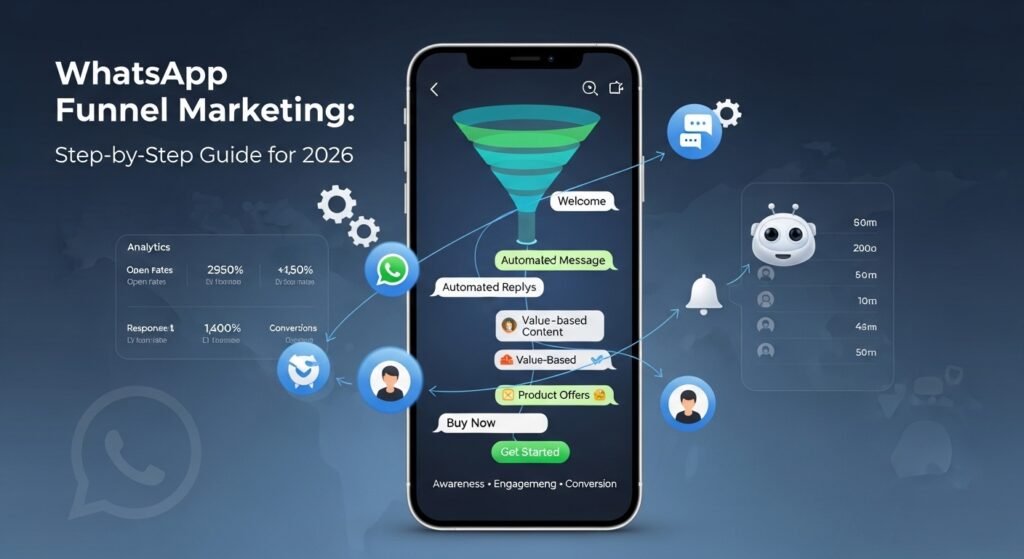
Introduction to WhatsApp Funnel Marketing
As a digital marketing strategist and SEO consultant, I have witnessed the evolution of marketing strategies over the years. With the rise of messaging apps, WhatsApp has emerged as a powerful platform for businesses to connect with their customers. WhatsApp funnel marketing is a strategy that leverages the app’s vast user base to guide potential customers through a series of steps, ultimately leading to a conversion. In this section, we will delve into the world of WhatsApp funnel marketing, exploring its benefits, and how it can be a game-changer for businesses in 2026.
WhatsApp, with its over 2 billion monthly active users, presents a vast opportunity for businesses to reach their target audience. The app’s high engagement rates, coupled with its ease of use, make it an ideal platform for businesses to build relationships with their customers. WhatsApp funnel marketing is a strategic approach that utilizes the app’s features to create a series of interactions, nudging potential customers toward a specific goal, such as making a purchase, signing up for a service, or attending an event.
The concept of a marketing funnel is not new, but its application on WhatsApp is a relatively recent development. A traditional marketing funnel consists of several stages, including awareness, consideration, and conversion. On WhatsApp, this funnel can be customized to fit the specific needs of a business, taking into account the app’s unique features, such as messaging, voice and video calls, and group chats. By creating a WhatsApp funnel, businesses can tailor their marketing efforts to effectively engage with their target audience, building trust and driving conversions.
One of the primary benefits of WhatsApp funnel marketing is its ability to provide a personalized experience for customers. Unlike traditional marketing channels, such as email or social media, WhatsApp allows businesses to interact with customers in a more intimate and interactive way. By using WhatsApp’s features, such as chatbots and messaging automation, businesses can create a customized experience for each customer, addressing their specific needs and concerns. This level of personalization can lead to increased customer satisfaction, loyalty, and ultimately, conversions.
Another significant advantage of WhatsApp funnel marketing is its cost-effectiveness. Compared to traditional marketing channels, WhatsApp marketing is relatively inexpensive, with minimal costs associated with sending messages or creating chatbots. This makes it an attractive option for small and medium-sized businesses, which often have limited marketing budgets. Additionally, WhatsApp’s high engagement rates mean that businesses can achieve a higher return on investment (ROI) compared to other marketing channels.
To illustrate the effectiveness of WhatsApp funnel marketing, let’s consider an example. Suppose an e-commerce business wants to promote a new product launch to its customers. Using WhatsApp, the business can create a funnel that starts with a awareness message, introducing the new product and its features. The next step in the funnel could be a consideration message, highlighting the product’s benefits and offering a special discount. Finally, the business can send a conversion message, encouraging customers to make a purchase. By using WhatsApp’s features, such as messaging automation and chatbots, the business can create a seamless and interactive experience for customers, guiding them through the funnel and increasing the chances of conversion.
Some of the key elements of a successful WhatsApp funnel marketing strategy include:
- Defining the target audience: Identifying the ideal customer segment and creating buyer personas to guide the marketing efforts.
- Creating engaging content: Developing a content strategy that resonates with the target audience and addresses their specific needs and concerns.
- Building a chatbot or messaging automation system: Utilizing WhatsApp’s features to create a customized and interactive experience for customers.
- Monitoring and optimizing the funnel: Tracking the performance of the WhatsApp funnel and making data-driven decisions to optimize its effectiveness.
- Integrating with other marketing channels: Combining WhatsApp funnel marketing with other marketing channels, such as social media and email, to create a cohesive and multi-channel marketing strategy.
In conclusion, WhatsApp funnel marketing is a powerful strategy that can help businesses connect with their customers and drive conversions. By leveraging the app’s features and creating a customized funnel, businesses can provide a personalized experience for their customers, increasing satisfaction and loyalty. As we move into 2026, it’s essential for businesses to stay ahead of the curve and adapt to the evolving marketing landscape. By incorporating WhatsApp funnel marketing into their marketing strategy, businesses can stay competitive and achieve their goals in the ever-changing world of digital marketing.
Understanding WhatsApp Marketing Funnel Stages
As a digital marketing strategist, I have seen the rise of WhatsApp as a powerful platform for businesses to connect with their customers. With over 2 billion monthly active users, WhatsApp has become an essential channel for companies to build brand awareness, generate leads, and drive sales. However, to maximize the potential of WhatsApp marketing, it is crucial to understand the different stages of the marketing funnel. In this section, we will delve into the various stages of the WhatsApp marketing funnel and explore how businesses can leverage each stage to achieve their marketing goals.
The WhatsApp marketing funnel is a framework that outlines the customer’s journey from the initial awareness stage to the final conversion stage. It is a strategic approach to guide potential customers through a series of stages, each designed to nurture and engage them, ultimately leading to a conversion. The WhatsApp marketing funnel typically consists of four stages: awareness, consideration, conversion, and retention.
The awareness stage is the first stage of the WhatsApp marketing funnel, where businesses aim to create awareness about their brand, product, or service. This stage is critical, as it sets the foundation for the entire marketing funnel. Businesses can use WhatsApp to share engaging content, such as videos, images, and text messages, to grab the attention of potential customers. For example, a fashion brand can share a promotional message about a new collection, including images and prices, to create awareness and generate interest among potential customers.
The consideration stage is the second stage of the WhatsApp marketing funnel, where businesses aim to educate and inform potential customers about their product or service. At this stage, businesses can share detailed information about their offerings, such as features, benefits, and testimonials. The goal is to build trust and credibility with potential customers, increasing the likelihood of them considering the business as a viable option. For instance, a fitness center can share workout tips, nutritional advice, and success stories to educate and engage potential customers, positioning themselves as a trusted authority in the fitness industry.
The conversion stage is the third stage of the WhatsApp marketing funnel, where businesses aim to convert potential customers into paying customers. This stage is critical, as it is where businesses can generate revenue and achieve their marketing goals. Businesses can use WhatsApp to offer exclusive promotions, discounts, or limited-time offers to encourage potential customers to make a purchase. For example, an e-commerce company can send a promotional message with a discount code to customers who have abandoned their shopping carts, enticing them to complete the purchase.
The retention stage is the final stage of the WhatsApp marketing funnel, where businesses aim to retain existing customers and encourage repeat business. This stage is essential, as it is more cost-effective to retain existing customers than to acquire new ones. Businesses can use WhatsApp to offer loyalty programs, exclusive rewards, and personalized support to retain customers and build long-term relationships. For instance, a restaurant can send a loyalty program message to regular customers, offering them a free dessert on their next visit, to encourage repeat business and loyalty.
To illustrate the WhatsApp marketing funnel stages, let’s consider an example of a company that sells outdoor gear and equipment. The company can use WhatsApp to create awareness about a new product, such as a waterproof backpack, by sharing a promotional message with an image and price. As potential customers show interest, the company can share more detailed information about the product, such as its features and benefits, to educate and engage them. Once potential customers are considering the product, the company can offer a discount or promotion to encourage them to make a purchase. Finally, after the purchase, the company can offer loyalty rewards and personalized support to retain the customer and encourage repeat business.
Understanding the WhatsApp marketing funnel stages is crucial for businesses to create effective marketing strategies that guide potential customers through the entire customer journey. By leveraging each stage of the funnel, businesses can build brand awareness, generate leads, drive sales, and retain customers, ultimately achieving their marketing goals. In the next section, we will explore how businesses can create a WhatsApp marketing funnel that is tailored to their specific needs and goals.
Some of the key benefits of understanding the WhatsApp marketing funnel stages include:
- Improved customer engagement and retention
- Increased conversions and sales
- Enhanced brand awareness and credibility
- More effective marketing strategies and campaigns
- Better customer insights and understanding
By understanding the WhatsApp marketing funnel stages, businesses can create targeted marketing campaigns that address the specific needs and pain points of their customers at each stage of the funnel. This approach enables businesses to build strong relationships with their customers, ultimately driving long-term growth and revenue.
In conclusion, the WhatsApp marketing funnel is a powerful framework for businesses to guide potential customers through the entire customer journey. By understanding the different stages of the funnel, businesses can create effective marketing strategies that build brand awareness, generate leads, drive sales, and retain customers. In the next section, we will explore how businesses can create a WhatsApp marketing funnel that is tailored to their specific needs and goals, and provide examples of successful WhatsApp marketing campaigns that have driven significant results for businesses.
Creating an Effective WhatsApp Marketing Funnel
As a digital marketing strategist, I have worked with numerous businesses to develop and implement effective WhatsApp marketing funnels that drive conversions and revenue growth. In this section, we will delve into the step-by-step process of creating a WhatsApp marketing funnel that resonates with your target audience and propels your business forward. To begin with, it is essential to understand the concept of a marketing funnel and how it applies to WhatsApp marketing. A marketing funnel represents the customer’s journey, from initial awareness to conversion, and is typically divided into three stages: awareness, consideration, and conversion.
In the context of WhatsApp marketing, the awareness stage involves capturing the attention of potential customers and persuading them to opt-in to your WhatsApp list. The consideration stage is where you nurture your leads, build trust, and provide value to them through engaging content and personalized interactions. Finally, the conversion stage is where you encourage your leads to take a specific action, such as making a purchase or signing up for a service. To create an effective WhatsApp marketing funnel, you need to carefully plan and execute each stage, ensuring a seamless transition from one stage to the next.
Let’s start with the awareness stage, which is critical in setting the foundation for your WhatsApp marketing funnel. At this stage, your primary objective is to drive traffic to your WhatsApp opt-in page and convince people to join your list. There are several strategies you can employ to achieve this, including:
- Adding a WhatsApp opt-in link to your website or social media profiles, allowing visitors to easily join your list.
- Creating engaging content, such as blog posts, videos, or podcasts, that resonates with your target audience and encourages them to opt-in to your WhatsApp list.
- Running paid advertisements on platforms like Google, Facebook, or Instagram, targeting specific demographics and interests to drive traffic to your WhatsApp opt-in page.
- Collaborating with influencers or other businesses in your niche to promote your WhatsApp list to their followers.
Once you have driven traffic to your WhatsApp opt-in page, the next step is to persuade people to join your list. This can be achieved by offering incentives, such as exclusive discounts, free resources, or early access to new products or services. For example, you could offer a 10% discount on the first purchase for new subscribers, or provide exclusive access to a free eBook or webinar. By providing value upfront, you can increase the likelihood of people opting-in to your WhatsApp list and reduce the risk of them unsubscribing later on.
After capturing leads, the next stage in your WhatsApp marketing funnel is the consideration stage. At this stage, your primary objective is to build trust and provide value to your leads through engaging content and personalized interactions. This can be achieved by sending regular updates, such as:
- Newsletters that summarize your latest blog posts, products, or services.
- Promotional messages that offer exclusive discounts or promotions to your subscribers.
- Educational content that provides tips, tutorials, or webinars on topics relevant to your niche.
- Personalized messages that address specific pain points or interests of your subscribers.
By providing value and building trust, you can increase the likelihood of your leads converting into customers. It is essential to note that the consideration stage is not just about promoting your products or services, but also about educating and empowering your leads to make informed decisions. For example, if you are a fitness coach, you could send workout tips and nutrition advice to your subscribers, helping them achieve their fitness goals and establishing your authority in the niche.
Finally, the conversion stage is where you encourage your leads to take a specific action, such as making a purchase or signing up for a service. At this stage, your primary objective is to create a sense of urgency and scarcity, persuading your leads to take action. This can be achieved by:
- Offering limited-time discounts or promotions that create a sense of urgency.
- Creating scarcity by limiting the availability of a product or service.
- Using social proof such as customer testimonials or reviews to build credibility.
- Providing clear calls-to-action that direct your leads to a specific landing page or website.
By carefully planning and executing each stage of your WhatsApp marketing funnel, you can increase the likelihood of driving conversions and revenue growth. It is essential to continuously monitor and optimize your funnel, ensuring that it resonates with your target audience and aligns with your business goals. In the next section, we will explore the tools and technologies you need to create and manage an effective WhatsApp marketing funnel, including WhatsApp Business API, chatbot software, and marketing automation platforms.
Optimizing and Measuring WhatsApp Funnel Performance
As a digital marketing strategist, I always emphasize the importance of optimizing and measuring the performance of any marketing funnel, including WhatsApp funnel marketing. In this section, we will delve into the details of how to optimize and measure the performance of your WhatsApp funnel, ensuring that you get the most out of your marketing efforts.
To start with, it’s essential to understand that optimizing and measuring WhatsApp funnel performance is a continuous process. It requires constant monitoring, analysis, and adjustments to ensure that your funnel is performing at its best. In this article, we will explore the key metrics to track, how to use data to optimize your funnel, and the tools you can use to measure performance.
When it comes to optimizing WhatsApp funnel performance, there are several key metrics to track. These include:
- Conversion rates: This is the percentage of users who complete a desired action, such as making a purchase or filling out a form. Tracking conversion rates helps you understand how effective your funnel is at driving sales or generating leads.
- Drop-off rates: This refers to the percentage of users who drop off at each stage of the funnel. Identifying where users are dropping off can help you pinpoint areas for improvement and optimize your funnel for better performance.
- Engagement rates: This includes metrics such as open rates, click-through rates, and response rates. Tracking engagement rates helps you understand how well your messages are resonating with your audience and whether your funnel is effectively capturing their attention.
- Customer acquisition cost (CAC): This is the cost of acquiring a new customer, including the cost of messaging, personnel, and other resources. Tracking CAC helps you understand the financial effectiveness of your funnel and make data-driven decisions to optimize it.
Once you have identified the key metrics to track, the next step is to use data to optimize your funnel. This involves analyzing your data to identify areas for improvement and making adjustments to your funnel accordingly. For example, if you notice that a high percentage of users are dropping off at a particular stage of the funnel, you may need to revisit your messaging or adjust the flow of your funnel to better meet the needs of your audience.
One of the most effective ways to optimize your WhatsApp funnel is to use A/B testing. This involves creating two or more versions of a message or funnel stage and testing them against each other to see which one performs better. By using A/B testing, you can identify which messages, images, or calls-to-action are most effective at driving conversions and engagement, and adjust your funnel accordingly.
In addition to A/B testing, there are several other strategies you can use to optimize your WhatsApp funnel. These include:
- Personalization: Using data and analytics to personalize your messages and offers can help increase engagement and conversion rates. For example, you can use a customer’s name, location, or purchase history to create targeted and relevant messages.
- Segmentation: Segmenting your audience based on demographics, behavior, or other factors can help you create more targeted and effective messages. For example, you can create separate funnels for different age groups or interests.
- Timing: Timing is everything when it comes to WhatsApp marketing. Sending messages at the right time can help increase engagement and conversion rates. For example, you can send messages during peak hours or at times when your audience is most active.
When it comes to measuring WhatsApp funnel performance, there are several tools you can use. These include:
- WhatsApp Business API: The WhatsApp Business API provides a range of metrics and insights that can help you track the performance of your funnel. These include message delivery rates, open rates, and conversion rates.
- Google Analytics: Google Analytics can be used to track website traffic and conversions generated from your WhatsApp funnel. This can help you understand the effectiveness of your funnel and make data-driven decisions to optimize it.
- Third-party analytics tools: There are several third-party analytics tools available that can help you track WhatsApp funnel performance. These include tools such as Chatmeter, WhatsApp Analytics, and WATI.
In conclusion, optimizing and measuring WhatsApp funnel performance is a critical component of any successful WhatsApp marketing strategy. By tracking key metrics, using data to optimize your funnel, and leveraging tools such as A/B testing and personalization, you can create a high-performing funnel that drives sales, generates leads, and grows your business. As a digital marketing strategist, I recommend that you prioritize optimizing and measuring your WhatsApp funnel performance to get the most out of your marketing efforts.
For example, let’s say you’re a fashion brand that uses WhatsApp to promote your products and offer exclusive discounts to your customers. To optimize your funnel, you can use A/B testing to determine which messages and images are most effective at driving conversions. You can also use personalization to create targeted messages based on your customers’ purchase history and preferences. By using these strategies, you can increase engagement and conversion rates, and ultimately drive more sales and revenue for your business.
Another example is a fitness studio that uses WhatsApp to promote its classes and services. To measure the performance of its funnel, the studio can use the WhatsApp Business API to track message delivery rates, open rates, and conversion rates. The studio can also use Google Analytics to track website traffic and conversions generated from its WhatsApp funnel. By using these tools, the studio can understand the effectiveness of its funnel and make data-driven decisions to optimize it and drive more sales and revenue.
As you can see, optimizing and measuring WhatsApp funnel performance is a complex process that requires careful planning, execution, and analysis. However, by using the strategies and tools outlined in this article, you can create a high-performing funnel that drives sales, generates leads, and grows your business. Whether you’re a fashion brand, a fitness studio, or any other type of business, optimizing and measuring your WhatsApp funnel performance is critical to achieving success in the competitive world of digital marketing.
Advanced WhatsApp Funnel Marketing Strategies for 2026
As a digital marketing strategist, I have witnessed the evolution of WhatsApp as a powerful platform for businesses to connect with their audience. With over 2 billion monthly active users, WhatsApp has become an essential channel for marketers to reach their target audience. In this section, we will delve into advanced WhatsApp funnel marketing strategies that can help businesses scale their customer acquisition and revenue growth in 2026.
To create an effective WhatsApp funnel marketing strategy, it’s essential to understand the concept of a marketing funnel. A marketing funnel represents the customer’s journey, from initial awareness to conversion. The funnel is divided into three stages: top-of-the-funnel (TOFU), middle-of-the-funnel (MOFU), and bottom-of-the-funnel (BOFU). Each stage requires a unique approach to engage and nurture leads.
At the TOFU stage, the primary objective is to create awareness and generate leads. WhatsApp can be used to run targeted campaigns, offering valuable content, discounts, or free trials to potential customers. For instance, a fitness brand can create a WhatsApp campaign offering a free workout plan to subscribers. This approach helps to build trust and establishes the brand as an authority in the fitness industry.
At the MOFU stage, the focus shifts to nurturing leads and building relationships. WhatsApp can be used to provide personalized support, offer exclusive content, and engage with customers through interactive messages. A great example of this is a clothing brand that uses WhatsApp to offer style advice, provide fashion tips, and share behind-the-scenes content. This approach helps to build a loyal community and increases the chances of conversion.
At the BOFU stage, the primary objective is to convert leads into customers. WhatsApp can be used to offer limited-time promotions, exclusive deals, and personalized offers. For example, an e-commerce brand can use WhatsApp to offer a 10% discount to customers who have abandoned their shopping cart. This approach helps to recover lost sales and increases revenue.
Some advanced WhatsApp funnel marketing strategies for 2026 include:
- Using WhatsApp chatbots to automate customer support and improve response times
- Utilizing WhatsApp’s built-in features, such as quick replies and message templates, to streamline customer interactions
- Integrating WhatsApp with CRM systems to track customer interactions and preferences
- Using data analytics to track WhatsApp campaign performance and optimize marketing strategies
- Creating WhatsApp-based loyalty programs to reward customers and encourage repeat business
Another crucial aspect of WhatsApp funnel marketing is measuring and optimizing campaign performance. WhatsApp provides a range of metrics, including message delivery rates, open rates, and conversion rates, to help marketers track their campaign’s effectiveness. By analyzing these metrics, marketers can identify areas for improvement and optimize their campaigns for better results.
In addition to these strategies, it’s essential to ensure that WhatsApp campaigns comply with data protection regulations, such as GDPR and CCPA. Marketers must obtain explicit consent from customers before sending them messages and provide clear opt-out options. Failure to comply with these regulations can result in significant fines and damage to a brand’s reputation.
To illustrate the effectiveness of WhatsApp funnel marketing, let’s consider a case study. A leading online education platform used WhatsApp to promote their courses to potential students. They created a series of interactive messages, offering free trial lessons, exclusive discounts, and personalized support. The campaign resulted in a 25% increase in course enrollments and a 30% increase in revenue.
In conclusion, WhatsApp funnel marketing is a powerful strategy for businesses to connect with their audience, generate leads, and drive revenue growth. By understanding the different stages of the marketing funnel and using advanced WhatsApp features, such as chatbots and data analytics, marketers can create effective campaigns that resonate with their target audience. As a digital marketing strategist, I recommend that businesses prioritize WhatsApp funnel marketing in their 2026 marketing strategy and leverage the platform’s vast potential to drive business growth.
To get started with WhatsApp funnel marketing, businesses can follow these best practices:
- Define a clear target audience and create buyer personas
- Develop a content strategy that resonates with the target audience
- Use WhatsApp’s built-in features to streamline customer interactions
- Track campaign performance using data analytics
- Optimize campaigns regularly to improve results
By following these best practices and leveraging the advanced WhatsApp funnel marketing strategies outlined in this section, businesses can create effective campaigns that drive real results and help them achieve their marketing goals in 2026. As a digital marketing strategist, I am excited to see the potential of WhatsApp funnel marketing and its impact on the marketing landscape in the years to come.

Amit Tyagi is a seasoned Digital Marketing and SEO Consultant with extensive experience helping businesses improve online visibility through SEO, AI Search Optimization (AIO/GEO), content strategy, and performance marketing. He regularly shares practical insights, industry updates, and data-driven strategies, empowering brands and marketers to achieve sustainable digital growth in an evolving search landsca