
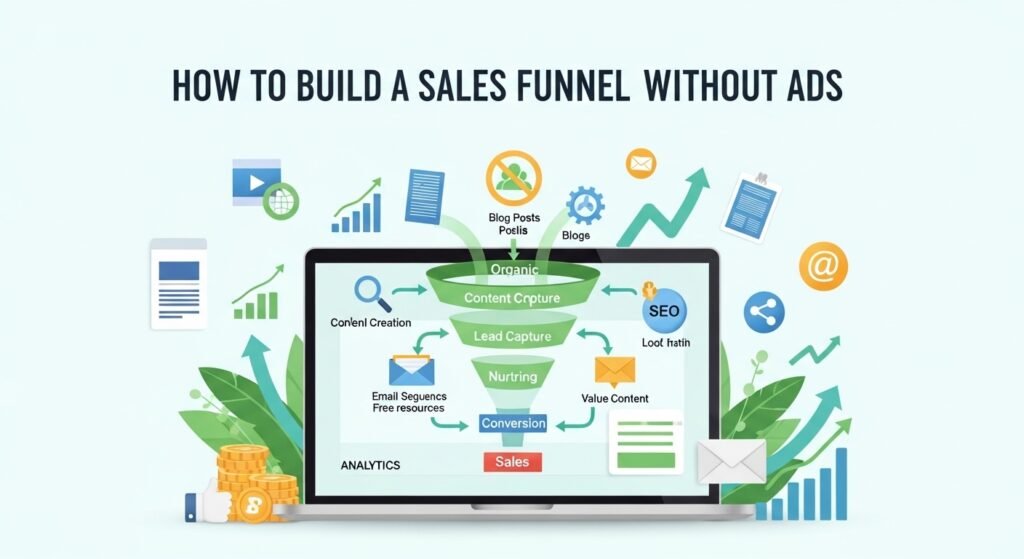
Introduction to Sales Funnels and Organic Growth
As a digital marketing strategist and SEO consultant, I have worked with numerous brands to help them scale globally and achieve revenue-focused organic growth. One of the most effective ways to achieve this is by building a sales funnel that leverages organic traffic, rather than relying on paid advertising. In this section, we will explore the concept of sales funnels and how they can be used to drive organic growth, without the need for ads.
A sales funnel is a strategic marketing process that guides potential customers through a series of steps, from initial awareness to conversion. The goal of a sales funnel is to nurture leads and build trust with potential customers, ultimately driving them to take a desired action, such as making a purchase or signing up for a service. While many businesses rely on paid advertising to drive traffic to their sales funnels, it is possible to build a sales funnel that drives organic growth, without the need for ads.
Organic growth refers to the process of increasing website traffic, engagement, and conversions through non-paid means, such as search engine optimization (SEO), content marketing, and social media marketing. By leveraging these channels, businesses can drive targeted traffic to their sales funnels, without the need for costly ad campaigns. In this section, we will explore the benefits of building a sales funnel without ads, and provide tips and strategies for achieving organic growth.
One of the primary benefits of building a sales funnel without ads is that it allows businesses to drive targeted traffic to their website, without the need for costly ad campaigns. By leveraging SEO, content marketing, and social media marketing, businesses can attract high-quality leads that are more likely to convert, without breaking the bank. Additionally, organic growth provides a more sustainable and long-term approach to driving traffic and conversions, as it is not dependent on ad spend.
Another benefit of building a sales funnel without ads is that it allows businesses to build trust and credibility with their target audience. By providing valuable and relevant content, businesses can establish themselves as thought leaders in their industry, and build a loyal following of customers who are more likely to convert. This approach also allows businesses to build a more personal connection with their customers, which can lead to increased customer loyalty and retention.
So, how can businesses build a sales funnel without ads? The first step is to develop a deep understanding of their target audience, including their needs, pain points, and behaviors. This can be achieved through market research, customer surveys, and social media listening. Once businesses have a clear understanding of their target audience, they can develop a content marketing strategy that provides value and relevance to their audience, and drives traffic to their sales funnel.
Some examples of content marketing strategies that can be used to drive traffic to a sales funnel include:
- Blog posts and articles that provide valuable insights and information on topics related to the business
- Social media posts and updates that engage with the target audience and drive traffic to the website
- Email newsletters and campaigns that provide exclusive offers and promotions to subscribers
- Video content, such as explainer videos and tutorials, that educate and entertain the target audience
- Podcasts and audio content that provide valuable insights and information on topics related to the business
These content marketing strategies can be used to drive traffic to a sales funnel, and can be optimized for SEO to increase their visibility and reach. By leveraging these strategies, businesses can build a sales funnel that drives organic growth, without the need for ads.
In addition to content marketing, businesses can also use SEO to drive traffic to their sales funnel. This can be achieved by optimizing the website and content for relevant keywords and phrases, and by building high-quality backlinks from other websites. By leveraging SEO, businesses can increase their visibility and reach, and drive targeted traffic to their sales funnel.
For example, a business that sells outdoor gear and equipment could optimize their website and content for keywords such as “hiking boots” and “camping gear”. They could also build backlinks from other websites, such as outdoor enthusiast blogs and review sites, to increase their authority and credibility. By leveraging SEO, the business could increase their visibility and reach, and drive targeted traffic to their sales funnel.
Another way to build a sales funnel without ads is to leverage social media marketing. Social media platforms, such as Facebook and Twitter, provide businesses with a powerful way to connect with their target audience and drive traffic to their website. By creating engaging and relevant content, businesses can build a loyal following of customers who are more likely to convert.
For example, a business that sells fitness equipment and supplements could create a social media campaign that provides workout tips and advice, and drives traffic to their website. They could also use social media to engage with their target audience, and build a community of customers who are passionate about fitness and health. By leveraging social media marketing, the business could build a sales funnel that drives organic growth, without the need for ads.
In conclusion, building a sales funnel without ads is a powerful way for businesses to drive organic growth and increase conversions. By leveraging content marketing, SEO, and social media marketing, businesses can drive targeted traffic to their sales funnel, without the need for costly ad campaigns. By providing value and relevance to their target audience, businesses can build trust and credibility, and establish themselves as thought leaders in their industry. Whether you are a small business or a large corporation, building a sales funnel without ads can help you achieve your marketing goals and drive long-term success.
Understanding Your Audience and Creating Valuable Content
As a digital marketing strategist, I have worked with numerous brands to help them scale globally, and one of the most crucial aspects of building a sales funnel without ads is understanding your audience and creating valuable content. This may seem like a straightforward concept, but it requires a deep dive into the psyche of your target audience to truly comprehend their needs, desires, and pain points. In this section, we will explore the importance of audience understanding and content creation in building a sales funnel that converts without relying on paid advertising.
To begin with, it is essential to recognize that your audience is the backbone of your sales funnel. Without a thorough understanding of who they are, what they want, and what problems they are trying to solve, you will struggle to create content that resonates with them. This, in turn, will lead to a sales funnel that fails to convert, resulting in a significant waste of time, resources, and effort. Therefore, it is crucial to conduct thorough audience research to gain insights into their demographics, interests, behaviors, and preferences.
One of the most effective ways to conduct audience research is through social media listening. By monitoring social media conversations related to your brand, industry, or niche, you can gain valuable insights into what your audience is talking about, what they are concerned about, and what they are looking for. For instance, if you are a fitness brand, you can use social media listening tools to track conversations around fitness-related topics, such as workout routines, nutrition, and wellness. This will help you identify patterns, trends, and areas of interest that you can leverage to create content that resonates with your audience.
Another approach to audience research is through surveys and polls. By conducting surveys and polls, you can gather direct feedback from your audience, which can provide valuable insights into their needs, preferences, and pain points. For example, if you are an e-commerce brand, you can conduct a survey to ask your customers about their shopping habits, preferences, and pain points. This will help you identify areas of improvement and create content that addresses their specific needs and concerns.
Once you have a deep understanding of your audience, you can begin creating valuable content that resonates with them. This content should be tailored to their specific needs, interests, and pain points, and should provide value to them in some way. For instance, if you are a software brand, you can create a blog post that provides tips and tricks on how to use your software to solve a specific problem. Alternatively, you can create a video tutorial that demonstrates how to use your software to achieve a specific goal. The key is to create content that is relevant, informative, and engaging, and that provides value to your audience in some way.
There are several types of content that you can create to attract and engage your audience, including:
- Blog posts: These are a great way to provide in-depth information on a specific topic, and can be optimized for search engines to improve visibility.
- Videos: These are a great way to provide visual content that demonstrates a product or service, and can be used to tell a story or convey a message.
- Podcasts: These are a great way to provide audio content that can be consumed on-the-go, and can be used to interview experts or thought leaders in your industry.
- Infographics: These are a great way to provide visual content that presents information in a clear and concise manner, and can be used to illustrate complex concepts or data.
- E-books: These are a great way to provide in-depth information on a specific topic, and can be used to provide value to your audience in exchange for their contact information.
When creating content, it is essential to keep your audience in mind and tailor your content to their specific needs and interests. This means using language that resonates with them, providing examples that are relevant to their lives, and creating content that is engaging and interactive. For instance, if you are a fashion brand, you can create a blog post that provides style tips and tricks for a specific demographic, such as young adults or professionals. Alternatively, you can create a video that showcases your latest collection and provides a behind-the-scenes look at your design process.
In addition to creating valuable content, it is also essential to optimize your content for search engines. This means using keywords and phrases that your audience is searching for, and optimizing your content for user experience and technical SEO. For instance, if you are a health and wellness brand, you can optimize your blog post for keywords such as “healthy recipes” or “workout routines.” This will help your content rank higher in search engine results pages (SERPs) and attract organic traffic to your website.
Finally, it is essential to measure and track the performance of your content to see what is working and what is not. This means using analytics tools to track engagement metrics such as page views, bounce rate, and time on site, and using this data to refine your content strategy. For instance, if you find that a specific type of content is performing well, you can create more of that type of content to attract and engage your audience. Alternatively, if you find that a specific piece of content is not performing well, you can refine it or replace it with new content that is more relevant and engaging.
In conclusion, understanding your audience and creating valuable content is a crucial aspect of building a sales funnel without ads. By conducting thorough audience research, creating content that resonates with your audience, and optimizing your content for search engines, you can attract and engage your audience, and drive conversions without relying on paid advertising. As a digital marketing strategist, I have seen firsthand the impact that valuable content can have on a sales funnel, and I highly recommend that brands prioritize content creation and audience understanding in their digital marketing strategy.
By following these tips and strategies, you can create a sales funnel that converts without relying on ads, and drives revenue and growth for your business. Remember, the key to success is to understand your audience, create valuable content, and optimize your content for search engines. With the right approach and strategy, you can build a sales funnel that attracts and engages your audience, and drives conversions and revenue for your business.
Setting Up the Foundation of Your Sales Funnel
As a digital marketing strategist, I have worked with numerous brands to help them scale their businesses globally through advanced SEO frameworks and performance-driven digital strategies. One of the most crucial components of a successful digital marketing strategy is a well-structured sales funnel. A sales funnel is a step-by-step process that guides potential customers through the buyer’s journey, from initial awareness to conversion. In this section, we will explore the importance of setting up the foundation of your sales funnel without relying on ads, and provide actionable tips to help you get started.
The foundation of a sales funnel is built on a deep understanding of your target audience, their needs, and pain points. It is essential to conduct thorough market research to identify your ideal customer, their preferences, and behaviors. This information will help you create a buyer persona, which is a semi-fictional representation of your ideal customer. The buyer persona will serve as a guide for all your marketing efforts, ensuring that your messaging, content, and overall strategy resonate with your target audience.
For instance, let’s say you are a fitness coach who specializes in helping busy professionals lose weight and improve their overall well-being. Your buyer persona might look like this:
- Age: 30-50
- Occupation: Corporate executive, entrepreneur, or professional
- Income: $100,000+
- Goals: Lose weight, improve overall health, and increase energy levels
- Pain points: Lack of time, struggle with motivation, and difficulty sticking to a diet or exercise routine
- Preferred communication channels: Email, social media, and online webinars
Once you have created your buyer persona, you can start building the foundation of your sales funnel. The first step is to create a lead magnet, which is a valuable resource that provides solutions to your target audience’s problems. The lead magnet can be an eBook, a webinar, a template, or any other type of content that resonates with your buyer persona. The goal of the lead magnet is to capture the attention of your target audience and encourage them to opt-in to your email list.
For example, as a fitness coach, you could create a lead magnet that offers a free 7-day meal plan and workout routine to help busy professionals get started with their weight loss journey. The lead magnet could be promoted through social media, email marketing, and other digital channels, with a clear call-to-action (CTA) that encourages visitors to download the resource in exchange for their email address.
The next step is to create a tripwire offer, which is a low-cost, high-value product or service that provides a tangible solution to your target audience’s problems. The tripwire offer is designed to convert leads into paying customers, and it should be priced between $7 and $47. The goal of the tripwire offer is to build trust and credibility with your target audience, while also generating revenue and increasing the average order value.
For instance, as a fitness coach, you could create a tripwire offer that offers a 30-day fitness program with personalized coaching and support. The tripwire offer could be priced at $27, and it could be promoted through email marketing and other digital channels, with a clear CTA that encourages leads to purchase the program.
Finally, it is essential to create a core offer, which is a high-ticket product or service that provides a comprehensive solution to your target audience’s problems. The core offer is designed to convert paying customers into loyal advocates, and it should be priced between $97 and $497. The goal of the core offer is to provide a transformational experience that exceeds your target audience’s expectations, while also generating significant revenue and increasing customer lifetime value.
For example, as a fitness coach, you could create a core offer that offers a 12-week weight loss program with personalized coaching, support, and accountability. The core offer could be priced at $297, and it could be promoted through email marketing, webinars, and other digital channels, with a clear CTA that encourages paying customers to purchase the program.
In conclusion, setting up the foundation of your sales funnel without relying on ads requires a deep understanding of your target audience, their needs, and pain points. By creating a buyer persona, lead magnet, tripwire offer, and core offer, you can build a sales funnel that guides potential customers through the buyer’s journey, from initial awareness to conversion. Remember to focus on providing value at each stage of the sales funnel, and to use actionable language and clear CTAs to encourage visitors to take the next step. With the right strategy and execution, you can build a sales funnel that drives revenue, increases customer lifetime value, and helps you achieve your business goals.
Optimizing and Scaling Your Sales Funnel for Organic Growth
As a digital marketing strategist, I have worked with numerous businesses to build and optimize their sales funnels for organic growth. In today’s digital landscape, it’s possible to create a sales funnel without relying on paid advertising. By leveraging the power of search engine optimization (SEO), content marketing, and social media, you can attract and engage with your target audience, driving conversions and revenue. In this section, we’ll dive into the strategies and techniques for optimizing and scaling your sales funnel for organic growth.
The key to building a successful sales funnel is to understand your target audience and their needs. By creating buyer personas, you can tailor your content and marketing efforts to resonate with your ideal customers. This involves researching their pain points, interests, and behaviors, as well as analyzing your competitors and market trends. With this information, you can develop a sales funnel that addresses the unique needs and concerns of your target audience.
One of the most effective ways to drive organic traffic to your sales funnel is through SEO. By optimizing your website and content for relevant keywords, you can increase your search engine rankings and visibility. This involves conducting thorough keyword research, creating high-quality and engaging content, and building high-authority backlinks to your website. For example, if you’re a fitness coach, you can optimize your website for keywords like “weight loss tips” or “home workout routines.” By ranking higher in search engine results, you can attract more organic traffic to your sales funnel and increase your chances of converting visitors into customers.
In addition to SEO, content marketing is another crucial component of a successful sales funnel. By creating valuable and relevant content, you can attract and engage with your target audience, building trust and credibility with potential customers. This can include blog posts, videos, podcasts, and social media content, all of which should be optimized for your target keywords and designed to address the needs and concerns of your ideal customers. For instance, if you’re a fashion brand, you can create content around the latest trends, styling tips, and product reviews. By providing value to your audience, you can establish your brand as a authority in your industry and drive more conversions through your sales funnel.
Social media is also a powerful tool for driving organic traffic to your sales funnel. By building a strong presence on platforms like Facebook, Instagram, and Twitter, you can engage with your target audience and promote your content and products. This involves creating and sharing high-quality content, participating in relevant conversations, and using social media advertising to amplify your reach. For example, if you’re a food blogger, you can share recipes and cooking tips on Instagram, using relevant hashtags to attract new followers and drive traffic to your website.
Another important aspect of optimizing and scaling your sales funnel is email marketing. By building an email list and creating targeted campaigns, you can nurture leads and encourage conversions. This involves creating opt-in forms on your website, offering incentives like free e-books or webinars, and segmenting your list to deliver personalized content and offers. For instance, if you’re a software company, you can create a series of email campaigns that educate subscribers about your product and its benefits, providing case studies and testimonials to build trust and credibility.
To illustrate the power of email marketing, consider the example of a company like HubSpot, which offers a range of marketing, sales, and customer service tools. By creating a series of email campaigns that educate subscribers about their products and services, HubSpot is able to nurture leads and drive conversions. For example, they might create a campaign that offers a free trial of their software, followed by a series of emails that provide tips and best practices for getting the most out of the tool. By providing value to their subscribers, HubSpot is able to build trust and establish their brand as a authority in the marketing and sales industry.
When it comes to scaling your sales funnel, it’s essential to track and measure your performance. By using analytics tools like Google Analytics, you can monitor your website traffic, conversion rates, and revenue, identifying areas for improvement and optimizing your sales funnel accordingly. This involves setting clear goals and objectives, tracking key performance indicators (KPIs), and making data-driven decisions to drive growth and revenue. For example, if you’re an e-commerce brand, you can track your website traffic, conversion rates, and average order value, using this data to optimize your product offerings, pricing, and marketing campaigns.
In addition to tracking and measuring performance, it’s also essential to continually test and refine your sales funnel. By using A/B testing and experimentation, you can identify areas for improvement and optimize your sales funnel for better performance. This involves creating multiple versions of your website, content, and marketing campaigns, testing them with different audience segments, and analyzing the results to determine which version performs best. For instance, if you’re a software company, you can test different pricing plans, features, and messaging to see which resonates best with your target audience.
Some of the key metrics to track when optimizing and scaling your sales funnel include:
- Website traffic: The number of visitors to your website, which can be tracked using tools like Google Analytics.
- Conversion rates: The percentage of visitors who complete a desired action, such as filling out a form or making a purchase.
- Revenue: The total amount of revenue generated by your sales funnel, which can be tracked using tools like Google Analytics or CRM software.
- Customer acquisition cost (CAC): The cost of acquiring a new customer, which can be calculated by dividing your marketing and sales expenses by the number of new customers acquired.
- Customer lifetime value (CLV): The total amount of revenue generated by a customer over their lifetime, which can be calculated by multiplying the average order value by the number of purchases made by a customer.
By tracking and measuring these metrics, you can gain a deeper understanding of your sales funnel’s performance and identify areas for improvement. This involves analyzing your data, identifying trends and patterns, and making data-driven decisions to drive growth and revenue. For example, if you notice that your conversion rates are low, you can test different versions of your website and marketing campaigns to see which performs better. By continually testing and refining your sales funnel, you can optimize its performance and drive more conversions and revenue.
In conclusion, optimizing and scaling your sales funnel for organic growth requires a deep understanding of your target audience, a solid content marketing strategy, and a data-driven approach to tracking and measuring performance. By leveraging the power of SEO, content marketing, and social media, you can attract and engage with your target audience, driving conversions and revenue. By continually testing and refining your sales funnel, you can optimize its performance and drive growth and revenue for your business. As a digital marketing strategist, I recommend that businesses focus on building a strong foundation in these areas, using data and analytics to inform their decisions and drive continuous improvement.
By following these strategies and techniques, you can build a sales funnel that drives organic growth and revenue for your business. Remember to stay focused on your target audience, continually test and refine your sales funnel, and use data and analytics to inform your decisions. With the right approach and mindset, you can create a sales funnel that attracts and engages with your ideal customers, driving conversions and revenue for your business. Whether you’re a seasoned marketer or just starting out, the principles outlined in this section can help you build a successful sales funnel that drives growth and revenue for your business.
Advanced Techniques for Maximizing Sales Funnel Efficiency
As a digital marketing strategist and SEO consultant, I have worked with numerous brands to help them scale their businesses globally through advanced SEO frameworks and performance-driven digital strategies. One of the most critical components of a successful digital marketing strategy is a well-structured sales funnel. A sales funnel is a series of steps that a potential customer takes from becoming aware of a product or service to making a purchase. In this section, we will explore advanced techniques for maximizing sales funnel efficiency without relying on ads.
To build an effective sales funnel, it is essential to understand the different stages of the customer journey. The typical stages of a sales funnel include awareness, consideration, and conversion. At each stage, the customer is presented with targeted content and messaging that is designed to move them closer to making a purchase. By optimizing each stage of the sales funnel, businesses can increase conversions, reduce bounce rates, and improve overall customer satisfaction.
One of the most effective ways to maximize sales funnel efficiency is to use personalization. Personalization involves tailoring the content and messaging of each stage of the sales funnel to the individual needs and preferences of the customer. This can be achieved through the use of data analytics and AI-driven marketing tools. For example, a business can use data analytics to identify the demographics and interests of its target audience and then use this information to create targeted content and messaging that resonates with them.
Another advanced technique for maximizing sales funnel efficiency is to use content marketing. Content marketing involves creating high-quality, relevant, and valuable content that attracts and engages the target audience. This can include blog posts, videos, social media posts, and other types of content. By creating content that addresses the needs and interests of the target audience, businesses can establish themselves as thought leaders in their industry and build trust with potential customers. For instance, a business can create a series of blog posts that provide tips and advice on how to solve a common problem in their industry. This can help to attract potential customers who are searching for solutions to this problem and move them into the awareness stage of the sales funnel.
In addition to personalization and content marketing, businesses can also use email marketing to maximize sales funnel efficiency. Email marketing involves sending targeted and personalized messages to customers and potential customers via email. This can include newsletters, promotional offers, and other types of emails. By using email marketing, businesses can stay in touch with customers and potential customers and move them through the different stages of the sales funnel. For example, a business can send a series of emails to new subscribers that provide them with valuable information and resources. This can help to build trust and establish the business as a thought leader in their industry.
Furthermore, businesses can also use SEO optimization to maximize sales funnel efficiency. SEO optimization involves optimizing the website and content of a business to rank higher in search engine results pages (SERPs). This can include optimizing the website for keywords, creating high-quality and relevant content, and building backlinks from other websites. By optimizing for SEO, businesses can increase their visibility and attract more organic traffic to their website. For instance, a business can optimize its website for keywords related to its products or services. This can help to attract potential customers who are searching for these keywords and move them into the awareness stage of the sales funnel.
Another technique that businesses can use to maximize sales funnel efficiency is to use social proof. Social proof involves using customer testimonials, reviews, and ratings to build trust and credibility with potential customers. This can include displaying customer testimonials on the website, using customer reviews in marketing materials, and encouraging customers to leave ratings and reviews on social media. By using social proof, businesses can establish themselves as trustworthy and credible and increase conversions. For example, a business can display customer testimonials on its website, highlighting the benefits and results that customers have achieved by using their products or services.
To implement these advanced techniques, businesses can follow these steps:
- Conduct market research to understand the target audience and their needs and preferences.
- Develop a content marketing strategy that includes creating high-quality and relevant content.
- Use data analytics and AI-driven marketing tools to personalize the content and messaging of each stage of the sales funnel.
- Optimize the website for SEO to increase visibility and attract more organic traffic.
- Use email marketing to stay in touch with customers and potential customers and move them through the different stages of the sales funnel.
- Use social proof to build trust and credibility with potential customers.
By following these steps and using these advanced techniques, businesses can maximize sales funnel efficiency and increase conversions without relying on ads. It is essential to remember that building an effective sales funnel takes time and effort, and it requires a deep understanding of the target audience and their needs and preferences. By using personalization, content marketing, email marketing, SEO optimization, and social proof, businesses can create a sales funnel that is tailored to their target audience and drives real results.
In conclusion, maximizing sales funnel efficiency is critical for businesses that want to drive real results and increase conversions. By using advanced techniques such as personalization, content marketing, email marketing, SEO optimization, and social proof, businesses can create a sales funnel that is tailored to their target audience and drives real results. As a digital marketing strategist and SEO consultant, I have seen firsthand the impact that these techniques can have on a business’s bottom line. By following the steps outlined in this section and using these advanced techniques, businesses can maximize sales funnel efficiency and achieve their marketing goals without relying on ads.

Amit Tyagi is a seasoned Digital Marketing and SEO Consultant with extensive experience helping businesses improve online visibility through SEO, AI Search Optimization (AIO/GEO), content strategy, and performance marketing. He regularly shares practical insights, industry updates, and data-driven strategies, empowering brands and marketers to achieve sustainable digital growth in an evolving search landsca