
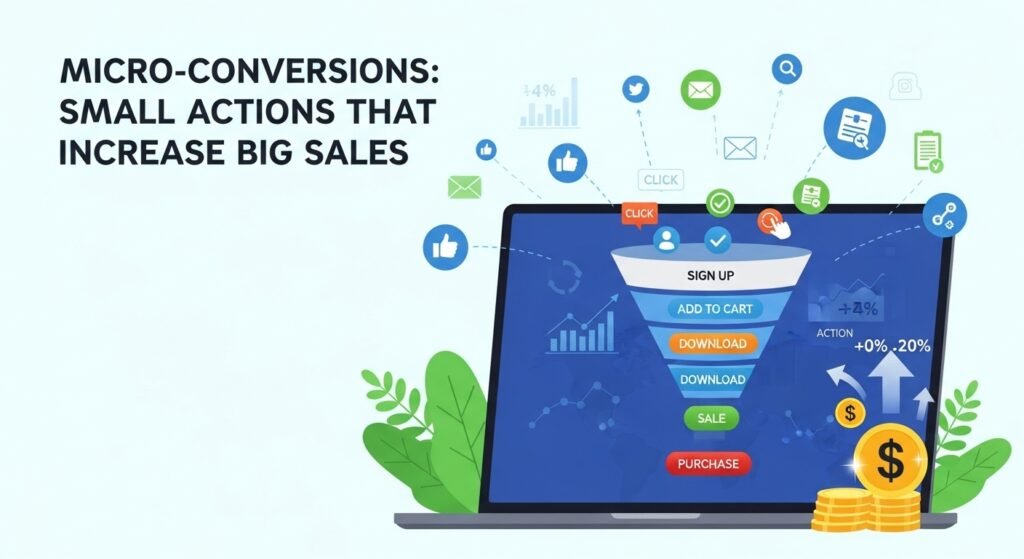
Introduction to Micro-Conversions
As a digital marketing strategist, I have always emphasized the importance of understanding the intricacies of user behavior and the conversion funnel. While many marketers focus on the ultimate goal of making a sale, it is equally crucial to recognize the significance of micro-conversions in the buying process. In this article, we will delve into the world of micro-conversions, exploring what they are, why they matter, and how they can be leveraged to increase big sales.
Micro-conversions refer to the small, incremental actions that users take while interacting with a website, product, or service. These actions may seem insignificant in isolation, but they are, in fact, crucial steps in the customer journey. By acknowledging and optimizing for micro-conversions, businesses can create a more seamless and engaging user experience, ultimately driving more significant conversions and revenue growth.
As a seasoned SEO consultant, I have worked with numerous clients who have struggled to convert website traffic into sales. Upon closer examination, it becomes apparent that these businesses often overlook the importance of micro-conversions. By focusing solely on the end goal of making a sale, they neglect the smaller, yet vital, actions that precede it. This is where the concept of micro-conversions comes into play, helping marketers to identify and optimize these critical touchpoints.
So, what exactly are micro-conversions? They can take many forms, depending on the context and industry. Some common examples include:
- Signing up for a newsletter or email list
- Downloading a whitepaper, e-book, or other resource
- Watching a product demo or tutorial video
- Participating in a survey or poll
- Sharing content on social media
- Leaving a comment or review
These actions may not necessarily result in an immediate sale, but they are essential in building trust, establishing credibility, and fostering a sense of engagement with the brand. By recognizing and encouraging micro-conversions, businesses can create a more nuanced understanding of their target audience and develop targeted strategies to nurture them through the conversion funnel.
For instance, let’s consider the example of an e-commerce website that sells outdoor gear and apparel. A user visits the site, browses through the product catalog, and eventually downloads a guide to hiking in the local area. This action, in itself, is a micro-conversion. Although the user has not made a purchase, they have demonstrated interest in the brand and its expertise. By capturing the user’s email address and providing them with valuable content, the business can begin to build a relationship and nurture them towards a potential sale.
In another example, a software company offers a free trial of its product, allowing users to experience the features and benefits firsthand. The act of signing up for the trial is a micro-conversion, as it indicates a level of interest and intent. By monitoring the user’s behavior during the trial period, the company can gather valuable insights into their needs and preferences, ultimately informing its sales and marketing strategies.
As we can see, micro-conversions are not just minor events; they are, in fact, critical milestones in the customer journey. By acknowledging and optimizing for these smaller actions, businesses can create a more holistic understanding of their target audience and develop targeted strategies to drive more significant conversions and revenue growth. In the following sections, we will explore the importance of micro-conversions in more detail, discussing how they can be measured, optimized, and leveraged to increase big sales.
As a digital marketing strategist, I have seen firsthand the impact that micro-conversions can have on a business’s bottom line. By focusing on these smaller actions and creating a more nuanced understanding of the customer journey, companies can unlock new opportunities for growth and revenue expansion. Whether you are a seasoned marketer or just starting out, understanding micro-conversions is essential for developing effective digital marketing strategies that drive real results.
In conclusion, micro-conversions are a vital component of the conversion funnel, providing valuable insights into user behavior and intent. By recognizing and optimizing for these smaller actions, businesses can create a more engaging user experience, build trust and credibility, and ultimately drive more significant conversions and revenue growth. As we continue to explore the world of micro-conversions, we will delve deeper into the strategies and tactics for measuring, optimizing, and leveraging these critical touchpoints to increase big sales.
Throughout my career, I have worked with numerous clients who have struggled to understand the intricacies of micro-conversions and their role in the customer journey. However, by acknowledging the importance of these smaller actions and developing targeted strategies to optimize them, businesses can unlock new opportunities for growth and revenue expansion. In the next section, we will explore the importance of micro-conversions in more detail, discussing how they can be measured and optimized to drive more significant conversions and revenue growth.
Understanding the Psychology Behind Micro-Conversions
As a digital marketing strategist, I have come to realize the significance of micro-conversions in driving big sales. At first glance, micro-conversions may seem like insignificant actions, but they play a crucial role in shaping the customer’s journey and ultimately influencing their purchasing decisions. To truly grasp the concept of micro-conversions, it’s essential to delve into the psychology behind them. In this section, we will explore the underlying psychological principles that make micro-conversions a vital component of any successful digital marketing strategy.
The concept of micro-conversions is rooted in the idea that customers rarely make a purchase on their first visit to a website. In fact, research suggests that it can take multiple interactions with a brand before a customer feels comfortable enough to make a purchase. Micro-conversions are the small actions that customers take during these interactions, such as signing up for a newsletter, downloading a free e-book, or watching a product video. These actions may seem insignificant on their own, but they are a crucial part of the customer’s journey and can have a significant impact on their purchasing decisions.
One of the primary psychological principles behind micro-conversions is the concept of commitment and consistency. This principle suggests that once a customer has made a small commitment to a brand, such as signing up for a newsletter, they are more likely to make a larger commitment, such as making a purchase. This is because customers tend to want to be consistent in their actions and will often follow through on a smaller commitment to avoid feeling inconsistent. By encouraging customers to make small commitments through micro-conversions, brands can increase the likelihood of larger commitments down the line.
Another psychological principle that drives micro-conversions is the concept of reciprocity. This principle suggests that customers are more likely to make a purchase from a brand that has provided them with value in the past. Micro-conversions, such as downloading a free e-book or watching a product video, provide customers with value and create a sense of reciprocity. When a customer feels that a brand has provided them with value, they are more likely to reciprocate by making a purchase.
The principle of social proof also plays a significant role in micro-conversions. Social proof refers to the idea that customers are more likely to make a purchase if they see that others have made the same purchase. Micro-conversions, such as customer reviews and testimonials, provide social proof and can increase the likelihood of a purchase. By showcasing the positive experiences of other customers, brands can create a sense of trust and credibility that encourages customers to make a purchase.
In addition to these psychological principles, micro-conversions can also be driven by the concept of anticipation. Anticipation refers to the idea that customers are more likely to make a purchase if they are expecting to receive something in return. Micro-conversions, such as signing up for a free trial or requesting a demo, create a sense of anticipation and can increase the likelihood of a purchase. By providing customers with a sense of what they can expect from a product or service, brands can build anticipation and encourage customers to make a purchase.
To illustrate the power of micro-conversions, let’s consider an example. Suppose a customer visits an e-commerce website and signs up for a newsletter. This is a micro-conversion that provides the customer with value and creates a sense of commitment and consistency. The customer may then receive a series of emails showcasing new products and promotions, which creates a sense of anticipation and encourages the customer to make a purchase. If the customer then watches a product video or reads customer reviews, they are more likely to make a purchase due to the social proof and reciprocity created by these micro-conversions.
The benefits of micro-conversions are numerous, and they can have a significant impact on a brand’s bottom line. Some of the key benefits of micro-conversions include:
- Increased conversions: By encouraging customers to make small commitments, micro-conversions can increase the likelihood of larger commitments, such as making a purchase.
- Improved customer engagement: Micro-conversions provide customers with value and create a sense of anticipation, which can increase customer engagement and encourage customers to return to a website.
- Enhanced customer insights: Micro-conversions provide brands with valuable insights into customer behavior and preferences, which can be used to improve marketing strategies and increase sales.
- Reduced cart abandonment: By creating a sense of commitment and consistency, micro-conversions can reduce cart abandonment rates and increase the likelihood of a purchase.
- Increased customer loyalty: Micro-conversions can create a sense of reciprocity and social proof, which can increase customer loyalty and encourage customers to make repeat purchases.
In conclusion, micro-conversions are a crucial component of any successful digital marketing strategy. By understanding the psychology behind micro-conversions, brands can create effective strategies that encourage customers to make small commitments and ultimately drive big sales. Whether it’s through commitment and consistency, reciprocity, social proof, or anticipation, micro-conversions have the power to shape the customer’s journey and influence their purchasing decisions. By leveraging the power of micro-conversions, brands can increase conversions, improve customer engagement, and drive revenue growth.
Identifying and Tracking Micro-Conversions
As a digital marketing strategist, I have worked with numerous brands to help them scale their online presence and boost revenue. One crucial aspect of achieving this goal is understanding the importance of micro-conversions. Micro-conversions refer to the small actions that users take on a website, which may not necessarily lead to a direct sale, but can ultimately contribute to a larger conversion. In this section, we will delve into the process of identifying and tracking micro-conversions, and explore how they can be leveraged to increase big sales.
Micro-conversions can take many forms, depending on the nature of the business and the goals of the website. Some common examples of micro-conversions include signing up for a newsletter, downloading a free e-book or whitepaper, watching a video, or engaging with a brand on social media. These actions may seem insignificant on their own, but they can provide valuable insights into user behavior and preferences, and can be used to nurture leads and guide them through the sales funnel.
To identify micro-conversions, it is essential to have a clear understanding of the user journey and the various touchpoints that a user interacts with on the website. This can be achieved through the use of tools such as Google Analytics, which provides detailed information on user behavior, including page views, bounce rates, and conversion rates. By analyzing this data, businesses can identify patterns and trends that indicate which micro-conversions are most likely to lead to a larger conversion.
For instance, let’s consider an e-commerce website that sells outdoor gear and apparel. The website may have a number of micro-conversions, such as signing up for a newsletter, downloading a free guide to hiking trails, or watching a video on how to choose the right camping equipment. By tracking these micro-conversions, the business may find that users who sign up for the newsletter are more likely to make a purchase than those who do not. This information can be used to optimize the website and marketing campaigns to encourage more users to sign up for the newsletter, thereby increasing the likelihood of a larger conversion.
Another example is a software company that offers a free trial of its product. The micro-conversions in this case may include signing up for the free trial, watching a demo video, or engaging with the company on social media. By tracking these micro-conversions, the business may find that users who watch the demo video are more likely to purchase the software than those who do not. This information can be used to optimize the website and marketing campaigns to encourage more users to watch the demo video, thereby increasing the likelihood of a larger conversion.
In addition to identifying micro-conversions, it is also important to track them. This can be done using a variety of tools, including Google Analytics, as mentioned earlier. Other tools, such as Mixpanel and Kissmetrics, can also be used to track micro-conversions and provide detailed insights into user behavior. By tracking micro-conversions, businesses can gain a better understanding of the user journey and make data-driven decisions to optimize the website and marketing campaigns.
Some of the key metrics that can be used to track micro-conversions include:
- Conversion rate: This refers to the percentage of users who complete a micro-conversion, such as signing up for a newsletter or downloading a free e-book.
- Click-through rate: This refers to the percentage of users who click on a link or button to complete a micro-conversion, such as watching a video or engaging with a brand on social media.
- Drop-off rate: This refers to the percentage of users who start a micro-conversion, but do not complete it, such as abandoning a shopping cart or not completing a form.
- Time on site: This refers to the amount of time that users spend on the website, which can be an indicator of engagement and interest in the brand.
By tracking these metrics, businesses can gain a better understanding of the user journey and identify areas for improvement. For example, if the conversion rate for a particular micro-conversion is low, the business may need to optimize the website or marketing campaigns to make it easier for users to complete the micro-conversion. Similarly, if the drop-off rate is high, the business may need to identify the causes of the drop-off and make changes to the website or marketing campaigns to reduce it.
In conclusion, identifying and tracking micro-conversions is a crucial aspect of digital marketing. By understanding the small actions that users take on a website, businesses can gain valuable insights into user behavior and preferences, and can use this information to nurture leads and guide them through the sales funnel. By tracking micro-conversions, businesses can optimize the website and marketing campaigns to increase the likelihood of a larger conversion, and ultimately drive more sales and revenue.
As a digital marketing strategist, I have seen firsthand the impact that micro-conversions can have on a business. By identifying and tracking micro-conversions, businesses can make data-driven decisions to optimize the website and marketing campaigns, and can ultimately drive more sales and revenue. In the next section, we will explore how to use micro-conversions to optimize the website and marketing campaigns, and will provide examples and case studies of businesses that have successfully leveraged micro-conversions to drive growth and revenue.
Strategies for Optimizing Micro-Conversions
As a digital marketing strategist, I have worked with numerous brands to optimize their online presence and increase sales. One crucial aspect of this process is micro-conversions. Micro-conversions refer to small actions taken by users on a website, such as filling out a form, downloading an e-book, or signing up for a newsletter. While these actions may seem insignificant, they can have a significant impact on the overall conversion rate and revenue of a business. In this section, we will explore strategies for optimizing micro-conversions and how they can contribute to big sales.
To optimize micro-conversions, it is essential to understand the concept of the conversion funnel. The conversion funnel represents the journey a user takes from the initial visit to a website to the final conversion, such as making a purchase. The funnel is typically divided into three stages: awareness, consideration, and decision. Micro-conversions occur at each stage of the funnel and can be used to nurture leads and guide them towards the final conversion.
One strategy for optimizing micro-conversions is to identify and track key micro-conversion events on a website. This can be done using analytics tools such as Google Analytics. By tracking micro-conversions, businesses can gain insights into user behavior and identify areas for improvement. For example, if a website has a high bounce rate on a particular page, it may indicate that the content is not engaging or relevant to the user. By optimizing the content and user experience, businesses can increase the micro-conversion rate and ultimately drive more sales.
Another strategy for optimizing micro-conversions is to use persuasive and compelling calls-to-action (CTAs). CTAs are buttons or links that prompt users to take a specific action, such as signing up for a newsletter or downloading an e-book. To be effective, CTAs should be clear, concise, and prominent on the page. They should also be relevant to the user’s interests and needs. For instance, if a user is reading a blog post about SEO, a CTA to download an SEO guide would be more effective than a CTA to sign up for a newsletter about fashion.
Additionally, businesses can use personalization to optimize micro-conversions. Personalization involves tailoring the user experience to individual users based on their behavior, preferences, and interests. This can be done using data and analytics tools, such as cookies and user profiling. By personalizing the user experience, businesses can increase the relevance and engagement of their content, leading to higher micro-conversion rates. For example, an e-commerce website can use personalization to recommend products based on a user’s browsing history and purchase behavior.
Furthermore, businesses can use social proof to optimize micro-conversions. Social proof refers to the phenomenon where users are more likely to take an action if they see others doing it. This can be achieved by displaying customer testimonials, reviews, and ratings on a website. Social proof can increase trust and credibility, leading to higher micro-conversion rates. For instance, a website can display a popup with a customer testimonial, such as “1000+ users have downloaded our e-book in the past month.”
Another effective strategy for optimizing micro-conversions is to use urgency and scarcity. Urgency and scarcity involve creating a sense of limited-time offer or limited availability to prompt users to take action. This can be achieved using tactics such as countdown timers, limited-time discounts, and limited availability notifications. For example, a website can offer a limited-time discount on a product, such as “Get 20% off this product for the next 24 hours only.”
Moreover, businesses can use gamification to optimize micro-conversions. Gamification involves using game design elements, such as rewards, challenges, and leaderboards, to engage users and encourage them to take action. This can be achieved using tactics such as points systems, badges, and quizzes. For instance, a website can offer a quiz that rewards users with a badge or points for completing it.
In addition to these strategies, businesses can use the following tactics to optimize micro-conversions:
- Optimize website loading speed and user experience to reduce friction and increase engagement
- Use clear and concise language in CTAs and content to reduce confusion and increase clarity
- Use high-quality and relevant images and videos to increase engagement and interest
- Use A/B testing and experimentation to identify the most effective CTAs, content, and user experience
- Use data and analytics to track and measure micro-conversion rates and identify areas for improvement
By implementing these strategies and tactics, businesses can optimize micro-conversions and increase the overall conversion rate and revenue. Micro-conversions may seem like small actions, but they can have a significant impact on the success of a business. By understanding the conversion funnel, identifying and tracking key micro-conversion events, using persuasive CTAs, personalization, social proof, urgency, and gamification, businesses can create a user experience that nurtures leads and drives sales.
In conclusion, optimizing micro-conversions is a crucial aspect of digital marketing and can have a significant impact on the success of a business. By using the strategies and tactics outlined in this section, businesses can increase micro-conversion rates, drive more sales, and ultimately achieve their revenue goals. As a digital marketing strategist, I have seen firsthand the impact that micro-conversions can have on a business, and I highly recommend that businesses prioritize micro-conversion optimization as part of their overall digital marketing strategy.
Measuring the Impact of Micro-Conversions on Big Sales
As a digital marketing strategist, I have always emphasized the importance of micro-conversions in driving big sales. Micro-conversions refer to the small actions that users take on a website, such as filling out a form, downloading an e-book, or signing up for a newsletter. These actions may seem insignificant on their own, but they can have a significant impact on the overall sales funnel. In this section, we will explore the ways to measure the impact of micro-conversions on big sales and how to leverage them to drive revenue growth.
To understand the impact of micro-conversions, it is essential to track and analyze user behavior on your website. This can be done using analytics tools such as Google Analytics, which provides insights into user behavior, including the pages they visit, the actions they take, and the devices they use. By analyzing this data, you can identify the micro-conversions that are most likely to lead to big sales and optimize your website accordingly.
For example, let’s say you are an e-commerce website that sells clothing and accessories. You notice that users who sign up for your newsletter are more likely to make a purchase than those who don’t. This is a micro-conversion that can have a significant impact on big sales. By optimizing your website to encourage more users to sign up for your newsletter, you can increase the chances of driving big sales. This can be done by placing a prominent newsletter signup form on your website, offering exclusive discounts to subscribers, or creating engaging content that encourages users to sign up.
Another way to measure the impact of micro-conversions is to use attribution modeling. Attribution modeling is a technique that helps you understand the role of each micro-conversion in the sales funnel. By assigning a value to each micro-conversion, you can determine which actions are most likely to lead to big sales. For instance, you may assign a value of $1 to each newsletter signup, $5 to each e-book download, and $10 to each demo request. By analyzing the attribution model, you can see which micro-conversions are driving the most value and optimize your marketing campaigns accordingly.
Here are some examples of micro-conversions that can have a significant impact on big sales:
- Signing up for a newsletter or email list
- Downloading an e-book or whitepaper
- Requesting a demo or free trial
- Following your brand on social media
- Leaving a review or rating
- Referring a friend or family member
- Participating in a survey or poll
- Watching a video or webinar
These micro-conversions may seem small, but they can have a significant impact on the sales funnel. By tracking and analyzing these actions, you can identify patterns and trends that can help you optimize your marketing campaigns and drive big sales.
In addition to tracking micro-conversions, it is also essential to track the overall customer journey. The customer journey refers to the series of interactions that a user has with your brand, from the initial awareness stage to the final purchase stage. By mapping out the customer journey, you can identify the touchpoints that are most critical to driving big sales and optimize your marketing campaigns accordingly.
For example, let’s say you are a software company that sells project management tools. You notice that users who watch a demo video are more likely to sign up for a free trial, and users who sign up for a free trial are more likely to make a purchase. This is an example of a customer journey that can be optimized to drive big sales. By placing a prominent call-to-action on your website to watch the demo video, you can increase the chances of driving users further down the sales funnel.
In conclusion, micro-conversions are a critical component of the sales funnel, and measuring their impact is essential to driving big sales. By tracking and analyzing micro-conversions, using attribution modeling, and mapping out the customer journey, you can identify the actions that are most likely to drive revenue growth and optimize your marketing campaigns accordingly. As a digital marketing strategist, I have seen firsthand the impact that micro-conversions can have on big sales, and I recommend that all businesses prioritize tracking and analyzing these small actions to drive revenue growth.
By leveraging micro-conversions, businesses can create a more personalized and engaging user experience that drives big sales. For instance, by using data and analytics to identify the micro-conversions that are most valuable, businesses can create targeted marketing campaigns that speak directly to their target audience. Additionally, by optimizing the customer journey to include micro-conversions, businesses can create a more seamless and intuitive user experience that drives users further down the sales funnel.
Overall, measuring the impact of micro-conversions on big sales is a critical component of any digital marketing strategy. By prioritizing micro-conversions and using data and analytics to drive decision-making, businesses can create a more effective and efficient sales funnel that drives revenue growth and increases conversions. As a digital marketing strategist, I recommend that all businesses take a closer look at their micro-conversions and develop a strategy to leverage these small actions to drive big sales.
In terms of implementation, there are several tools and technologies that businesses can use to track and analyze micro-conversions. For example, Google Analytics provides a range of features and tools that allow businesses to track and analyze user behavior, including micro-conversions. Additionally, marketing automation platforms such as Marketo and Pardot provide a range of features and tools that allow businesses to track and analyze micro-conversions, as well as automate and optimize marketing campaigns.
By using these tools and technologies, businesses can gain a deeper understanding of their micro-conversions and develop a more effective strategy to leverage these small actions to drive big sales. For instance, by using Google Analytics to track micro-conversions, businesses can identify the pages and actions that are most likely to drive conversions, and optimize their website and marketing campaigns accordingly. Similarly, by using marketing automation platforms to automate and optimize marketing campaigns, businesses can create a more personalized and engaging user experience that drives users further down the sales funnel.
In conclusion, measuring the impact of micro-conversions on big sales is a critical component of any digital marketing strategy. By prioritizing micro-conversions and using data and analytics to drive decision-making, businesses can create a more effective and efficient sales funnel that drives revenue growth and increases conversions. As a digital marketing strategist, I recommend that all businesses take a closer look at their micro-conversions and develop a strategy to leverage these small actions to drive big sales.
By doing so, businesses can create a more personalized and engaging user experience that drives users further down the sales funnel, and ultimately, drives big sales. With the right tools and technologies, businesses can track and analyze micro-conversions, automate and optimize marketing campaigns, and develop a more effective strategy to leverage these small actions to drive revenue growth. As a result, businesses can achieve their marketing goals and drive big sales, and ultimately, achieve long-term success and growth.
Furthermore, businesses can also use micro-conversions to identify areas for improvement in their sales funnel. For example, if a business notices that a large number of users are abandoning their shopping cart, they can use micro-conversions to identify the reasons why. By analyzing the micro-conversions that occur before and after the shopping cart abandonment, businesses can identify the pain points and areas for improvement, and develop a strategy to address these issues and optimize their sales funnel.
In addition, businesses can also use micro-conversions to personalize the user experience and increase engagement. For example, by using data and analytics to identify the micro-conversions that are most valuable, businesses can create targeted marketing campaigns that speak directly to their target audience. By personalizing the user experience, businesses can increase engagement and drive users further down the sales funnel, ultimately driving big sales.
Overall, micro-conversions are a critical component of any digital marketing strategy, and measuring their impact is essential to driving big sales. By prioritizing micro-conversions and using data and analytics to drive decision-making, businesses can create a more effective and efficient sales funnel that drives revenue growth and increases conversions. As a digital marketing strategist, I recommend that all businesses take a closer look at their micro-conversions and develop a strategy to leverage these small actions to drive big sales.
In the end, the key to driving big sales is to understand the micro-conversions that occur throughout the sales funnel. By tracking and analyzing these small actions, businesses can identify the patterns and trends that drive revenue growth, and develop a strategy to optimize their sales funnel and drive big sales. With the right tools and technologies, businesses can create a more personalized and engaging user experience that drives users further down the sales funnel, and ultimately, drives big sales.

Amit Tyagi is a seasoned Digital Marketing and SEO Consultant with extensive experience helping businesses improve online visibility through SEO, AI Search Optimization (AIO/GEO), content strategy, and performance marketing. He regularly shares practical insights, industry updates, and data-driven strategies, empowering brands and marketers to achieve sustainable digital growth in an evolving search landsca