
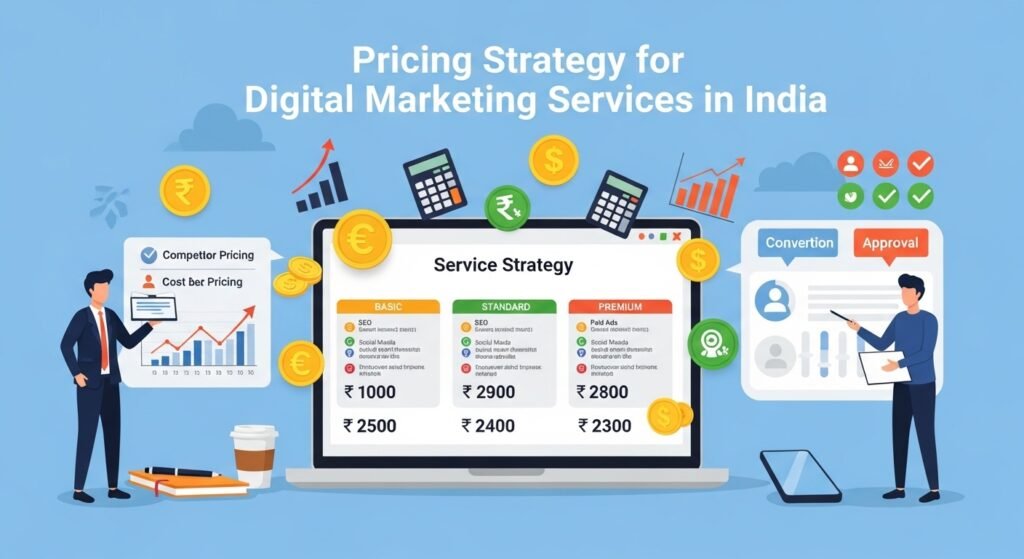
Introduction to Digital Marketing Services in India
The digital marketing landscape in India has experienced tremendous growth over the past decade, with the country emerging as a significant player in the global digital economy. As a digital marketing strategist and SEO consultant with over 15 years of experience, I, Amit Tyagi, have witnessed the evolution of the industry firsthand. The increasing demand for digital marketing services in India can be attributed to the growing number of internet users, the rise of e-commerce, and the need for businesses to establish a strong online presence. In this section, we will delve into the world of digital marketing services in India, exploring the current state of the industry, the benefits of digital marketing, and the importance of developing a robust pricing strategy.
India’s digital marketing industry has been driven by the country’s large and growing population of internet users. With over 500 million internet users, India presents a vast and diverse market for businesses to tap into. The growth of e-commerce, social media, and online content has created new opportunities for businesses to reach and engage with their target audience. As a result, companies are increasingly turning to digital marketing services to enhance their online visibility, drive website traffic, and generate leads.
The benefits of digital marketing are numerous, and businesses in India are beginning to recognize the value of investing in digital marketing strategies. Some of the key benefits of digital marketing include increased brand awareness, improved website traffic, enhanced customer engagement, and higher conversion rates. Digital marketing also provides businesses with the ability to track and measure the effectiveness of their marketing campaigns, allowing them to make data-driven decisions and optimize their strategies for better results.
However, as the demand for digital marketing services in India continues to grow, the need for a well-structured pricing strategy becomes increasingly important. A pricing strategy that is tailored to the specific needs and goals of a business can help digital marketing agencies to differentiate themselves from competitors, demonstrate the value of their services, and attract high-quality clients. In the following sections, we will explore the key factors that influence pricing strategies for digital marketing services in India, and provide guidance on how to develop a pricing strategy that drives business growth and revenue.
One of the key challenges facing digital marketing agencies in India is the lack of standardization in pricing. Unlike other industries, where prices are often determined by fixed costs and margins, digital marketing pricing is often subjective and influenced by a range of factors, including the agency’s expertise, the scope of work, and the client’s budget. To develop an effective pricing strategy, digital marketing agencies must consider these factors and develop a deep understanding of the value that they bring to their clients.
For example, a digital marketing agency that specializes in search engine optimization (SEO) may charge higher prices for its services than an agency that offers more general digital marketing services. This is because SEO requires a high level of expertise and can have a significant impact on a business’s online visibility and revenue. On the other hand, an agency that offers social media management services may charge lower prices, as these services are often more straightforward and require less technical expertise.
Another important factor to consider when developing a pricing strategy is the level of competition in the market. India’s digital marketing industry is highly competitive, with many agencies vying for a limited number of clients. To stand out in this crowded market, digital marketing agencies must develop a unique value proposition and demonstrate the value that they bring to their clients. This can be achieved by offering specialized services, providing exceptional customer service, and delivering high-quality results.
In addition to these factors, digital marketing agencies must also consider the client’s budget and expectations when developing a pricing strategy. This involves understanding the client’s goals and objectives, as well as their willingness to invest in digital marketing services. By developing a deep understanding of the client’s needs and budget, digital marketing agencies can create customized pricing packages that meet the client’s requirements and provide a strong return on investment.
Some of the common pricing models used by digital marketing agencies in India include:
- Project-based pricing: This involves charging a fixed fee for a specific project or scope of work.
- Retainer-based pricing: This involves charging a recurring fee for ongoing services, such as social media management or SEO.
- Performance-based pricing: This involves charging a fee based on the performance of the digital marketing campaign, such as the number of leads generated or the increase in website traffic.
- Hourly-based pricing: This involves charging an hourly rate for the time spent on a project or scope of work.
Each of these pricing models has its advantages and disadvantages, and the choice of pricing model will depend on the specific needs and goals of the business. For example, project-based pricing may be suitable for businesses that require a one-time digital marketing campaign, while retainer-based pricing may be more suitable for businesses that require ongoing digital marketing services.
As a digital marketing strategist and SEO consultant, I have worked with numerous businesses in India to develop and implement effective digital marketing strategies. One of the key lessons that I have learned is the importance of developing a pricing strategy that is tailored to the specific needs and goals of the business. By understanding the value that digital marketing services bring to a business, and developing a pricing strategy that reflects this value, businesses can drive growth, revenue, and profitability in the competitive Indian market.
In conclusion, the digital marketing industry in India is growing rapidly, driven by the increasing demand for digital marketing services. To succeed in this competitive market, digital marketing agencies must develop a robust pricing strategy that reflects the value that they bring to their clients. By considering the key factors that influence pricing strategies, such as expertise, scope of work, and competition, and developing a deep understanding of the client’s needs and budget, digital marketing agencies can create customized pricing packages that drive business growth and revenue. In the next section, we will explore the key factors that influence pricing strategies for digital marketing services in India, and provide guidance on how to develop a pricing strategy that drives business success.
Understanding Pricing Models for Digital Marketing Services
As a digital marketing strategist and SEO consultant, I have worked with numerous businesses in India, helping them scale their online presence and drive revenue growth through effective digital marketing strategies. One of the most critical aspects of digital marketing is pricing, and it’s essential to understand the various pricing models that digital marketing agencies use to charge their clients. In this section, we will delve into the different pricing models for digital marketing services in India, exploring their pros and cons, and providing examples of when each model is most suitable.
In India, the digital marketing industry is highly competitive, with numerous agencies offering a range of services, from search engine optimization (SEO) and pay-per-click (PPC) advertising to social media marketing and content creation. With so many options available, businesses often struggle to determine the best pricing model for their digital marketing needs. To make an informed decision, it’s crucial to understand the different pricing models and how they can impact your business’s bottom line.
There are several pricing models that digital marketing agencies use, including project-based pricing, retainer-based pricing, hourly pricing, and performance-based pricing. Each model has its advantages and disadvantages, and the right model for your business will depend on your specific needs and goals. For example, if you’re looking for a one-time website redesign, a project-based pricing model may be the most suitable. On the other hand, if you require ongoing SEO services, a retainer-based pricing model may be more effective.
Let’s take a closer look at each of these pricing models, exploring their pros and cons, and providing examples of when each model is most suitable. Project-based pricing involves charging a fixed fee for a specific project, such as a website redesign or a social media campaign. This model is ideal for businesses that have a clear idea of what they want to achieve and are looking for a one-time solution. The pros of project-based pricing include predictable costs, a clear scope of work, and a defined timeline. However, the cons include the potential for scope creep, where the project’s requirements change during the execution phase, and the risk of overpaying for services that may not deliver the desired results.
Another pricing model is retainer-based pricing, which involves paying a recurring fee for ongoing services, such as monthly SEO or social media management. This model is suitable for businesses that require continuous digital marketing support and are looking for a long-term partnership with their agency. The pros of retainer-based pricing include ongoing support, flexibility, and scalability, as well as the ability to adjust the scope of work as needed. However, the cons include the risk of overpaying for services that may not deliver the desired results, and the potential for a lack of transparency in the agency’s work and pricing.
Hourly pricing involves charging clients an hourly rate for the time spent on their project. This model is ideal for businesses that require flexible, ad-hoc support, such as occasional SEO audits or content creation. The pros of hourly pricing include flexibility, scalability, and transparency, as clients can see exactly how much time is being spent on their project. However, the cons include the potential for unpredictable costs, as the total hours spent on the project may vary, and the risk of overpaying for services that may not deliver the desired results.
Finally, performance-based pricing involves charging clients based on the results achieved, such as the number of leads generated or the increase in website traffic. This model is suitable for businesses that are looking for a results-driven approach and are willing to pay for performance. The pros of performance-based pricing include alignment with business goals, transparency, and accountability, as the agency is incentivized to deliver results. However, the cons include the potential for a lack of control over the agency’s work and pricing, as well as the risk of overpaying for services that may not deliver the desired results.
To illustrate the different pricing models, let’s consider a few examples. Suppose a business in India wants to launch a new website and requires a one-time website redesign. In this case, a project-based pricing model may be the most suitable, with a fixed fee of ₹50,000 to ₹200,000, depending on the complexity of the project. On the other hand, if the business requires ongoing SEO services to improve its search engine rankings, a retainer-based pricing model may be more effective, with a monthly fee of ₹10,000 to ₹50,000, depending on the scope of work and the agency’s expertise.
In addition to understanding the different pricing models, it’s essential to consider the factors that influence pricing in the digital marketing industry. These factors include the agency’s expertise, the scope of work, the complexity of the project, and the level of competition in the market. For example, an agency with extensive experience in SEO and a strong track record of delivering results may charge higher rates than a newer agency with less experience. Similarly, a project that requires specialized skills, such as video production or mobile app development, may be more expensive than a project that requires standard digital marketing services.
When selecting a digital marketing agency in India, it’s crucial to consider the pricing model and the factors that influence pricing. By understanding the different pricing models and their pros and cons, businesses can make an informed decision and choose an agency that meets their needs and budget. Here are some tips to keep in mind:
- Clearly define your digital marketing goals and objectives to determine the most suitable pricing model for your business.
- Research the agency’s expertise and track record to ensure they have the necessary skills and experience to deliver results.
- Compare prices and services from different agencies to find the best value for your money.
- Negotiate the pricing model and scope of work to ensure they align with your business needs and budget.
- Monitor the agency’s performance and adjust the pricing model as needed to ensure you’re getting the desired results.
In conclusion, understanding the different pricing models for digital marketing services in India is essential for businesses that want to scale their online presence and drive revenue growth. By considering the pros and cons of each pricing model, as well as the factors that influence pricing, businesses can make an informed decision and choose an agency that meets their needs and budget. As a digital marketing strategist and SEO consultant, I have seen firsthand the impact that effective pricing can have on a business’s bottom line, and I recommend that businesses take the time to carefully evaluate their options and choose a pricing model that aligns with their goals and objectives.
Factors Influencing Pricing Strategy for Digital Marketing Services
As a digital marketing strategist and SEO consultant with over 15 years of experience, I have witnessed the evolution of the digital marketing landscape in India. With the increasing demand for digital marketing services, businesses are looking for effective pricing strategies to stay competitive. The pricing strategy for digital marketing services in India is influenced by a multitude of factors, which can be broadly categorized into internal, external, and customer-related factors.
Internal factors include the cost of operation, expertise, and resources required to deliver high-quality digital marketing services. For instance, the cost of hiring and training a team of skilled digital marketers, investing in the latest tools and technologies, and maintaining a robust infrastructure can significantly impact the pricing strategy. Additionally, the level of expertise and specialization of the digital marketing agency can also influence the pricing, as more experienced and specialized agencies can command higher prices for their services.
External factors, on the other hand, include the market conditions, competition, and economic trends. The digital marketing industry in India is highly competitive, with numerous agencies offering a range of services. This competition can drive prices down, making it essential for agencies to differentiate themselves through unique value propositions and high-quality services. Furthermore, economic trends, such as recession or boom, can also impact the pricing strategy, as businesses may be more or less willing to invest in digital marketing services during different economic conditions.
Customer-related factors, including the target audience, industry, and specific needs, also play a significant role in determining the pricing strategy. For example, a digital marketing agency catering to the e-commerce industry may charge higher prices due to the high demand for services such as search engine optimization (SEO), pay-per-click (PPC) advertising, and social media marketing. Similarly, agencies serving the healthcare or finance industries may require specialized expertise and compliance with specific regulations, which can increase the pricing.
Another critical factor influencing the pricing strategy is the scope of work and the specific services offered. Digital marketing agencies in India may offer a range of services, including SEO, PPC, social media marketing, content creation, and email marketing. The pricing for each service can vary depending on the complexity, time required, and resources needed. For instance, a comprehensive SEO audit and strategy development may require more time and expertise than a basic social media marketing campaign, and therefore, may be priced higher.
The pricing strategy for digital marketing services in India can also be influenced by the agency’s business model. Some agencies may operate on a project-based model, where the pricing is based on the specific requirements of the project. Others may offer retainer-based services, where the client pays a recurring fee for ongoing services. The pricing for each model can vary, and agencies must carefully consider their costs, expertise, and the value they provide to clients when determining their pricing strategy.
Some of the key factors that influence the pricing strategy for digital marketing services in India include:
- Cost of operation, including employee salaries, infrastructure, and technology
- Level of expertise and specialization of the digital marketing agency
- Market conditions, competition, and economic trends
- Target audience, industry, and specific needs of the client
- Scope of work and specific services offered
- Agency’s business model, including project-based or retainer-based services
- Value proposition and unique selling points of the agency
- Client’s budget and willingness to pay for digital marketing services
For example, a digital marketing agency specializing in SEO services for the e-commerce industry may charge higher prices due to the high demand for these services. The agency may offer a range of services, including keyword research, on-page optimization, link building, and content creation, and may charge a premium for its expertise and the value it provides to clients. On the other hand, a agency offering basic social media marketing services may charge lower prices due to the relatively low complexity and time required for these services.
In addition to these factors, the pricing strategy for digital marketing services in India can also be influenced by the use of technology and automation. With the increasing use of artificial intelligence (AI) and machine learning (ML) in digital marketing, agencies can automate many tasks, such as data analysis, keyword research, and content creation. This can help reduce costs and increase efficiency, allowing agencies to offer more competitive pricing to clients. However, the use of technology and automation can also increase the cost of operation, as agencies may need to invest in the latest tools and technologies to stay competitive.
Overall, the pricing strategy for digital marketing services in India is influenced by a complex array of factors, including internal, external, and customer-related factors. By carefully considering these factors and developing a unique value proposition, digital marketing agencies can create effective pricing strategies that meet the needs of their clients and drive business growth.
As a digital marketing strategist and SEO consultant, I have worked with numerous businesses in India to develop effective pricing strategies for their digital marketing services. By understanding the factors that influence pricing and developing a deep understanding of the client’s needs and budget, agencies can create pricing strategies that drive revenue growth and customer satisfaction. Whether you are a small business or a large enterprise, a well-planned pricing strategy can help you achieve your digital marketing goals and stay competitive in the Indian market.
Best Practices for Pricing Digital Marketing Services in India
As a digital marketing strategist and SEO consultant with over 15 years of experience, I have seen the Indian market evolve significantly. With the increasing demand for digital marketing services, it is essential to develop a pricing strategy that is both competitive and profitable. In this section, we will explore the best practices for pricing digital marketing services in India, and I will share my expertise on how to create a pricing strategy that works for your business.
The Indian digital marketing landscape is highly competitive, with numerous agencies and freelancers offering a wide range of services. To stand out in this crowded market, it is crucial to have a well-defined pricing strategy that reflects the value you bring to your clients. In this article, we will discuss the key factors to consider when pricing digital marketing services in India, including the type of service, target audience, competition, and cost structure.
One of the most critical aspects of pricing digital marketing services is to understand the type of service you are offering. Different services have different pricing models, and it is essential to choose the right model for your business. For example, SEO services are typically priced on a project basis, while social media management services are often priced on a monthly retainer basis. Understanding the pricing model for each service will help you to create a pricing strategy that is tailored to your business needs.
Another critical factor to consider when pricing digital marketing services is the target audience. Different industries and businesses have different budgets and pricing expectations. For instance, e-commerce businesses may be willing to pay more for digital marketing services than small businesses or startups. Understanding your target audience and their pricing expectations will help you to create a pricing strategy that is competitive and profitable.
The competition is another essential factor to consider when pricing digital marketing services. The Indian digital marketing market is highly competitive, and it is crucial to understand what your competitors are charging for similar services. This will help you to create a pricing strategy that is competitive and attractive to potential clients. For example, if you are offering SEO services, you may want to research what other SEO agencies in India are charging for similar services.
In addition to understanding the type of service, target audience, and competition, it is also essential to consider your cost structure when pricing digital marketing services. Your cost structure includes the costs of delivering the service, such as labor costs, software costs, and marketing costs. Understanding your cost structure will help you to create a pricing strategy that is profitable and sustainable.
Some of the best practices for pricing digital marketing services in India include:
- Value-based pricing: This involves pricing your services based on the value you bring to your clients. For example, if you are offering SEO services, you may charge a higher price for services that deliver high-value results, such as keyword research and on-page optimization.
- Package-based pricing: This involves offering pre-defined packages of services at a fixed price. For example, you may offer a social media management package that includes content creation, paid advertising, and monthly reporting.
- Retainer-based pricing: This involves charging a recurring fee for ongoing services. For example, you may charge a monthly retainer fee for SEO services or social media management services.
- Project-based pricing: This involves charging a one-time fee for a specific project. For example, you may charge a project-based fee for website design and development or content creation.
When creating a pricing strategy for digital marketing services in India, it is essential to consider the following factors:
- Industry benchmarks: Research what other digital marketing agencies in India are charging for similar services.
- Client budget: Understand the budget of your target audience and create a pricing strategy that is competitive and attractive.
- Service complexity: Consider the complexity of the service you are offering and charge accordingly. For example, SEO services may be more complex and time-consuming than social media management services.
- Deliverables: Consider the deliverables of the service you are offering and charge accordingly. For example, content creation services may include blog posts, social media posts, and email newsletters.
In conclusion, creating a pricing strategy for digital marketing services in India requires a deep understanding of the market, the type of service, target audience, competition, and cost structure. By following the best practices outlined in this article and considering the key factors, you can create a pricing strategy that is competitive, profitable, and attractive to potential clients. As a digital marketing strategist and SEO consultant, I have seen the importance of having a well-defined pricing strategy, and I hope this article has provided you with the insights and expertise you need to create a pricing strategy that works for your business.
Finally, it is essential to remember that pricing is not a one-time task, but an ongoing process that requires continuous monitoring and adjustment. As the Indian digital marketing market continues to evolve, it is crucial to stay up-to-date with the latest trends and best practices in pricing digital marketing services. By doing so, you can ensure that your pricing strategy remains competitive, profitable, and attractive to potential clients, and that your business continues to thrive in the Indian digital marketing landscape.
Implementing and Optimizing Pricing Strategies for Digital Marketing Services
As a digital marketing strategist and SEO consultant, I have worked with numerous businesses in India, helping them develop and implement effective pricing strategies for their digital marketing services. With over 15 years of experience in the industry, I have seen firsthand the importance of having a well-structured pricing strategy in place. In this section, we will delve into the world of pricing strategies for digital marketing services in India, exploring the various approaches, their advantages, and disadvantages, as well as providing examples and explanations to help businesses make informed decisions.
In today’s competitive digital landscape, pricing strategies play a crucial role in determining the success of a business. A well-crafted pricing strategy can help businesses differentiate themselves from their competitors, attract and retain customers, and ultimately drive revenue growth. However, with so many different pricing strategies to choose from, it can be challenging for businesses to determine which approach is best for their digital marketing services. In this section, we will examine the various pricing strategies that businesses in India can use to optimize their digital marketing services, including cost-plus pricing, competitive pricing, value-based pricing, and premium pricing.
One of the most common pricing strategies used by businesses in India is the cost-plus pricing approach. This approach involves calculating the total cost of providing a digital marketing service, including labor, materials, and overheads, and then adding a markup to determine the selling price. For example, if a business provides SEO services and the total cost of providing these services is ₹50,000, they may add a markup of 20% to determine the selling price, which would be ₹60,000. The advantage of this approach is that it is simple to calculate and ensures that the business covers its costs. However, the disadvantage is that it may not take into account the value that the service provides to the customer, which can result in the business leaving money on the table.
Another pricing strategy that businesses in India can use is competitive pricing. This approach involves researching the prices of similar digital marketing services offered by competitors and setting a price that is comparable or slightly lower. For example, if a business provides social media management services and their competitors are charging between ₹30,000 and ₹50,000 per month, they may set their price at ₹40,000 per month. The advantage of this approach is that it helps businesses to remain competitive and attract price-sensitive customers. However, the disadvantage is that it can lead to a price war, where businesses compete solely on price, which can result in reduced profit margins and a lack of differentiation.
A more effective pricing strategy that businesses in India can use is value-based pricing. This approach involves determining the value that a digital marketing service provides to the customer and setting a price that reflects that value. For example, if a business provides PPC services that result in a 20% increase in sales for the customer, they may set a price that is based on a percentage of the increased sales. The advantage of this approach is that it takes into account the value that the service provides to the customer, which can result in higher prices and increased revenue. However, the disadvantage is that it can be challenging to determine the value that the service provides, which can require significant research and analysis.
Finally, businesses in India can use premium pricing to differentiate their digital marketing services and attract high-end customers. This approach involves setting a high price for a service based on its unique features, quality, or brand reputation. For example, if a business provides high-end SEO services that are tailored to the specific needs of large enterprises, they may set a price that is significantly higher than their competitors. The advantage of this approach is that it can result in high profit margins and a strong brand reputation. However, the disadvantage is that it can be challenging to attract customers who are willing to pay a premium price, which can require significant marketing and sales efforts.
In addition to these pricing strategies, businesses in India can also use various pricing models to optimize their digital marketing services. Some common pricing models include:
- Project-based pricing: This model involves charging a fixed price for a specific project or service. For example, a business may charge ₹50,000 for a website design project.
- Retainer-based pricing: This model involves charging a recurring fee for ongoing services. For example, a business may charge ₹20,000 per month for ongoing SEO services.
- Performance-based pricing: This model involves charging a fee based on the performance of a service. For example, a business may charge a percentage of the increased sales generated by their PPC services.
- Package-based pricing: This model involves offering a bundle of services at a discounted price. For example, a business may offer a package of SEO, social media, and content marketing services for ₹50,000 per month.
When implementing and optimizing pricing strategies for digital marketing services, businesses in India should consider several factors, including their target audience, competition, costs, and revenue goals. They should also conduct market research to determine the prices that customers are willing to pay for their services and adjust their pricing strategy accordingly. Additionally, businesses should regularly review and adjust their pricing strategy to ensure that it remains competitive and aligned with their business goals.
In conclusion, implementing and optimizing pricing strategies for digital marketing services is crucial for businesses in India to remain competitive and drive revenue growth. By understanding the various pricing strategies and models available, businesses can develop a pricing strategy that reflects the value that their services provide to customers and helps them achieve their business goals. As a digital marketing strategist and SEO consultant, I have helped numerous businesses in India develop and implement effective pricing strategies, and I believe that with the right approach, businesses can unlock significant revenue potential and achieve long-term success.

Amit Tyagi is a seasoned Digital Marketing and SEO Consultant with extensive experience helping businesses improve online visibility through SEO, AI Search Optimization (AIO/GEO), content strategy, and performance marketing. He regularly shares practical insights, industry updates, and data-driven strategies, empowering brands and marketers to achieve sustainable digital growth in an evolving search landsca