
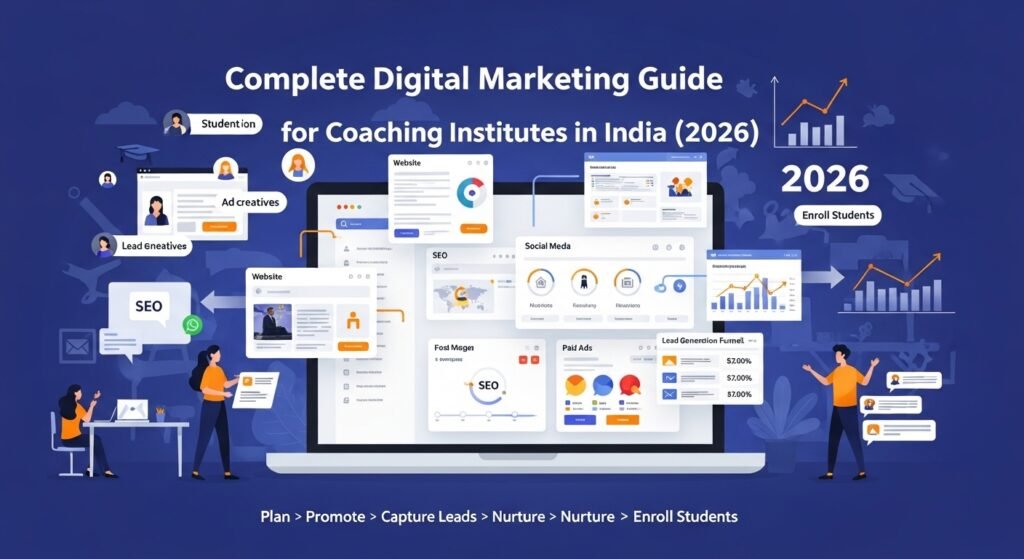
Introduction to Digital Marketing for Coaching Institutes in India
As a digital marketing strategist and SEO consultant, I, Amit Tyagi, have had the privilege of working with numerous coaching institutes in India, helping them establish a strong online presence and drive revenue growth through effective digital marketing strategies. In this comprehensive guide, we will delve into the world of digital marketing for coaching institutes in India, exploring the latest trends, best practices, and actionable tips to help these institutions thrive in the competitive online landscape of 2026.
In recent years, the Indian education sector has witnessed a significant shift towards digitalization, with coaching institutes being no exception. With the rise of online learning platforms, social media, and search engines, coaching institutes can now reach a wider audience, increase brand awareness, and attract potential students more efficiently than ever before. However, with this increased competition, it’s essential for coaching institutes to adopt a well-planned digital marketing strategy to stand out from the crowd and achieve their business goals.
At its core, digital marketing for coaching institutes in India involves creating and promoting content, products, or services through digital channels such as search engines, social media platforms, email, and websites. The primary objective is to build brand awareness, generate leads, and drive conversions, ultimately resulting in increased enrollments and revenue growth. To achieve this, coaching institutes must develop a deep understanding of their target audience, including their needs, preferences, and behaviors, and tailor their digital marketing strategies accordingly.
For instance, a coaching institute specializing in IIT-JEE preparation can create a website with relevant and informative content, such as blog posts, videos, and practice tests, to attract potential students searching for similar topics online. By optimizing their website for search engines, utilizing social media platforms to engage with their target audience, and running targeted online advertising campaigns, the coaching institute can increase its online visibility, drive more traffic to its website, and ultimately, boost enrollments.
Throughout this guide, we will explore the various aspects of digital marketing for coaching institutes in India, including search engine optimization (SEO), pay-per-click (PPC) advertising, social media marketing, content marketing, email marketing, and more. We will also discuss the latest trends and best practices in digital marketing, such as the use of artificial intelligence (AI), machine learning (ML), and data analytics to optimize marketing campaigns and improve overall performance.
To get started, let’s take a look at some of the key benefits of digital marketing for coaching institutes in India:
- Increased online visibility: By optimizing their website and online presence for search engines, coaching institutes can increase their visibility in search engine results pages (SERPs), driving more traffic to their website and attracting potential students.
- Targeted advertising: Digital marketing allows coaching institutes to target specific audiences based on demographics, interests, and behaviors, ensuring that their marketing efforts are focused on the most relevant and potential students.
- Cost-effective: Compared to traditional marketing methods, digital marketing is often more cost-effective, allowing coaching institutes to reach a wider audience at a lower cost per acquisition.
- Measurable results: With digital marketing, coaching institutes can track the performance of their marketing campaigns in real-time, using metrics such as website traffic, engagement rates, and conversion rates to measure success and make data-driven decisions.
- Improved brand awareness: By creating and promoting high-quality, relevant, and informative content, coaching institutes can establish themselves as thought leaders in their industry, increasing brand awareness and reputation among their target audience.
In the following sections, we will dive deeper into the world of digital marketing for coaching institutes in India, exploring the various strategies, tactics, and best practices that can help these institutions achieve their business goals and thrive in the competitive online landscape of 2026. Whether you’re a coaching institute looking to establish a strong online presence or a digital marketing professional seeking to help these institutions succeed, this guide is designed to provide you with the knowledge, insights, and expertise needed to drive success in the digital age.
Understanding the Target Audience and Creating a Digital Marketing Strategy
As a coaching institute in India, understanding your target audience is crucial for creating an effective digital marketing strategy. With the rise of digital platforms, the way students and parents search for coaching institutes has changed dramatically. According to a recent study, over 80% of students use the internet to research and find coaching institutes, making it essential for institutes to have a strong online presence. In this section, we will delve into the importance of understanding your target audience and creating a tailored digital marketing strategy to reach and engage with them.
As a digital marketing strategist, I have worked with numerous coaching institutes in India, and I can attest that understanding the target audience is the foundation of a successful digital marketing strategy. The target audience for coaching institutes typically includes students, parents, and educators who are looking for coaching services to prepare for competitive exams, such as IIT JEE, NEET, and CAT. To effectively target this audience, it is essential to understand their needs, preferences, and pain points.
For instance, a coaching institute specializing in IIT JEE preparation may have a target audience that is primarily comprised of students who have completed their 12th standard and are looking to crack the IIT JEE exam. This audience is likely to be highly motivated and focused on achieving their goals, but may also be facing challenges such as limited resources, lack of guidance, and high competition. By understanding these challenges and needs, the coaching institute can create a digital marketing strategy that resonates with this audience and provides them with valuable solutions and support.
To create an effective digital marketing strategy, coaching institutes need to conduct thorough market research and analyze their target audience’s behavior, preferences, and expectations. This can be done through various methods, including online surveys, focus groups, and social media listening. By gathering insights into their target audience’s needs and preferences, coaching institutes can develop a tailored digital marketing strategy that addresses their pain points and provides them with relevant and valuable content.
Some key factors to consider when creating a digital marketing strategy for coaching institutes include:
- Identifying the target audience’s preferred communication channels, such as social media, email, or online forums
- Developing a content strategy that resonates with the target audience and provides them with valuable information and insights
- Creating a website that is user-friendly, responsive, and provides a seamless user experience
- Utilizing search engine optimization (SEO) techniques to improve the website’s visibility and ranking on search engines
- Leveraging social media platforms to engage with the target audience, build brand awareness, and drive website traffic
- Measuring and analyzing the performance of the digital marketing strategy using key performance indicators (KPIs) such as website traffic, engagement rates, and conversion rates
For example, a coaching institute specializing in CAT preparation may create a digital marketing strategy that includes creating a website with a user-friendly interface, developing a content strategy that provides valuable tips and insights on CAT preparation, and leveraging social media platforms to engage with the target audience and drive website traffic. The institute may also utilize SEO techniques to improve the website’s visibility and ranking on search engines, and measure the performance of the digital marketing strategy using KPIs such as website traffic and engagement rates.
In addition to understanding the target audience, coaching institutes also need to stay up-to-date with the latest digital marketing trends and best practices. This includes staying informed about the latest algorithm updates, social media platform changes, and emerging technologies such as artificial intelligence (AI) and machine learning (ML). By staying ahead of the curve, coaching institutes can stay competitive and adapt their digital marketing strategy to changing market conditions.
As a digital marketing strategist, I always emphasize the importance of creating a tailored digital marketing strategy that resonates with the target audience and provides them with valuable solutions and support. By understanding the target audience, creating a tailored digital marketing strategy, and staying up-to-date with the latest digital marketing trends and best practices, coaching institutes in India can effectively reach and engage with their target audience, drive website traffic, and ultimately achieve their business goals.
Furthermore, coaching institutes can also utilize influencer marketing to reach and engage with their target audience. Influencer marketing involves partnering with influencers who have a large following on social media platforms and are relevant to the coaching institute’s niche. For instance, a coaching institute specializing in IIT JEE preparation may partner with an influencer who has a large following on Instagram and is known for providing valuable tips and insights on IIT JEE preparation. By partnering with influencers, coaching institutes can increase their brand awareness, drive website traffic, and ultimately achieve their business goals.
In conclusion, understanding the target audience and creating a digital marketing strategy is crucial for coaching institutes in India. By conducting thorough market research, analyzing the target audience’s behavior and preferences, and creating a tailored digital marketing strategy, coaching institutes can effectively reach and engage with their target audience, drive website traffic, and ultimately achieve their business goals. As a digital marketing strategist, I recommend that coaching institutes stay up-to-date with the latest digital marketing trends and best practices, and continuously measure and analyze the performance of their digital marketing strategy to ensure optimal results.
SEO and Content Marketing for Coaching Institutes
As a digital marketing strategist and SEO consultant, I have worked with numerous coaching institutes in India, helping them improve their online presence and attract more students through effective SEO and content marketing strategies. In this section, we will delve into the world of SEO and content marketing, exploring how coaching institutes can leverage these techniques to enhance their online visibility, build their brand, and drive more conversions.
Search Engine Optimization (SEO) is a crucial aspect of digital marketing that involves optimizing a website to rank higher in search engine results pages (SERPs) for specific keywords and phrases. For coaching institutes, SEO is essential to increase their online visibility, drive more traffic to their website, and attract potential students. By optimizing their website and content for relevant keywords, coaching institutes can improve their chances of ranking higher in search engine results, thereby increasing their online presence and credibility.
For instance, let’s consider a coaching institute that offers IIT JEE coaching in Delhi. To optimize their website for SEO, they can use relevant keywords such as “IIT JEE coaching in Delhi,” “best IIT JEE coaching institute in Delhi,” or “IIT JEE preparation in Delhi.” By incorporating these keywords into their website’s content, meta tags, and titles, the coaching institute can improve its chances of ranking higher in search engine results for these keywords.
Content marketing is another vital aspect of digital marketing that involves creating and distributing valuable, relevant, and consistent content to attract and retain a clearly defined audience. For coaching institutes, content marketing can be an effective way to build their brand, establish thought leadership, and attract potential students. By creating high-quality, informative, and engaging content, coaching institutes can demonstrate their expertise and showcase their unique selling proposition (USP), thereby differentiating themselves from their competitors.
Some examples of content marketing strategies that coaching institutes can use include:
- Blog posts: Coaching institutes can create informative blog posts on topics related to their courses, such as exam preparation tips, subject-specific tutorials, or industry trends.
- Video content: Coaching institutes can create video lectures, tutorials, or explainer videos to provide valuable information to their audience and showcase their expertise.
- Infographics: Coaching institutes can create visually appealing infographics to present complex information in a simple and easy-to-understand format.
- Podcasts: Coaching institutes can create podcasts to discuss topics related to their courses, interview industry experts, or provide tips and advice to their audience.
- Whitepapers: Coaching institutes can create in-depth whitepapers to provide detailed information on specific topics, such as exam preparation strategies or industry trends.
By using these content marketing strategies, coaching institutes can attract and engage their target audience, build their brand, and establish themselves as thought leaders in their industry. For example, a coaching institute that offers CAT coaching can create a blog post on “How to Prepare for CAT in 6 Months” or a video on “CAT Exam Preparation Tips.” By providing valuable and relevant content, the coaching institute can attract potential students who are searching for information on CAT preparation, thereby increasing their chances of converting them into leads.
In addition to SEO and content marketing, coaching institutes can also use other digital marketing strategies to enhance their online presence and attract more students. Some of these strategies include:
- Social media marketing: Coaching institutes can use social media platforms to engage with their audience, share their content, and build their brand.
- Email marketing: Coaching institutes can use email marketing to nurture their leads, provide them with valuable information, and encourage them to enroll in their courses.
- Pay-per-click (PPC) advertising: Coaching institutes can use PPC advertising to drive more traffic to their website, increase their conversions, and attract more students.
- Influencer marketing: Coaching institutes can partner with influencers in their industry to promote their brand, build their credibility, and attract more students.
By using these digital marketing strategies, coaching institutes can improve their online visibility, build their brand, and attract more students. However, it’s essential to note that digital marketing is a constantly evolving field, and coaching institutes need to stay up-to-date with the latest trends and best practices to remain competitive.
As a digital marketing strategist and SEO consultant, I have helped numerous coaching institutes in India improve their online presence and attract more students through effective SEO and content marketing strategies. If you’re a coaching institute looking to enhance your online presence and attract more students, I can help you develop a customized digital marketing strategy that meets your unique needs and goals. With my expertise and experience in AI-driven search visibility, authority building, and revenue-focused organic growth, I can help you scale your coaching institute globally and achieve your desired results.
In conclusion, SEO and content marketing are essential components of digital marketing that can help coaching institutes in India improve their online presence, build their brand, and attract more students. By optimizing their website and content for relevant keywords, creating high-quality and informative content, and using other digital marketing strategies, coaching institutes can establish themselves as thought leaders in their industry and drive more conversions. As a digital marketing strategist and SEO consultant, I can help coaching institutes develop a customized digital marketing strategy that meets their unique needs and goals, and helps them achieve their desired results.
To get started with SEO and content marketing, coaching institutes can begin by conducting keyword research to identify relevant keywords and phrases that their target audience is searching for. They can then use these keywords to optimize their website’s content, meta tags, and titles, and create high-quality and informative content that provides value to their audience. Additionally, coaching institutes can use other digital marketing strategies such as social media marketing, email marketing, and PPC advertising to enhance their online presence and attract more students.
By following these steps and using the right digital marketing strategies, coaching institutes can improve their online visibility, build their brand, and attract more students. As a digital marketing strategist and SEO consultant, I can provide coaching institutes with the expertise and guidance they need to develop a customized digital marketing strategy that meets their unique needs and goals, and helps them achieve their desired results. With the right digital marketing strategy, coaching institutes can establish themselves as thought leaders in their industry, drive more conversions, and achieve long-term success.
Social Media and Paid Advertising for Coaching Institutes
As a digital marketing strategist, I have worked with numerous coaching institutes in India, and I can attest that social media and paid advertising are crucial components of a comprehensive digital marketing strategy. In this section, we will delve into the world of social media and paid advertising, exploring how coaching institutes can leverage these platforms to reach their target audience, build their brand, and drive conversions.
Social media has become an indispensable part of our daily lives, with billions of people around the world using platforms like Facebook, Instagram, Twitter, and LinkedIn to connect with others, share their experiences, and stay informed about the latest news and trends. For coaching institutes, social media offers a unique opportunity to connect with potential students, build their brand, and promote their services. By creating engaging content, responding to comments and messages, and using social media advertising, coaching institutes can increase their visibility, drive website traffic, and generate leads.
One of the most effective ways to leverage social media for coaching institutes is to create engaging content that resonates with their target audience. This can include informative blog posts, videos, infographics, and social media posts that provide valuable insights and tips on topics related to the coaching institute’s area of expertise. For example, a coaching institute that specializes in preparing students for the IIT JEE exam can create content that provides tips and strategies for cracking the exam, such as how to manage time effectively, how to stay motivated, and how to overcome common obstacles. By creating content that is informative, engaging, and relevant to their target audience, coaching institutes can establish themselves as thought leaders in their industry and build trust with potential students.
In addition to creating engaging content, coaching institutes can also use social media advertising to reach their target audience and drive conversions. Social media platforms like Facebook and Instagram offer a range of advertising options, including targeted ads, lookalike ads, and retargeting ads, that allow coaching institutes to reach their target audience with precision and accuracy. For example, a coaching institute can use Facebook’s targeted ads to reach students who have shown an interest in the IIT JEE exam, or who have visited the coaching institute’s website in the past. By using social media advertising, coaching institutes can increase their visibility, drive website traffic, and generate leads.
Paid advertising is another crucial component of a comprehensive digital marketing strategy for coaching institutes. Paid advertising allows coaching institutes to reach their target audience with precision and accuracy, and can be used to drive website traffic, generate leads, and increase conversions. There are several types of paid advertising that coaching institutes can use, including Google Ads, Facebook Ads, and LinkedIn Ads. Each of these platforms offers a range of advertising options, including search ads, display ads, and video ads, that allow coaching institutes to reach their target audience in different ways.
For example, a coaching institute can use Google Ads to reach students who are searching for keywords related to the IIT JEE exam, such as “IIT JEE coaching” or “IIT JEE preparation”. By using Google Ads, the coaching institute can increase its visibility, drive website traffic, and generate leads. Similarly, a coaching institute can use Facebook Ads to reach students who have shown an interest in the IIT JEE exam, or who have visited the coaching institute’s website in the past. By using Facebook Ads, the coaching institute can increase its visibility, drive website traffic, and generate leads.
In order to get the most out of social media and paid advertising, coaching institutes need to have a clear understanding of their target audience and what drives them. This includes understanding their demographics, interests, and behavior, as well as what motivates them and what obstacles they face. By understanding their target audience, coaching institutes can create content and advertising campaigns that resonate with them, and that drive conversions.
Here are some tips for coaching institutes that want to leverage social media and paid advertising to reach their target audience and drive conversions:
- Define your target audience: Understand who your target audience is, what drives them, and what obstacles they face. This will help you create content and advertising campaigns that resonate with them.
- Create engaging content: Create content that is informative, engaging, and relevant to your target audience. This can include blog posts, videos, infographics, and social media posts.
- Use social media advertising: Use social media advertising to reach your target audience and drive conversions. This can include targeted ads, lookalike ads, and retargeting ads.
- Use paid advertising: Use paid advertising to reach your target audience and drive conversions. This can include Google Ads, Facebook Ads, and LinkedIn Ads.
- Track and measure your results: Track and measure your results to see what’s working and what’s not. This will help you refine your content and advertising campaigns and improve your ROI.
By following these tips and leveraging social media and paid advertising, coaching institutes can increase their visibility, drive website traffic, and generate leads. Remember, social media and paid advertising are crucial components of a comprehensive digital marketing strategy, and can help coaching institutes reach their target audience and achieve their goals.
In conclusion, social media and paid advertising are powerful tools that coaching institutes can use to reach their target audience and drive conversions. By creating engaging content, using social media advertising, and leveraging paid advertising, coaching institutes can increase their visibility, drive website traffic, and generate leads. As a digital marketing strategist, I have seen firsthand the impact that social media and paid advertising can have on a coaching institute’s bottom line, and I highly recommend that coaching institutes include these strategies in their digital marketing plan.
Measuring and Optimizing Digital Marketing Performance for Coaching Institutes
As a digital marketing strategist and SEO consultant, I have worked with numerous coaching institutes in India to help them scale their online presence and drive revenue growth. Measuring and optimizing digital marketing performance is a critical aspect of any successful online marketing strategy. In this section, we will delve into the importance of measuring digital marketing performance, key performance indicators (KPIs) to track, and strategies to optimize performance for coaching institutes in India.
Measuring digital marketing performance is essential to understand the effectiveness of your online marketing efforts and make data-driven decisions to improve your strategy. Without proper measurement and analysis, you may be wasting resources on ineffective marketing channels or tactics. By tracking key metrics and KPIs, coaching institutes can gain valuable insights into their online performance, identify areas for improvement, and optimize their marketing strategies to achieve better results.
So, what are the key performance indicators (KPIs) that coaching institutes in India should track to measure their digital marketing performance? Some of the most important KPIs include:
- Website traffic: The number of visitors to your website is a critical metric to track. It indicates the effectiveness of your online marketing efforts in driving traffic to your site.
- Conversion rates: Conversion rates measure the percentage of website visitors who take a desired action, such as filling out a form, making a phone call, or submitting an inquiry.
- Social media engagement: Social media engagement metrics, such as likes, shares, and comments, indicate the level of interaction between your brand and your target audience.
- Email open and click-through rates: Email marketing is a powerful tool for coaching institutes. Tracking email open and click-through rates helps you understand the effectiveness of your email campaigns.
- Return on investment (ROI): ROI is a critical metric that measures the revenue generated by your digital marketing efforts compared to the cost of those efforts.
Once you have identified the KPIs to track, it’s essential to set up a system to measure and analyze your digital marketing performance. This can be done using various tools, such as Google Analytics, Google Tag Manager, and social media insights. These tools provide valuable data and insights into your online performance, helping you understand what’s working and what’s not.
Now, let’s talk about strategies to optimize digital marketing performance for coaching institutes in India. One of the most effective ways to optimize performance is to conduct regular audits of your website and online marketing campaigns. This involves reviewing your website’s technical performance, content quality, and user experience, as well as analyzing your social media and email marketing campaigns to identify areas for improvement.
Another strategy to optimize performance is to use data-driven decision making. By analyzing your KPIs and metrics, you can make informed decisions about your marketing strategy, such as which channels to focus on, which tactics to adjust, and how to allocate your budget. For example, if your data shows that your website is driving a high volume of traffic from organic search, you may want to invest more in search engine optimization (SEO) to further improve your rankings and drive more traffic.
In addition to conducting audits and using data-driven decision making, coaching institutes can also optimize their content marketing strategy to improve performance. This involves creating high-quality, relevant, and engaging content that resonates with your target audience. By using content marketing, coaching institutes can establish themselves as thought leaders in their industry, build trust with their audience, and drive more conversions.
For instance, a coaching institute in India can create a blog series on tips and strategies for students preparing for competitive exams. By providing valuable and informative content, the institute can attract potential students, build trust, and establish itself as a thought leader in the industry. The institute can also use search engine optimization (SEO) techniques to optimize the blog posts for relevant keywords, driving more organic traffic to the website.
Furthermore, coaching institutes can also leverage social media platforms to optimize their digital marketing performance. Social media platforms, such as Facebook, Instagram, and LinkedIn, provide a powerful way to reach and engage with your target audience. By creating engaging content, running targeted ads, and participating in online conversations, coaching institutes can build their brand, drive website traffic, and generate leads.
For example, a coaching institute can create a Facebook page and post regular updates about their courses, faculty, and student achievements. The institute can also use Facebook ads to target specific demographics, interests, and behaviors, driving more traffic to their website and generating leads. By tracking the performance of their social media campaigns, the institute can optimize their strategy, improving their return on investment (ROI) and driving more conversions.
In conclusion, measuring and optimizing digital marketing performance is crucial for coaching institutes in India to achieve their online marketing goals. By tracking key performance indicators (KPIs), conducting regular audits, using data-driven decision making, optimizing content marketing strategies, and leveraging social media platforms, coaching institutes can improve their online performance, drive more conversions, and achieve revenue growth. As a digital marketing strategist and SEO consultant, I recommend that coaching institutes prioritize measurement and optimization to get the most out of their digital marketing efforts and stay ahead of the competition in the Indian market.

Amit Tyagi is a seasoned Digital Marketing and SEO Consultant with extensive experience helping businesses improve online visibility through SEO, AI Search Optimization (AIO/GEO), content strategy, and performance marketing. He regularly shares practical insights, industry updates, and data-driven strategies, empowering brands and marketers to achieve sustainable digital growth in an evolving search landsca