
Introduction to Retargeting Ads for Coaching Institutes
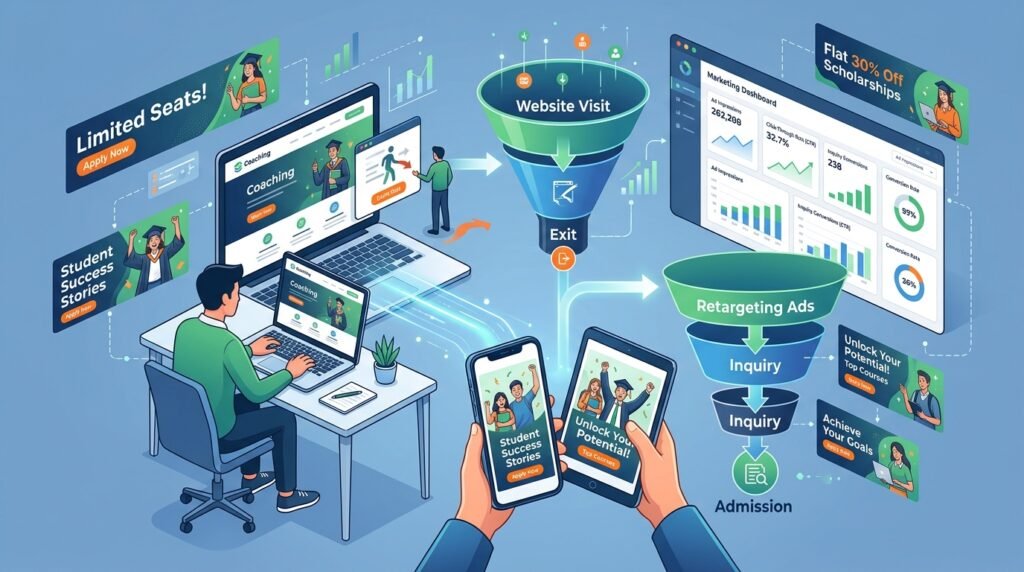
As a digital marketing strategist and SEO consultant, I have worked with numerous coaching institutes to help them scale their online presence and attract more students. One of the most effective strategies I have found is retargeting ads. In this section, we will delve into the world of retargeting ads and explore how they can be a game-changer for coaching institutes. Retargeting ads are a form of online advertising that targets users who have previously interacted with a website or brand, but have not yet converted into customers. This type of advertising is particularly useful for coaching institutes, as it allows them to reconnect with potential students who have shown interest in their services but have not yet enrolled.
For instance, let’s say a student visits a coaching institute’s website to learn more about their courses, but does not fill out the enrollment form. With retargeting ads, the coaching institute can serve targeted ads to this student on other websites they visit, reminding them about the institute’s services and encouraging them to take the next step. This approach can be highly effective, as it allows coaching institutes to stay top of mind with potential students and build trust and credibility over time.
According to recent studies, retargeting ads can increase conversion rates by up to 50%, making them a valuable addition to any coaching institute’s marketing strategy. Moreover, retargeting ads can be highly targeted, allowing coaching institutes to focus on specific demographics, interests, and behaviors. This ensures that their ads are seen by the most relevant audience, increasing the likelihood of conversion and reducing waste.
To illustrate the power of retargeting ads, let’s consider an example. Suppose a coaching institute offers courses in digital marketing, and a potential student visits their website to learn more about the program. However, the student does not enroll, and instead visits other websites to research similar courses. With retargeting ads, the coaching institute can serve targeted ads to this student on these other websites, highlighting the unique benefits of their program and encouraging the student to enroll. This approach can be particularly effective, as it allows the coaching institute to stay in front of the student and build a relationship with them over time.
In addition to their targeting capabilities, retargeting ads also offer a range of benefits for coaching institutes. For one, they can help to increase brand awareness and establish the institute as a thought leader in their industry. By serving targeted ads to potential students, coaching institutes can build trust and credibility, and establish themselves as a go-to resource for students looking for high-quality educational programs.
Furthermore, retargeting ads can be highly cost-effective, as they allow coaching institutes to focus their marketing efforts on the most relevant audience. By targeting users who have already shown interest in their services, coaching institutes can reduce waste and ensure that their marketing budget is being used effectively. This can be particularly important for coaching institutes with limited marketing budgets, as it allows them to make the most of their resources and achieve a strong return on investment.
Some of the key benefits of retargeting ads for coaching institutes include:
- Increased conversion rates: By targeting users who have already shown interest in their services, coaching institutes can increase the likelihood of conversion and drive more enrollments.
- Improved brand awareness: Retargeting ads can help coaching institutes build trust and credibility with potential students, establishing themselves as a thought leader in their industry.
- Cost-effectiveness: By focusing their marketing efforts on the most relevant audience, coaching institutes can reduce waste and ensure that their marketing budget is being used effectively.
- Enhanced targeting capabilities: Retargeting ads allow coaching institutes to target specific demographics, interests, and behaviors, ensuring that their ads are seen by the most relevant audience.
- Increased ROI: By targeting users who have already shown interest in their services, coaching institutes can achieve a strong return on investment and drive more revenue.
In conclusion, retargeting ads offer a powerful way for coaching institutes to reconnect with potential students and drive more enrollments. By serving targeted ads to users who have previously interacted with their website or brand, coaching institutes can build trust and credibility, increase brand awareness, and achieve a strong return on investment. As a digital marketing strategist and SEO consultant, I have seen firsthand the impact that retargeting ads can have on a coaching institute’s marketing efforts, and I highly recommend exploring this strategy as part of a comprehensive marketing plan.
By understanding the benefits and best practices of retargeting ads, coaching institutes can unlock the full potential of this powerful marketing strategy and drive more success in the competitive educational landscape. Whether you are looking to increase brand awareness, drive more enrollments, or simply stay top of mind with potential students, retargeting ads offer a valuable tool for achieving your marketing goals. As we will explore in the following sections, retargeting ads can be a key component of a comprehensive marketing strategy, and can help coaching institutes to achieve long-term success and growth.
As Amit Tyagi, a digital marketing strategist and SEO consultant with over 15 years of experience, I have worked with numerous coaching institutes to help them scale their online presence and attract more students. My expertise in AI-driven search visibility, authority building, and revenue-focused organic growth has allowed me to develop effective marketing strategies that drive real results. In the following sections, I will share my insights and expertise on retargeting ads, and provide coaching institutes with the knowledge and tools they need to succeed in the competitive educational landscape.
Understanding the Target Audience for Coaching Institutes
As a digital marketing strategist, I have worked with numerous coaching institutes to help them achieve their online marketing goals. One crucial aspect of a successful marketing strategy is understanding the target audience. Coaching institutes cater to a diverse range of students, from school-going children to working professionals, and each group has its unique needs and preferences. In this section, we will delve into the world of coaching institutes and explore the importance of identifying and understanding the target audience for effective retargeting ads.
Coaching institutes offer a wide range of courses, including test preparation, language classes, professional certifications, and skill development programs. Each course is designed to cater to a specific audience, and understanding the demographics, interests, and behaviors of this audience is vital for creating targeted marketing campaigns. For instance, a coaching institute offering test preparation courses for competitive exams like the GRE or GMAT will have a target audience that is primarily composed of students in their early twenties, who are likely to be active on social media platforms like Facebook, Instagram, and LinkedIn.
On the other hand, a coaching institute offering professional certification courses in areas like digital marketing or data science will have a target audience that is more mature, with a higher disposable income and a stronger professional presence online. This audience is likely to be active on platforms like LinkedIn and Twitter, and may be more receptive to targeted ads that highlight the benefits of upskilling or reskilling in their chosen profession. By understanding the target audience, coaching institutes can create targeted marketing campaigns that speak directly to their needs and interests, increasing the chances of conversion and enrollment.
To illustrate this point, let’s consider an example. Suppose a coaching institute offers a course in digital marketing, and their target audience is marketing professionals aged 25-40, who are looking to upskill and enhance their career prospects. The coaching institute can use retargeting ads to target this audience on platforms like LinkedIn and Facebook, using ads that highlight the benefits of the course, such as improved job prospects, increased earning potential, and enhanced professional networking opportunities. By targeting the right audience with the right message, the coaching institute can increase the chances of conversion and enrollment, while also building a strong brand reputation and establishing themselves as a thought leader in the industry.
So, how can coaching institutes identify and understand their target audience? Here are some key steps to follow:
- Conduct market research: Coaching institutes should conduct market research to identify their target audience, including demographics, interests, behaviors, and preferences. This can involve surveys, focus groups, and online analytics tools.
- Analyze online behavior: Coaching institutes should analyze the online behavior of their target audience, including social media platforms, search engines, and websites. This can help identify patterns and trends that can inform targeted marketing campaigns.
- Create buyer personas: Coaching institutes should create buyer personas that represent their ideal customer, including demographics, interests, behaviors, and preferences. This can help guide targeted marketing campaigns and ensure that the right message is being communicated to the right audience.
- Monitor and adjust: Coaching institutes should continuously monitor and adjust their targeted marketing campaigns, based on the feedback and response of their target audience. This can involve A/B testing, analytics tools, and social media listening.
By following these steps, coaching institutes can gain a deeper understanding of their target audience and create targeted marketing campaigns that speak directly to their needs and interests. This can help increase conversion and enrollment rates, while also building a strong brand reputation and establishing the coaching institute as a thought leader in the industry. In the next section, we will explore the importance of retargeting ads for coaching institutes, and how they can be used to reach and engage with the target audience.
In conclusion, understanding the target audience is a critical component of a successful marketing strategy for coaching institutes. By identifying and understanding the demographics, interests, and behaviors of the target audience, coaching institutes can create targeted marketing campaigns that speak directly to their needs and interests. This can help increase conversion and enrollment rates, while also building a strong brand reputation and establishing the coaching institute as a thought leader in the industry. As a digital marketing strategist, I have seen firsthand the impact that targeted marketing campaigns can have on the success of coaching institutes, and I strongly recommend that institutes prioritize understanding their target audience as a key component of their marketing strategy.
Setting Up Retargeting Ads for Coaching Institutes
As a digital marketing strategist, I have worked with numerous coaching institutes to help them scale their online presence and attract more students. One of the most effective strategies that I have found to be particularly useful for coaching institutes is retargeting ads. In this section, we will delve into the world of retargeting ads and explore how coaching institutes can set them up to maximize their online marketing efforts.
Retargeting ads are a type of online advertising that allows coaching institutes to target users who have previously interacted with their website or social media pages. This type of advertising is particularly useful for coaching institutes because it enables them to reconnect with potential students who may have shown interest in their services but have not yet converted into leads. By targeting these users with personalized ads, coaching institutes can increase their chances of converting them into paying customers.
The process of setting up retargeting ads for coaching institutes involves several steps. First, coaching institutes need to install a tracking pixel on their website. This pixel is a small piece of code that tracks the behavior of users on the website and collects data on their interactions, such as the pages they visit, the amount of time they spend on the website, and the actions they take. This data is then used to create targeted ads that are tailored to the specific needs and interests of each user.
Once the tracking pixel is installed, coaching institutes can start creating their retargeting ads. This involves selecting the target audience, choosing the ad format, and setting the budget for the ad campaign. Coaching institutes can target users based on a variety of criteria, such as their location, demographics, interests, and behaviors. For example, a coaching institute that offers test preparation services for students may target users who have visited their website and have shown interest in test preparation resources.
The ad format for retargeting ads can vary depending on the platform being used. For example, coaching institutes can use Google Ads to create text-based ads that appear on Google search results pages, or they can use social media platforms like Facebook and Instagram to create image-based ads that appear in users’ news feeds. The budget for the ad campaign will depend on the coaching institute’s marketing goals and the size of their target audience.
To illustrate the effectiveness of retargeting ads for coaching institutes, let’s consider an example. Suppose a coaching institute offers online courses in digital marketing and wants to target users who have visited their website but have not yet enrolled in a course. The coaching institute can create a retargeting ad campaign that targets users who have visited their website in the past 30 days and have shown interest in digital marketing resources. The ad campaign can include image-based ads that appear on Facebook and Instagram, with a budget of $500 per month.
The ads can be designed to appeal to the target audience, with headlines such as “Take Your Digital Marketing Skills to the Next Level” and “Get Started with Our Online Courses Today.” The ads can also include calls-to-action, such as “Enroll Now” or “Learn More,” to encourage users to visit the coaching institute’s website and sign up for a course. By targeting users who have already shown interest in their services, the coaching institute can increase the chances of converting them into paying customers and maximize their return on investment (ROI) from their ad campaign.
Another important aspect of setting up retargeting ads for coaching institutes is measuring and optimizing their performance. Coaching institutes can use analytics tools to track the performance of their retargeting ads, including metrics such as click-through rates, conversion rates, and ROI. By analyzing these metrics, coaching institutes can identify areas for improvement and make data-driven decisions to optimize their ad campaigns. For example, if a coaching institute finds that their retargeting ads are not generating enough conversions, they can adjust their ad targeting, ad creative, or budget to improve their performance.
In addition to measuring and optimizing the performance of retargeting ads, coaching institutes can also use lookalike targeting to expand their reach to new users who are similar to their existing audience. Lookalike targeting involves creating a new target audience that is similar to the coaching institute’s existing audience, based on criteria such as demographics, interests, and behaviors. By targeting lookalike audiences, coaching institutes can increase their brand awareness and attract new users who are likely to be interested in their services.
Coaching institutes can also use frequency capping to limit the number of times that users see their retargeting ads. Frequency capping involves setting a limit on the number of times that a user can see a retargeting ad within a certain time period, such as a day or a week. By limiting the frequency of their retargeting ads, coaching institutes can avoid overwhelming users with too many ads and reduce the risk of ad fatigue, which can lead to decreased ad performance and ROI.
To get started with retargeting ads, coaching institutes can follow these steps:
- Install a tracking pixel on their website to collect data on user interactions
- Create a target audience based on criteria such as location, demographics, interests, and behaviors
- Choose an ad format, such as text-based ads or image-based ads
- Set a budget for the ad campaign based on marketing goals and target audience size
- Design ad creative that appeals to the target audience, including headlines, images, and calls-to-action
- Measure and optimize ad performance using analytics tools and data-driven decision making
By following these steps and using retargeting ads effectively, coaching institutes can increase their online visibility, attract more students, and maximize their ROI from their marketing efforts. Whether you are a small coaching institute or a large one, retargeting ads can help you achieve your marketing goals and grow your business.
In conclusion, setting up retargeting ads for coaching institutes is a straightforward process that involves installing a tracking pixel, creating a target audience, choosing an ad format, setting a budget, and designing ad creative. By using retargeting ads, coaching institutes can reconnect with potential students who have shown interest in their services, increase their brand awareness, and attract new users who are likely to be interested in their services. With the right strategy and optimization, retargeting ads can be a powerful tool for coaching institutes to achieve their marketing goals and grow their business.
Measuring and Optimizing Retargeting Ad Performance
As a digital marketing strategist, I’ve worked with numerous coaching institutes to help them leverage the power of retargeting ads to reach their target audience and drive conversions. However, one of the most critical aspects of retargeting ad campaigns is measuring and optimizing their performance. In this section, we’ll delve into the world of retargeting ad performance measurement and optimization, exploring the key metrics to track, the tools to use, and the strategies to implement.
When it comes to measuring retargeting ad performance, there are several key metrics to track. These include click-through rates (CTRs), conversion rates, cost per click (CPC), and return on ad spend (ROAS). By monitoring these metrics, coaching institutes can gain valuable insights into the effectiveness of their retargeting ad campaigns and make data-driven decisions to optimize their performance.
For instance, let’s say a coaching institute is running a retargeting ad campaign on Facebook, targeting users who have visited their website but haven’t converted yet. The campaign has a CTR of 0.5%, a conversion rate of 2%, a CPC of $0.50, and a ROAS of 300%. These metrics indicate that the campaign is performing well, with a significant number of users clicking on the ads and converting into leads or customers. However, the coaching institute may still want to optimize the campaign further to improve its performance and increase its return on investment.
To optimize retargeting ad performance, coaching institutes can use a variety of tools and strategies. These include ad rotation, audience segmentation, and bid optimization. Ad rotation involves rotating different ad creatives to avoid ad fatigue and keep the target audience engaged. Audience segmentation involves segmenting the target audience into different groups based on their behaviors, demographics, and interests, and targeting them with personalized ads. Bid optimization involves optimizing bids to ensure that the coaching institute is paying the right price for each ad click.
For example, a coaching institute may use ad rotation to rotate different ad creatives every two weeks, to avoid ad fatigue and keep the target audience engaged. They may also use audience segmentation to target users who have visited their website but haven’t converted yet, with personalized ads that speak to their specific needs and interests. Additionally, they may use bid optimization to ensure that they’re paying the right price for each ad click, based on the target audience’s behavior and demographics.
In addition to these strategies, coaching institutes can also use retargeting ad platforms to optimize their retargeting ad performance. These platforms provide a range of features and tools to help coaching institutes manage and optimize their retargeting ad campaigns, including ad creation, ad targeting, and ad bidding. Some popular retargeting ad platforms include Google Ads, Facebook Ads, and AdRoll.
When it comes to choosing a retargeting ad platform, coaching institutes should consider several factors, including the platform’s targeting capabilities, ad formats, and pricing models. They should also consider the platform’s integration with other marketing tools, such as CRM systems and marketing automation platforms. By choosing the right retargeting ad platform, coaching institutes can ensure that their retargeting ad campaigns are optimized for maximum performance and return on investment.
Here are some best practices for measuring and optimizing retargeting ad performance:
- Set clear goals and objectives: Coaching institutes should set clear goals and objectives for their retargeting ad campaigns, such as driving conversions, increasing brand awareness, or generating leads.
- Track key metrics: Coaching institutes should track key metrics such as CTRs, conversion rates, CPC, and ROAS, to gain valuable insights into the effectiveness of their retargeting ad campaigns.
- Use ad rotation and audience segmentation: Coaching institutes should use ad rotation and audience segmentation to avoid ad fatigue and target their audience with personalized ads.
- Optimize bids: Coaching institutes should optimize their bids to ensure that they’re paying the right price for each ad click.
- Use retargeting ad platforms: Coaching institutes should use retargeting ad platforms to manage and optimize their retargeting ad campaigns.
By following these best practices and using the right tools and strategies, coaching institutes can measure and optimize their retargeting ad performance, driving maximum return on investment and achieving their marketing goals. As a digital marketing strategist, I’ve seen firsthand the impact that retargeting ads can have on a coaching institute’s marketing efforts, and I’m excited to help more coaching institutes leverage the power of retargeting ads to drive success.
In conclusion, measuring and optimizing retargeting ad performance is a critical aspect of any retargeting ad campaign. By tracking key metrics, using ad rotation and audience segmentation, optimizing bids, and using retargeting ad platforms, coaching institutes can ensure that their retargeting ad campaigns are optimized for maximum performance and return on investment. Whether you’re a coaching institute looking to drive conversions, increase brand awareness, or generate leads, retargeting ads can help you achieve your marketing goals and drive success.
Advanced Retargeting Strategies for Coaching Institutes
As a digital marketing strategist, I have worked with numerous coaching institutes to help them reach their target audience and increase their online presence. One of the most effective ways to do this is through retargeting ads. Retargeting ads are a form of online advertising that targets users who have previously interacted with a website or brand, but have not yet converted into customers. In the context of coaching institutes, retargeting ads can be used to target students who have visited the website, but have not yet enrolled in a course.
Retargeting ads work by using cookies to track the online behavior of users. When a user visits a website, a cookie is placed on their browser, which allows the website to track their online activity. This information can then be used to serve targeted ads to the user as they browse other websites. For example, if a user visits the website of a coaching institute, but does not enroll in a course, the institute can use retargeting ads to serve them ads on other websites, reminding them of the benefits of enrolling in a course.
There are several advanced retargeting strategies that coaching institutes can use to reach their target audience. One of these strategies is to use lookalike targeting. Lookalike targeting involves targeting users who are similar to the institute’s existing customers. For example, if a coaching institute has a list of students who have enrolled in a course, they can use lookalike targeting to target users who have similar characteristics, such as age, location, and interests. This can help the institute to reach new users who are likely to be interested in their courses.
Another advanced retargeting strategy is to use behavioral targeting. Behavioral targeting involves targeting users based on their online behavior. For example, a coaching institute can use behavioral targeting to target users who have visited their website, but have not yet enrolled in a course. They can also target users who have abandoned their shopping cart, or who have not completed a form on the website. By targeting users based on their online behavior, coaching institutes can increase the effectiveness of their retargeting ads and improve their conversion rates.
Coaching institutes can also use contextual targeting to reach their target audience. Contextual targeting involves targeting users based on the content they are viewing online. For example, a coaching institute can use contextual targeting to target users who are viewing content related to education, such as articles about study tips or educational news. By targeting users who are interested in education, coaching institutes can increase their brand awareness and reach new users who are likely to be interested in their courses.
In addition to these strategies, coaching institutes can also use retargeting ads on social media to reach their target audience. Social media platforms such as Facebook and LinkedIn offer retargeting ads that can be used to target users who have visited a website or engaged with a brand. For example, a coaching institute can use Facebook retargeting ads to target users who have visited their website, but have not yet enrolled in a course. They can also use LinkedIn retargeting ads to target users who are interested in education and have a high likelihood of enrolling in a course.
Some examples of retargeting ads that coaching institutes can use include:
- Image ads: These are ads that use images to promote a product or service. Coaching institutes can use image ads to promote their courses and reach their target audience.
- Video ads: These are ads that use video to promote a product or service. Coaching institutes can use video ads to promote their courses and reach their target audience.
- Carousel ads: These are ads that use multiple images or videos to promote a product or service. Coaching institutes can use carousel ads to promote their courses and reach their target audience.
- Collection ads: These are ads that use a combination of images and videos to promote a product or service. Coaching institutes can use collection ads to promote their courses and reach their target audience.
To create effective retargeting ads, coaching institutes need to have a clear understanding of their target audience and what motivates them to enroll in a course. They also need to have a clear call-to-action (CTA) that encourages users to take action. The CTA can be to enroll in a course, download a brochure, or contact the institute for more information. By using retargeting ads effectively, coaching institutes can increase their brand awareness, reach new users, and improve their conversion rates.
Coaching institutes can also use AI-powered retargeting ads to reach their target audience. AI-powered retargeting ads use machine learning algorithms to analyze user behavior and serve targeted ads. For example, a coaching institute can use AI-powered retargeting ads to target users who are likely to enroll in a course based on their online behavior. By using AI-powered retargeting ads, coaching institutes can increase the effectiveness of their retargeting ads and improve their conversion rates.
In conclusion, retargeting ads are a powerful tool that coaching institutes can use to reach their target audience and increase their online presence. By using advanced retargeting strategies such as lookalike targeting, behavioral targeting, and contextual targeting, coaching institutes can increase the effectiveness of their retargeting ads and improve their conversion rates. Additionally, by using retargeting ads on social media and AI-powered retargeting ads, coaching institutes can reach new users and increase their brand awareness. By following these strategies and using retargeting ads effectively, coaching institutes can achieve their marketing goals and increase their revenue.

Amit Tyagi is a seasoned Digital Marketing and SEO Consultant with extensive experience helping businesses improve online visibility through SEO, AI Search Optimization (AIO/GEO), content strategy, and performance marketing. He regularly shares practical insights, industry updates, and data-driven strategies, empowering brands and marketers to achieve sustainable digital growth in an evolving search landsca