
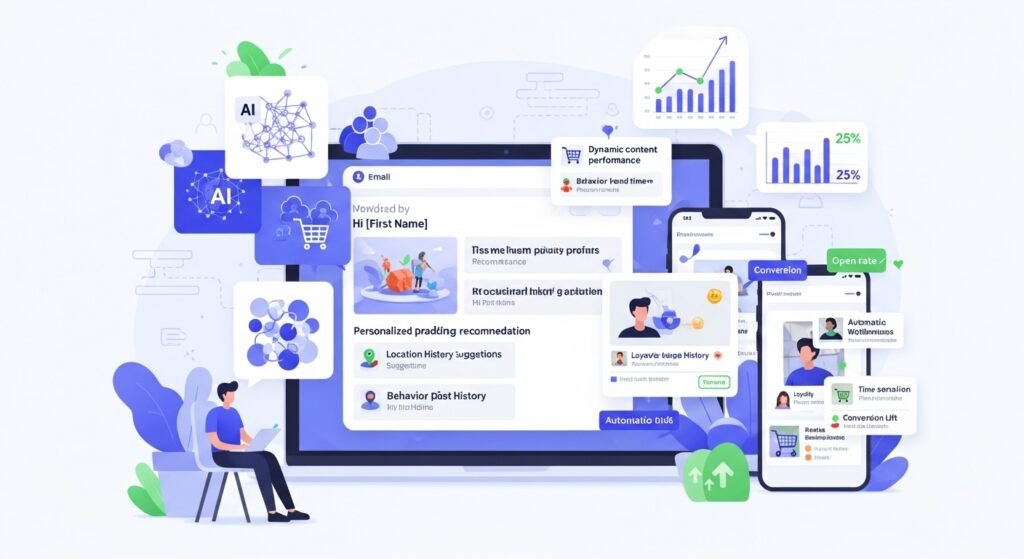
Introduction to AI-Powered Email Personalization
As a digital marketing strategist and SEO consultant, I have witnessed the evolution of email marketing over the years. From basic email blasts to sophisticated personalized campaigns, the landscape has transformed dramatically. One of the key drivers of this transformation is the integration of Artificial Intelligence (AI) in email marketing. AI-powered email personalization has taken the industry by storm, and it’s no longer just about addressing the recipient by their first name. In this section, we will delve into the world of AI-powered email personalization, exploring its possibilities, benefits, and the impact it can have on your marketing efforts.
The concept of personalization in email marketing is not new. For years, marketers have been using basic personalization techniques such as using the recipient’s name, tailoring the content based on their location, or using their purchase history to create targeted campaigns. However, with the advent of AI, personalization has reached new heights. AI-powered email personalization uses machine learning algorithms to analyze vast amounts of data, including customer behavior, preferences, and interests, to create highly tailored and relevant email campaigns.
The use of AI in email personalization enables marketers to move beyond basic customization and create campaigns that are truly one-to-one. For instance, AI can help you identify the most effective subject lines, email copy, and calls-to-action for each individual recipient. It can also help you determine the optimal time to send emails, taking into account the recipient’s time zone, email open history, and other factors. This level of personalization can significantly boost engagement rates, conversion rates, and ultimately, revenue.
A key aspect of AI-powered email personalization is its ability to analyze and learn from large datasets. By leveraging machine learning algorithms, AI can identify patterns and trends in customer behavior that may not be immediately apparent to human marketers. For example, AI can analyze customer purchase history, browsing behavior, and social media activity to create detailed customer profiles. These profiles can then be used to create highly targeted and relevant email campaigns that resonate with each individual customer.
Another significant advantage of AI-powered email personalization is its ability to automate routine tasks. AI can help you automate tasks such as email list segmentation, content creation, and campaign optimization, freeing up more time for strategic planning and creative thinking. This can be particularly beneficial for small businesses or marketing teams with limited resources, as it enables them to compete with larger organizations that have more extensive resources.
To illustrate the power of AI-powered email personalization, let’s consider a few examples. Suppose you’re an e-commerce company that sells clothing and accessories. Using AI, you can create email campaigns that are tailored to each customer’s individual style preferences, purchase history, and browsing behavior. For instance, if a customer has purchased a pair of shoes from your website in the past, you can send them personalized recommendations for matching accessories, such as socks or belts. Similarly, if a customer has browsed your website for a specific type of clothing, such as dresses or tops, you can send them targeted campaigns featuring those products.
Some of the key benefits of AI-powered email personalization include:
- Improved engagement rates: Personalized emails are more likely to be opened, read, and acted upon, resulting in higher engagement rates and conversion rates.
- Increased revenue: By creating targeted and relevant campaigns, you can increase sales and revenue, as customers are more likely to purchase from brands that understand their needs and preferences.
- Enhanced customer experience: AI-powered email personalization enables you to create a more personalized and humanized experience for your customers, which can lead to increased loyalty and retention.
- Competitive advantage: By leveraging AI-powered email personalization, you can differentiate your brand from competitors and establish a leadership position in your industry.
- Scalability: AI-powered email personalization enables you to scale your marketing efforts more efficiently, as you can create and deploy highly targeted campaigns to large audiences with minimal manual effort.
In conclusion, AI-powered email personalization is a game-changer for marketers. By leveraging machine learning algorithms and large datasets, you can create highly targeted and relevant email campaigns that resonate with each individual customer. Whether you’re a small business or a large enterprise, AI-powered email personalization can help you improve engagement rates, increase revenue, and enhance the customer experience. In the next section, we will explore the key technologies and strategies involved in AI-powered email personalization, including machine learning algorithms, natural language processing, and data analytics.
Understanding AI-Powered Email Personalization
As a digital marketing strategist, I have seen the evolution of email marketing over the years, and one trend that has gained significant attention in recent times is AI-powered email personalization. While traditional email personalization techniques, such as using a subscriber’s first name, are still effective, they have become somewhat basic and generic. With the advent of artificial intelligence (AI) and machine learning (ML) technologies, email personalization has become more sophisticated, allowing marketers to create highly tailored and relevant content that resonates with their audience.
AI-powered email personalization goes beyond simply using a subscriber’s first name in the subject line or body of the email. It involves analyzing vast amounts of data, including behavioral patterns, preferences, and interests, to create a unique and personalized experience for each subscriber. This approach has been shown to improve email engagement, conversion rates, and ultimately, revenue. In this section, we will delve into the world of AI-powered email personalization, exploring its benefits, techniques, and best practices.
To understand AI-powered email personalization, it’s essential to recognize the limitations of traditional personalization methods. While using a subscriber’s first name may make the email feel more personal, it doesn’t necessarily ensure that the content is relevant to their interests or needs. In contrast, AI-powered personalization uses advanced algorithms to analyze subscriber data, such as purchase history, browsing behavior, and search queries, to create a comprehensive profile of each individual. This profile is then used to tailor the email content, including product recommendations, offers, and messaging, to match the subscriber’s unique preferences and interests.
For instance, an e-commerce company may use AI-powered email personalization to send targeted product recommendations to subscribers based on their browsing history and purchase behavior. If a subscriber has been browsing shoes on the website, the AI algorithm may suggest similar products or complementary items, such as shoe care products or accessories, in the email. This approach not only increases the chances of conversion but also enhances the overall subscriber experience, making them more likely to engage with future emails.
Another significant benefit of AI-powered email personalization is its ability to optimize email content in real-time. Traditional email personalization methods often rely on static data, which may become outdated or irrelevant over time. In contrast, AI-powered personalization uses real-time data and analytics to adjust the email content, ensuring that it remains relevant and engaging to the subscriber. This approach is particularly effective in industries where trends and preferences change rapidly, such as fashion or technology.
To illustrate this concept, consider a fashion brand that uses AI-powered email personalization to send newsletters to its subscribers. The AI algorithm analyzes the latest fashion trends, as well as the subscriber’s past purchases and browsing behavior, to create a personalized newsletter that showcases the most relevant and stylish products. If a new fashion trend emerges, the AI algorithm can quickly adjust the newsletter content to reflect the latest styles, ensuring that the subscriber receives the most up-to-date and relevant information.
AI-powered email personalization also enables marketers to create highly targeted and segmented email campaigns. By analyzing subscriber data and behavior, the AI algorithm can identify specific segments or niches within the audience, allowing marketers to create tailored content that resonates with each group. For example, a travel company may use AI-powered email personalization to create separate email campaigns for subscribers who are interested in adventure travel, luxury travel, or family travel, each with its own unique content and offers.
The benefits of AI-powered email personalization are numerous, and some of the key advantages include:
- Improved email engagement and conversion rates
- Enhanced subscriber experience and loyalty
- Increased revenue and ROI
- Real-time optimization and personalization
- Targeted and segmented email campaigns
In conclusion, AI-powered email personalization is a game-changer for marketers looking to create highly tailored and relevant content that resonates with their audience. By analyzing vast amounts of data and using advanced algorithms, AI-powered personalization enables marketers to go beyond traditional personalization methods and create a unique and personalized experience for each subscriber. As we will explore in the next section, the techniques and best practices for implementing AI-powered email personalization are crucial to its success, and understanding these concepts is essential for marketers looking to leverage this powerful technology.
Advanced Strategies for AI-Powered Email Personalization
As a digital marketing strategist, I’ve seen firsthand the impact that AI-powered email personalization can have on a brand’s bottom line. While many marketers are familiar with basic personalization tactics like addressing customers by their first name, there are more advanced strategies that can take your email marketing to the next level. In this section, we’ll explore some of the most effective ways to use AI-powered email personalization to drive engagement, conversions, and revenue.
One of the key benefits of AI-powered email personalization is its ability to analyze vast amounts of customer data and use that information to create highly targeted and relevant messages. This can include data such as purchase history, browsing behavior, and demographic information. By using AI to analyze this data, marketers can create email campaigns that are tailored to the individual needs and preferences of each customer, rather than relying on generic messages that may not resonate with everyone.
For example, let’s say you’re an e-commerce brand that sells clothing and accessories. You could use AI-powered email personalization to send targeted promotions to customers based on their past purchases. If a customer has previously bought a pair of shoes from your brand, you could send them an email showcasing complementary products such as socks or shoe care kits. This approach not only increases the likelihood of a sale, but also helps to build trust and loyalty with your customers by showing that you understand their needs and preferences.
Another advanced strategy for AI-powered email personalization is to use machine learning algorithms to predict customer behavior. This can include predicting which products a customer is likely to be interested in, or which promotions are most likely to drive a sale. By using AI to analyze customer data and behavior, marketers can create email campaigns that are highly targeted and relevant, and that drive real results.
For instance, let’s say you’re a travel brand that offers package deals to customers. You could use AI-powered email personalization to send targeted promotions to customers based on their search history and booking behavior. If a customer has previously searched for flights to a particular destination, you could send them an email showcasing package deals that include flights, hotels, and activities in that destination. This approach not only increases the likelihood of a sale, but also helps to build trust and loyalty with your customers by showing that you understand their needs and preferences.
In addition to predicting customer behavior, AI-powered email personalization can also be used to create highly personalized content. This can include using AI to generate subject lines, email copy, and even entire email campaigns. By using machine learning algorithms to analyze customer data and behavior, marketers can create email content that is highly relevant and engaging, and that drives real results.
For example, let’s say you’re a financial services brand that offers investment products to customers. You could use AI-powered email personalization to create highly personalized email campaigns that are tailored to the individual needs and preferences of each customer. If a customer has previously expressed interest in a particular type of investment product, you could use AI to generate email copy that highlights the benefits and features of that product, and that includes a clear call-to-action to drive sales.
Some of the key benefits of using AI-powered email personalization include:
- Increased engagement and conversion rates: By creating highly targeted and relevant email campaigns, marketers can increase the likelihood of driving sales and revenue.
- Improved customer loyalty and retention: By showing customers that you understand their needs and preferences, marketers can build trust and loyalty with their customers.
- Enhanced customer experience: By creating highly personalized email content, marketers can create a more engaging and relevant customer experience that drives real results.
- Increased efficiency and productivity: By using AI to automate and optimize email campaigns, marketers can save time and resources, and focus on higher-level strategy and creative work.
However, it’s also important to note that AI-powered email personalization is not without its challenges. One of the key challenges is ensuring that customer data is accurate and up-to-date, and that AI algorithms are trained on high-quality data. This requires significant investment in data management and analytics infrastructure, as well as ongoing monitoring and maintenance to ensure that AI systems are working effectively.
Another challenge is ensuring that AI-powered email personalization is used in a way that is transparent and respectful of customer privacy. This requires clear communication with customers about how their data is being used, and ensuring that AI systems are designed with privacy and security in mind. By being transparent and respectful of customer privacy, marketers can build trust and loyalty with their customers, and create a positive and engaging customer experience.
In conclusion, AI-powered email personalization is a powerful tool for driving engagement, conversions, and revenue. By using advanced strategies such as predicting customer behavior, creating highly personalized content, and using machine learning algorithms to analyze customer data, marketers can create email campaigns that are highly targeted and relevant, and that drive real results. However, it’s also important to note that AI-powered email personalization requires significant investment in data management and analytics infrastructure, as well as ongoing monitoring and maintenance to ensure that AI systems are working effectively. By being transparent and respectful of customer privacy, and by using AI in a way that is strategic and targeted, marketers can create a more engaging and relevant customer experience that drives real results.
To get started with AI-powered email personalization, marketers should consider the following best practices:
- Start by analyzing customer data and behavior to identify key trends and patterns.
- Use machine learning algorithms to predict customer behavior and create highly targeted email campaigns.
- Create highly personalized content that is tailored to the individual needs and preferences of each customer.
- Use AI to automate and optimize email campaigns, and to save time and resources.
- Ensure that customer data is accurate and up-to-date, and that AI algorithms are trained on high-quality data.
- Be transparent and respectful of customer privacy, and ensure that AI systems are designed with privacy and security in mind.
By following these best practices, and by using AI-powered email personalization in a strategic and targeted way, marketers can create a more engaging and relevant customer experience that drives real results. Whether you’re a seasoned digital marketer or just starting out, AI-powered email personalization is a powerful tool that can help you achieve your goals and drive revenue for your brand.
Best Practices for Implementing AI-Powered Email Personalization
As a digital marketing strategist, I have witnessed the evolution of email marketing from a generic, one-size-fits-all approach to a highly personalized and targeted strategy. With the advent of artificial intelligence (AI), email personalization has become more sophisticated, allowing marketers to tailor their messages to individual subscribers. However, many marketers are still stuck in the basics of personalization, using only the subscriber’s first name in the subject line or greeting. In this section, we will delve into the best practices for implementing AI-powered email personalization, going beyond first name customization to create a truly unique and engaging experience for subscribers.
AI-powered email personalization uses machine learning algorithms to analyze subscriber behavior, preferences, and demographics, enabling marketers to create highly targeted and relevant content. This approach has been shown to increase open rates, click-through rates, and conversion rates, while also reducing unsubscribe rates and improving overall customer satisfaction. To implement AI-powered email personalization effectively, marketers must follow best practices that prioritize subscriber data, content relevance, and continuous optimization.
Understanding Subscriber Data is crucial to implementing AI-powered email personalization. Marketers must collect and analyze data on subscriber behavior, such as purchase history, browsing behavior, and search queries. This data can be used to create detailed profiles of each subscriber, including their preferences, interests, and pain points. For example, an e-commerce company can use data on a subscriber’s purchase history to recommend products that are similar to their previous purchases or to offer personalized promotions based on their buying behavior.
Another key aspect of AI-powered email personalization is Content Relevance. Marketers must create content that is relevant to each subscriber’s interests and preferences. This can be achieved by using natural language processing (NLP) and machine learning algorithms to analyze subscriber data and generate content that is tailored to their needs. For instance, a travel company can use AI-powered email personalization to send subscribers personalized travel recommendations based on their search history, browsing behavior, and previous travel bookings.
Marketers can also use Clustering and Segmentation to group subscribers with similar characteristics and preferences. This approach enables marketers to create targeted content that resonates with each segment, increasing the effectiveness of their email campaigns. For example, a fashion brand can segment its subscribers based on their purchase history, demographics, and browsing behavior, and then create targeted content that speaks to each segment’s unique needs and preferences.
Some of the other best practices for implementing AI-powered email personalization include:
- Using Real-Time Data to personalize email content and ensure that subscribers receive the most up-to-date and relevant information.
- Implementing A/B Testing to continuously optimize email campaigns and improve their effectiveness.
- Providing Transparency and Control to subscribers, allowing them to manage their preferences and opt-out of personalized content if they choose to do so.
- Ensuring Data Quality and Security to protect subscriber data and prevent data breaches.
- Using AI-Powered Email Tools to automate and optimize email personalization, such as AI-powered email platforms, marketing automation software, and customer data platforms.
For instance, a company like Amazon uses AI-powered email personalization to send subscribers personalized product recommendations based on their browsing history and purchase behavior. The company’s algorithms analyze subscriber data in real-time, generating personalized content that is tailored to each subscriber’s unique needs and preferences. This approach has been shown to increase customer engagement, drive sales, and improve overall customer satisfaction.
Another example is Netflix, which uses AI-powered email personalization to send subscribers personalized content recommendations based on their viewing history and preferences. The company’s algorithms analyze subscriber data, including their viewing history, search queries, and ratings, to generate personalized content that is tailored to each subscriber’s unique interests and preferences. This approach has been shown to increase customer engagement, drive viewing hours, and improve overall customer satisfaction.
In conclusion, AI-powered email personalization is a powerful strategy for creating a unique and engaging experience for subscribers. By following best practices that prioritize subscriber data, content relevance, and continuous optimization, marketers can create highly targeted and effective email campaigns that drive real results. Whether you are a seasoned marketer or just starting out, AI-powered email personalization is an essential tool for any email marketing strategy, and by implementing these best practices, you can take your email marketing to the next level and achieve greater success in your digital marketing efforts.
As a digital marketing strategist, I have seen firsthand the impact that AI-powered email personalization can have on a brand’s bottom line. By leveraging the power of AI and machine learning, marketers can create highly personalized and targeted email campaigns that drive real results. Whether you are looking to increase customer engagement, drive sales, or improve overall customer satisfaction, AI-powered email personalization is a strategy that is worth considering. With the right approach and the right tools, you can create a truly unique and engaging experience for your subscribers, and achieve greater success in your digital marketing efforts.
Future of AI-Powered Email Personalization and Revenue Growth
As a digital marketing strategist, I have witnessed the evolution of email marketing from a one-size-fits-all approach to a highly personalized and targeted strategy. The future of AI-powered email personalization holds immense potential for businesses to drive revenue growth and improve customer engagement. In this section, we will delve into the world of AI-powered email personalization, exploring its current state, future prospects, and the role it plays in driving revenue growth.
The traditional approach to email personalization has been limited to using the recipient’s first name in the subject line or email body. However, with the advent of artificial intelligence (AI) and machine learning (ML), email personalization has become more sophisticated and effective. AI-powered email personalization involves using customer data, behavior, and preferences to create highly targeted and relevant email campaigns. This approach enables businesses to build stronger relationships with their customers, increase customer loyalty, and ultimately drive revenue growth.
One of the primary advantages of AI-powered email personalization is its ability to analyze vast amounts of customer data and identify patterns and preferences. This enables businesses to create personalized email campaigns that resonate with their target audience. For instance, an e-commerce company can use AI-powered email personalization to send personalized product recommendations to customers based on their browsing history, purchase behavior, and search queries. This approach can lead to significant increases in conversion rates, average order value, and customer lifetime value.
Another significant benefit of AI-powered email personalization is its ability to optimize email campaigns in real-time. AI algorithms can analyze customer interactions with email campaigns, such as open rates, click-through rates, and conversion rates, and adjust the campaign strategy accordingly. This ensures that the email campaigns are always optimized for maximum impact and ROI. For example, if an AI algorithm detects that a particular subject line is not performing well, it can automatically adjust the subject line to improve open rates.
AI-powered email personalization also enables businesses to create personalized customer journeys. By analyzing customer behavior and preferences, businesses can create customized email workflows that cater to the individual needs of each customer. For instance, a business can create an email workflow that sends a welcome email to new subscribers, followed by a series of personalized emails that provide value and build trust. This approach can lead to significant increases in customer engagement, loyalty, and retention.
In addition to driving revenue growth, AI-powered email personalization also enables businesses to improve customer experience. By providing personalized and relevant content, businesses can build trust and credibility with their customers. This can lead to increased customer satisfaction, loyalty, and advocacy. For example, a business can use AI-powered email personalization to send personalized birthday messages to customers, which can lead to increased customer loyalty and retention.
To illustrate the potential of AI-powered email personalization, let’s consider a few examples:
- A fashion brand uses AI-powered email personalization to send personalized product recommendations to customers based on their purchase history and browsing behavior. The campaign results in a 25% increase in conversion rates and a 15% increase in average order value.
- An e-commerce company uses AI-powered email personalization to create personalized email workflows for new subscribers. The campaign results in a 30% increase in customer engagement and a 20% increase in customer retention.
- A financial services company uses AI-powered email personalization to send personalized investment advice to customers based on their financial goals and risk tolerance. The campaign results in a 20% increase in customer satisfaction and a 15% increase in customer loyalty.
These examples demonstrate the potential of AI-powered email personalization to drive revenue growth, improve customer experience, and build stronger relationships with customers. As AI technology continues to evolve, we can expect to see even more sophisticated and effective email personalization strategies emerge.
In conclusion, the future of AI-powered email personalization holds immense potential for businesses to drive revenue growth and improve customer engagement. By leveraging AI and ML algorithms, businesses can create highly personalized and targeted email campaigns that resonate with their target audience. As a digital marketing strategist, I strongly believe that AI-powered email personalization is a key component of any successful digital marketing strategy. By embracing this technology, businesses can stay ahead of the competition, drive revenue growth, and build stronger relationships with their customers.
As we move forward, it’s essential to consider the role of data quality in AI-powered email personalization. The accuracy and relevance of customer data are crucial in creating effective personalized email campaigns. Businesses must invest in data management and analytics to ensure that their customer data is accurate, up-to-date, and relevant. Additionally, businesses must also consider the ethical implications of AI-powered email personalization, ensuring that they are transparent and compliant with data protection regulations.
Furthermore, the integration of AI-powered email personalization with other marketing channels is also crucial. Businesses must consider how AI-powered email personalization can be integrated with other marketing channels, such as social media, content marketing, and paid advertising. By integrating AI-powered email personalization with other marketing channels, businesses can create a seamless and personalized customer experience across all touchpoints.
In the next section, we will delve deeper into the technical aspects of AI-powered email personalization, exploring the AI and ML algorithms used to create personalized email campaigns. We will also discuss the best practices for implementing AI-powered email personalization, including data management, campaign optimization, and measurement and evaluation.