
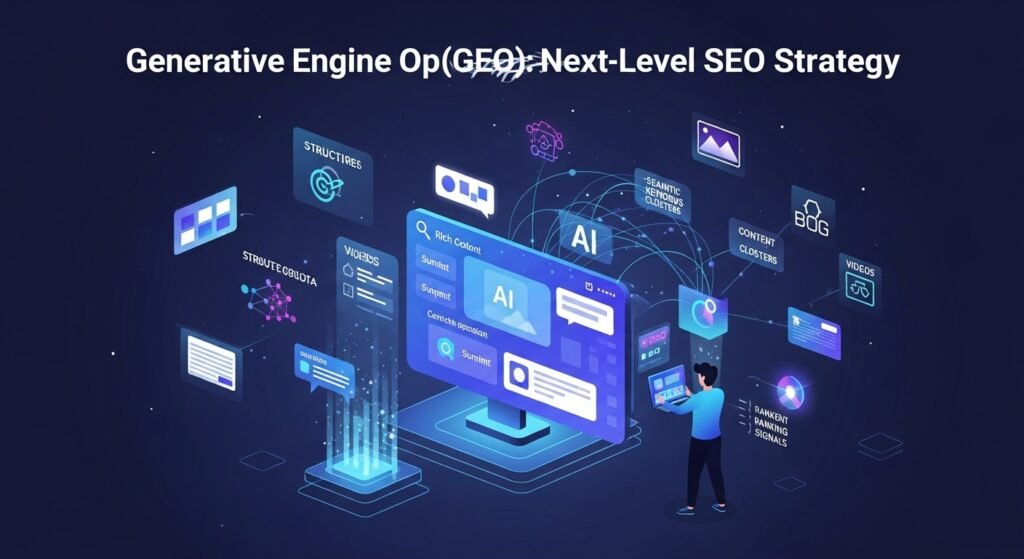
Introduction to Generative Engine Optimization (GEO)
As a digital marketing strategist and SEO consultant, I have witnessed the evolution of search engine optimization (SEO) over the years. From keyword stuffing to link building, the SEO landscape has undergone significant transformations. However, with the advent of artificial intelligence (AI) and machine learning (ML), a new paradigm has emerged in the form of Generative Engine Optimization (GEO). In this section, we will delve into the world of GEO, exploring its core principles, benefits, and applications in the context of modern SEO.
GEO is an advanced SEO strategy that leverages the power of AI and ML to generate high-quality, optimized content that resonates with both search engines and human users. By harnessing the capabilities of generative models, GEO enables marketers to create content that is not only optimized for search engines but also provides value to users. This approach has revolutionized the way we think about SEO, shifting the focus from traditional keyword-based optimization to a more holistic, user-centric approach.
The concept of GEO is built around the idea of generating content that is contextually relevant, engaging, and informative. By analyzing user behavior, search patterns, and content trends, GEO algorithms can identify gaps in the market and create content that fills those gaps. This approach not only improves search engine rankings but also enhances user experience, driving more conversions and revenue for businesses. For instance, a company like HubSpot has successfully implemented GEO strategies to create personalized content that resonates with its target audience, resulting in significant increases in organic traffic and lead generation.
To understand the workings of GEO, it’s essential to grasp the role of generative models in content creation. Generative models are AI-powered algorithms that can generate human-like text, images, and videos based on a given set of inputs. In the context of GEO, these models are trained on vast amounts of data, including user behavior, search queries, and content patterns. By analyzing this data, generative models can identify patterns, trends, and correlations that inform the creation of optimized content. For example, a generative model can analyze user search queries related to a specific topic and generate content that addresses the underlying questions and concerns of users.
The benefits of GEO are multifaceted, offering advantages that traditional SEO strategies cannot match. Some of the key benefits of GEO include:
- Improved search engine rankings: GEO-optimized content is designed to resonate with search engines, driving higher rankings and increased visibility.
- Enhanced user experience: By creating content that is contextually relevant and engaging, GEO improves user experience, leading to higher conversion rates and revenue growth.
- Increased efficiency: GEO automates the content creation process, reducing the time and resources required to produce high-quality, optimized content.
- Personalization: GEO enables marketers to create personalized content that resonates with specific audience segments, improving engagement and driving more conversions.
- Competitive advantage: By adopting GEO strategies, businesses can gain a competitive edge in the market, outperforming rivals and establishing themselves as thought leaders in their industry.
To illustrate the application of GEO in real-world scenarios, let’s consider the example of a company like Netflix. Netflix uses GEO strategies to create personalized content recommendations for its users, analyzing user behavior, search patterns, and content trends to suggest relevant TV shows and movies. This approach has enabled Netflix to improve user engagement, reduce churn rates, and drive more revenue through targeted content marketing.
In conclusion, Generative Engine Optimization (GEO) represents a significant shift in the SEO landscape, offering a powerful framework for creating high-quality, optimized content that resonates with both search engines and human users. By harnessing the capabilities of AI and ML, GEO enables marketers to improve search engine rankings, enhance user experience, and drive more conversions and revenue. As the digital marketing landscape continues to evolve, it’s essential for businesses to adopt GEO strategies and stay ahead of the competition in the ever-changing world of SEO.
As we move forward in this discussion, we will explore the core principles of GEO in more detail, including the role of generative models, the importance of user-centric approach, and the applications of GEO in various industries. We will also examine the challenges and limitations of implementing GEO strategies and provide insights into the future of SEO in the age of AI and ML.
Understanding the Fundamentals of GEO
As a digital marketing strategist and SEO consultant, I have witnessed the evolution of search engine optimization (SEO) over the years. With the rapid advancement of artificial intelligence (AI) and machine learning (ML) technologies, the traditional SEO approach is no longer sufficient to drive organic growth and revenue. This is where Generative Engine Optimization (GEO) comes into play, representing the next level of SEO strategy. In this section, we will delve into the fundamentals of GEO, exploring its core principles, key components, and the benefits it offers to businesses and organizations.
To begin with, it is essential to understand that GEO is an AI-driven approach to SEO, designed to optimize website content, structure, and overall user experience for search engines. Unlike traditional SEO, which focuses on keyword research, link building, and content creation, GEO takes a more holistic approach, leveraging AI and ML algorithms to analyze and improve website performance, relevance, and authority. By doing so, GEO enables businesses to scale their online presence, drive more traffic, and increase conversions, ultimately leading to revenue growth and improved brand visibility.
The core principles of GEO revolve around the concept of generative modeling, which involves the use of AI and ML algorithms to generate high-quality, relevant, and engaging content that resonates with target audiences. This approach enables businesses to create personalized content experiences, tailored to the specific needs and preferences of their users, resulting in increased engagement, retention, and conversion rates. Furthermore, GEO emphasizes the importance of entity-based optimization, which focuses on creating a robust and consistent entity graph, representing the business, its products, services, and expertise, across the digital landscape.
Some of the key components of GEO include natural language processing (NLP), machine learning (ML), and knowledge graph optimization. NLP enables businesses to analyze and understand user intent, sentiment, and behavior, while ML algorithms facilitate the development of predictive models, forecasting user interactions and preferences. Knowledge graph optimization, on the other hand, involves the creation of a comprehensive and structured knowledge graph, representing the business and its entities, and facilitating the dissemination of accurate and consistent information across the web.
To illustrate the benefits of GEO, let us consider a few examples. Suppose we have an e-commerce business, selling outdoor gear and equipment. Using traditional SEO approaches, the business might focus on optimizing product pages for specific keywords, such as “hiking boots” or “camping tents.” However, with GEO, the business can take a more integrated approach, using AI and ML algorithms to analyze user behavior, preferences, and intent, and generating personalized content experiences, tailored to the specific needs of their target audience. For instance, the business might create a virtual assistant that provides users with personalized product recommendations, based on their search history, purchase behavior, and social media interactions.
Another example is a healthcare organization, seeking to establish itself as a thought leader in the medical industry. Using GEO, the organization can leverage AI and ML algorithms to analyze and optimize its content, structure, and overall user experience, resulting in improved search engine rankings, increased website traffic, and enhanced brand authority. The organization might create a knowledge graph that represents its expertise, services, and research areas, and facilitates the dissemination of accurate and consistent information across the web, resulting in increased trust and credibility among its target audience.
The benefits of GEO are numerous and significant. By leveraging AI and ML algorithms, businesses can
- Improve search engine rankings and increase website traffic
- Enhance brand authority and thought leadership
- Drive more conversions and revenue growth
- Gain a competitive edge in the market
- Improve user experience and engagement
In conclusion, Generative Engine Optimization (GEO) represents a significant shift in the way businesses approach SEO, enabling them to leverage AI and ML algorithms to drive organic growth, revenue, and brand visibility. By understanding the fundamentals of GEO, including its core principles, key components, and benefits, businesses can unlock new opportunities for growth, innovation, and success in the digital landscape. As a digital marketing strategist and SEO consultant, I strongly believe that GEO is the future of SEO, and businesses that adopt this approach will be well-positioned to thrive in an increasingly competitive and rapidly evolving digital environment.
GEO Strategy and Planning
As a digital marketing strategist and SEO consultant, I, Amit Tyagi, have had the privilege of working with numerous brands, helping them scale globally through advanced SEO frameworks and performance-driven digital strategies. One of the most exciting and rapidly evolving areas of search engine optimization (SEO) is Generative Engine Optimization (GEO). In this section, we will delve into the GEO strategy and planning, exploring the intricacies of this next-level SEO strategy and how it can be leveraged to drive revenue-focused organic growth.
GEO strategy and planning involve a multidisciplinary approach, combining the principles of artificial intelligence (AI), machine learning (ML), and natural language processing (NLP) to optimize content for search engines. The primary objective of GEO is to create high-quality, engaging, and informative content that resonates with the target audience, while also satisfying the search engine algorithms. To achieve this, it is essential to develop a comprehensive GEO strategy that encompasses various aspects, including keyword research, content creation, technical optimization, and link building.
Understanding the Importance of Keyword Research in GEO
Keyword research is a critical component of GEO strategy and planning. It involves identifying relevant keywords and phrases that the target audience uses to search for products or services. By conducting thorough keyword research, businesses can create content that is optimized for the most relevant and high-traffic keywords, increasing their visibility and search engine rankings. For instance, a company that offers eco-friendly cleaning products may identify keywords such as “green cleaning solutions” or “sustainable cleaning products” to target their content. By incorporating these keywords strategically, the company can improve its search engine rankings and attract more organic traffic to its website.
Content Creation and Optimization in GEO
Content creation and optimization are vital aspects of GEO strategy and planning. High-quality, engaging, and informative content is essential for attracting and retaining the target audience, as well as for satisfying search engine algorithms. In GEO, content creation involves using AI-driven tools and techniques to generate content that is optimized for specific keywords and phrases. This can include blog posts, articles, product descriptions, and social media posts. For example, a company that offers AI-powered chatbot solutions may create content that highlights the benefits of using chatbots for customer support, such as “How AI-Powered Chatbots Can Revolutionize Customer Support” or “The Benefits of Using Chatbots for Customer Engagement.”
Technical Optimization in GEO
Technical optimization is another crucial aspect of GEO strategy and planning. It involves optimizing the website’s technical infrastructure to improve its crawlability, indexability, and overall performance. This can include optimizing website speed, mobile responsiveness, and internal linking, as well as ensuring that the website is secure and accessible. For instance, a company that offers e-commerce solutions may optimize its website’s technical infrastructure to improve its page load speed, ensuring that customers can quickly and easily navigate the website and make purchases.
Link Building and Authority Building in GEO
Link building and authority building are essential components of GEO strategy and planning. Link building involves acquiring high-quality backlinks from authoritative sources to improve the website’s credibility and search engine rankings. Authority building involves establishing the brand as a thought leader in the industry, through content creation, social media engagement, and other digital marketing strategies. For example, a company that offers digital marketing services may create high-quality content that is shared by other reputable sources, such as industry blogs or news outlets, to build its authority and credibility in the industry.
Best Practices for GEO Strategy and Planning
To develop an effective GEO strategy and planning framework, businesses should follow best practices that include:
- Conducting thorough keyword research to identify relevant and high-traffic keywords
- Creating high-quality, engaging, and informative content that resonates with the target audience
- Optimizing the website’s technical infrastructure to improve its crawlability, indexability, and overall performance
- Acquiring high-quality backlinks from authoritative sources to improve the website’s credibility and search engine rankings
- Establishing the brand as a thought leader in the industry through content creation, social media engagement, and other digital marketing strategies
- Monitoring and analyzing the website’s performance using tools such as Google Analytics and Search Console
- Continuously refining and improving the GEO strategy and planning framework to ensure optimal results
By following these best practices and incorporating GEO into their digital marketing strategies, businesses can drive revenue-focused organic growth, improve their search engine rankings, and establish themselves as thought leaders in their industry. As a digital marketing strategist and SEO consultant, I have seen firsthand the impact that GEO can have on a business’s online presence and bottom line. By leveraging the power of AI, ML, and NLP, businesses can create high-quality, engaging, and informative content that resonates with their target audience and drives real results.
In conclusion, GEO strategy and planning involve a multidisciplinary approach that combines the principles of AI, ML, and NLP to optimize content for search engines. By developing a comprehensive GEO strategy that encompasses various aspects, including keyword research, content creation, technical optimization, and link building, businesses can drive revenue-focused organic growth and establish themselves as thought leaders in their industry. As the digital landscape continues to evolve, it is essential for businesses to stay ahead of the curve and leverage the latest technologies and strategies to remain competitive. With the right GEO strategy and planning framework in place, businesses can unlock their full potential and achieve remarkable results in the digital marketplace.
Implementing and Optimizing GEO
As a digital marketing strategist and SEO consultant, I have witnessed the evolution of search engine optimization (SEO) over the years. With the advent of artificial intelligence (AI) and machine learning (ML), the traditional SEO approach has given way to a more advanced and sophisticated strategy – Generative Engine Optimization (GEO). In this section, we will delve into the implementation and optimization of GEO, exploring its nuances and best practices.
GEO is a holistic approach that focuses on creating a seamless user experience, leveraging AI-driven tools to generate high-quality content, and optimizing website architecture to improve search engine rankings. Implementing GEO requires a deep understanding of search engine algorithms, user behavior, and technical SEO. It’s essential to have a clear understanding of your target audience, their search patterns, and the type of content that resonates with them.
To implement GEO effectively, you need to start by conducting a thorough website audit. This involves analyzing your website’s technical infrastructure, content quality, and user experience. You can use tools like Ahrefs, SEMrush, or Moz to identify technical issues, such as page speed, mobile responsiveness, and crawl errors. Additionally, you should assess your content’s relevance, quality, and engagement metrics, such as bounce rate, time on page, and social shares.
Once you have a clear understanding of your website’s strengths and weaknesses, you can start developing a GEO strategy. This involves creating a content roadmap that aligns with your target audience’s search intent and preferences. You can use AI-driven tools like content generation platforms, natural language processing (NLP) tools, and machine learning algorithms to create high-quality, engaging, and optimized content. For instance, you can use tools like WordLift or Content Blossom to generate content briefs, outlines, and even entire articles.
Another critical aspect of GEO is technical optimization. This involves optimizing your website’s architecture, page speed, and mobile responsiveness to improve search engine crawlability and user experience. You can use tools like Google PageSpeed Insights, GTmetrix, or Pingdom to identify areas for improvement and optimize your website’s performance. Additionally, you should ensure that your website is secure, with an SSL certificate, and has a clear and concise navigation structure.
Some of the key GEO optimization techniques include:
- Entity-based optimization: This involves creating content that is optimized for specific entities, such as people, places, or things. You can use tools like Google’s Entity Dictionary or Wikidata to identify relevant entities and create content that is optimized for them.
- NLP-driven content optimization: This involves using NLP tools to analyze and optimize your content for better readability, engagement, and search engine rankings. You can use tools like Grammarly or ProWritingAid to optimize your content’s grammar, syntax, and style.
- Machine learning-driven link building: This involves using machine learning algorithms to identify relevant link opportunities and build high-quality backlinks to your website. You can use tools like Ahrefs or Moz to identify link opportunities and build relationships with other websites and influencers.
For example, let’s say you’re a fashion e-commerce brand, and you want to optimize your website for the entity “sustainable fashion.” You can create content that is optimized for this entity, such as blog posts, product descriptions, and social media posts. You can also use NLP tools to analyze and optimize your content for better readability and engagement. Additionally, you can use machine learning algorithms to identify relevant link opportunities and build high-quality backlinks to your website.
Another example is the use of AI-driven content generation tools to create high-quality and engaging content. For instance, you can use tools like Article Forge or WordLift to generate content briefs, outlines, and even entire articles. These tools use machine learning algorithms to analyze your content’s performance and suggest improvements. You can also use these tools to create content that is optimized for specific entities, such as people, places, or things.
To illustrate the power of GEO, let’s consider a case study. Suppose we have an e-commerce website that sells outdoor gear and equipment. We want to optimize our website for the entity “hiking boots.” We can create content that is optimized for this entity, such as blog posts, product descriptions, and social media posts. We can also use NLP tools to analyze and optimize our content for better readability and engagement. Additionally, we can use machine learning algorithms to identify relevant link opportunities and build high-quality backlinks to our website.
By implementing and optimizing GEO, we can improve our website’s search engine rankings, drive more traffic and sales, and establish our brand as an authority in the outdoor gear and equipment industry. In conclusion, GEO is a powerful strategy that can help businesses scale globally and establish a strong online presence. By leveraging AI-driven tools, optimizing website architecture, and creating high-quality content, businesses can improve their search engine rankings, drive more traffic and sales, and establish their brand as an authority in their industry.
As a digital marketing strategist and SEO consultant, I have seen firsthand the impact that GEO can have on a business’s online presence and bottom line. By following the best practices and techniques outlined in this section, businesses can unlock the full potential of GEO and take their online marketing efforts to the next level. Whether you’re a seasoned SEO professional or just starting out, GEO is an essential strategy that can help you achieve your online marketing goals and establish a strong online presence.
Measuring and Refining GEO Performance
As a digital marketing strategist and SEO consultant, I have worked with numerous brands to implement Generative Engine Optimization (GEO) strategies that drive significant improvements in search visibility, authority, and revenue. However, the key to unlocking the full potential of GEO lies in measuring and refining its performance. In this section, we will delve into the importance of performance measurement, the key metrics to track, and the strategies for refining GEO performance.
To begin with, measuring GEO performance is crucial because it allows you to understand the impact of your strategies on search engine rankings, website traffic, and ultimately, revenue. Without a clear understanding of how your GEO strategies are performing, you risk investing time and resources into tactics that may not be yielding the desired results. By tracking key metrics, you can identify areas of strength and weakness, make data-driven decisions, and refine your GEO strategies to achieve better outcomes.
So, what are the key metrics to track when measuring GEO performance? Some of the most important metrics include:
- Search engine rankings: This metric is critical because it indicates how well your website is performing in search engine results pages (SERPs) for target keywords. By tracking rankings, you can identify opportunities to improve your website’s visibility and drive more organic traffic.
- Organic traffic: This metric measures the number of visitors coming to your website from search engines. By tracking organic traffic, you can understand the impact of your GEO strategies on driving relevant and targeted traffic to your website.
- Click-through rate (CTR): This metric measures the percentage of users who click on your website’s link in search engine results pages. A high CTR indicates that your website’s title tags, meta descriptions, and other elements are optimized for user experience and are effectively enticing users to click through to your website.
- Conversion rate: This metric measures the percentage of users who complete a desired action on your website, such as filling out a form, making a purchase, or subscribing to a newsletter. By tracking conversion rates, you can understand the impact of your GEO strategies on driving revenue and achieving business goals.
- Return on investment (ROI): This metric measures the revenue generated by your GEO strategies compared to the cost of implementing them. By tracking ROI, you can understand the financial impact of your GEO strategies and make informed decisions about where to allocate your budget.
Once you have identified the key metrics to track, the next step is to refine your GEO performance. This involves analyzing your data, identifying areas for improvement, and implementing strategies to optimize your performance. Some strategies for refining GEO performance include:
Optimizing website content: This involves ensuring that your website’s content is high-quality, relevant, and optimized for target keywords. By optimizing your content, you can improve your website’s search engine rankings, drive more organic traffic, and increase user engagement.
Building high-quality backlinks: This involves acquiring links from authoritative and relevant websites to improve your website’s authority and trustworthiness. By building high-quality backlinks, you can improve your website’s search engine rankings, drive more referral traffic, and increase your website’s credibility.
Improving website technical performance: This involves ensuring that your website is fast, secure, and mobile-friendly. By improving your website’s technical performance, you can improve user experience, increase conversions, and drive more revenue.
Utilizing AI-driven tools: This involves leveraging artificial intelligence (AI) and machine learning (ML) tools to analyze your data, identify opportunities for improvement, and automate tasks. By utilizing AI-driven tools, you can streamline your GEO strategies, improve efficiency, and drive better outcomes.
For example, let’s say you are a fashion e-commerce brand, and you want to improve your search engine rankings for the keyword “summer dresses.” You can use AI-driven tools to analyze your website’s content, identify gaps in your keyword strategy, and optimize your product pages for the target keyword. You can also use AI-driven tools to build high-quality backlinks, improve your website’s technical performance, and drive more organic traffic.
In another example, let’s say you are a financial services company, and you want to improve your search engine rankings for the keyword “mortgage rates.” You can use AI-driven tools to analyze your website’s content, identify opportunities to improve your keyword strategy, and optimize your website’s title tags, meta descriptions, and other elements. You can also use AI-driven tools to build high-quality backlinks, improve your website’s technical performance, and drive more conversions.
In conclusion, measuring and refining GEO performance is critical to achieving success with Generative Engine Optimization. By tracking key metrics, analyzing your data, and implementing strategies to optimize your performance, you can drive significant improvements in search visibility, authority, and revenue. Whether you are a fashion e-commerce brand, a financial services company, or any other type of business, GEO can help you achieve your goals and drive long-term success.
As a digital marketing strategist and SEO consultant, I have seen firsthand the impact that GEO can have on a business. By leveraging the power of AI-driven tools, building high-quality backlinks, and optimizing website content, businesses can drive more organic traffic, increase conversions, and achieve significant revenue growth. If you are looking to take your SEO strategies to the next level, I encourage you to explore the possibilities of Generative Engine Optimization and discover the benefits of measuring and refining GEO performance for yourself.
By following the strategies outlined in this section, you can unlock the full potential of GEO and drive significant improvements in your search engine rankings, website traffic, and revenue. Remember to track key metrics, analyze your data, and refine your GEO performance regularly to ensure that you are achieving the best possible outcomes. With the right approach and the right tools, you can achieve success with GEO and drive long-term growth and profitability for your business.