
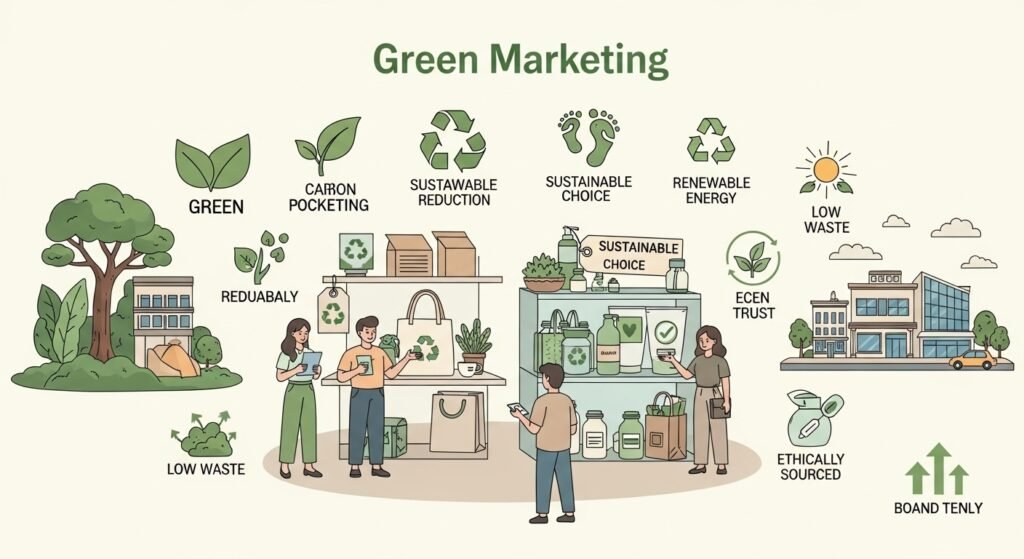
Green marketing has shifted from being a niche concept to a powerful business differentiator in 2026, especially for small businesses looking to stand out in crowded markets. Today’s consumers are more environmentally aware than ever before. They actively seek brands that align with their values, support ethical practices, and demonstrate genuine commitment to sustainability. For small businesses, green marketing offers a unique opportunity to compete with larger brands—not by spending more on advertising, but by building trust, transparency, and purpose-driven branding.
Green marketing is not just about claiming to be eco-friendly; it’s about communicating real actions such as responsible sourcing, reduced waste, energy efficiency, ethical labor practices, and sustainable packaging. When done right, sustainability becomes a powerful USP (Unique Selling Proposition) that influences buying decisions, encourages customer loyalty, and strengthens brand reputation. In 2026, authenticity matters more than perfection. Customers don’t expect small businesses to solve global environmental problems—but they do expect honesty and effort.
Advancements in digital marketing allow small businesses to tell their sustainability stories more effectively. From social media storytelling and eco-certifications on websites to green labels, behind-the-scenes videos, and transparent supply chain communication, green marketing creates emotional connections with customers. It also improves long-term brand value, attracts conscious consumers, and even supports SEO through trust-based signals.
This article explains what green marketing really means, why sustainability works as a USP for small businesses, how to implement green marketing step by step, real case studies, success stories, video content ideas, a practical green marketing framework, and frequently asked questions—helping you promote sustainability without falling into the trap of greenwashing.
What Is Green Marketing?
Green marketing refers to promoting products, services, and practices that are environmentally responsible.
It includes:
- Sustainable sourcing
- Eco-friendly packaging
- Reduced carbon footprint
- Ethical operations
- Transparent communication
Green marketing focuses on real impact, not just branding claims.
Why Sustainability Works as a USP for Small Businesses
Sustainability gives small businesses a competitive edge because:
- Builds trust and credibility
- Attracts conscious consumers
- Encourages long-term loyalty
- Differentiates from mass brands
Customers often prefer authentic small brands that show real effort toward sustainability.
Green Marketing Strategies for Small Businesses
Eco-Friendly Product Positioning
Highlight sustainable materials, processes, and benefits clearly.
Transparent Storytelling
Share how products are made, sourced, and delivered.
Sustainable Packaging Communication
Educate customers about packaging choices and disposal.
Community & Local Impact
Show involvement in local sustainability efforts.
How to Implement Green Marketing Step by Step
Step 1: Audit Your Current Practices
Identify where your business is already sustainable.
Step 2: Define Your Sustainability USP
Focus on one or two genuine green strengths.
Step 3: Communicate Honestly
Avoid exaggerated claims—clarity builds trust.
Step 4: Use Digital Channels Effectively
Share sustainability stories via blogs, videos, and social media.
Step 5: Measure Customer Response
Track engagement, sentiment, and loyalty metrics.
Growing Brand Loyalty Through Green Marketing
A small eco-friendly home décor business highlighted sustainable sourcing and packaging.
Results in 90 days:
- Increased repeat purchases
- Higher engagement on social media
- Improved brand trust
Transparency resonated strongly with customers.
Turning Sustainability into Brand Identity
A local clothing brand positioned sustainability as its core USP.
Outcome:
- Strong community support
- Organic word-of-mouth growth
- Reduced reliance on paid ads
Green marketing became central to brand storytelling.
Video Content Ideas for Green Marketing
A strong video idea is “How Small Businesses Can Go Green Without Greenwashing”, featuring:
- Behind-the-scenes processes
- Supplier stories
- Packaging explanations
This content performs well on Instagram, YouTube, and LinkedIn.
Green Marketing Framework for Small Businesses
A simple green marketing framework:
- Identify genuine sustainable actions
- Define a clear USP
- Communicate transparently
- Engage customers emotionally
- Improve continuously
Best Practices
- Be specific, not vague
- Use proof and data
- Avoid over-claiming
- Educate customers gently
FAQs: Green Marketing for Small Businesses
Do small businesses need certifications for green marketing?
Not always, but certifications can boost credibility.
What is greenwashing?
Making misleading or exaggerated sustainability claims.
Can green marketing increase sales?
Yes, when authenticity and value align.
Is sustainability expensive for small businesses?
Many green practices reduce costs in the long run.
Which industries benefit most from green marketing?
Retail, food, fashion, beauty, and local services.
Final Thoughts
Green marketing is no longer optional—it’s a strategic advantage for small businesses in 2026. When sustainability is promoted honestly and consistently, it builds trust, loyalty, and long-term brand value.
Small businesses that succeed with green marketing:
- Focus on real actions
- Communicate transparently
- Avoid greenwashing
- Align sustainability with brand values
At Kanity Solutions, we help businesses craft authentic green marketing strategies that customers respect and support.
🌐 www.kanity.in
📞 9454784602