
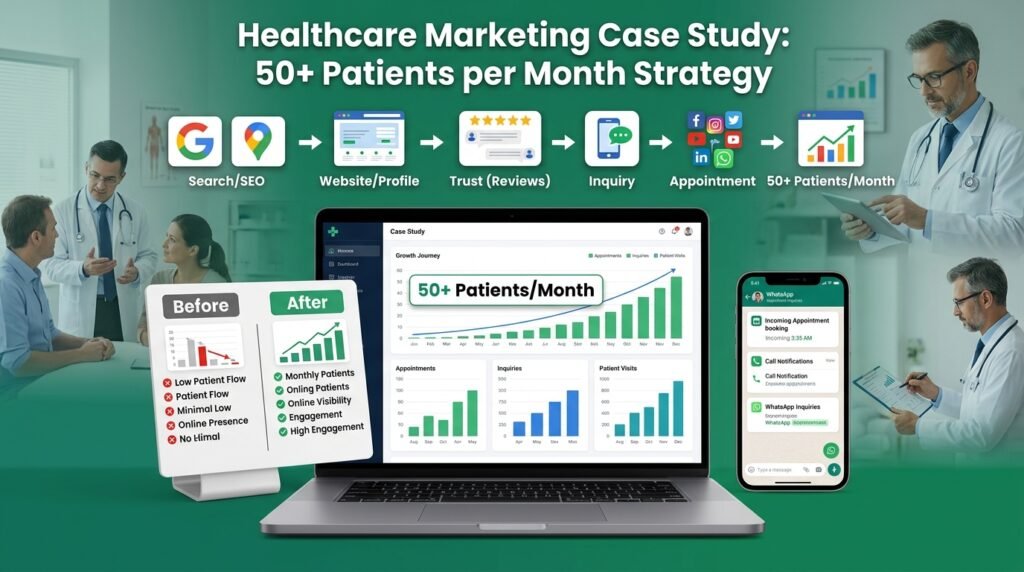
Introduction to Online Patient Acquisition for Dentists
As a dentist, having a steady stream of patients is crucial for the success of your practice. In today’s digital age, having an online presence is no longer a luxury, but a necessity. With the majority of people turning to the internet to find healthcare services, including dental care, it is essential for dentists to have a solid online strategy in place to attract new patients. In this section, we will explore how dentists can get patients online without relying on ads, and why this approach is not only cost-effective but also sustainable in the long run.
In recent years, the dental industry has become increasingly competitive, with many practices vying for the attention of potential patients. While paid advertising can be an effective way to reach new patients, it can be expensive and may not always yield the desired results. Furthermore, with the ever-changing landscape of online advertising, it can be challenging for dentists to keep up with the latest trends and best practices. This is where a more organic approach to online patient acquisition comes in – an approach that focuses on building a strong online presence, creating valuable content, and engaging with potential patients in a meaningful way.
As a digital marketing strategist and SEO consultant, I have worked with numerous dental practices to help them develop and implement effective online strategies that drive real results. Through my experience, I have seen firsthand the impact that a well-crafted online presence can have on a dental practice’s bottom line. By leveraging the power of search engine optimization (SEO), content marketing, and social media, dentists can attract new patients and grow their practice without relying on expensive ads.
So, how can dentists get started with online patient acquisition without ads? The first step is to develop a deep understanding of their target audience and what they are looking for in a dental practice. This involves conducting keyword research, analyzing the competition, and identifying areas of opportunity. From there, dentists can create a comprehensive online strategy that includes a website, social media presence, and content marketing plan. By focusing on creating high-quality, engaging content that addresses the needs and concerns of their target audience, dentists can establish themselves as authorities in their field and attract new patients who are actively searching for their services.
For example, a dentist who specializes in cosmetic dentistry could create a series of blog posts and videos that provide tips and advice on how to achieve a healthier, more beautiful smile. By optimizing these pieces of content for relevant keywords and phrases, the dentist can increase their visibility in search engine results and attract new patients who are searching for information on cosmetic dentistry. Similarly, a dentist who offers emergency dental services could create a social media campaign that provides helpful tips and advice on how to handle common dental emergencies, such as a toothache or lost filling. By engaging with their audience and providing value, the dentist can build trust and establish themselves as a go-to resource for emergency dental care.
In addition to creating high-quality content, dentists can also leverage the power of online reviews and reputation management to attract new patients. By encouraging satisfied patients to leave reviews on their website or social media profiles, dentists can build a strong online reputation and increase their visibility in search engine results. This is especially important, as 85% of patients use online reviews to evaluate dentists and make informed decisions about their care. By taking a proactive approach to online reputation management, dentists can ensure that their practice is presented in the best possible light and that potential patients have a positive impression of their brand.
Another effective way for dentists to get patients online without ads is to utilize email marketing and patient engagement strategies. By building an email list and creating regular newsletters or promotional offers, dentists can stay top of mind with existing patients and attract new ones. For example, a dentist could create a monthly newsletter that provides helpful tips and advice on oral health, as well as special promotions or discounts for new patients. By segmenting their email list and tailoring their content to specific groups of patients, dentists can increase engagement and drive more conversions.
Some of the key benefits of online patient acquisition without ads include:
- Cost savings: By not relying on expensive ads, dentists can save money and allocate their budget to other areas of their practice.
- Increased credibility: By establishing themselves as authorities in their field, dentists can increase their credibility and build trust with potential patients.
- Improved patient engagement: By creating high-quality content and engaging with their audience, dentists can improve patient satisfaction and loyalty.
- Long-term sustainability: By building a strong online presence and leveraging the power of SEO and content marketing, dentists can drive long-term growth and sustainability for their practice.
- Measurable results: By tracking key metrics such as website traffic, social media engagement, and email open rates, dentists can measure the effectiveness of their online strategy and make data-driven decisions to optimize their approach.
Overall, online patient acquisition without ads is a powerful way for dentists to attract new patients and grow their practice. By focusing on creating high-quality content, building a strong online reputation, and engaging with their audience, dentists can establish themselves as authorities in their field and drive long-term growth and sustainability for their practice. In the next section, we will explore the importance of search engine optimization (SEO) for dentists and how it can be used to drive online patient acquisition.
Building a Strong Online Foundation for Dental Practices
As a digital marketing strategist and SEO consultant, I have worked with numerous dental practices to help them establish a robust online presence. In today’s digital age, having a strong online foundation is crucial for dentists to attract new patients and stay ahead of the competition. In this section, we will explore the importance of building a strong online foundation for dental practices and provide actionable tips on how to achieve this without relying on ads.
A strong online foundation is the backbone of any successful dental practice. It encompasses various aspects, including a professional website, search engine optimization (SEO), social media presence, and online reputation management. By focusing on these areas, dentists can increase their online visibility, build trust with potential patients, and ultimately drive more bookings and revenue.
A professional website is the first step in building a strong online foundation. A well-designed website serves as a virtual representation of the dental practice, providing essential information about the services offered, the team, and the practice’s values. It should be easy to navigate, visually appealing, and optimized for user experience. A website that is not user-friendly or lacks essential information can deter potential patients and harm the practice’s reputation.
For instance, a dental practice in New York City, Smile Care, invested in a website redesign to improve user experience and search engine rankings. The new website featured a clean design, easy-to-use navigation, and prominent calls-to-action (CTAs) to encourage visitors to book an appointment. As a result, the practice saw a significant increase in online bookings and a 25% rise in website traffic.
Search engine optimization (SEO) is another critical component of a strong online foundation. SEO involves optimizing the website and online content to rank higher in search engine results pages (SERPs) for relevant keywords. This increases the practice’s visibility and credibility, making it more likely to attract organic traffic and new patients. By targeting specific keywords, such as “dentist in [city]” or “teeth whitening [state],” dentists can reach patients who are actively searching for their services.
For example, a dental practice in Los Angeles, Dental Care Center, focused on optimizing its website for local SEO by including the city and state in its keywords, meta tags, and content. As a result, the practice saw a significant increase in local search engine rankings and a 30% rise in organic traffic.
Social media presence is also essential for building a strong online foundation. Social media platforms, such as Facebook and Instagram, provide an opportunity for dentists to engage with patients, share educational content, and promote their services. A strong social media presence can help build trust and credibility with potential patients, making them more likely to choose the practice for their dental needs.
For instance, a dental practice in Chicago, Healthy Smiles, created a social media content calendar to ensure consistent posting and engagement. The practice shared educational content, such as oral health tips and dental care advice, and responded promptly to patient inquiries and comments. As a result, the practice saw a significant increase in social media followers and a 20% rise in patient engagement.
Online reputation management is also critical for building a strong online foundation. This involves monitoring and managing online reviews, responding to patient feedback, and maintaining a positive online reputation. A strong online reputation can increase trust and credibility with potential patients, making them more likely to choose the practice for their dental needs.
For example, a dental practice in Houston, Dental Excellence, implemented a review management system to monitor and respond to online reviews. The practice responded promptly to patient feedback, both positive and negative, and used the feedback to improve its services and patient experience. As a result, the practice saw a significant increase in positive reviews and a 15% rise in patient satisfaction.
To build a strong online foundation without relying on ads, dentists can focus on the following strategies:
- Optimize their website for SEO by including relevant keywords, meta tags, and content to improve search engine rankings and visibility.
- Create high-quality, engaging content that educates and informs patients about oral health and dental care, such as blog posts, videos, and social media posts.
- Build a strong social media presence by creating a content calendar, engaging with patients, and responding promptly to inquiries and comments.
- Monitor and manage online reviews by responding promptly to patient feedback, both positive and negative, and using the feedback to improve services and patient experience.
- Collaborate with other healthcare professionals to build relationships, share knowledge, and refer patients to each other.
- Utilize email marketing to stay in touch with patients, promote services, and offer special promotions and discounts.
By implementing these strategies, dentists can build a strong online foundation that attracts new patients, builds trust and credibility, and drives revenue and growth. A strong online foundation is essential for any successful dental practice, and by focusing on these areas, dentists can establish a robust online presence that sets them apart from the competition.
In conclusion, building a strong online foundation is crucial for dental practices to attract new patients, build trust and credibility, and stay ahead of the competition. By focusing on a professional website, SEO, social media presence, and online reputation management, dentists can establish a robust online presence that drives revenue and growth. By implementing the strategies outlined above, dentists can build a strong online foundation without relying on ads and achieve long-term success in the digital age.
Search Engine Optimization (SEO) for Dentists
As a digital marketing strategist and SEO consultant, I have worked with numerous dentists who struggle to attract new patients to their practice. In today’s digital age, having a strong online presence is crucial for any business, including dental practices. One of the most effective ways for dentists to get patients online without relying on ads is through Search Engine Optimization (SEO). In this section, we will explore the importance of SEO for dentists and provide tips on how to optimize their website for better search engine rankings.
SEO is the process of improving the visibility and ranking of a website in search engine results pages (SERPs) through various techniques, such as keyword research, on-page optimization, link building, and content creation. For dentists, SEO can help increase their online visibility, drive more traffic to their website, and ultimately attract new patients to their practice. By optimizing their website for search engines, dentists can improve their chances of ranking higher in search results for relevant keywords, such as “dentist in [city]” or “teeth whitening [state]”.
There are several benefits of SEO for dentists, including increased online visibility, targeted traffic, and cost-effectiveness. Unlike paid advertising, SEO is a long-term strategy that can provide sustained results over time. By investing in SEO, dentists can improve their website’s ranking and drive more traffic to their site without having to pay for each click. Additionally, SEO can help dentists target specific keywords and phrases that are relevant to their practice, increasing the chances of attracting high-quality leads.
To get started with SEO, dentists should begin by conducting keyword research. This involves identifying the most relevant and frequently searched keywords and phrases related to their practice. For example, a dentist in New York City may want to target keywords such as “NYC dentist”, “New York City dental care”, or “Manhattan teeth whitening”. By incorporating these keywords into their website’s content, meta tags, and titles, dentists can improve their website’s visibility and ranking for these search terms.
Another important aspect of SEO for dentists is on-page optimization. This involves optimizing the website’s structure, content, and meta tags to make it more search engine friendly. Some tips for on-page optimization include:
- Using header tags (H1, H2, H3, etc.) to structure the content and highlight important keywords
- Optimizing meta titles and meta descriptions to accurately reflect the content and entice users to click through
- Using keyword-rich alt tags for images to improve image search visibility
- Creating high-quality, engaging content that provides value to users and encourages sharing and linking
In addition to on-page optimization, link building is also an important aspect of SEO for dentists. This involves acquiring high-quality backlinks from other reputable websites to increase the website’s authority and ranking. Some ways to build links include:
- Guest blogging on other dental websites or health-related blogs
- Participating in online directories and listings, such as Healthgrades or Yelp
- Creating high-quality, shareable content that attracts links and shares
- Partnering with other healthcare professionals or businesses to build relationships and acquire links
Finally, local SEO is also crucial for dentists, as it helps them attract patients from their local area. To optimize for local SEO, dentists should:
- Claim and optimize their Google My Business listing to improve local search visibility
- Use location-specific keywords in their website’s content and meta tags
- Build high-quality local citations on other reputable websites and directories
- Encourage patient reviews on their Google My Business listing and other review platforms
By following these tips and investing in SEO, dentists can improve their online visibility, drive more traffic to their website, and attract new patients to their practice without relying on ads. As a digital marketing strategist and SEO consultant, I have seen firsthand the impact that SEO can have on a dental practice’s online presence and bottom line. By prioritizing SEO and creating a strong online foundation, dentists can set themselves up for long-term success and growth in the competitive dental industry.
For example, let’s consider a dentist in Los Angeles who wants to attract more patients to their practice. By conducting keyword research and optimizing their website for relevant keywords, such as “Los Angeles dentist” or “LA teeth whitening”, they can improve their website’s visibility and ranking in search engine results. Additionally, by building high-quality backlinks from other reputable websites and creating engaging content, they can increase their website’s authority and attract more traffic. By also optimizing for local SEO, they can attract patients from their local area and improve their chances of ranking higher in local search results.
In conclusion, SEO is a powerful tool for dentists who want to get patients online without relying on ads. By conducting keyword research, optimizing their website, building high-quality backlinks, and prioritizing local SEO, dentists can improve their online visibility, drive more traffic to their website, and attract new patients to their practice. As a digital marketing strategist and SEO consultant, I highly recommend that dentists invest in SEO and create a strong online foundation to set themselves up for long-term success and growth in the competitive dental industry.
Leveraging Content Marketing and Local SEO
As a dentist, having a strong online presence is crucial to attract new patients and grow your practice. While paid advertising can be effective, it’s not the only way to get patients online. In fact, with the right strategy, you can drive significant traffic to your website and attract new patients without spending a dime on ads. In this section, we’ll explore how dentists can leverage content marketing and local SEO to get patients online without relying on paid advertising.
Content marketing is a powerful way to attract and engage with your target audience. By creating high-quality, informative, and relevant content, you can establish your practice as a trusted authority in the dental industry. This can include blog posts, articles, videos, and social media content that provides value to your audience. For example, you could create a series of blog posts that provide tips and advice on oral health, or create a video series that showcases different dental procedures and treatments.
One of the key benefits of content marketing is that it allows you to attract and engage with your target audience in a non-intrusive way. Rather than interrupting people with ads, you’re providing them with valuable information that they’re actively seeking out. This helps to build trust and credibility with your audience, which can ultimately lead to more patients and revenue for your practice. For instance, a dentist in New York created a blog series on the importance of regular dental check-ups, which resulted in a significant increase in website traffic and new patient inquiries.
Local SEO is another critical component of getting patients online without ads. By optimizing your website and online presence for local search terms, you can increase your visibility in search engine results and attract more local patients. This includes optimizing your website for keywords related to your location, such as “dentist in [city]” or “dental practice in [state]”. You should also ensure that your website is listed in local directories and citations, such as Google My Business, Yelp, and Healthgrades.
In addition to optimizing your website, you should also focus on building high-quality backlinks from other local websites and directories. This can include links from local health and wellness websites, dental associations, and other relevant sources. For example, a dentist in California partnered with a local health food store to create a series of blog posts on the importance of oral health and nutrition, which resulted in several high-quality backlinks and increased website traffic.
Another effective way to leverage local SEO is to use online directories and review sites to your advantage. By claiming and optimizing your listings on sites like Google My Business, Yelp, and Healthgrades, you can increase your visibility in local search results and attract more patients. You should also encourage your patients to leave reviews and ratings on these sites, as this can help to improve your reputation and attract more new patients. For instance, a dentist in Texas created a review campaign that resulted in over 100 positive reviews on Google My Business, which significantly improved their local search rankings.
It’s also important to note that local SEO is not just about attracting new patients, but also about building a strong online reputation. By having a strong online presence and reputation, you can attract more patients and grow your practice, even in a competitive market. For example, a dentist in Florida created a series of patient testimonials and case studies, which resulted in a significant increase in website traffic and new patient inquiries.
To get started with content marketing and local SEO, you’ll need to develop a strategy that aligns with your practice’s goals and target audience. This may involve conducting keyword research to identify relevant terms and phrases, creating a content calendar to ensure consistency and organization, and optimizing your website and online presence for local search terms. You may also want to consider working with a digital marketing agency or consultant who can help you develop and implement a customized strategy.
Some other ways to leverage content marketing and local SEO include:
- Creating a blog or news section on your website to provide regular updates and insights on oral health and dental care
- Using social media platforms to engage with your audience and share relevant content
- Partnering with other local businesses and organizations to create content and promote each other’s services
- Optimizing your website for voice search and other emerging trends in local SEO
- Using online reputation management tools to monitor and manage your online reviews and ratings
By leveraging content marketing and local SEO, you can attract more patients online without relying on paid advertising. This approach can help you build a strong online presence, establish your practice as a trusted authority in the dental industry, and drive significant revenue and growth for your practice. As a dentist, it’s essential to stay ahead of the curve and adapt to the latest trends and best practices in digital marketing. By working with a digital marketing agency or consultant, you can develop a customized strategy that aligns with your practice’s goals and target audience, and helps you achieve long-term success and growth.
In addition to the strategies mentioned above, it’s also essential to track and measure the effectiveness of your content marketing and local SEO efforts. This can be done using tools like Google Analytics, which provides insights into website traffic, engagement, and conversion rates. By tracking your progress and making data-driven decisions, you can refine your strategy and optimize your results over time. For instance, a dentist in Illinois used Google Analytics to track the effectiveness of their content marketing campaign, which resulted in a significant increase in website traffic and new patient inquiries.
Furthermore, it’s crucial to stay up-to-date with the latest trends and best practices in content marketing and local SEO. This can be done by attending industry conferences, reading industry blogs and publications, and participating in online forums and discussions. By staying informed and adapting to the latest developments, you can stay ahead of the competition and achieve long-term success and growth for your practice. For example, a dentist in Georgia attended a conference on local SEO, which provided valuable insights and strategies for improving their online presence and attracting more patients.
In conclusion, leveraging content marketing and local SEO is a powerful way to get patients online without relying on paid advertising. By creating high-quality, informative, and relevant content, optimizing your website and online presence for local search terms, and building high-quality backlinks from other local websites and directories, you can establish your practice as a trusted authority in the dental industry and attract more patients and revenue. As a dentist, it’s essential to stay ahead of the curve and adapt to the latest trends and best practices in digital marketing, and by working with a digital marketing agency or consultant, you can develop a customized strategy that aligns with your practice’s goals and target audience, and helps you achieve long-term success and growth.
As Amit Tyagi, a digital marketing strategist and SEO consultant, I have seen firsthand the impact that content marketing and local SEO can have on a dental practice. By leveraging these strategies, dentists can attract more patients online, build a strong online reputation, and drive significant revenue and growth for their practice. If you’re looking to take your dental practice to the next level, I encourage you to explore the power of content marketing and local SEO, and to work with a digital marketing agency or consultant who can help you develop a customized strategy that aligns with your practice’s goals and target audience.
Measuring Success and Continuous Improvement
As a dentist, getting patients online without relying on ads requires a strategic approach to digital marketing. Once you’ve established an online presence and started attracting potential patients, it’s essential to measure the success of your efforts and continuously improve your strategy. In this section, we’ll explore the importance of measuring success and provide guidance on how to do it effectively.
Measuring success is crucial because it allows you to understand what’s working and what areas need improvement. By tracking key performance indicators (KPIs), you can identify trends, patterns, and correlations that inform your decision-making. For instance, if you notice that your website is generating a high volume of traffic but few conversions, you may need to revisit your conversion rate optimization (CRO) strategy. On the other hand, if your social media campaigns are driving a significant number of appointments, you can allocate more resources to these channels.
To measure success, you’ll need to establish clear goals and objectives. These goals should be specific, measurable, achievable, relevant, and time-bound (SMART). Examples of SMART goals for dentists might include:
- Increase website traffic by 20% within the next 6 months
- Boost social media engagement by 50% within the next 3 months
- Generate 10 new patient leads per month through online channels
- Improve the website’s conversion rate by 15% within the next 9 months
Once you’ve set your goals, you can start tracking relevant KPIs. Some essential metrics for dentists to monitor include:
- Website traffic and engagement metrics (e.g., page views, bounce rate, average session duration)
- Social media metrics (e.g., followers, engagement rate, reach)
- Conversion metrics (e.g., form submissions, phone calls, appointments)
- Search engine optimization (SEO) metrics (e.g., keyword rankings, organic traffic)
There are various tools available to help you track these metrics, including Google Analytics, Google Search Console, and social media insights. By leveraging these tools, you can gain valuable insights into your online performance and make data-driven decisions to improve your strategy.
Continuous improvement is also critical to achieving long-term success. As the digital landscape evolves, your strategy must adapt to changing trends, algorithms, and patient behaviors. To stay ahead of the curve, consider the following strategies:
- Conduct regular website audits to ensure technical SEO, user experience, and content quality
- Stay up-to-date with the latest digital marketing trends and best practices
- Monitor patient feedback and reviews to identify areas for improvement
- Experiment with new channels, tactics, and technologies to stay innovative
For example, you might notice that patients are increasingly using voice search to find dental services. To capitalize on this trend, you could optimize your website and content for voice search by using natural language, long-tail keywords, and a conversational tone. Similarly, you might experiment with new technologies like chatbots or virtual reality to enhance the patient experience and differentiate your practice.
In conclusion, measuring success and continuous improvement are essential components of a successful digital marketing strategy for dentists. By setting clear goals, tracking relevant KPIs, and staying adaptable, you can refine your approach, drive more patients to your practice, and establish a strong online presence. As a digital marketing strategist, I recommend that dentists prioritize these efforts to stay competitive in the ever-evolving digital landscape.
By focusing on data-driven decision-making and continuous improvement, dentists can create a robust online presence that attracts and engages potential patients. This, in turn, can lead to increased appointments, revenue, and growth for the practice. As Amit Tyagi, I emphasize the importance of embracing a holistic approach to digital marketing, one that combines technical SEO, content marketing, social media, and patient experience to drive long-term success.
Ultimately, the key to success lies in striking a balance between short-term goals and long-term vision. By prioritizing measuring success and continuous improvement, dentists can create a sustainable online presence that drives real results and helps them achieve their business objectives. Whether you’re just starting to build your online presence or looking to optimize your existing strategy, remember that data-driven decision-making and adaptability are essential for staying ahead in the competitive digital landscape.

Amit Tyagi is a seasoned Digital Marketing and SEO Consultant with extensive experience helping businesses improve online visibility through SEO, AI Search Optimization (AIO/GEO), content strategy, and performance marketing. He regularly shares practical insights, industry updates, and data-driven strategies, empowering brands and marketers to achieve sustainable digital growth in an evolving search landsca