
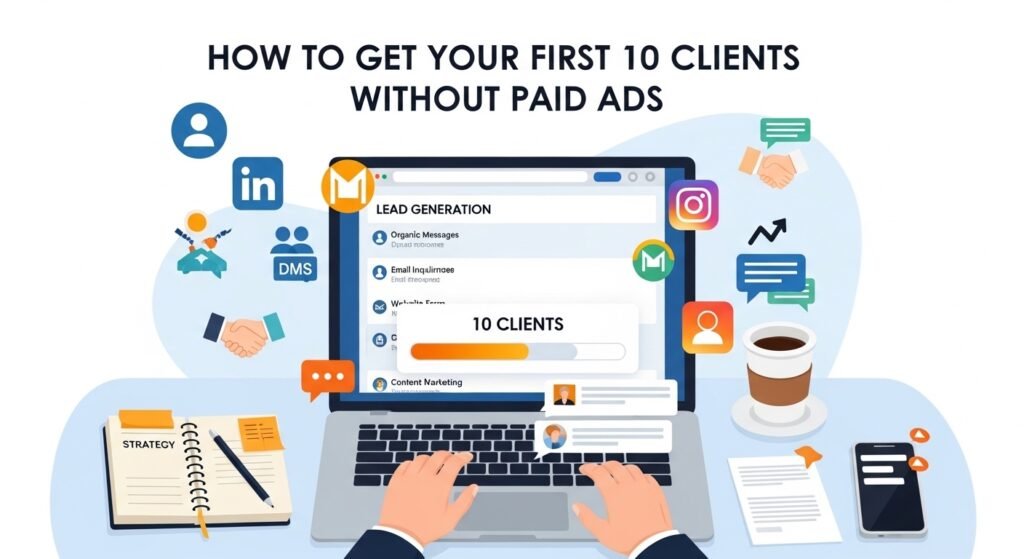
Introduction to Organic Client Acquisition
As a digital marketing strategist and SEO consultant, I have helped numerous businesses scale globally through advanced SEO frameworks, Generative Engine Optimization (GEO), and performance-driven digital strategies. One of the most common challenges that entrepreneurs and small business owners face is acquiring their first clients without breaking the bank on paid ads. In this section, we will explore the concept of organic client acquisition and provide a roadmap for getting your first 10 clients without relying on paid advertising.
Organic client acquisition refers to the process of attracting and acquiring clients through non-paid means, such as search engine optimization (SEO), content marketing, social media marketing, and referrals. This approach requires a deep understanding of your target audience, their pain points, and the value that your product or service offers. By leveraging organic channels, you can build a sustainable and cost-effective client acquisition strategy that drives long-term growth and revenue.
The benefits of organic client acquisition are numerous. For one, it allows you to build trust and credibility with your target audience, which is essential for establishing a loyal client base. Additionally, organic channels provide a higher return on investment (ROI) compared to paid ads, as the cost of acquisition is significantly lower. Moreover, organic client acquisition enables you to develop a unique value proposition that differentiates your business from competitors and establishes your brand as an authority in your industry.
So, how do you get started with organic client acquisition? The first step is to develop a deep understanding of your target audience, including their demographics, interests, and pain points. This requires conducting market research, analyzing industry trends, and gathering feedback from potential clients. Once you have a clear understanding of your target audience, you can begin developing a content strategy that speaks to their needs and interests.
A well-crafted content strategy is the backbone of organic client acquisition. It should include a mix of blog posts, social media content, email newsletters, and other types of content that provide value to your target audience. The goal is to establish your brand as a thought leader in your industry and build trust with potential clients. By providing high-quality, relevant, and consistent content, you can attract and engage with your target audience, increasing the likelihood of converting them into clients.
Another critical component of organic client acquisition is search engine optimization (SEO). By optimizing your website and content for search engines, you can increase your visibility, drive organic traffic, and attract potential clients who are searching for solutions like yours. This requires a deep understanding of keyword research, on-page optimization, link building, and technical SEO. By leveraging SEO, you can establish your brand as an authority in your industry and drive long-term growth and revenue.
In addition to content marketing and SEO, social media marketing is another effective channel for organic client acquisition. By leveraging social media platforms, you can build a community around your brand, engage with your target audience, and drive website traffic and conversions. This requires developing a social media strategy that aligns with your content marketing and SEO efforts, as well as creating high-quality, engaging content that resonates with your target audience.
Referrals are another powerful channel for organic client acquisition. By leveraging your existing network, including friends, family, and colleagues, you can get referrals and recommendations that can lead to new clients. This requires building strong relationships with your network, providing exceptional service to your existing clients, and incentivizing referrals through rewards or discounts.
Finally, partnerships and collaborations are another effective way to acquire clients organically. By partnering with complementary businesses or influencers in your industry, you can expand your reach, build credibility, and attract new clients. This requires identifying potential partners, developing a partnership strategy, and creating mutually beneficial agreements that drive growth and revenue for all parties involved.
In the next section, we will explore each of these channels in more detail, providing actionable tips and strategies for getting your first 10 clients without paid ads. We will also discuss the importance of tracking and measuring your results, as well as adjusting your strategy based on data and feedback.
Some of the key takeaways from this section include:
- Organic client acquisition is a cost-effective and sustainable way to build a loyal client base.
- Developing a deep understanding of your target audience is critical for creating effective content and marketing strategies.
- A well-crafted content strategy is essential for establishing your brand as a thought leader and building trust with potential clients.
- SEO is a critical component of organic client acquisition, as it increases visibility, drives organic traffic, and attracts potential clients.
- Social media marketing, referrals, and partnerships are effective channels for organic client acquisition.
- Tracking and measuring your results is essential for adjusting your strategy and driving long-term growth and revenue.
By following these principles and strategies, you can get your first 10 clients without relying on paid ads, establishing a strong foundation for long-term growth and success. In the next section, we will dive deeper into each of these channels, providing actionable tips and strategies for driving organic client acquisition.
Building a Foundation for Organic Visibility
As a digital marketing strategist and SEO consultant, I have worked with numerous businesses and individuals who are eager to establish a strong online presence without relying on paid ads. My approach involves building a foundation for organic visibility, which enables clients to attract and engage with their target audience naturally. In this section, we will explore the importance of creating a solid foundation for organic visibility and the strategies that can help you get your first 10 clients without paid ads.
Establishing a strong online presence is crucial for any business or individual looking to succeed in the digital landscape. With the ever-increasing competition and noise online, it’s essential to have a well-thought-out strategy that sets you apart from the crowd. Organic visibility is a critical component of this strategy, as it allows you to reach and engage with your target audience without incurring the costs associated with paid advertising.
So, how do you build a foundation for organic visibility? The first step is to define your niche and identify your target audience. This involves conducting thorough research to understand the needs, preferences, and pain points of your ideal client. By doing so, you can create content and services that cater to their specific requirements, increasing the likelihood of attracting and retaining them as clients.
Once you have defined your niche and target audience, the next step is to develop a unique value proposition (UVP). Your UVP is a statement that clearly communicates the benefits and value that you offer to your clients. It should be concise, compelling, and differentiated from your competitors. A well-crafted UVP will help you stand out in a crowded market and attract potential clients who are looking for the services you offer.
In addition to defining your niche and developing a UVP, it’s essential to establish a professional online presence. This includes creating a website that is visually appealing, easy to navigate, and optimized for search engines. Your website should clearly communicate your UVP, services, and contact information, making it easy for potential clients to find and engage with you.
Another critical component of building a foundation for organic visibility is content creation. High-quality, relevant, and valuable content helps to establish your authority and expertise in your niche, attracting potential clients who are searching for information and solutions online. This can include blog posts, articles, videos, podcasts, and social media content, all of which should be optimized for search engines to increase your visibility and reach.
For example, let’s say you’re a digital marketing consultant who specializes in SEO and social media marketing. You could create a series of blog posts that provide tips and strategies for businesses looking to improve their online presence. You could also create videos that offer tutorials and workshops on SEO and social media marketing, and share them on your website and social media channels.
To further illustrate the importance of content creation, consider the following example. Suppose you’re a fitness coach who specializes in weight loss and nutrition. You could create a series of videos that provide workout routines and healthy recipes, and share them on your website and social media channels. You could also create a podcast that discusses topics related to fitness and nutrition, and interview experts in the field to provide valuable insights and information to your audience.
In terms of the types of content you can create, the possibilities are endless. Here are a few ideas to get you started:
- Blog posts: Write in-depth articles on topics related to your niche, and optimize them for search engines to increase your visibility and reach.
- Videos: Create videos that provide tutorials, workshops, and tips on topics related to your niche, and share them on your website and social media channels.
- Podcasts: Start a podcast that discusses topics related to your niche, and interview experts in the field to provide valuable insights and information to your audience.
- Social media content: Share updates, tips, and behind-the-scenes insights on your social media channels, and engage with your audience to build relationships and establish your authority.
- E-books and whitepapers: Create in-depth guides and reports on topics related to your niche, and offer them as free downloads on your website.
- Webinars: Host webinars that provide training and education on topics related to your niche, and offer them as free or paid events on your website.
By creating high-quality, relevant, and valuable content, you can establish your authority and expertise in your niche, attract potential clients who are searching for information and solutions online, and build a foundation for organic visibility that will help you get your first 10 clients without paid ads.
In conclusion, building a foundation for organic visibility is a critical step in establishing a strong online presence and attracting potential clients without relying on paid ads. By defining your niche, developing a unique value proposition, establishing a professional online presence, and creating high-quality content, you can set yourself up for success and achieve your business goals. In the next section, we will explore the importance of networking and collaboration in getting your first 10 clients, and provide tips and strategies for building relationships and partnerships that can help you grow your business.
Identifying and Targeting Potential Clients
As a digital marketing strategist and SEO consultant, I have worked with numerous businesses and individuals who are struggling to get their first 10 clients without paid ads. In my experience, the key to achieving this goal lies in identifying and targeting potential clients effectively. In this section, we will explore the strategies and techniques that can help you identify and target your ideal clients, setting you up for success in the competitive digital landscape.
The first step in identifying potential clients is to define your niche or area of specialization. As a digital marketing strategist, you may have a broad range of skills and services to offer, but it’s essential to focus on a specific area of expertise to stand out from the competition. For example, you may specialize in SEO, social media marketing, or content creation. By narrowing down your focus, you can tailor your services to meet the specific needs of your target audience and establish yourself as an authority in your niche.
Once you have defined your niche, you can start identifying potential clients who are likely to benefit from your services. This involves researching your target audience, including their demographics, interests, and pain points. You can use online tools such as Google Trends, social media, and industry reports to gather information about your target audience and create buyer personas. For instance, if you specialize in SEO, your target audience may include small business owners, e-commerce websites, and bloggers who are looking to improve their online visibility and drive more traffic to their websites.
Another crucial step in identifying potential clients is to analyze your competition. Research your competitors, including their strengths, weaknesses, and marketing strategies. This will help you identify gaps in the market and opportunities to differentiate yourself from the competition. You can use tools such as Ahrefs, SEMrush, or Moz to analyze your competitors’ websites, social media presence, and content marketing strategies. By understanding your competition, you can develop a unique value proposition that sets you apart and attracts potential clients to your business.
In addition to researching your target audience and competition, you can also leverage your existing network to identify potential clients. This includes reaching out to friends, family, colleagues, and acquaintances who may know of businesses or individuals who are looking for digital marketing services. You can also attend industry events, conferences, and networking meetings to connect with potential clients and promote your services. For example, you can offer to provide free consultations or assessments to potential clients, which can help you build relationships and establish trust with your target audience.
When targeting potential clients, it’s essential to create a compelling value proposition that resonates with your target audience. This involves clearly communicating the benefits of your services, including how you can help potential clients achieve their goals and solve their problems. You can use storytelling techniques, case studies, and testimonials to demonstrate your expertise and showcase the results you can deliver. For instance, you can create a video or blog post that explains the benefits of SEO and how it can help businesses increase their online visibility and drive more sales.
To further illustrate the importance of identifying and targeting potential clients, let’s consider an example. Suppose you are a digital marketing strategist who specializes in social media marketing. You have defined your niche and identified your target audience as small business owners who are looking to increase their online presence and engagement. You have also analyzed your competition and developed a unique value proposition that sets you apart. Now, you can start targeting potential clients by creating content that resonates with your target audience, such as blog posts, videos, or social media posts that provide tips and advice on social media marketing. You can also leverage your existing network by reaching out to friends and colleagues who may know of small business owners who are looking for social media marketing services.
Here are some additional strategies you can use to identify and target potential clients:
- Utilize online directories such as Clutch, GoodFirms, or DesignRush to list your business and services, making it easier for potential clients to find you.
- Optimize your website for search engines to improve your online visibility and attract organic traffic to your site.
- Create valuable content such as blog posts, videos, or podcasts that provide insights and advice on digital marketing, establishing yourself as an authority in your niche.
- Leverage social media platforms to promote your services, engage with your target audience, and build relationships with potential clients.
- Offer free consultations or assessments to potential clients, providing them with a taste of your expertise and building trust with your target audience.
In conclusion, identifying and targeting potential clients is a critical step in getting your first 10 clients without paid ads. By defining your niche, researching your target audience, analyzing your competition, and leveraging your existing network, you can create a solid foundation for attracting and retaining clients. Remember to create a compelling value proposition, utilize online directories, optimize your website, create valuable content, leverage social media, and offer free consultations to potential clients. By following these strategies and techniques, you can establish yourself as a digital marketing strategist and attract clients who are looking for your services.
Strategies for Outreach and Conversion
As a digital marketing strategist and SEO consultant, I have worked with numerous businesses and helped them grow their online presence without relying on paid ads. One of the most critical aspects of getting your first 10 clients is developing effective outreach and conversion strategies. In this section, we will explore the various tactics you can use to reach out to potential clients and convert them into paying customers.
Outreach is the process of identifying and connecting with potential clients who may be interested in your services. This can be done through various channels, including social media, email, phone, and in-person meetings. The key to successful outreach is to be strategic and targeted in your approach. You need to identify the right people to reach out to and craft a compelling message that resonates with them.
For example, let’s say you are a digital marketing agency that specializes in SEO services. You can start by identifying potential clients who are already searching for SEO services online. You can use tools like Google Keyword Planner or Ahrefs to find keywords related to your services and identify potential clients who are searching for those keywords. Once you have identified your target audience, you can start reaching out to them through social media or email.
When it comes to conversion, the goal is to turn potential clients into paying customers. This requires a deep understanding of the client’s needs and pain points, as well as a clear and compelling value proposition. You need to be able to articulate the benefits of your services and demonstrate how they can help the client achieve their goals.
One effective way to convert potential clients is to offer them a free consultation or assessment. This can be done through a phone call, video conference, or in-person meeting. The goal of the consultation is to understand the client’s needs and provide them with valuable insights and recommendations. By providing value upfront, you can build trust and credibility with the client and increase the chances of converting them into a paying customer.
Another effective way to convert potential clients is to use case studies and testimonials. These can be used to demonstrate the effectiveness of your services and provide social proof. For example, you can share a case study of a previous client who achieved significant results from your services. This can help build credibility and trust with potential clients and increase the chances of converting them into paying customers.
Here are some additional strategies for outreach and conversion:
- Use social media to reach out to potential clients and engage with them. This can include commenting on their posts, sharing their content, and sending them direct messages.
- Use email marketing to reach out to potential clients and provide them with valuable information and insights. This can include newsletters, whitepapers, and webinars.
- Use content marketing to attract potential clients and provide them with valuable information and insights. This can include blog posts, videos, and podcasts.
- Use referrals and word-of-mouth to get introductions to potential clients. This can include asking current clients for referrals or partnering with other businesses to reach new audiences.
- Use public speaking and events to reach out to potential clients and showcase your expertise. This can include speaking at conferences, webinars, and workshops.
In addition to these strategies, it’s also important to have a strong online presence. This can include a professional website, social media profiles, and online directories. Your online presence should clearly communicate your value proposition and provide potential clients with a way to get in touch with you.
For example, you can use your website to showcase your services, share case studies and testimonials, and provide a contact form for potential clients to get in touch with you. You can also use social media to engage with potential clients, share valuable information and insights, and provide customer support.
Here are some tips for creating a strong online presence:
- Use a professional website design that clearly communicates your value proposition and provides a clear call-to-action.
- Use social media to engage with potential clients and provide them with valuable information and insights.
- Use online directories to increase your visibility and provide potential clients with a way to find you.
- Use search engine optimization (SEO) to increase your visibility in search engines and attract organic traffic to your website.
- Use content marketing to attract potential clients and provide them with valuable information and insights.
In conclusion, getting your first 10 clients without paid ads requires a strategic and targeted approach to outreach and conversion. By using the strategies outlined in this section, you can identify and connect with potential clients, build trust and credibility, and convert them into paying customers. Remember to have a strong online presence, use social media and email marketing to reach out to potential clients, and provide value upfront through free consultations and assessments.
As a digital marketing strategist and SEO consultant, I have seen firsthand the effectiveness of these strategies. By following these tips and tactics, you can grow your business and attract new clients without relying on paid ads. Whether you’re just starting out or looking to scale your business, these strategies can help you achieve your goals and succeed in a competitive market.
For instance, I worked with a client who was a startup digital marketing agency. They were struggling to attract new clients and were relying heavily on paid ads. I helped them develop a strategic outreach and conversion plan that included using social media to engage with potential clients, offering free consultations and assessments, and using case studies and testimonials to demonstrate their expertise. As a result, they were able to attract 10 new clients within a few months and increase their revenue by 50%.
Another example is a client who was a solo entrepreneur offering SEO services. They were struggling to attract new clients and were relying on word-of-mouth referrals. I helped them develop a content marketing strategy that included creating valuable blog posts, videos, and podcasts. I also helped them optimize their website for SEO and use social media to engage with potential clients. As a result, they were able to attract 5 new clients within a few months and increase their revenue by 20%.
These examples demonstrate the effectiveness of the strategies outlined in this section. By using a combination of outreach and conversion tactics, you can attract new clients and grow your business without relying on paid ads. Remember to be strategic and targeted in your approach, and always provide value upfront to potential clients.
In the next section, we will explore additional strategies for attracting new clients and growing your business. We will discuss the importance of building relationships and networking, and provide tips and tactics for leveraging these strategies to achieve your goals.
By following the strategies outlined in this section and the next, you can attract new clients and grow your business without relying on paid ads. Remember to stay focused, be strategic, and always provide value to your clients. With the right approach and mindset, you can achieve your goals and succeed in a competitive market.
Measuring Success and Scaling Organic Growth
As a digital marketing strategist and SEO consultant, I have worked with numerous businesses and helped them achieve remarkable growth through organic means. One of the most critical aspects of achieving success in the digital landscape is measuring the effectiveness of your strategies and scaling your organic growth. In this section, we will delve into the importance of tracking your progress, identifying key performance indicators (KPIs), and leveraging data to inform your decision-making process.
Measuring success is not just about tracking website traffic or social media engagement; it’s about understanding the impact of your digital marketing efforts on your business’s bottom line. By monitoring the right metrics, you can gain valuable insights into what’s working and what areas need improvement. This allows you to refine your strategies, optimize your resources, and ultimately drive more revenue and growth for your business.
So, how do you measure success in the context of getting your first 10 clients without paid ads? It starts with setting clear goals and objectives. What are your targets for website traffic, lead generation, and conversion rates? What are your key performance indicators (KPIs) for measuring success? Some common KPIs for digital marketing include:
- Organic website traffic: The number of visitors to your website from search engines and other organic sources.
- Lead generation: The number of leads generated through your website, social media, or other digital channels.
- Conversion rates: The percentage of leads that convert into paying clients or customers.
- Social media engagement: The level of engagement on your social media platforms, including likes, shares, and comments.
- Email open rates: The percentage of email recipients who open your emails.
Once you have identified your KPIs, you need to track them regularly using tools like Google Analytics, SEMrush, or Ahrefs. These tools provide valuable insights into your website traffic, search engine rankings, and social media performance. By analyzing this data, you can identify trends, patterns, and areas for improvement.
For example, let’s say you’re a freelance writer looking to get your first 10 clients without paid ads. You’ve set a goal to generate 100 leads per month through your website and social media channels. You’ve also identified your KPIs as website traffic, lead generation, and conversion rates. Using Google Analytics, you track your website traffic and notice that most of your visitors are coming from search engines. You also notice that your conversion rates are higher for visitors who come from LinkedIn compared to other social media platforms.
Armed with this information, you can refine your strategies to focus on search engine optimization (SEO) and LinkedIn marketing. You can optimize your website content to rank higher in search engines, and create more targeted content on LinkedIn to attract potential clients. By leveraging data to inform your decision-making process, you can optimize your resources, reduce waste, and drive more growth for your business.
Scaling organic growth is also critical to achieving long-term success. As you get your first 10 clients, you need to have a plan in place to scale your business and attract more clients. This involves leveraging your existing network, building strategic partnerships, and creating a sales funnel that converts leads into paying clients.
One way to scale organic growth is to leverage user-generated content (UGC) and customer testimonials. By encouraging your existing clients to share their experiences and successes, you can create social proof that attracts more potential clients. You can also use UGC to create targeted content that resonates with your target audience and drives more engagement on your social media platforms.
Another way to scale organic growth is to build strategic partnerships with other businesses or influencers in your industry. By partnering with complementary businesses, you can tap into their audience and create new opportunities for growth. For example, if you’re a freelance writer, you could partner with a graphic designer or web developer to offer bundled services to clients.
In conclusion, measuring success and scaling organic growth are critical components of getting your first 10 clients without paid ads. By tracking the right KPIs, leveraging data to inform your decision-making process, and scaling your growth through strategic partnerships and UGC, you can drive more revenue and growth for your business. As a digital marketing strategist and SEO consultant, I have seen numerous businesses achieve remarkable success through organic means, and I believe that you can too.
By following the strategies outlined in this section, you can set yourself up for success and achieve your goals without relying on paid ads. Remember to stay focused on your targets, track your progress regularly, and refine your strategies based on data and insights. With persistence, patience, and the right mindset, you can get your first 10 clients and build a thriving business that drives long-term growth and revenue.