
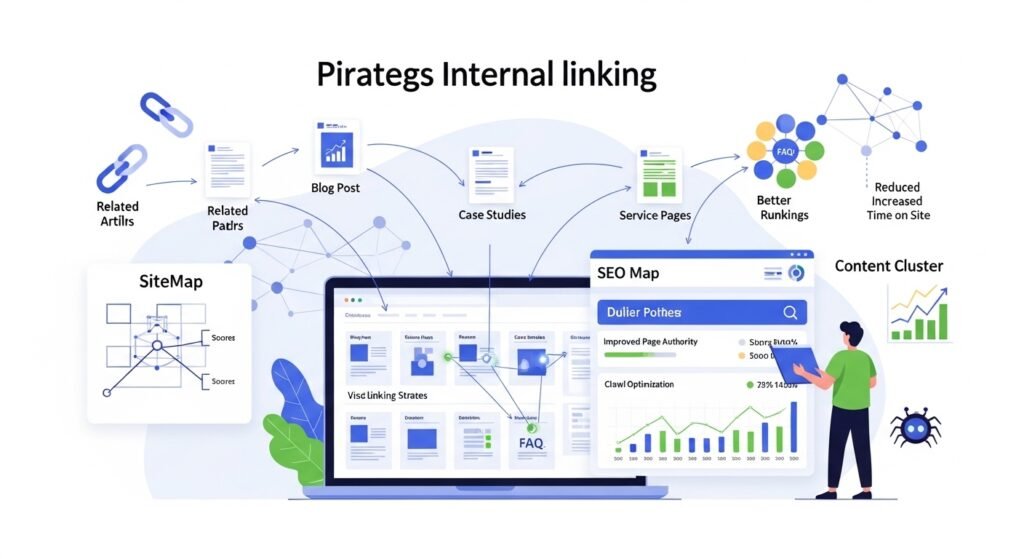
Internal linking is one of the most underrated yet powerful SEO strategies for small businesses. While many brands focus heavily on backlinks and external promotions, they often overlook the strategic value of linking pages within their own website. Internal linking refers to connecting one page of your website to another relevant page using anchor text. When implemented correctly, it helps search engines understand your website structure, distribute link equity (ranking power), and identify important pages. In 2026, with search algorithms becoming more context-driven and user-focused, internal linking plays a major role in building topical authority.
For small businesses, this means you can boost rankings without spending extra money on ads or backlinks. By linking blog posts to service pages, connecting related articles, and guiding users through logical content paths, you increase dwell time, improve user experience, and strengthen SEO signals. Internal links also help new pages get indexed faster and improve crawl efficiency. For example, if you publish a blog about “Local SEO Tips,” linking it to your “SEO Services” page passes relevance and authority.
Additionally, optimized anchor text (descriptive clickable text) tells search engines what the linked page is about. Instead of generic text like “click here,” using keyword-rich anchors improves contextual clarity. A well-structured internal linking strategy transforms your website from isolated pages into a connected ecosystem.
Internal linking is not just about navigation—it’s about authority building. When search engines see structured content relationships, they recognize expertise within a topic cluster. For small businesses competing against larger brands, smart internal linking is a cost-effective way to strengthen credibility, improve rankings, and drive more conversions organically.
What Is Internal Linking?
Internal linking means linking one page of your website to another page on the same domain.
Examples:
- Blog → Service page
- Service page → Case study
- Homepage → Key category pages
- FAQ → Related blog posts
It creates a structured content network.
Why Internal Linking Matters for Small Businesses
1️⃣ Improves Search Engine Crawling
Search engines discover and index pages faster through internal links.
2️⃣ Distributes Page Authority
High-performing pages can pass ranking strength to newer or weaker pages.
3️⃣ Enhances User Experience
Visitors easily navigate related content, increasing time on site.
4️⃣ Builds Topical Authority
Search engines recognize subject depth when pages are interconnected.
Core Internal Linking Strategies
1. Create Topic Clusters
Structure content into:
- Pillar page (main topic)
- Supporting blog articles
Example:
Pillar Page: Digital Marketing Services
Supporting Articles:
- SEO Tips
- Social Media Strategy
- PPC Advertising Guide
Link all supporting articles back to the pillar page.
2. Use Descriptive Anchor Text
Avoid:
“Click here”
Use:
“Affordable SEO services for small businesses”
Descriptive anchors improve keyword relevance.
3. Link High-Traffic Pages to Conversion Pages
Identify pages with high traffic and add links to:
- Contact page
- Service pages
- Booking form
This increases conversion opportunities.
4. Add Contextual Links Within Content
Place links naturally inside paragraphs where relevant.
Example:
If writing about “Local SEO,” link to your “Google Business Optimization” service.
Relevance is key.
5. Maintain Logical Hierarchy
Homepage
→ Category pages
→ Subcategories
→ Blog posts
Clear structure improves crawl efficiency.
Best Practices
✔ Link to relevant content only
✔ Keep anchor text natural
✔ Avoid over-linking on one page
✔ Update old posts with new links
✔ Ensure no broken links
✔ Use breadcrumb navigation
Balance improves usability and SEO.
Internal Linking for New Websites
If your site is small:
Step 1: Identify core services
Step 2: Create detailed blog content
Step 3: Link blog posts to services
Step 4: Interlink related blogs
Step 5: Review monthly for updates
Gradual linking builds authority over time.
Common Mistakes to Avoid
❌ Using identical anchor text repeatedly
❌ Linking irrelevant pages
❌ Creating orphan pages (no links pointing to them)
❌ Overloading pages with excessive links
❌ Ignoring old content updates
Strategic linking matters more than quantity.
Measuring Internal Linking Impact
Track:
- Organic traffic growth
- Keyword ranking improvements
- Crawl stats in Search Console
- Average session duration
- Bounce rate reduction
- Conversion rate increase
Better linking often improves multiple metrics simultaneously.
Long-Term Benefits
Effective internal linking leads to:
- Stronger topical authority
- Higher rankings
- Better user navigation
- Increased conversions
- Faster indexing of new content
It strengthens your entire website ecosystem.
Final Thoughts
Internal linking is one of the simplest yet most powerful SEO strategies available to small businesses. Unlike backlinks, it is fully within your control and requires no external investment.
By structuring your website logically, connecting related content, and using optimized anchor text, you turn your website into a cohesive authority hub rather than scattered pages.
In competitive markets, smart internal linking can be the difference between ranking on page one or remaining invisible. Build connections within your content, and search engines will recognize your expertise. 🚀