
🌟 Introduction
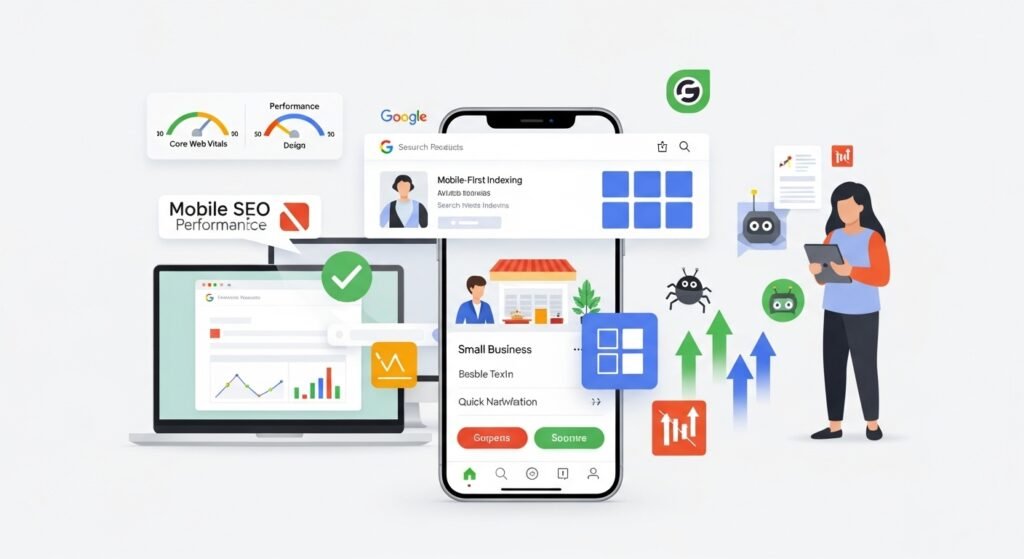
In 2026, mobile devices are no longer an alternative way to browse the internet — they are the primary way people search, shop, and interact with businesses online. With over 75% of global web traffic coming from smartphones, Google has officially shifted to mobile-first indexing, meaning it primarily uses the mobile version of a website to determine search rankings.
For small businesses, this change is critical. A website that looks perfect on desktop but performs poorly on mobile will struggle to rank, convert visitors, and generate leads. Mobile-first indexing doesn’t mean having a mobile-friendly site anymore — it means your mobile experience must be your best experience.
From page speed and layout to content readability and navigation, Google evaluates how easily mobile users can access information. Slow load times, tiny text, unclickable buttons, intrusive pop-ups, or missing mobile content can directly hurt rankings — even if your desktop site is flawless.
The good news? Small businesses can compete with big brands by focusing on mobile usability, performance, and accessibility. Optimizing for mobile-first indexing not only improves SEO but also enhances customer experience, reduces bounce rates, and increases conversions.
In this complete guide, you’ll learn what mobile-first indexing really means, why it matters for small businesses, how to optimize your website step-by-step, real case studies, success stories, video ideas, a full mobile SEO toolkit, and frequently asked questions — all explained in simple, actionable terms.
If your website isn’t optimized for mobile users in 2026, you’re already falling behind.
✅ What Is Mobile-First Indexing & Why It Matters
Mobile-first indexing means:
- Google crawls your mobile site first
- Rankings are based on mobile performance
- Desktop version becomes secondary
🔍 Why Small Businesses Must Care
- Most local searches happen on mobile
- Mobile UX affects trust & conversions
- Poor mobile sites lose visibility
📊 SEO Insight:
Google rewards fast, responsive, and mobile-friendly websites.
✅ How to Optimize Your Website for Mobile-First Indexing (Step-by-Step)
Step 1: Use Responsive Web Design
- Same URL for desktop & mobile
- Flexible layouts for all screen sizes
Step 2: Improve Mobile Page Speed
- Compress images
- Use lazy loading
- Minimize scripts
🎯 Goal: Load pages under 3 seconds.
Step 3: Ensure Content Parity
- Mobile version must include all important content
- No hidden text or missing sections
Step 4: Optimize Fonts & Buttons
- Readable font sizes
- Clickable buttons with enough spacing
Step 5: Avoid Intrusive Pop-Ups
- Especially on mobile
- Use subtle banners instead
Step 6: Optimize Mobile SEO Elements
- Title tags
- Meta descriptions
- Headings
- Schema markup
✅ How Mobile Optimization Improved Rankings for a Small Business
Client: Local service business
Issues:
❌ Slow mobile site
❌ High bounce rate
Mobile-First Improvements
✔ Speed optimization
✔ Responsive redesign
✔ Mobile-friendly CTAs
Results (90 Days)
📈 35% increase in mobile traffic
📈 22% boost in local rankings
📉 Lower bounce rate
⭐ From Page 3 to Page 1 with Mobile-First SEO
A small retailer optimized:
- Mobile UX
- Page speed
- Touch-friendly navigation
Result:
✔ Higher Google visibility
✔ More mobile leads
✔ Improved conversions
🎬 Video Idea: “Why Mobile-First Indexing Matters in 2026”
Video topics:
- Google’s mobile indexing update
- Mobile SEO checklist
- Live site audit example
Ideal for Reels, Shorts & YouTube.
🚀 Mobile-First SEO Toolkit for Small Businesses
Essential Mobile Optimization Elements
| Element | Benefit |
| Responsive Design | Better rankings |
| Fast Load Time | Lower bounce |
| Mobile UX | Higher conversions |
| Content Parity | SEO consistency |
Recommended Tools
- Google Mobile-Friendly Test
- PageSpeed Insights
- Lighthouse
- Search Console
Best Practices
- Test monthly
- Monitor mobile rankings
- Update content regularly
- Optimize for local searches
❓ FAQs (Frequently Asked Questions)
1. Does Google only use mobile sites now?
Yes, mobile version is primary for indexing.
2. Is a mobile app required?
No, a mobile-optimized website is enough.
3. Can desktop SEO still help?
Yes, but mobile performance is critical.
4. How do I check mobile issues?
Use Google Search Console.
5. Is mobile-first indexing expensive?
No — many improvements are simple.
🏁 Final Thoughts
Mobile-first indexing is not a trend — it’s the standard.
In 2026, small businesses that:
✔ Prioritize mobile users
✔ Optimize speed & usability
✔ Focus on mobile SEO
will rank higher, convert better, and grow faster.
At Kanity Solutions, we help businesses:
- Optimize for mobile-first indexing
- Improve Google rankings
- Increase mobile conversions
🌐 www.kanity.in
📞 9454784602