
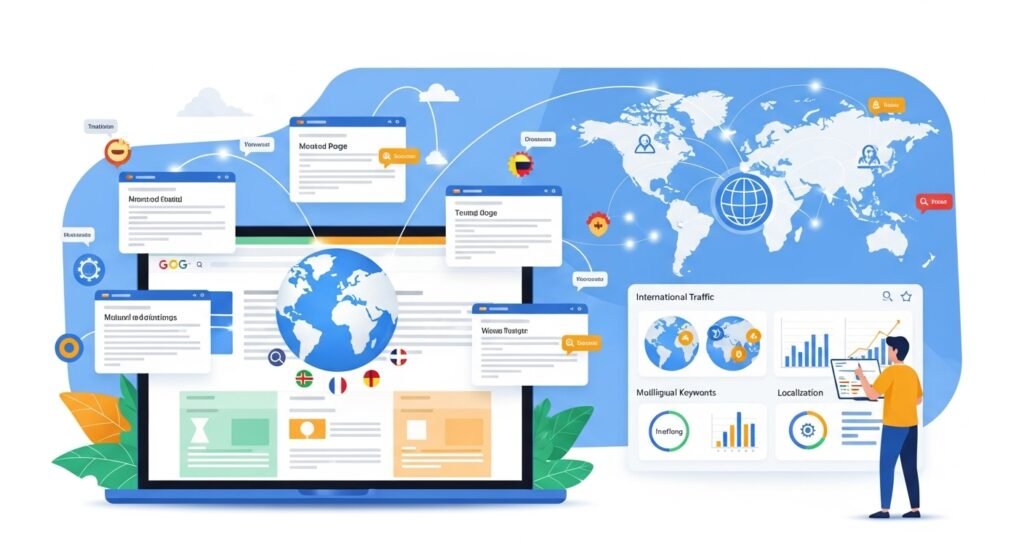
In today’s digitally connected world, small businesses are no longer limited to serving only one language audience. Especially in countries like India—where multiple regional languages are spoken—businesses that optimize their websites and content for more than one language can unlock significant growth opportunities. Multilingual SEO (Search Engine Optimization) is the practice of optimizing your website so it ranks in search engines for users searching in different languages. It goes beyond simple translation; it requires localized keyword research, culturally relevant content adaptation, proper technical configuration (like hreflang tags), and user-friendly navigation for multiple language versions. When done correctly, multilingual SEO helps small businesses attract new customer segments, improve search visibility, and increase conversions from diverse communities.
For example, a coaching institute targeting both English-speaking and Hindi-speaking students can create separate landing pages optimized for “Best SSC Coaching in Delhi” and “दिल्ली में बेस्ट SSC कोचिंग.” This approach ensures visibility in both language-based searches. Additionally, multilingual content builds trust. Customers feel more comfortable engaging with brands that communicate in their native language. It reduces friction, improves user experience, and increases the likelihood of inquiries or purchases.
Small businesses often assume multilingual SEO is expensive or only for global corporations. However, even adding one additional language strategically can create competitive advantages, especially in regional markets. By combining localized keywords, proper website structure, and consistent content updates, small brands can significantly expand their digital footprint.
Multilingual SEO is not just about traffic—it’s about accessibility, inclusivity, and deeper market penetration. Businesses that embrace language diversity position themselves as customer-centric, culturally aware, and growth-focused.
What Is Multilingual SEO?
Multilingual SEO is the process of optimizing website content so it ranks in multiple languages on search engines like Google.
It involves:
- Translating and localizing content
- Conducting keyword research in each language
- Using hreflang tags
- Creating language-specific URLs
- Optimizing meta titles and descriptions
It is not just translation—it’s strategic localization.
Why Small Businesses Should Invest in Multilingual SEO
1️⃣ Reach Untapped Audiences
Many users search in their native language. If your website only exists in English, you miss those opportunities.
2️⃣ Higher Conversion Rates
Customers trust brands that communicate in their preferred language.
3️⃣ Competitive Advantage
Many small businesses ignore multilingual optimization—this gives you an edge.
4️⃣ Stronger Local SEO
Regional language pages rank better for location-based searches.
How Multilingual SEO Works
1. Language-Specific Keyword Research
Search intent differs by language. For example:
English: “Affordable digital marketing agency in Delhi”
Hindi: “दिल्ली में सस्ती डिजिटल मार्केटिंग एजेंसी”
Use keyword tools separately for each language.
2. Proper Website Structure
Choose one structure:
- example.com/hi/
- hi.example.com
- example.com?lang=hi
The most SEO-friendly structure is usually:
example.com/hi/
This helps search engines understand language versions clearly.
3. Implement Hreflang Tags
Hreflang tags tell search engines which language version to show users based on location and language preferences.
Without proper tagging, Google may show the wrong version.
4. Localized Content (Not Just Translation)
Direct translation may sound unnatural.
Localization includes:
- Cultural references
- Currency formats
- Local examples
- Regional testimonials
Make content feel native—not translated.
Best Practices for Multilingual SEO
✔ Translate meta titles and descriptions
✔ Optimize images with localized alt text
✔ Create language-specific blog posts
✔ Maintain consistent branding
✔ Avoid auto-translation without review
✔ Ensure fast page loading for all versions
Example Strategy for Small Businesses
Imagine a small retail shop in Delhi:
Step 1: Create English and Hindi landing pages
Step 2: Optimize both with local keywords
Step 3: Add Hindi blog articles
Step 4: Promote via local language ads
Step 5: Track performance separately
This can double visibility in search results.
Common Mistakes to Avoid
❌ Using Google Translate without editing
❌ Mixing languages on the same page
❌ Ignoring technical SEO setup
❌ Forgetting to translate CTAs
❌ Not tracking language-based performance
Poor implementation can hurt rankings.
Tools That Help
- Google Search Console
- Google Keyword Planner
- Ahrefs / SEMrush
- Weglot (for language integration)
- WPML (for WordPress sites)
These tools simplify multilingual optimization.
Measuring Success
Track:
- Organic traffic by language
- Bounce rate per language
- Conversion rate
- Keyword rankings
- Engagement metrics
Data helps refine strategy.
Long-Term Benefits
Multilingual SEO leads to:
- Broader customer base
- Stronger brand inclusivity
- Improved trust
- Higher search visibility
- Increased long-term revenue
Language accessibility builds brand credibility.
Final Thoughts
For small businesses aiming to grow in diverse markets, multilingual SEO is a powerful and practical strategy. It removes language barriers, improves user experience, and increases search visibility across different audience segments.
In a competitive digital environment, businesses that speak their customers’ language—literally—gain deeper trust and stronger engagement. Start with one additional language, implement it strategically, and scale gradually.
Growth doesn’t always require bigger budgets—sometimes it simply requires speaking the right language. 🌍🚀