
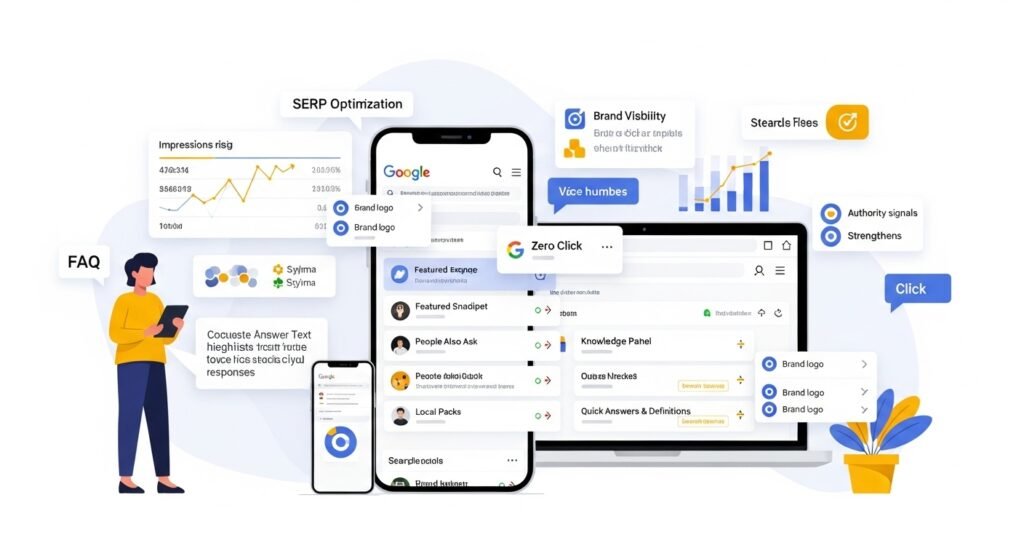
In 2026, not every successful search result leads to a website visit—and that’s not a bad thing. With the rise of zero-click searches, Google increasingly answers user queries directly on the search results page. Featured snippets, People Also Ask boxes, local packs, knowledge panels, and AI-generated summaries now provide instant answers without requiring users to click through. While this may seem like a loss of traffic, it is actually a powerful opportunity for businesses to gain brand visibility, authority, and trust.
Zero-click searches happen when users get exactly what they need directly from Google. These searches are especially common for informational queries, definitions, comparisons, local intent searches, and quick solutions. For small businesses, winning zero-click visibility means your brand appears as the source of truth, even if the user doesn’t visit your website immediately.
This shift changes how SEO success is measured. Instead of focusing only on clicks, modern SEO emphasizes impressions, brand exposure, search dominance, and repeated visibility. When users repeatedly see your business featured in snippets or answer boxes, trust builds—and when they’re ready to buy, they remember your brand.
Optimizing for zero-click searches also aligns perfectly with voice search, AI assistants, and mobile behavior, where users expect fast, clear answers. Businesses that structure content for these formats gain an edge in both search and brand recall.
In this article, you’ll learn what zero-click searches are, why they matter in 2026, how to optimize your content to win featured visibility, real-world case studies, success stories, video content ideas, a practical optimization framework, and FAQs—all explained in simple, actionable terms for small businesses.
What Are Zero-Click Searches and Why They Matters
Zero-click searches occur when Google answers a query directly on the results page. These answers appear in:
- Feature snippets
- People Also Ask sections
- Knowledge pannels
- Local map packs
- AI-generated summaries
For small businesses, this means:
- Higher brand exposure
- Authority positioning
- Visibility without relying on clicks
Instead of losing traffic, businesses gain mindshares.
How to Optimize Content for Zero-Click Searches Step by Step
Step 1: Target Question-Based Queries
Focus on:
- Who, what, why, how queries
- Comparison searches
- Definitions and explanations
Step 2: Use Clear, Structured Answers
Provide:
- Direct answers in 40–60 words
- Bullet points and numbered lists
- Clear headings
Step 3: Optimize for Feature Snippets
Place:
- The answer immediately after the heading
- Supporting details below
Step 4: Use Schema Markup
Implement:
- FAQ schema
- How-to schema
- Local business schema
Step 5: Optimize for Mobile & Voice Search
Use:
- Simple language
- Conversational tone
- Fast-loading pages
Case Study: How Zero-Click Visibility Increased Brand Searches
A service business focused only on ranking blog posts struggled with declining click-through rates. After restructuring content to answer common customer questions clearly, multiple pages began appearing in featured snippets.
Results within three months:
- Significant increase in impressions
- More branded searches
- Higher trust from repeat exposure
Even without clicks, brand demand increased.
Success Story: Becoming the “Answer” in Google Search
A local expert published concise answers to industry questions using structured content and schema markup. Over time, their website dominated People Also Ask boxes.
The result:
- Strong authority perception
- Increased inbound leads
- Higher conversion intent when users clicked later
Zero-click visibility became a branding asset.
Video Content Ideas for Zero-Click Optimization
A powerful video idea is “How to Rank in Featured Snippets Without Click”, covering:
- Zero-click examples
- Content formatting tips
- Live SERP breakdowns
These videos perform well on YouTube, LinkedIn, and Instagram Reels.
Zero-Click Optimization Framework
A winning strategy includes:
- Question-focused content
- Clear formatting
- Schema implementation
- SERP monitoring
Recommended Tools
- Google Search Console
- Ahrefs or SEMrush
- Schema markup generators
- SERP preview tools
Best Practices
- Update answers regularly
- Track impressions, not just clicks
- Focus on search intent
- Combine zero-click with conversion pages
FAQs: Zero-Click Searches & SEO
Are zero-click searches bad for SEO?
No. They improve brand visibility and authority.
Can zero-click results drive sales?
Yes. They increase trust and branded searches.
Do featured snippets change often?
Yes. Fresh, accurate content helps retain them.
Is schema markup required?
Not mandatory, but highly recommended.
Should small businesses optimize for zero-click searches?
Absolutely. It’s a major visibility opportunity.
Final Thoughts
Zero-click searches are not the enemy of SEO—they are its evolution. Businesses that adapt by focusing on visibility, authority, and intent gain long-term advantages even when clicks are limited.
In 2026, SEO success means:
- Being visible everywhere
- Becoming the trusted answer
- Building brand recognition before conversion
At Kanity Solutions, we help businesses optimize for zero-click searches, featured snippets, and modern SERP visibility.
🌐 www.kanity.in
📞 9454784602