
Introduction
In 2026, podcasts have become one of the fastest‑growing mediums for storytelling, education, and brand building. With millions of listeners worldwide, podcasts offer small businesses a unique opportunity to build authority, connect with niche audiences, and establish trust—all without the need for expensive video production or large marketing budgets.
Unlike traditional advertising, podcasting thrives on authenticity and long‑form engagement. For small businesses, this means they can share expertise, customer stories, and industry insights in a way that feels personal and relatable.
Why Podcast Marketing Matters for Small Businesses
- Low entry barrier: Starting a podcast requires minimal equipment and investment.
- High engagement: Listeners often spend 20–40 minutes per episode, far longer than social media attention spans.
- Authority building: Sharing expertise positions small businesses as thought leaders.
- Community growth: Podcasts foster loyal audiences who return weekly.
- Cross‑platform reach: Episodes can be repurposed into blogs, social posts, and YouTube videos.
Step 1: Define Your Podcast Strategy
Before recording, small businesses should clarify their goals.
- Purpose: Build authority, educate customers, or share behind‑the‑scenes stories.
- Target audience: Identify niche listeners (local customers, industry peers, or global enthusiasts).
- Format: Interviews, solo episodes, panel discussions, or storytelling.
- Frequency: Weekly or bi‑weekly episodes for consistency.
- Length: 20–30 minutes works best for busy listeners.
Step 2: Choose the Right Topics
Content drives authority. Small businesses should:
- Share expertise: A bakery can discuss baking techniques; a fitness studio can share health tips.
- Answer FAQs: Address common customer questions in detail.
- Feature guests: Invite local experts, influencers, or loyal customers.
- Tell stories: Share the journey of building the business, challenges, and successes.
- Trend alignment: Discuss industry trends relevant to the audience.
Step 3: Invest in Quality Audio
Good sound builds credibility.
- Microphone: Affordable USB or XLR microphones improve quality.
- Quiet space: Record in a noise‑free environment.
- Editing tools: Use free or low‑cost software like Audacity or GarageBand.
- Intro/outro music: Create a consistent brand identity.
Step 4: Distribute Across Platforms
Reach audiences where they listen.
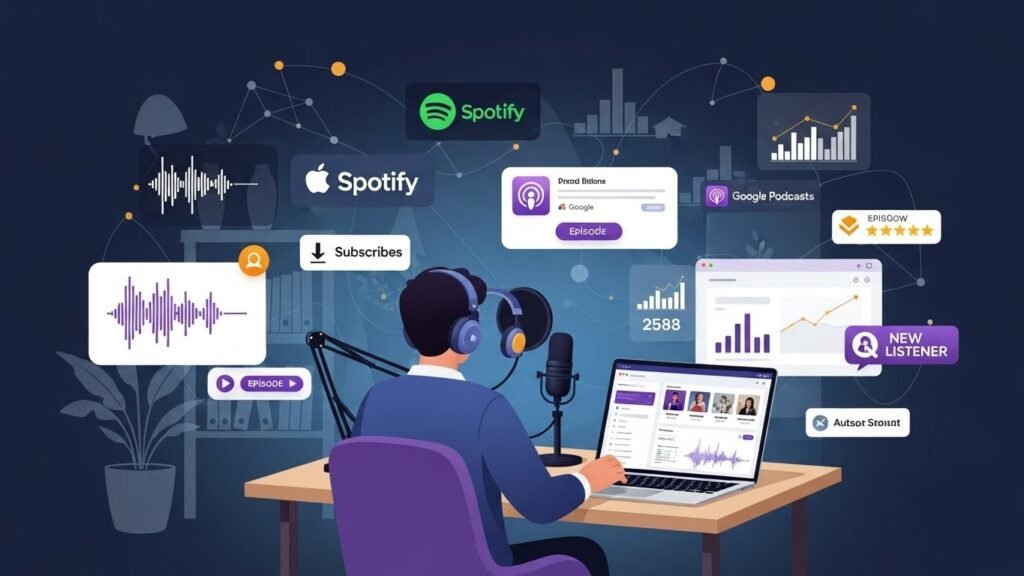
- Podcast directories: Upload to Spotify, Apple Podcasts, Google Podcasts.
- Website integration: Embed episodes on the business website.
- Social media snippets: Share 30‑second highlights on Instagram, TikTok, and LinkedIn.
- Email newsletters: Include podcast links for subscribers.
Step 5: Promote Your Podcast
Marketing ensures visibility.
- Cross‑promotion: Collaborate with other podcasters or influencers.
- Hashtags: Use #SmallBusinessPodcast, #BusinessTips, #PodcastMarketing.
- Paid ads: Run small campaigns on Facebook or Instagram to boost reach.
- Customer engagement: Encourage listeners to leave reviews and ratings.
- Community building: Create a Facebook group or Discord for listeners.
Step 6: Monetize Strategically
Podcasts can generate revenue while building authority.
- Sponsorships: Partner with local brands or suppliers.
- Affiliate marketing: Promote relevant products with affiliate links.
- Premium content: Offer exclusive episodes or workshops.
- Cross‑selling: Use podcasts to promote services, events, or products.
Step 7: Measure Success
Analytics help refine strategy.
- Downloads: Track episode performance.
- Retention: Measure how long listeners stay engaged.
- Reviews: Monitor feedback for improvement.
- Conversions: Link podcast traffic to website visits or sales.
Case Studies
- Local Coffee Shop (Toronto): Launched a podcast about coffee culture, attracting global listeners and boosting café sales.
- Fitness Studio (Sydney): Shared weekly health tips, building authority and increasing memberships.
- Handmade Crafts Store (Berlin): Interviewed artisans and shared stories, driving international Etsy sales.
Practical Tips for Small Businesses
- Consistency matters: Publish regularly to build trust.
- Authenticity wins: Speak naturally, avoid scripted ads.
- Repurpose content: Turn episodes into blogs, infographics, or videos.
- Engage listeners: Ask questions and invite feedback.
- Stay patient: Building authority takes time, but podcasts compound influence.
Risks & Challenges
- Time commitment: Recording and editing require effort.
- Slow growth: Podcasts build audiences gradually.
- Competition: Thousands of podcasts exist—niche focus is key.
- Technical issues: Poor audio can harm credibility.
Conclusion
Podcast marketing is a powerful tool for small businesses in 2026. By sharing expertise, telling authentic stories, and engaging audiences through audio, small businesses can build authority, foster loyalty, and expand their reach globally. With minimal investment and smart strategy, podcasts can transform small businesses into trusted voices in their industries.