
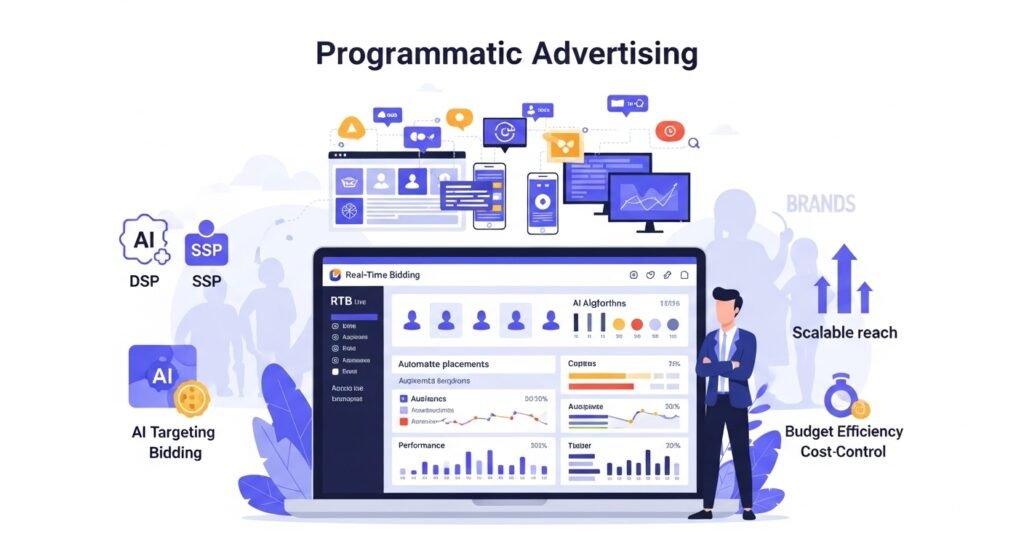
Programmatic advertising has rapidly become one of the most powerful forces in digital marketing, and in 2026 it is no longer reserved for large enterprises with massive budgets. At its core, programmatic advertising uses automation and AI to buy and place ads in real time, ensuring the right message reaches the right person at the right moment. For small businesses, this shift is a game changer. Instead of negotiating ad placements manually or relying on guesswork, programmatic platforms use data, algorithms, and machine learning to make smarter decisions instantly.
What makes programmatic advertising especially relevant for small businesses today is accessibility. Modern ad platforms have simplified the process, reduced minimum spends, and integrated AI tools that handle targeting, bidding, and optimization automatically. This allows small brands to compete with bigger players on precision rather than budget size. Instead of outspending competitors, small businesses can outsmart them by focusing on relevance and intent.
Programmatic advertising also improves efficiency. Ads are shown only to users who match specific behavioral, demographic, or intent-based criteria. This minimizes wasted impressions and maximizes return on ad spend. Whether the goal is lead generation, brand awareness, or local visibility, programmatic systems continuously analyze performance and optimize campaigns in real time.
In this article, we’ll break down what programmatic advertising really is, how it works, whether small businesses can realistically compete, practical steps to get started, real-world case studies, success stories, video content ideas, a simple framework, and frequently asked questions—all explained in clear, actionable language for 2026.
What Is Programmatic Advertisings?
Programmatic advertisings is the automated buying and selling of digital ad space using AI and real-time bidding (RTB). Instead of manually choosing websites or placements, advertisers use platforms that automatically decide where and when ads appear.
Key components include:
- Demand-Side Platforms (DSPs)
- Data-driven audience targeting
- Real-time biddings
- AI-powered optimizations
This system ensures ads are placed where they are most likely to perform.
Can Small Businesses Compete with Programmatic Advertising?
Yes—small businesses can absolutely compete, but success depends on strategy rather than scale.
Why programmatic works for small businesses:
- Lower entry costs than traditional media
- Precise targeting instead of broad reach
- Automated bidding reduces manual effort
- Real-time optimization improves ROI
Instead of paying for visibility everywhere, small businesses pay only for meaningful impressions.
How Small Businesses Can Start with Programmatic Advertising
Step 1: Choose the Right Platform
Beginner-friendly options include:
- Google Display & Video 360
- Google Ads (Display & Performance Max)
- Programmatic features within Meta Ads
Step 2: Define Clear Campaign Goals
Set objectives such as:
- Website visits
- Lead generation
- Retargeting
- Brand awareness
Clear goals help AI optimize effectively.
Step 3: Focus on High-Intent Audiences
Use:
- Behavioral targeting
- Contextual targeting
- Retargeting audiences
Avoid overly broad targeting when budgets are limited.
Step 4: Start with Small Budgets
Test campaigns with controlled spending to allow the algorithm to learn.
Step 5: Analyze and Optimize
Track metrics like:
- CPM
- Conversion rate
- Cost per acquisition
Refine audiences and creatives regularly.
Case Study: Small Business Success with Programmatic Ads
A local education service wanted to increase leads without increasing ad spend. By switching to programmatic display advertising:
Results after 6 weeks:
- 25% increase in qualified leads
- Lower cost per conversion
- Improved engagement rates
The campaign succeeded by targeting users actively researching similar services.
Success Story: Competing with Bigger Brands Using Smart Targeting
A small eCommerce brand used programmatic retargeting to reach users who had previously visited their website. Instead of competing on awareness, they focused on intent.
Outcome:
- Higher conversion rates
- Reduced ad wastage
- Consistent monthly sales growth
Programmatic advertising allowed them to compete on relevance, not budget.
Video Content Ideas for Programmatic Advertising
A high-performing video idea is “Programmatic Advertising Explained for Small Businesses”, covering:
- Real-time bidding visuals
- Platform walkthroughs
- Budget-friendly examples
This works well on YouTube, LinkedIn, and Instagram.
Programmatic Advertising Framework for Small Businesses
A simple framework includes:
- Clear objectives
- Data-driven targeting
- AI-based optimization
- Continuous testing
Recommended Tools
- Google Ads AI features
- DSP platforms
- Analytics dashboards
Best Practices
- Focus on intent-based audiences
- Refresh creatives regularly
- Avoid spreading budgets too thin
- Review performance weekly
FAQs: Programmatic Advertising for Small Businesses
Is programmatic advertising has expensive?
No. It can be cost-effective when targeting is precise.
Do small businesses has need agencies to run programmatic ads?
Not always. Many platforms are self-serve.
How long before results appear?
Most campaigns show optimization within 1–3 weeks.
Is programmatic better than social media ads?
Both work well together when aligned with goals.
Can local businesses benefit from programmatic advertising?
Yes. Geo-targeting and contextual ads work extremely well locally.
Final Thoughts
Programmatic advertising has evolved into a powerful, accessible, and affordable channel for small businesses in 2026. With the right strategy, small brands can compete effectively by focusing on precision, intent, and automation rather than large budgets.
Businesses that succeed:
- Start small and scale smart
- Use AI-driven insights
- Focus on relevance over reach
At Kanity Solutions, we help small businesses unlock programmatic advertising in a practical, budget-friendly way.
🌐 www.kanity.in
📞 9454784602