
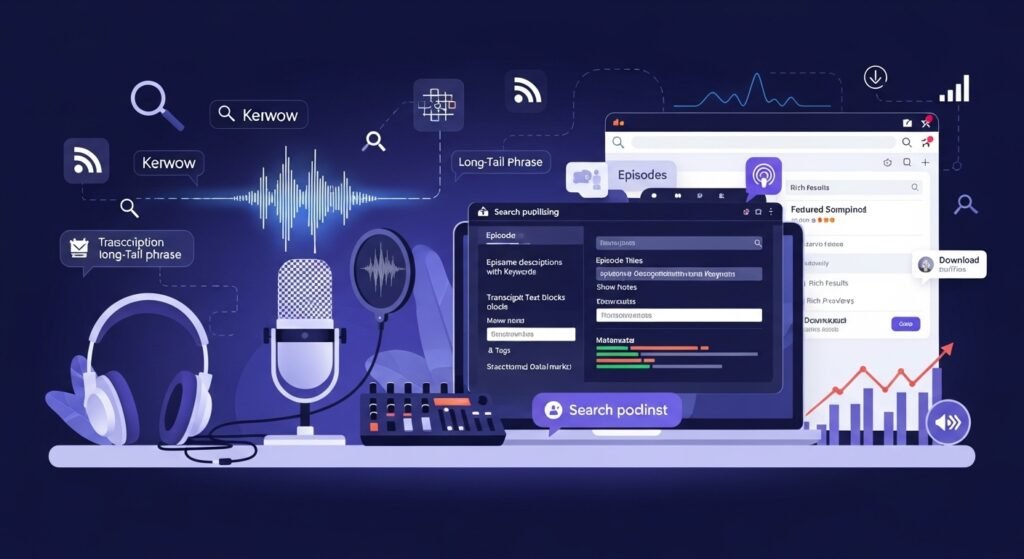
Podcasts have rapidly evolved from niche content formats into mainstream marketing and branding tools. However, creating high-quality audio content is only half the battle—ensuring it is discoverable is equally critical. SEO for podcasts focuses on optimizing audio episodes, show pages, transcripts, metadata, and distribution channels so they rank in search engines and podcast platforms. Unlike traditional blog SEO, podcast SEO requires a multi-layered approach that combines keyword research, optimized titles and descriptions, structured show notes, episode transcripts, and strategic distribution across directories. Search engines cannot “listen” to audio files directly, so they rely on surrounding text, metadata, and transcripts to understand content relevance. This means small businesses, creators, and brands must treat each podcast episode like a searchable webpage.
In 2026, search behavior includes voice search, AI-powered summaries, and cross-platform discovery. Optimized podcast content can appear in Google search results, featured snippets, and even recommended content sections. Adding detailed show notes, keyword-rich episode descriptions, timestamps, and full transcripts significantly increases visibility. Additionally, backlinks from guest appearances and cross-promotions strengthen authority signals. Platforms like Spotify, Apple Podcasts, and Google Podcasts rely on titles, categories, and engagement metrics for ranking.
For small businesses, podcasts offer authority-building opportunities, but without SEO, episodes remain hidden. By aligning podcast strategy with search optimization principles, brands can transform audio content into a long-term traffic asset. Podcast SEO ensures your voice is not only heard—but found.
Why Podcast SEO Matters
1️⃣ Search Engines Can’t “Hear” Audio
Google relies on text signals like titles, descriptions, and transcripts to rank content.
2️⃣ Growing Audio Consumption
Podcast listenership continues to increase globally, creating competitive discovery challenges.
3️⃣ Multi-Platform Visibility
Optimized podcasts can rank in Google search results, YouTube, and podcast directories.
Core Elements of Podcast SEO
1. Keyword Research for Episodes
Before recording, identify:
- Long-tail conversational keywords
- Questions your audience asks
- Trending industry topics
Example:
Instead of “Marketing Tips Episode 5”
Use: “Digital Marketing Strategies for Small Businesses in 2026.”
Clear, keyword-focused titles improve discoverability.
2. Optimized Podcast Titles
Good titles:
✔ Include primary keyword
✔ Stay under 60 characters (if possible)
✔ Clearly explain value
Avoid vague episode names.
3. Detailed Episode Descriptions
Include:
- Summary (150–300 words)
- Keywords naturally integrated
- Guest details
- Key takeaways
- Call-to-action links
Descriptions act like meta content for search engines.
4. Full Transcripts (Critical for SEO)
Transcripts allow:
✔ Search engines to index content
✔ Users to skim topics
✔ Better accessibility
✔ More keyword inclusion
Transcripts significantly boost ranking potential.
5. Show Notes with Timestamps
Example:
00:02 – Introduction
03:45 – SEO Basics
12:10 – AI in Marketing
Structured notes improve user experience and indexing.
Technical Optimization
1️⃣ Create Dedicated Episode Pages
Each episode should have its own SEO-optimized webpage.
Include:
- Embedded audio player
- Transcript
- Show notes
- Internal links
2️⃣ Add Structured Data (Schema Markup)
Use podcast schema to help search engines identify:
- Episode title
- Duration
- Release date
- Author
This improves search visibility.
3️⃣ Optimize File Names
Instead of:
episode1.mp3
Use:
seo-for-small-business-podcast-episode.mp3
Small details matter.
Distribution Strategy
Submit your podcast to:
- Spotify
- Apple Podcasts
- Google Podcasts
- Amazon Music
- YouTube
Wider distribution increases discoverability signals.
Backlink & Authority Building
Invite guests from your industry.
Ask them to:
✔ Share the episode
✔ Link from their website
✔ Promote on social media
Backlinks strengthen domain authority.
Repurpose for Maximum SEO Impact
Turn each episode into:
- Blog post
- Social media snippets
- YouTube video with captions
- Email newsletter content
Multi-format content increases reach.
Measuring Podcast SEO Success
Track:
- Organic traffic to episode pages
- Keyword rankings
- Backlinks earned
- Listener growth
- Average listen duration
- Click-through rate from search
SEO-driven podcasts grow steadily over time.
Common Mistakes to Avoid
❌ Skipping transcripts
❌ Using generic episode titles
❌ No dedicated webpage
❌ Poor descriptions
❌ Ignoring keyword research
Podcast SEO requires strategy, not just creativity.
Long-Term Benefits
Optimized podcasts:
- Build authority
- Increase website traffic
- Strengthen brand credibility
- Generate inbound leads
- Improve overall SEO performance
Audio content becomes evergreen search assets.
Final Thoughts
Podcasting is powerful—but without SEO, even the best episodes may remain undiscovered. By optimizing titles, descriptions, transcripts, metadata, and distribution channels, small businesses can transform podcasts into discoverable digital assets.
In an increasingly competitive content landscape, discoverability equals growth. When your podcast ranks in search results, you don’t just gain listeners—you gain authority, traffic, and trust.
Make your voice searchable, and let your expertise reach the audience that’s already looking for it. 🎙️🚀