
Introduction to Topical Authority and Backlinks
As we navigate the ever-evolving landscape of search engine optimization (SEO), two crucial concepts continue to dominate the discussions among digital marketing strategists: Topical Authority and Backlinks. As a digital marketing strategist and SEO consultant with over 15 years of experience, I have witnessed firsthand the impact of these two factors on a website’s visibility, credibility, and ultimately, its revenue. In this article, we will delve into the nuances of Topical Authority and Backlinks, exploring their significance, differences, and how they can be leveraged to drive organic growth in 2026.
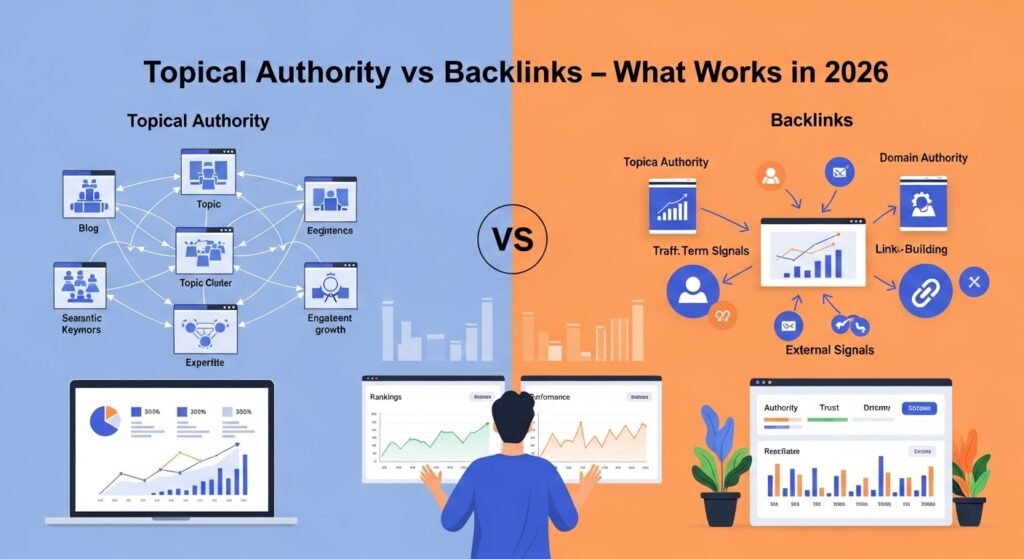
In the realm of SEO, Topical Authority refers to a website’s expertise and credibility on a specific topic or niche. It is a measure of how well a website covers a particular subject area, providing valuable and relevant content to its audience. Topical Authority is built by creating high-quality, in-depth content that demonstrates a deep understanding of the topic, as well as by obtaining relevant and authoritative external citations. This concept has gained significant attention in recent years, as search engines like Google continue to refine their algorithms to prioritize content that showcases expertise, authoritativeness, and trustworthiness (E-A-T).
On the other hand, Backlinks have long been a cornerstone of SEO strategies. A backlink is an incoming link from one website to another, serving as a vote of confidence in the linked website’s content. Backlinks are considered a key ranking factor, as they indicate to search engines that a website is credible, relevant, and worthy of citation. The quality and quantity of backlinks pointing to a website can significantly impact its search engine rankings, with high-quality backlinks from authoritative sources being particularly valuable.
To illustrate the difference between Topical Authority and Backlinks, consider the following example: a health and wellness website may have a high Topical Authority on the subject of nutrition, with in-depth articles and guides on healthy eating and meal planning. However, if this website lacks backlinks from other reputable health and wellness sites, its search engine rankings may suffer. Conversely, a website with a low Topical Authority on nutrition may still rank well if it has managed to secure a large number of high-quality backlinks from authoritative sources in the health and wellness niche.
It is essential to note that Topical Authority and Backlinks are not mutually exclusive concepts. In fact, they are interconnected and can reinforce each other. A website with high Topical Authority is more likely to attract high-quality backlinks, as other websites and authors want to reference and cite its authoritative content. Similarly, a website with a strong backlink profile can enhance its Topical Authority, as the incoming links demonstrate its credibility and expertise to search engines.
In the next section, we will explore the current state of Topical Authority and Backlinks in 2026, including the latest trends, best practices, and strategies for leveraging these concepts to drive organic growth. We will also examine the role of AI-driven search visibility, authority building, and revenue-focused organic growth in the context of Topical Authority and Backlinks.
Some key points to consider when evaluating the importance of Topical Authority and Backlinks include:
- Search engines are becoming increasingly sophisticated in their ability to evaluate the credibility and expertise of a website, making Topical Authority a critical factor in search engine rankings.
- High-quality backlinks from authoritative sources can significantly enhance a website’s search engine rankings, but low-quality or spammy backlinks can have a negative impact.
- Topical Authority and Backlinks are not one-time achievements, but rather ongoing processes that require continuous effort and optimization to maintain and improve.
- A website’s content strategy should be designed to build both Topical Authority and attract high-quality backlinks, rather than focusing solely on one or the other.
By understanding the intricacies of Topical Authority and Backlinks, digital marketers and SEO consultants can develop effective strategies to drive organic growth, increase search engine rankings, and establish their websites as authorities in their respective niches. In the following sections, we will dive deeper into the world of Topical Authority and Backlinks, exploring the latest trends, best practices, and expert insights to help you stay ahead of the curve in 2026.
Understanding Topical Authority
As a digital marketing strategist and SEO consultant, I, Amit Tyagi, have witnessed the evolution of search engine optimization (SEO) over the past 15 years. With the ever-changing landscape of search algorithms, it’s essential to stay ahead of the curve and adapt to the latest trends. One concept that has gained significant attention in recent years is topical authority. In this section, we will delve into the world of topical authority, exploring its definition, importance, and how it differs from traditional backlink-based SEO strategies.
Topical authority refers to a website’s expertise and credibility on a specific topic or niche. It’s a measure of how well a website covers a particular subject, providing valuable and relevant information to its audience. Search engines like Google aim to provide users with the most accurate and helpful results, and topical authority plays a crucial role in this process. By establishing a website as a trusted authority on a specific topic, search engines are more likely to rank it higher in search engine results pages (SERPs), driving more organic traffic and revenue.
To understand topical authority, let’s consider an example. Suppose we have two websites, both offering fitness-related content. Website A has a broad range of topics, including fitness, health, nutrition, and lifestyle, but lacks depth in each area. Website B, on the other hand, focuses exclusively on strength training, providing in-depth guides, tutorials, and expert advice. Although Website A may have a larger volume of content, Website B is more likely to be considered a topical authority on strength training due to its specialized and high-quality content.
So, what makes a website a topical authority? There are several key factors to consider:
- Content quality and relevance: The website’s content should be well-researched, informative, and relevant to the target audience. It’s essential to create content that addresses the needs and pain points of users, providing valuable insights and solutions.
- Content depth and breadth: A topical authority website should cover a specific topic in-depth, providing a comprehensive range of content that caters to different user needs and preferences. This can include blog posts, articles, videos, podcasts, and other formats.
- Expertise and credibility: The website should demonstrate expertise and credibility in its chosen niche. This can be achieved through author bios, about pages, and other forms of credentials that showcase the website’s authority and trustworthiness.
- Internal linking and structure: A well-structured website with a clear internal linking strategy can help search engines understand the site’s topology and identify its areas of expertise. This can also improve user experience and navigation.
- External validation: External validation, such as mentions, reviews, and citations from other reputable sources, can further reinforce a website’s topical authority. This can include guest posts, interviews, and other forms of collaborative content.
Now, let’s explore how topical authority differs from traditional backlink-based SEO strategies. In the past, SEO was largely focused on building backlinks from other websites to improve rankings. While backlinks are still an essential ranking factor, they are no longer the only consideration. Topical authority takes a more holistic approach, focusing on the website’s overall expertise and credibility, rather than just its link profile.
This shift in focus has significant implications for SEO strategies. Rather than solely pursuing backlinks, websites should prioritize creating high-quality, relevant, and informative content that demonstrates their expertise and authority. This approach not only improves search engine rankings but also enhances user experience, driving more engagement, conversions, and revenue.
In conclusion, understanding topical authority is crucial for businesses and organizations seeking to establish themselves as trusted experts in their niche. By focusing on content quality, depth, and breadth, as well as expertise and credibility, websites can establish a strong topical authority, driving more organic traffic and revenue. In the next section, we will explore the role of backlinks in the context of topical authority, examining how these two concepts intersect and impact search engine rankings.
The Role of Backlinks in Modern SEO
As a digital marketing strategist and SEO consultant, I have witnessed the evolution of search engine optimization (SEO) over the years. One of the most significant aspects of SEO is the role of backlinks in determining a website’s authority and ranking. In this section, we will delve into the world of backlinks and explore their significance in modern SEO.
Backlinks, also known as incoming links or inbound links, are links from one website to another. They are a crucial factor in SEO as they help search engines like Google understand the relevance, credibility, and authority of a website. The concept of backlinks is based on the idea that a website with many high-quality backlinks is likely to be a trusted and authoritative source of information.
In the past, the quantity of backlinks was the primary focus of SEO strategies. Website owners and SEO specialists would engage in link building activities, such as guest blogging, article marketing, and link exchanges, to accumulate as many backlinks as possible. However, with the introduction of Google’s Penguin algorithm in 2012, the focus shifted from quantity to quality. The algorithm update aimed to combat spammy link building practices and reward websites with high-quality, relevant backlinks.
Today, backlinks continue to play a vital role in SEO, but their significance is more nuanced. A website with a diverse range of high-quality backlinks from authoritative sources is more likely to rank higher in search engine results pages (SERPs). However, the quality of backlinks is not the only factor that determines a website’s authority. Other factors, such as content quality, user experience, and technical optimization, also contribute to a website’s overall authority and ranking.
So, what constitutes a high-quality backlink? A high-quality backlink is one that comes from a reputable website with a strong authority score. The website should be relevant to the topic or niche of the linked website, and the link should be placed in a natural and contextual manner. For example, a link from a well-established news website like The New York Times or BBC News would be considered a high-quality backlink.
On the other hand, low-quality backlinks can harm a website’s authority and ranking. These include links from spammy websites, link farms, or websites with thin content. For instance, a link from a website with a low authority score, such as a newly created blog with minimal content, would be considered a low-quality backlink.
To illustrate the importance of high-quality backlinks, let’s consider an example. Suppose we have two websites, Website A and Website B, both operating in the same niche. Website A has 100 low-quality backlinks from spammy websites, while Website B has 10 high-quality backlinks from reputable sources. Although Website A has more backlinks, Website B is likely to rank higher in SERPs due to the quality of its backlinks.
In addition to the quality of backlinks, the diversity of backlinks is also crucial. A website with a diverse range of backlinks from different sources, such as news websites, blogs, and educational institutions, is more likely to be considered an authority in its niche. This is because a diverse range of backlinks indicates that the website is widely recognized and respected within its industry.
The following are some tips for building high-quality backlinks:
- Guest blogging: Write guest posts for reputable websites in your niche, and include a link to your website in your author bio or within the content.
- Broken link building: Find broken links on other websites, and offer to replace them with a working link to a similar article or resource on your website.
- Resource pages: Create a resource page on your website that links to other high-quality websites in your niche, and reach out to those websites to ask for a link back to your resource page.
- Reviews and testimonials: Encourage your customers or clients to leave reviews or testimonials on your website, and ask them to link to your website from their own website or social media profile.
- Partnerships and collaborations: Partner with other businesses or organizations in your niche, and ask them to link to your website from their website or social media profile.
In conclusion, backlinks continue to play a vital role in modern SEO, but their significance is more nuanced than in the past. A website with a diverse range of high-quality backlinks from authoritative sources is more likely to rank higher in SERPs. However, the quality of backlinks is not the only factor that determines a website’s authority. Other factors, such as content quality, user experience, and technical optimization, also contribute to a website’s overall authority and ranking. By building high-quality backlinks and focusing on other aspects of SEO, website owners and SEO specialists can improve their website’s visibility, credibility, and authority in the online landscape.
Topical Authority vs Backlinks: What Works in 2026
As a digital marketing strategist and SEO consultant, I have witnessed the ever-evolving landscape of search engine optimization (SEO) over the past 15 years. The quest for online visibility and authority has led to a longstanding debate: what is more crucial for a website’s success, topical authority or backlinks? In this article, we will delve into the nuances of both concepts, explore their significance in 2026, and provide insights on how to leverage them to drive revenue-focused organic growth.
The notion of topical authority refers to a website’s expertise and credibility within a specific niche or topic. It is a measure of how well a website covers a particular subject matter, providing value to users through high-quality, relevant, and informative content. Topical authority is built by creating comprehensive, well-researched, and engaging content that addresses the needs and concerns of the target audience. This, in turn, helps establish the website as a trusted source of information, increasing its visibility and authority in search engine results pages (SERPs).
On the other hand, backlinks are incoming links from other websites that point to a specific webpage or website. They are a key ranking factor, as they indicate to search engines that a website is trustworthy, credible, and worthy of citation. Backlinks can be obtained through various means, such as guest blogging, broken link building, and resource pages. However, the quality and relevance of backlinks are more important than their quantity. A single high-quality backlink from an authoritative website can be more valuable than multiple low-quality links from obscure sites.
In 2026, the importance of topical authority and backlinks cannot be overstated. As search engines continue to evolve and improve, they are placing greater emphasis on the relevance, accuracy, and usefulness of content. Websites that demonstrate a deep understanding of their niche and provide exceptional value to users are more likely to earn higher rankings and drive organic traffic. Similarly, high-quality backlinks from authoritative sources can significantly enhance a website’s credibility and visibility.
So, what works in 2026? The answer lies in a balanced approach that combines the strengths of both topical authority and backlinks. By creating comprehensive, well-researched, and engaging content that addresses the needs and concerns of the target audience, websites can establish themselves as authorities in their niche. This, in turn, can attract high-quality backlinks from other authoritative sources, further reinforcing the website’s credibility and visibility.
To illustrate this concept, let’s consider an example. Suppose we have a website that specializes in fitness and wellness. To establish topical authority, the website could create a series of in-depth guides on topics such as nutrition, exercise, and stress management. These guides would provide exceptional value to users, establishing the website as a trusted source of information in the fitness and wellness niche. To attract high-quality backlinks, the website could reach out to other authoritative sources in the industry, such as health and wellness blogs, and offer to create guest posts or collaborate on content projects. This would not only drive referral traffic but also earn high-quality backlinks that reinforce the website’s credibility and visibility.
In addition to creating high-quality content and attracting backlinks, there are several other strategies that can help websites establish topical authority and drive revenue-focused organic growth. These include:
- Conducting thorough keyword research to identify relevant topics and themes
- Optimizing content for user experience, including page speed, mobile responsiveness, and accessibility
- Utilizing internal linking to help users and search engines navigate the website
- Leveraging social media and other channels to promote content and drive traffic
- Monitoring and analyzing performance metrics, such as rankings, traffic, and conversions, to refine and improve the SEO strategy
By implementing these strategies and focusing on topical authority and high-quality backlinks, websites can drive revenue-focused organic growth and establish themselves as leaders in their niche.
In conclusion, the debate between topical authority and backlinks is not a zero-sum game. Both concepts are crucial for a website’s success, and a balanced approach that combines the strengths of both is the key to driving revenue-focused organic growth in 2026. By creating high-quality, relevant, and informative content that addresses the needs and concerns of the target audience, and attracting high-quality backlinks from authoritative sources, websites can establish themselves as authorities in their niche and drive long-term success. As a digital marketing strategist and SEO consultant, I recommend that businesses prioritize topical authority and backlinks, and focus on creating exceptional value for their users. By doing so, they can establish a strong online presence, drive organic traffic, and achieve their revenue goals.
The importance of topical authority and backlinks will continue to evolve as search engines become more sophisticated. However, one thing is certain – the websites that prioritize user experience, content quality, and credibility will be the ones that succeed in the long run. As we move forward in 2026, it is essential for businesses to stay up-to-date with the latest trends and best practices in SEO, and to continually adapt and refine their strategies to drive revenue-focused organic growth.
Ultimately, the key to success lies in understanding the target audience and providing exceptional value through high-quality content and user experience. By doing so, businesses can establish themselves as authorities in their niche, drive organic traffic, and achieve their revenue goals. As a digital marketing strategist and SEO consultant, I am committed to helping businesses navigate the complex landscape of SEO and achieve long-term success. Whether through topical authority, backlinks, or other strategies, the goal remains the same – to drive revenue-focused organic growth and establish a strong online presence.
In the ever-evolving landscape of SEO, it is essential for businesses to stay ahead of the curve and continually adapt and refine their strategies. By prioritizing topical authority, backlinks, and user experience, businesses can drive revenue-focused organic growth and establish themselves as leaders in their niche. As we move forward in 2026, I am excited to see the impact that these strategies will have on the world of SEO and beyond.
The future of SEO is bright, and the opportunities for businesses to drive revenue-focused organic growth are vast. By focusing on topical authority, backlinks, and user experience, businesses can establish a strong online presence, drive organic traffic, and achieve their revenue goals. As a digital marketing strategist and SEO consultant, I am committed to helping businesses navigate the complex landscape of SEO and achieve long-term success. Whether through topical authority, backlinks, or other strategies, the goal remains the same – to drive revenue-focused organic growth and establish a strong online presence.
As we conclude this discussion on topical authority and backlinks, it is essential to remember that the key to success lies in understanding the target audience and providing exceptional value through high-quality content and user experience. By doing so, businesses can establish themselves as authorities in their niche, drive organic traffic, and achieve their revenue goals. The future of SEO is bright, and the opportunities for businesses to drive revenue-focused organic growth are vast. I am excited to see the impact that these strategies will have on the world of SEO and beyond.
In the world of SEO, change is the only constant. As search engines continue to evolve and improve, businesses must stay ahead of the curve and continually adapt and refine their strategies. By prioritizing topical authority, backlinks, and user experience, businesses can drive revenue-focused organic growth and establish themselves as leaders in their niche. As a digital marketing strategist and SEO consultant, I am committed to helping businesses navigate the complex landscape of SEO and achieve long-term success. Whether through topical authority, backlinks, or other strategies, the goal remains the same – to drive revenue-focused organic growth and establish a strong online presence.
The importance of staying up-to-date with the latest trends and best practices in SEO cannot be overstated. As search engines continue to evolve and improve, businesses must stay ahead of the curve and continually adapt and refine their strategies. By doing so, they can drive revenue-focused organic growth and establish themselves as leaders in their niche. As a digital marketing strategist and SEO consultant, I am committed to helping businesses navigate the complex landscape of SEO and achieve long-term success. Whether through topical authority, backlinks, or other strategies, the goal remains the same – to drive revenue-focused organic growth and establish a strong online presence.
In conclusion, the debate between topical authority and backlinks is not a zero-sum game. Both concepts are crucial for a website’s success, and a balanced approach that combines the strengths of both is the key to driving revenue-focused organic growth in 2026. By creating high-quality, relevant, and informative content that addresses the needs and concerns of the target audience, and attracting high-quality backlinks from authoritative sources, websites can establish themselves as authorities in their niche and drive long-term success. As a digital marketing strategist and SEO consultant, I recommend that businesses prioritize topical authority and backlinks, and focus on creating exceptional value for their users. By doing so, they can establish a strong online presence, drive organic traffic, and achieve their revenue goals.
The future of SEO is bright, and the opportunities for businesses to drive revenue-focused organic growth are vast. By focusing on topical authority, backlinks, and user experience, businesses can establish a strong online presence, drive organic traffic, and achieve their revenue goals. As a digital marketing strategist and SEO consultant, I am committed to helping businesses navigate the complex landscape of SEO and achieve long-term success. Whether through topical authority, backlinks, or other strategies, the goal remains the same – to drive revenue-focused organic growth and establish a strong online presence.
As we move forward in 2026, it is essential for businesses to stay ahead of the curve and continually adapt and refine their SEO strategies. By prioritizing topical authority, backlinks, and user experience, businesses can drive revenue-focused organic growth and establish themselves as leaders in their niche. The importance of staying up-to-date with the latest trends and best practices in SEO cannot be overstated. As search engines continue to evolve and improve, businesses must stay ahead of the curve and continually adapt and refine their strategies. By doing so, they can drive revenue-focused organic growth and establish themselves as leaders in their niche.
In the ever-evolving landscape of SEO, it is essential for businesses to focus on creating exceptional value for their users. By doing so, they can establish a strong online presence, drive organic traffic, and achieve their revenue goals. The future of SEO is bright, and the opportunities for businesses to drive revenue-focused organic growth are vast. As a digital marketing strategist and SEO consultant, I am committed to helping businesses navigate the complex landscape of SEO and achieve long-term success. Whether through topical authority, backlinks, or other strategies, the goal remains the same – to drive revenue-focused organic growth and establish a strong online presence.
The key to success in SEO lies in understanding the target audience and providing exceptional value through high-quality content and user experience. By doing so, businesses can establish themselves as authorities in their niche, drive organic traffic, and achieve their revenue goals. As a digital marketing strategist and SEO consultant, I recommend that businesses prioritize topical
Implementing a Winning SEO Strategy in 2026
As we navigate the ever-evolving landscape of search engine optimization, it’s essential to stay ahead of the curve and adapt to the latest trends and best practices. In 2026, the world of SEO is more complex than ever, with a multitude of factors influencing a website’s visibility and ranking. As a digital marketing strategist and SEO consultant with over 15 years of experience, I’ve seen firsthand the impact that a well-crafted SEO strategy can have on a brand’s online presence and bottom line. In this article, we’ll delve into the key components of a winning SEO strategy in 2026, with a focus on the ongoing debate between topical authority and backlinks.
The concept of topical authority refers to a website’s expertise and credibility within a specific niche or topic area. Search engines like Google aim to provide users with the most relevant and trustworthy results, and topical authority plays a significant role in determining a website’s ranking. By establishing a strong topical authority, brands can increase their online visibility, drive more traffic to their website, and ultimately boost conversions and revenue. For instance, a healthcare company that creates high-quality, informative content on various medical topics can establish itself as a trusted authority in the healthcare space, increasing its chances of ranking higher in search engine results pages (SERPs) for relevant keywords.
On the other hand, backlinks have long been a cornerstone of SEO, with high-quality links from authoritative sources serving as a vote of confidence in a website’s credibility and relevance. However, the importance of backlinks has been debated in recent years, with some arguing that they are no longer a key ranking factor. While it’s true that search engines have become more sophisticated in their ability to evaluate link equity, backlinks still play a crucial role in determining a website’s ranking. A website with a strong backlink profile can benefit from increased referral traffic, improved brand awareness, and enhanced credibility, all of which can contribute to higher search engine rankings and greater online success.
So, what works in 2026? The answer lies in a combination of both topical authority and backlinks. By establishing a strong topical authority through high-quality, relevant content, and supplementing this with a robust backlink profile, brands can create a winning SEO strategy that drives real results. This approach requires a deep understanding of the target audience, the competitive landscape, and the latest SEO best practices. It also demands a significant investment of time, resources, and effort, as well as a willingness to adapt and evolve in response to changing trends and algorithm updates.
For example, let’s consider a fictional e-commerce company that specializes in outdoor gear and apparel. To establish topical authority, the company might create a comprehensive guide to hiking and camping, complete with expert tips, product recommendations, and stunning visuals. This content would not only provide value to the target audience but also demonstrate the company’s expertise and credibility in the outdoor space. To supplement this content, the company might also engage in outreach and link building efforts, targeting authoritative sources like outdoor magazines, blogs, and influencers. By securing high-quality backlinks from these sources, the company can increase its online visibility, drive more traffic to its website, and ultimately boost sales and revenue.
Another key aspect of a winning SEO strategy in 2026 is the use of artificial intelligence (AI) and machine learning (ML) to drive search visibility and revenue-focused organic growth. As a digital marketing strategist and SEO consultant, I’ve seen firsthand the impact that AI-driven SEO frameworks can have on a brand’s online presence and bottom line. By leveraging AI and ML, brands can gain a deeper understanding of their target audience, optimize their content and marketing strategies, and stay ahead of the competition in an ever-evolving landscape. For instance, AI-powered tools can be used to analyze large datasets, identify trends and patterns, and provide actionable insights that inform SEO decisions. Additionally, AI-driven content generation can help brands create high-quality, engaging content at scale, while AI-powered link building can streamline outreach and acquisition efforts.
In addition to topical authority, backlinks, and AI-driven SEO, there are several other key components of a winning SEO strategy in 2026. These include:
- Technical optimization: Ensuring that a website is technically sound, with fast loading speeds, mobile responsiveness, and secure protocols (HTTPS), is essential for search engine rankings and user experience.
- Content marketing: Creating high-quality, engaging content that resonates with the target audience and addresses their needs and pain points is critical for establishing topical authority and driving organic traffic.
- Local SEO: For brands with a local presence, optimizing for local search by including name, address, and phone number (NAP) consistently across the web, creating content relevant to the local audience, and building high-quality local citations is vital for attracting local customers and driving foot traffic.
- Analytics and tracking: Monitoring key performance indicators (KPIs) like organic traffic, conversions, and revenue, and using data to inform SEO decisions and optimize marketing strategies is essential for measuring success and driving continuous improvement.
By incorporating these components into a comprehensive SEO strategy, brands can establish a strong online presence, drive more traffic and revenue, and stay ahead of the competition in an ever-evolving landscape. As a digital marketing strategist and SEO consultant, I’ve seen firsthand the impact that a well-crafted SEO strategy can have on a brand’s bottom line, and I’m excited to help businesses navigate the complexities of SEO in 2026 and beyond.
In conclusion, implementing a winning SEO strategy in 2026 requires a deep understanding of the latest trends and best practices, as well as a willingness to adapt and evolve in response to changing algorithm updates and user behavior. By establishing a strong topical authority, building a robust backlink profile, leveraging AI-driven SEO frameworks, and incorporating technical optimization, content marketing, local SEO, and analytics and tracking, brands can create a comprehensive SEO strategy that drives real results and helps them achieve their online goals. As the SEO landscape continues to evolve, it’s essential for businesses to stay ahead of the curve and prioritize SEO as a key component of their digital marketing strategy.