
Introduction
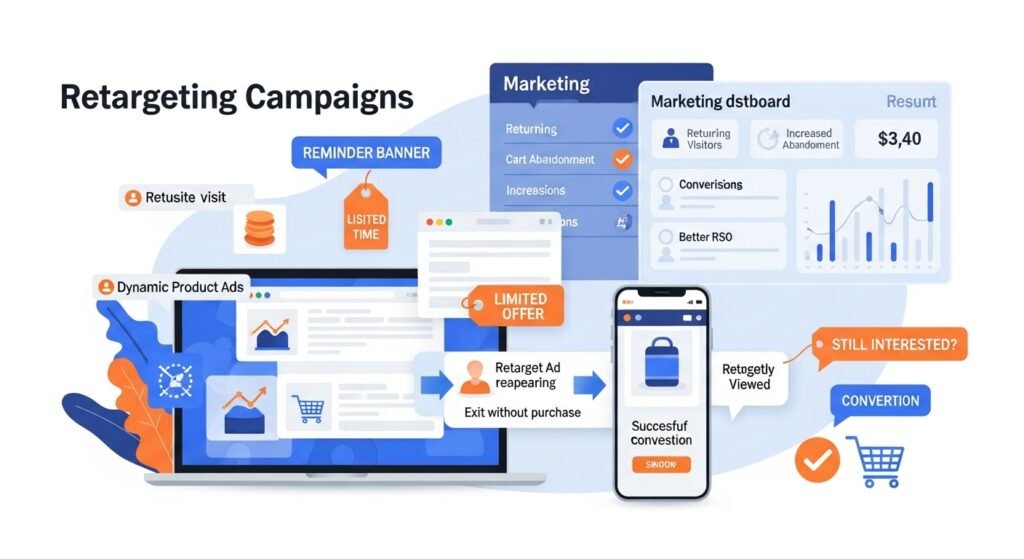
Retargeting campaigns have become one of the most powerful digital marketing strategies for small businesses in 2026, especially as customer attention spans shrink and competition increases across every industry. The reality is simple: most users do not convert on their first visit. They browse, compare options, get distracted, or postpone decisions. Retargeting solves this problem by allowing businesses to reconnect with people who have already shown interest in their brand, products, or services. Instead of chasing cold audiences, retargeting focuses on warm prospects—users who visited a website, viewed a product, added items to a cart, watched a video, or interacted with ads but didn’t take final action.
What makes retargeting so effective is relevance. These campaigns use behavioral data to deliver personalized ads across platforms like Google, Facebook, Instagram, YouTube, and even email. This keeps the brand top-of-mind and nudges users back into the sales funnel at the right moment. In 2026, AI-driven retargeting tools further enhance this process by optimizing timing, messaging, formats, and placements automatically.
For small businesses, retargeting is also budget-friendly. Since ads are shown only to users who already know the brand, conversion rates are higher and cost per acquisition is lower than most cold-traffic campaigns. Whether the goal is recovering abandoned carts, re-engaging website visitors, upselling past customers, or increasing repeat purchases, retargeting delivers measurable ROI.
In this article, we’ll explain what retargeting campaigns are, how they work, why they matter for small businesses, step-by-step setup strategies, real case studies, success stories, video content ideas, a simple framework, and common FAQs—all designed to help you win back lost customers effectively.
What Are Retargeting Campaigns?
Retargeting campaigns are digital ads shown specifically to users who have previously interacted with your brand but didn’t convert.
Common retargeting audiences include:
- Website visitors
- Cart abandoners
- Video viewers
- Past customers
- App users
These users are more likely to convert because they already trust or recognize your brand.
Why Retargeting Is Crucial for Small Businesses
Retargeting works because it focuses on intent, not interruption.
Key benefits:
- Higher conversion rates
- Lower ad costs
- Stronger brand recall
- Improved customer lifetime value
Instead of spending more on traffic, retargeting helps extract more value from existing visitors.
Types of Retargeting Campaigns That Work Best
Website Retargeting
Targets users who visited specific pages such as services or pricing.
Cart Abandonment Retargeting
Shows reminders, discounts, or urgency messages to users who left items in their cart.
Engagement Retargeting
Targets users who liked posts, watched videos, or interacted with ads.
Customer Retargeting
Encourages repeat purchases, upgrades, or referrals.
How to Set Up a Winning Retargeting Campaign
Step 1: Install Tracking Pixels
Use:
- Google Tags
- Meta Pixel
- Conversion APIs
These track user behavior accurately.
Step 2: Segment Your Audiences
Create separate lists for:
- Homepage visitors
- Product viewers
- Cart abandoners
- Past buyers
Personalization starts with segmentation.
Step 3: Create High-Intent Ad Creatives
Effective retargeting ads include:
- Social proof
- Limited-time offers
- Testimonials
- Clear CTAs
Avoid generic messaging.
Step 4: Choose the Right Platforms
Best platforms for retargeting:
- Google Display & YouTube
- Facebook & Instagram
- WhatsApp (for warm leads)
Use multi-channel retargeting for higher impact.
Step 5: Optimize Frequency and Timing
Avoid ad fatigue by:
- Limiting impressions
- Rotating creatives
- Using AI-based delivery optimization
Case Study: Recovering Lost Sales with Retargeting
A small eCommerce store struggled with abandoned carts. After launching a structured retargeting campaign:
Results in 30 days:
- 32% cart recovery rates
- 40% lower cost per conversions
- Increased repeat purchases
The campaign used urgency messaging and product-specific ads.
Success Story: Turning Website Visitors into Customers
A local service business retargeted users who visited their pricing page but didn’t book.
Outcome:
- 2x increase in booking inquiries
- Improved brand recall
- Lower ad spend with higher ROI
Retargeting worked because the audience already had intent.
Video Content Ideas for Retargeting Campaigns
A strong video idea is “Why You’re Losing Customers & How Retargeting Brings Them Back”, covering:
- Real customer journeys
- Retargeting ad examples
- Platform demos
This performs well on YouTube, Instagram Reels, and LinkedIn.
Retargeting Framework for Small Businesses
A simple retargeting framework:
- Track user behaviors
- Segment audience
- Personalize creatives
- Optimize with AI
- Measure conversions
Best Practices
- Use dynamic ads
- Add trust signals
- Test offers vs. reminders
- Retarget across platforms
FAQs: Retargeting Campaigns
Is retargeting legal and privacy-safe?
Yes, when compliant with consent and data policies.
How long should retargeting campaigns run?
Typically 14–45 days depending on buying cycle.
Do retargeting ads annoy users?
Only if frequency is too high or messaging is irrelevant.
Is retargeting better than cold ads?
Retargeting usually converts better, but both should work together.
Can local businesses use retargeting effectively?
Yes, especially with geo-based and service-page audiences.
Final Thoughts
In 2026, retargeting campaigns are no longer optional—they are essential for small businesses that want to maximize conversions without increasing ad spend. Winning back lost customers is easier, faster, and more affordable when you focus on intent-driven audiences and personalized messaging.
Businesses that succeed with retargeting:
- Track user behavior properly
- Segment audiences intelligently
- Use trust-focused creatives
- Optimize continuously
At Kanity Solutions, we design high-ROI retargeting campaigns tailored for small businesses.
🌐 www.kanity.in
📞 9454784602

Amit Tyagi is a seasoned Digital Marketing and SEO Consultant with extensive experience helping businesses improve online visibility through SEO, AI Search Optimization (AIO/GEO), content strategy, and performance marketing. He regularly shares practical insights, industry updates, and data-driven strategies, empowering brands and marketers to achieve sustainable digital growth in an evolving search landsca