
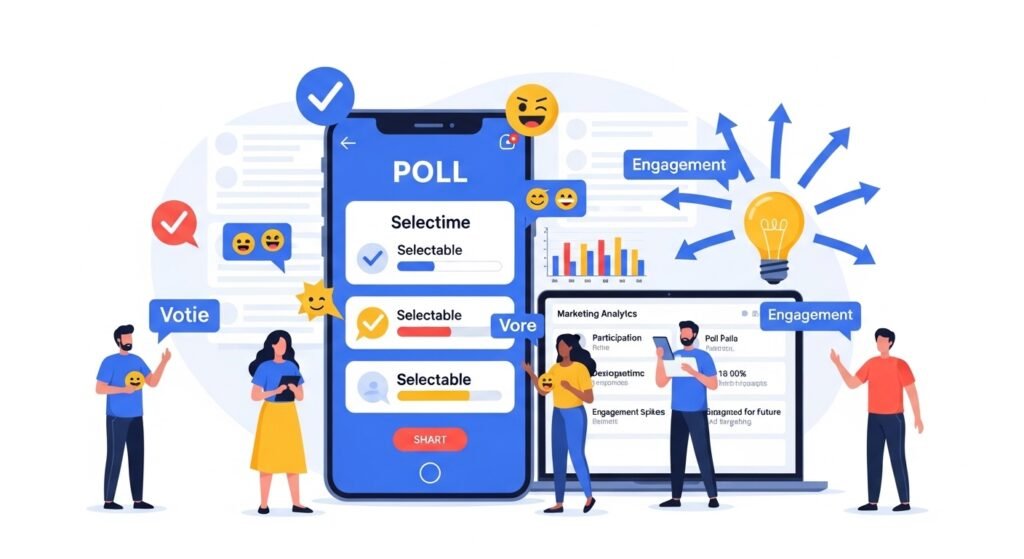
Introduction to Interactive Poll Ads
As a digital marketing strategist, I have always been fascinated by the power of interactive content in driving engagement and conversions. One of the most effective forms of interactive content is interactive poll ads, which have revolutionized the way brands connect with their target audience. In this section, we will delve into the world of interactive poll ads, exploring their benefits, best practices, and real-world examples of successful campaigns.
Interactive poll ads are a type of online advertising that allows users to participate in a poll or survey, providing feedback on a particular topic or issue. This type of ad format is designed to encourage audience engagement, spark conversations, and foster a sense of community around a brand or product. By leveraging the power of interactive poll ads, businesses can increase brand awareness, build trust, and drive conversions.
The rise of interactive poll ads can be attributed to the growing demand for immersive and interactive experiences online. With the proliferation of social media platforms, users are no longer satisfied with passive advertising experiences. They want to engage with content that is dynamic, interactive, and relevant to their interests. Interactive poll ads cater to this demand, providing users with a unique opportunity to share their opinions, participate in discussions, and influence the conversation around a brand or product.
One of the key benefits of interactive poll ads is their ability to provide valuable feedback and insights to businesses. By analyzing the responses and opinions of users, brands can gain a deeper understanding of their target audience, identifying trends, preferences, and pain points. This information can be used to inform marketing strategies, product development, and customer service initiatives, ultimately driving business growth and revenue.
For example, a fashion brand might use interactive poll ads to ask users about their favorite clothing styles, colors, or fabrics. The responses can provide valuable insights into consumer preferences, helping the brand to design and market products that meet the needs of their target audience. Similarly, a tech company might use interactive poll ads to gather feedback on new product features, using the insights to inform product development and improve the user experience.
In addition to providing feedback and insights, interactive poll ads can also help to increase brand awareness and reach. By encouraging users to participate in polls and surveys, businesses can create a buzz around their brand, generating social media conversations, and driving website traffic. Interactive poll ads can also be used to promote products, services, or events, providing users with a compelling reason to engage with the brand.
Another significant advantage of interactive poll ads is their ability to be used across multiple platforms and channels. Whether it’s social media, email marketing, or native advertising, interactive poll ads can be easily integrated into existing marketing campaigns, providing a seamless and consistent user experience. This flexibility makes it easy for businesses to reach their target audience, regardless of where they are online.
Some of the most popular platforms for interactive poll ads include social media giants like Facebook, Twitter, and LinkedIn. These platforms provide a range of tools and features that make it easy to create and distribute interactive poll ads, including built-in polling tools, targeting options, and analytics. Other platforms, such as email marketing software and native advertising networks, also support interactive poll ads, providing businesses with a range of options for reaching their target audience.
When it comes to creating effective interactive poll ads, there are several best practices to keep in mind. First and foremost, it’s essential to ensure that the poll or survey is relevant and engaging, providing users with a compelling reason to participate. The questions should be clear, concise, and easy to understand, with response options that are intuitive and user-friendly.
Additionally, businesses should consider the overall design and user experience of the interactive poll ad, ensuring that it is visually appealing, responsive, and optimized for mobile devices. The ad should also be optimized for conversions, with a clear call-to-action (CTA) that encourages users to participate in the poll or survey.
Some other key considerations for creating effective interactive poll ads include:
- Keeping the poll or survey short and sweet, with no more than 5-7 questions
- Using eye-catching visuals, such as images or videos, to grab the user’s attention
- Providing incentives, such as discounts or rewards, to encourage participation
- Using social proof, such as user testimonials or reviews, to build trust and credibility
- Testing and optimizing the ad for different audience segments and platforms
By following these best practices and leveraging the power of interactive poll ads, businesses can drive engagement, build brand awareness, and gain valuable feedback and insights from their target audience. Whether you’re a seasoned marketer or just starting out, interactive poll ads are an effective and efficient way to connect with your audience and achieve your marketing goals.
In the next section, we will explore the benefits of interactive poll ads in more detail, including their ability to increase brand awareness, drive conversions, and provide valuable feedback and insights. We will also examine some real-world examples of successful interactive poll ad campaigns, highlighting the strategies and tactics used to achieve success.
As a digital marketing strategist, I have seen firsthand the impact that interactive poll ads can have on a business. By providing a unique and engaging way to connect with their target audience, interactive poll ads can help businesses to build trust, drive conversions, and achieve their marketing goals. Whether you’re looking to increase brand awareness, drive website traffic, or generate leads, interactive poll ads are an effective and efficient way to achieve your objectives.
In conclusion, interactive poll ads are a powerful tool for driving engagement, building brand awareness, and gaining valuable feedback and insights from your target audience. By leveraging the power of interactive content, businesses can create immersive and interactive experiences that resonate with their audience, driving conversions and revenue. As we move forward in the world of digital marketing, it’s essential to stay ahead of the curve, embracing new and innovative formats like interactive poll ads to achieve success.
Understanding the Psychology of Interactive Poll Ads
As a digital marketing strategist, I have always been fascinated by the power of interactive poll ads in driving engagement and boosting brand awareness. At its core, interactive poll ads are designed to solicit feedback from users, providing them with a sense of ownership and participation in the brand’s narrative. But what makes these ads so effective, and how can brands harness their potential to drive meaningful connections with their target audience?
To answer this question, it’s essential to delve into the psychology behind interactive poll ads. When users are presented with a poll or a survey, they are more likely to engage with the content because it appeals to their inherent desire for self-expression and social interaction. By providing a platform for users to share their opinions and preferences, brands can tap into this fundamental human need, fostering a sense of community and belonging.
Moreover, interactive poll ads leverage the psychological principle of reciprocity, where users feel compelled to reciprocate the brand’s effort to engage with them. When a brand takes the time to ask for feedback, users are more likely to respond positively, as they feel valued and appreciated. This, in turn, can lead to increased brand loyalty and advocacy, as users become more invested in the brand’s success.
Another critical aspect of interactive poll ads is their ability to gamify the user experience. By incorporating elements of competition, such as leaderboards or rewards, brands can create a sense of excitement and anticipation around the poll. This can lead to increased engagement and participation, as users are motivated to contribute to the conversation and compete with others.
For instance, a fashion brand might create an interactive poll ad that asks users to vote for their favorite clothing style. The poll could be accompanied by a leaderboard that showcases the most popular styles, and users could be incentivized to participate by offering discounts or exclusive access to new products. By gamifying the experience, the brand can create a sense of fun and interactivity, while also gathering valuable feedback from its target audience.
To further illustrate the effectiveness of interactive poll ads, let’s consider a few examples:
- A beauty brand that creates a poll to ask users about their favorite skincare routine, with options ranging from natural products to chemical-based treatments. The poll could be accompanied by a series of educational videos and blog posts, providing users with valuable information and tips on how to achieve healthy, glowing skin.
- A food delivery service that asks users to vote for their favorite cuisine, with options ranging from Italian to Mexican. The poll could be accompanied by a series of limited-time offers and promotions, incentivizing users to try new dishes and flavors.
- A travel company that creates a poll to ask users about their dream vacation destination, with options ranging from beach resorts to city breaks. The poll could be accompanied by a series of inspirational travel guides and videos, providing users with ideas and tips on how to plan their next trip.
In each of these examples, the interactive poll ad is designed to solicit feedback from users, while also providing them with value and entertainment. By leveraging the psychological principles of reciprocity, self-expression, and gamification, brands can create a sense of engagement and participation, driving meaningful connections with their target audience.
Furthermore, interactive poll ads can provide brands with a wealth of valuable insights and data, which can be used to inform future marketing strategies and product development. By analyzing the results of the poll, brands can gain a deeper understanding of their target audience’s preferences, interests, and behaviors, allowing them to tailor their messaging and offerings to meet their needs.
In conclusion, understanding the psychology of interactive poll ads is crucial for brands looking to drive engagement and boost brand awareness. By leveraging the principles of reciprocity, self-expression, and gamification, brands can create a sense of community and participation, fostering meaningful connections with their target audience. As a digital marketing strategist, I strongly believe that interactive poll ads have the potential to revolutionize the way brands interact with their customers, and I am excited to see how this technology continues to evolve in the future.
As we move forward in the digital landscape, it’s essential for brands to prioritize interactive and immersive experiences that put the user at the center. By doing so, they can build trust, loyalty, and advocacy, ultimately driving long-term growth and success. Interactive poll ads are just one example of how brands can achieve this, and I am eager to explore more innovative and effective ways to drive engagement and connection in the years to come.
Creating Effective Interactive Poll Ads
As a digital marketing strategist, I have always emphasized the importance of creating engaging and interactive content to drive user participation and conversion. One of the most effective ways to achieve this is through the use of interactive poll ads. These ads are designed to encourage users to provide feedback, opinions, or responses to a particular question or topic, thereby increasing engagement and driving meaningful interactions. In this section, we will delve into the world of interactive poll ads, exploring their benefits, best practices, and strategies for creating effective campaigns.
Interactive poll ads are a type of ad format that allows users to participate in a poll or survey, usually by selecting one of the given options or providing a response to a question. These ads can be displayed on various platforms, including social media, websites, and mobile apps. The main objective of interactive poll ads is to create a two-way conversation between the brand and the user, fostering a sense of community and encouraging users to share their thoughts and opinions.
The benefits of interactive poll ads are numerous. For instance, they can help increase brand awareness, drive engagement, and provide valuable insights into user behavior and preferences. By analyzing the responses and feedback collected through interactive poll ads, brands can gain a deeper understanding of their target audience, identifying trends, patterns, and areas for improvement. This information can be used to refine marketing strategies, optimize ad campaigns, and create more targeted and effective content.
To create effective interactive poll ads, there are several best practices to keep in mind. Firstly, it is essential to keep the poll question simple and concise, ensuring that users can quickly understand the topic and provide a response. The question should be relevant to the target audience and aligned with the brand’s overall marketing objectives. Additionally, the options provided should be limited and easy to understand, making it easy for users to select a response.
Another crucial aspect of creating effective interactive poll ads is to make them visually appealing. The ad should be designed to grab the user’s attention, using eye-catching images, colors, and fonts. The call-to-action (CTA) should be clear and prominent, encouraging users to participate in the poll and provide their feedback. Furthermore, the ad should be optimized for mobile devices, ensuring that users can easily participate in the poll on their smartphones or tablets.
Some examples of effective interactive poll ads include:
- A fashion brand creating a poll ad that asks users to vote for their favorite clothing style, with options including casual, formal, or streetwear.
- A food company launching a poll ad that asks users to select their favorite flavor of ice cream, with options including vanilla, chocolate, or strawberry.
- A tech company creating a poll ad that asks users to vote for their favorite smartphone feature, with options including camera, battery life, or storage capacity.
In each of these examples, the poll ad is designed to encourage user participation, drive engagement, and provide valuable insights into user preferences and behavior. By analyzing the responses collected through these ads, the brands can refine their marketing strategies, optimize their products, and create more targeted and effective content.
In addition to these best practices, there are several strategies that can be used to optimize interactive poll ads for maximum impact. One approach is to use social proof, highlighting the number of users who have already participated in the poll or showcasing the most popular responses. This can help create a sense of community and encourage more users to participate. Another strategy is to offer incentives, such as discounts, freebies, or exclusive content, to users who participate in the poll. This can help drive engagement and encourage users to share the ad with their friends and family.
Another effective strategy is to use interactive poll ads in conjunction with other marketing channels. For instance, a brand could create a poll ad on social media, and then share the results on their website or email newsletter. This can help create a cohesive marketing campaign, driving engagement and encouraging users to participate in the poll. Additionally, using interactive poll ads in conjunction with influencer marketing can be highly effective, as influencers can help promote the poll ad to their followers and encourage them to participate.
In conclusion, interactive poll ads are a powerful tool for driving engagement, increasing brand awareness, and providing valuable insights into user behavior and preferences. By following best practices, such as keeping the poll question simple and concise, making the ad visually appealing, and optimizing it for mobile devices, brands can create effective interactive poll ads that resonate with their target audience. By using strategies such as social proof, offering incentives, and using interactive poll ads in conjunction with other marketing channels, brands can maximize the impact of their interactive poll ads and achieve their marketing objectives.
As a digital marketing strategist, I have seen firsthand the impact that interactive poll ads can have on a brand’s marketing efforts. By incorporating interactive poll ads into their marketing strategy, brands can create a more engaging and interactive experience for their users, driving meaningful interactions and fostering a sense of community. Whether you are a seasoned marketer or just starting out, I encourage you to explore the world of interactive poll ads and discover the benefits they can bring to your brand.
Measuring Success and Optimizing Interactive Poll Ads
As a digital marketing strategist, I have witnessed the rise of interactive poll ads as a powerful tool for driving engagement and boosting brand awareness. However, measuring the success of these ads and optimizing them for better performance can be a daunting task, especially for businesses that are new to this format. In this section, we will delve into the world of interactive poll ads, exploring the key metrics for measuring their success and providing actionable tips for optimization.
To start with, it’s essential to understand that interactive poll ads are designed to encourage audience participation, sparking conversations and fostering a sense of community around a brand. By incorporating elements such as quizzes, surveys, and polls, these ads invite users to share their thoughts, opinions, and preferences, providing valuable feedback that can be used to refine marketing strategies. But how do you measure the success of these ads, and what metrics should you be tracking?
When it comes to measuring the success of interactive poll ads, there are several key metrics to focus on. These include engagement rates, which measure the number of users who interact with the ad, such as voting in a poll or completing a quiz. Conversion rates are also crucial, as they track the number of users who take a desired action, such as making a purchase or signing up for a newsletter, after interacting with the ad. Additionally, click-through rates (CTRs) and cost-per-click (CPC) are important metrics to monitor, as they provide insights into the ad’s overall performance and return on investment.
Another critical metric for measuring the success of interactive poll ads is user feedback. By analyzing the feedback and responses collected through these ads, businesses can gain a deeper understanding of their target audience’s needs, preferences, and pain points. This information can be used to refine marketing strategies, improve product development, and enhance customer experiences. For example, a fashion brand might use an interactive poll ad to ask users about their favorite clothing styles, using the feedback to inform product design and marketing campaigns.
Now that we’ve explored the key metrics for measuring the success of interactive poll ads, let’s dive into the optimization process. To optimize these ads for better performance, businesses can follow several strategies. Firstly, it’s essential to keep the ad creative fresh and engaging, using attention-grabbing visuals, clear and concise language, and a compelling call-to-action. Additionally, targeting the right audience is critical, as interactive poll ads are most effective when they resonate with the target audience’s interests and preferences.
Here are some additional tips for optimizing interactive poll ads:
- Use social proof: Highlight the number of users who have already participated in the poll or quiz, as this can create a sense of FOMO (fear of missing out) and encourage more users to join in.
- Offer incentives: Provide rewards or discounts to users who participate in the poll or quiz, such as exclusive access to new products or services.
- Make it mobile-friendly: Ensure that the ad is optimized for mobile devices, as this is where most users will be interacting with the ad.
- Use clear and concise language: Avoid using jargon or complex language that may confuse users, and instead use simple and straightforward language that encourages participation.
- Monitor and adjust: Continuously monitor the ad’s performance and adjust the targeting, ad creative, and messaging as needed to optimize results.
By following these strategies and tips, businesses can optimize their interactive poll ads for better performance, driving engagement, and boosting brand awareness. For instance, a company like Coca-Cola might use an interactive poll ad to ask users about their favorite flavors, using the feedback to inform product development and marketing campaigns. Similarly, a fashion brand like Zara might use an interactive quiz to help users find their personal style, providing a fun and engaging experience that drives brand loyalty and advocacy.
In conclusion, measuring the success of interactive poll ads and optimizing them for better performance requires a deep understanding of the key metrics and strategies involved. By tracking engagement rates, conversion rates, and user feedback, and by using strategies such as keeping the ad creative fresh and engaging, targeting the right audience, and offering incentives, businesses can unlock the full potential of interactive poll ads and drive meaningful results for their brand. As a digital marketing strategist, I have seen firsthand the impact that these ads can have on driving engagement and boosting brand awareness, and I am excited to see how businesses will continue to innovate and push the boundaries of this format in the future.
As we move forward in the world of digital marketing, it’s clear that interactive poll ads will play an increasingly important role in driving engagement and boosting brand awareness. By providing a fun and interactive experience that sparks conversations and fosters a sense of community, these ads have the power to transform the way businesses connect with their target audiences and drive meaningful results. Whether you’re a seasoned marketer or just starting out, I encourage you to explore the world of interactive poll ads and discover the many benefits they have to offer.
Future of Interactive Poll Ads and Advanced Strategies
As we continue to navigate the ever-evolving landscape of digital marketing, it’s becoming increasingly clear that interactive poll ads are playing a vital role in driving engagement and fostering meaningful connections with target audiences. As a digital marketing strategist and SEO consultant, I’ve had the privilege of working with numerous brands, helping them leverage the power of interactive poll ads to boost their online presence and revenue. In this section, we’ll delve into the future of interactive poll ads and explore advanced strategies for maximizing their potential.
The rise of interactive poll ads can be attributed to their unique ability to encourage audience participation, spark conversations, and provide valuable feedback. By incorporating interactive elements, such as quizzes, surveys, and polls, into their ad campaigns, brands can create a more immersive and engaging experience for their target audience. This, in turn, can lead to increased brand awareness, improved customer loyalty, and ultimately, enhanced revenue growth.
So, what does the future hold for interactive poll ads? One key trend that’s expected to shape the industry is the integration of artificial intelligence (AI) and machine learning (ML) technologies. By leveraging AI-powered tools, brands can analyze audience feedback and behavior, gaining a deeper understanding of their preferences and interests. This insight can then be used to create more targeted and personalized ad campaigns, resulting in higher engagement rates and improved conversion rates.
Another exciting development in the world of interactive poll ads is the emergence of Generative Engine Optimization (GEO). This innovative approach focuses on optimizing ad campaigns for maximum engagement, using advanced algorithms and machine learning models to predict audience behavior and preferences. By incorporating GEO into their interactive poll ad strategies, brands can unlock new levels of efficiency and effectiveness, driving significant increases in revenue and growth.
Alternatively, a travel company might use interactive poll ads to ask users about their dream vacation destinations. The ad could include a series of images showcasing different locations, with users able to select their top choice and receive personalized recommendations for travel packages and accommodations. This approach allows the brand to engage with its target audience, gather feedback, and drive conversions, all while providing a unique and immersive experience for the user.
In addition to these examples, there are several advanced strategies that brands can use to maximize the effectiveness of their interactive poll ads. Some of these strategies include:
- Personalization: Using data and analytics to create personalized ad experiences that are tailored to individual users’ interests and preferences.
- Segmentation: Dividing target audiences into distinct segments, based on demographics, behavior, or other factors, to create more targeted and effective ad campaigns.
- Storytelling: Using interactive poll ads to tell compelling stories and create emotional connections with target audiences, rather than simply promoting products or services.
- Gamification: Incorporating game-like elements, such as rewards, challenges, and competitions, into interactive poll ads to encourage audience engagement and participation.
- Influencer partnerships: Collaborating with social media influencers to promote interactive poll ads and reach new, targeted audiences.
By incorporating these advanced strategies into their interactive poll ad campaigns, brands can unlock new levels of engagement, drive significant increases in revenue, and establish themselves as leaders in their respective industries. As we look to the future, it’s clear that interactive poll ads will play an increasingly important role in the world of digital marketing, and brands that fail to adapt and innovate risk being left behind.
As a digital marketing strategist and SEO consultant, I’ve seen firsthand the impact that interactive poll ads can have on a brand’s online presence and revenue. By leveraging the power of AI, ML, and GEO, and incorporating advanced strategies such as personalization, segmentation, and storytelling, brands can create interactive poll ad campaigns that drive real results and achieve significant returns on investment. Whether you’re a seasoned marketer or just starting out, I encourage you to explore the world of interactive poll ads and discover the exciting opportunities that they have to offer.

Amit Tyagi is a seasoned Digital Marketing and SEO Consultant with extensive experience helping businesses improve online visibility through SEO, AI Search Optimization (AIO/GEO), content strategy, and performance marketing. He regularly shares practical insights, industry updates, and data-driven strategies, empowering brands and marketers to achieve sustainable digital growth in an evolving search landsca