
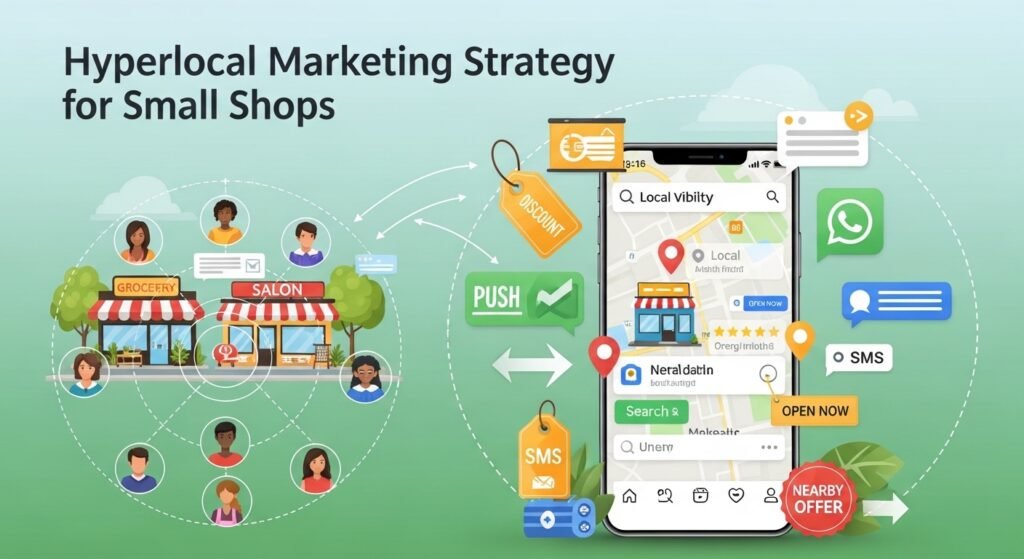
Introduction to Hyperlocal Marketing
As a digital marketing strategist and SEO consultant, I have worked with numerous small shops and local businesses, helping them increase their online visibility and drive more sales. One of the most effective strategies I recommend to my clients is hyperlocal marketing. In this section, we will delve into the world of hyperlocal marketing, exploring its benefits, strategies, and best practices for small shops.
Hyperlocal marketing refers to the process of targeting a specific geographic region, typically a small area such as a neighborhood, town, or city, to promote a product or service. This approach is particularly useful for small shops, as it allows them to focus on a specific audience and tailor their marketing efforts to meet the unique needs and preferences of that audience. By targeting a specific geographic region, small shops can increase their online visibility, drive more foot traffic to their store, and ultimately, boost sales.
Hyperlocal marketing is not a new concept, but it has gained significant attention in recent years, thanks to the rise of mobile devices and location-based technologies. With the majority of consumers using their smartphones to search for products and services online, hyperlocal marketing has become an essential strategy for small shops to reach their target audience. According to a study by Google, 76% of people who search for something nearby on their smartphone visit a related business within a day, and 28% of those searches result in a purchase. These statistics highlight the importance of hyperlocal marketing for small shops, as it can help them attract more customers and drive sales.
To illustrate the effectiveness of hyperlocal marketing, let’s consider an example. Suppose we have a small coffee shop located in a busy neighborhood in New York City. The coffee shop wants to attract more customers and increase sales. By using hyperlocal marketing strategies, such as optimizing their website for location-based keywords, creating content that is relevant to the local audience, and using social media to engage with customers, the coffee shop can increase its online visibility and attract more foot traffic to the store. For instance, the coffee shop can create a social media campaign that targets people who are within a 1-mile radius of the store, offering them a discount on their next purchase. This approach can help the coffee shop attract more customers and increase sales.
Another example of hyperlocal marketing is the use of Google My Business (GMB) listings. GMB listings are a free service provided by Google that allows businesses to manage their online presence and provide customers with essential information such as hours of operation, address, and contact details. By claiming and optimizing their GMB listing, small shops can increase their online visibility, respond to customer reviews, and post updates and offers to attract more customers. For example, a small shop can use GMB to post a weekly offer, such as a discount on a specific product, to attract more customers to the store.
In addition to these strategies, small shops can also use hyperlocal marketing to build relationships with their customers. By using social media and email marketing, small shops can engage with their customers, provide them with personalized offers and recommendations, and build a loyal customer base. For instance, a small shop can use social media to ask customers for feedback and suggestions, and then use that feedback to improve their products and services. This approach can help small shops build trust and loyalty with their customers, which is essential for long-term success.
In conclusion, hyperlocal marketing is a powerful strategy for small shops to increase their online visibility, drive more foot traffic to their store, and boost sales. By targeting a specific geographic region and tailoring their marketing efforts to meet the unique needs and preferences of that audience, small shops can attract more customers and increase sales. In the next section, we will explore the benefits of hyperlocal marketing in more detail, including its ability to increase online visibility, drive more foot traffic, and boost sales.
Some of the key benefits of hyperlocal marketing for small shops include:
- Increased online visibility: Hyperlocal marketing helps small shops to increase their online visibility, making it easier for customers to find them when searching for products or services online.
- Targeted marketing: Hyperlocal marketing allows small shops to target a specific audience, increasing the effectiveness of their marketing efforts and reducing waste.
- Improved customer engagement: Hyperlocal marketing enables small shops to build relationships with their customers, providing them with personalized offers and recommendations, and building a loyal customer base.
- Increased foot traffic: Hyperlocal marketing helps small shops to drive more foot traffic to their store, increasing the chances of making a sale.
- Competitive advantage: Hyperlocal marketing provides small shops with a competitive advantage, allowing them to differentiate themselves from larger businesses and attract more customers.
By understanding the benefits of hyperlocal marketing, small shops can develop effective strategies to increase their online visibility, drive more foot traffic, and boost sales. In the next section, we will explore the strategies and best practices for implementing hyperlocal marketing, including optimizing website content, using social media, and leveraging location-based technologies.
Understanding Target Audience for Hyperlocal Marketing
As a digital marketing strategist and SEO consultant, I have worked with numerous small shops and local businesses, helping them develop and implement effective hyperlocal marketing strategies. One of the most critical components of a successful hyperlocal marketing campaign is understanding the target audience. In this section, we will delve into the importance of identifying and understanding the target audience for hyperlocal marketing, and provide examples and explanations to help small shops develop a deeper understanding of their local customer base.
Hyperlocal marketing is all about targeting a specific geographic region, typically a small area such as a neighborhood, town, or city. To effectively target this audience, small shops need to have a thorough understanding of the demographics, needs, and preferences of the people living and working in the area. This includes factors such as age, income level, occupation, education, and interests. By understanding these factors, small shops can tailor their marketing efforts to resonate with their target audience and increase the likelihood of attracting and retaining local customers.
For example, a small boutique clothing store in a trendy neighborhood may find that its target audience is primarily young professionals and students who are interested in fashion and willing to pay a premium for unique and high-quality clothing. On the other hand, a family-owned restaurant in a suburban area may find that its target audience is primarily families with young children who are looking for a convenient and affordable dining option. By understanding these differences, small shops can develop marketing strategies that are tailored to the specific needs and preferences of their target audience.
Another important factor to consider when understanding the target audience for hyperlocal marketing is the role of online search in the customer journey. With the rise of mobile devices and voice search, more and more people are using online search to find local businesses and services. In fact, according to Google, 76% of people who search for something nearby on their smartphone visit a related business within a day, and 28% of those searches result in a purchase. This highlights the importance of having a strong online presence and optimizing for local search terms to attract and engage with the target audience.
To develop a deeper understanding of the target audience, small shops can use a variety of tools and techniques, including:
- Customer surveys and feedback forms to gather information about demographics, needs, and preferences
- Social media listening to understand what customers are talking about and what they are interested in
- Online review sites to see what customers are saying about the business and its competitors
- Local market research reports to gain insights into the local economy and consumer trends
- Google Analytics to understand website traffic and online behavior
By using these tools and techniques, small shops can gather valuable insights into the needs and preferences of their target audience and develop marketing strategies that are tailored to those needs. For example, a small shop may find that its target audience is primarily interested in sustainability and environmental issues, and therefore develops a marketing campaign that highlights its eco-friendly products and practices. Alternatively, a small shop may find that its target audience is primarily interested in convenience and affordability, and therefore develops a marketing campaign that emphasizes its competitive pricing and convenient location.
In addition to understanding the demographics and needs of the target audience, small shops also need to consider the role of psychology and emotional connections in the customer journey. People are more likely to engage with businesses that they feel a connection to, whether that be through shared values, a sense of community, or a personal relationship with the business owner. By understanding the psychological and emotional factors that drive customer behavior, small shops can develop marketing strategies that create a sense of connection and loyalty with their target audience.
For instance, a small coffee shop may find that its target audience is primarily young professionals who are looking for a welcoming and comfortable space to work and socialize. To create a sense of connection with this audience, the coffee shop may develop a marketing campaign that highlights its cozy atmosphere, friendly baristas, and commitment to using high-quality, locally-sourced ingredients. By emphasizing these factors, the coffee shop can create a sense of emotional connection with its target audience and increase the likelihood of attracting and retaining loyal customers.
In conclusion, understanding the target audience is a critical component of a successful hyperlocal marketing strategy. By gathering insights into the demographics, needs, and preferences of the target audience, small shops can develop marketing strategies that resonate with local customers and increase the likelihood of attracting and retaining a loyal customer base. Whether it be through customer surveys, social media listening, or online review sites, small shops have a range of tools and techniques at their disposal to develop a deeper understanding of their target audience and create effective hyperlocal marketing campaigns.
Building a Hyperlocal Marketing Strategy
As a digital marketing strategist and SEO consultant, I have worked with numerous small shops and local businesses, helping them develop and implement effective hyperlocal marketing strategies. In today’s competitive market, it is crucial for small shops to have a strong online presence and a well-planned marketing strategy to attract local customers. In this section, we will discuss the importance of hyperlocal marketing and provide a step-by-step guide on how to build a successful hyperlocal marketing strategy for small shops.
A hyperlocal marketing strategy focuses on targeting customers within a specific geographic area, typically within a few miles of the business location. This approach allows small shops to compete with larger brands and online retailers by emphasizing their unique local presence and personalized services. By leveraging hyperlocal marketing, small shops can increase foot traffic, drive sales, and build a loyal customer base.
To build a successful hyperlocal marketing strategy, small shops need to understand their target audience, including demographics, interests, and behaviors. This information can be gathered through market research, customer surveys, and social media analytics. For example, a local coffee shop can use social media to identify popular breakfast spots in the area and create targeted ads to attract customers who are looking for a quick and delicious breakfast option.
Another crucial aspect of hyperlocal marketing is optimizing the business’s online presence. This includes claiming and optimizing the Google My Business listing, creating a website with a clear and concise message, and engaging with customers on social media. Small shops should also focus on building high-quality local citations, such as listings in local directories and review sites, to increase their online visibility and credibility.
Search engine optimization (SEO) plays a vital role in hyperlocal marketing, as it helps small shops rank higher in local search results and attract organic traffic to their website. By incorporating location-specific keywords, such as city or neighborhood names, small shops can improve their search engine rankings and increase their online visibility. For instance, a local florist can optimize their website for keywords like “florist in New York City” or “flower delivery in Manhattan” to attract customers searching for florists in their area.
In addition to SEO, small shops should also utilize paid advertising channels, such as Google Ads and Facebook Ads, to reach their target audience. These platforms offer robust targeting options, including location targeting, which allows small shops to target customers within a specific radius of their business location. For example, a local restaurant can create a Google Ads campaign targeting customers within a 5-mile radius of their location, offering them exclusive discounts and promotions to drive foot traffic and sales.
Furthermore, small shops should leverage the power of local influencers and partnerships to amplify their hyperlocal marketing efforts. Partnering with local influencers, bloggers, or event organizers can help small shops reach a wider audience and build credibility within the local community. For instance, a local boutique can partner with a popular fashion blogger to showcase their latest collection and offer exclusive discounts to the blogger’s followers.
Measuring and tracking the success of a hyperlocal marketing strategy is also essential. Small shops should use analytics tools, such as Google Analytics, to monitor their website traffic, social media engagement, and conversion rates. By tracking these metrics, small shops can identify areas for improvement and make data-driven decisions to optimize their hyperlocal marketing strategy. For example, a local gym can use Google Analytics to track the number of website visitors and conversion rates, and adjust their marketing strategy to focus on the most effective channels and tactics.
In conclusion, building a successful hyperlocal marketing strategy requires a deep understanding of the target audience, a strong online presence, and a well-planned marketing approach. By leveraging SEO, paid advertising, local influencers, and partnerships, small shops can attract local customers, drive sales, and build a loyal customer base. As a digital marketing strategist and SEO consultant, I recommend that small shops focus on the following key takeaways to build a successful hyperlocal marketing strategy:
- Conduct thorough market research to understand the target audience and their needs
- Optimize the business’s online presence, including the Google My Business listing and website
- Utilize SEO and paid advertising channels to reach the target audience
- Leverage local influencers and partnerships to amplify hyperlocal marketing efforts
- Measure and track the success of the hyperlocal marketing strategy using analytics tools
By following these key takeaways and staying focused on the unique needs and preferences of their local target audience, small shops can develop a successful hyperlocal marketing strategy that drives growth, sales, and customer loyalty. As a seasoned digital marketing strategist and SEO consultant, I am confident that with the right approach and expertise, small shops can thrive in today’s competitive market and achieve their business goals.
For small shops looking to develop a hyperlocal marketing strategy, I recommend starting with a thorough analysis of their target audience and online presence. This includes conducting market research, analyzing customer feedback, and assessing the business’s online visibility and credibility. By taking a data-driven approach and leveraging the latest digital marketing tools and strategies, small shops can create a hyperlocal marketing strategy that resonates with their target audience and drives business success.
In addition to these key takeaways, small shops should also consider the following best practices when building a hyperlocal marketing strategy:
- Use location-specific keywords and phrases in website content and marketing materials
- Claim and optimize local directory listings, such as Yelp and Google My Business
- Utilize social media to engage with customers and promote local events and offers
- Partner with local businesses and organizations to amplify hyperlocal marketing efforts
- Monitor and respond to online reviews and feedback to build credibility and trust
By following these best practices and staying focused on the unique needs and preferences of their local target audience, small shops can develop a successful hyperlocal marketing strategy that drives growth, sales, and customer loyalty. As a digital marketing strategist and SEO consultant, I am committed to helping small shops achieve their business goals and succeed in today’s competitive market.
Executing and Measuring Hyperlocal Marketing Efforts
As a digital marketing strategist and SEO consultant, I have worked with numerous small shops and local businesses to develop and implement effective hyperlocal marketing strategies. In this section, we will dive deeper into the execution and measurement of hyperlocal marketing efforts, providing you with a comprehensive understanding of how to successfully promote your small shop to local customers.
Executing a hyperlocal marketing strategy requires careful planning, precise targeting, and continuous monitoring. To begin with, you need to define your target audience and identify the most effective channels to reach them. This may include Google My Business, local SEO, social media, email marketing, or a combination of these. For instance, if your small shop is a coffee shop in a busy downtown area, your target audience may be young professionals and students who frequent the area. In this case, you may want to focus on creating engaging content on Instagram and Facebook, utilizing location-based hashtags and tagging relevant local influencers.
Another crucial aspect of executing hyperlocal marketing efforts is optimizing your online presence. This includes claiming and optimizing your Google My Business listing, ensuring that your website is mobile-friendly and has a clear call-to-action, and building high-quality local citations. By doing so, you can increase your visibility in local search results, drive more foot traffic to your shop, and ultimately boost sales. For example, a small boutique clothing store in a trendy neighborhood can optimize its Google My Business listing by adding high-quality photos, responding promptly to customer reviews, and utilizing the “posts” feature to promote special offers and events.
In addition to optimizing your online presence, it is essential to leverage location-based advertising to reach your target audience. This may include running targeted Google Ads or Facebook Ads campaigns, utilizing location-based keywords and demographics to ensure that your ads are seen by people who are most likely to visit your shop. You can also use platforms like Waze or Yelp to reach local customers who are searching for businesses like yours. For instance, a small restaurant in a busy shopping district can run a targeted Google Ads campaign to reach people who are searching for “lunch near me” or “best restaurants in [neighborhood name]”.
Measuring the success of your hyperlocal marketing efforts is critical to understanding what is working and what areas need improvement. To do this, you need to track key performance indicators (KPIs) such as website traffic, social media engagement, foot traffic, and sales. You can use tools like Google Analytics to monitor your website traffic and track the effectiveness of your online advertising campaigns. Additionally, you can utilize social media analytics tools to measure engagement rates, follower growth, and other key metrics. For example, a small shop can use Google Analytics to track the number of website visitors who come from local search results, and adjust its SEO strategy accordingly.
Some other KPIs that you may want to track include:
- Customer acquisition cost (CAC): This refers to the cost of acquiring a new customer, including the cost of advertising, marketing, and other promotional activities.
- Customer retention rate: This measures the percentage of customers who return to your shop over a given period of time.
- Local search ranking: This refers to your shop’s ranking in local search results, which can have a significant impact on foot traffic and sales.
- Social media engagement: This includes metrics such as likes, shares, comments, and followers, which can help you understand how effectively you are engaging with your target audience.
- Revenue growth: This measures the increase in sales and revenue over time, which is ultimately the goal of any marketing strategy.
To illustrate the importance of measuring hyperlocal marketing efforts, let’s consider an example. Suppose you are the owner of a small independent bookstore in a neighborhood with a high foot traffic. You decide to run a targeted Facebook Ads campaign to promote your shop and increase sales. By tracking KPIs such as website traffic, social media engagement, and sales, you can determine the effectiveness of your campaign and make adjustments as needed. For instance, if you find that your campaign is driving a significant amount of website traffic but not resulting in many sales, you may want to adjust your ad targeting or messaging to better resonate with your target audience.
In conclusion, executing and measuring hyperlocal marketing efforts requires a combination of strategic planning, precise targeting, and continuous monitoring. By optimizing your online presence, leveraging location-based advertising, and tracking key performance indicators, you can effectively promote your small shop to local customers and drive business growth. As a digital marketing strategist and SEO consultant, I have seen firsthand the impact that a well-executed hyperlocal marketing strategy can have on a small business, and I am confident that by following these tips and best practices, you can achieve similar success.
Furthermore, it is essential to stay up-to-date with the latest trends and best practices in hyperlocal marketing, as the landscape is constantly evolving. This may include attending industry conferences, reading industry blogs and publications, and participating in online forums and discussions. By staying informed and adapting to changes in the market, you can stay ahead of the competition and continue to drive growth and success for your small shop. For instance, you may want to explore new platforms and channels, such as Instagram Reels or TikTok, to reach your target audience and promote your shop.
In addition to staying up-to-date with industry trends, it is also crucial to continuously monitor and adjust your hyperlocal marketing strategy to ensure that it remains effective. This may involve conducting regular audits of your online presence, analyzing your KPIs, and making adjustments to your targeting, messaging, and ad creative. By doing so, you can ensure that your hyperlocal marketing efforts continue to drive business growth and revenue for your small shop. For example, you may want to adjust your ad targeting to focus on a specific demographic or interest group, or modify your messaging to better resonate with your target audience.
Finally, it is essential to remember that hyperlocal marketing is a long-term strategy that requires ongoing effort and commitment. It is not a one-time campaign or promotion, but rather an ongoing process of building relationships, engaging with your target audience, and driving business growth. By adopting a long-term perspective and continually adapting and refining your hyperlocal marketing strategy, you can achieve lasting success and establish your small shop as a leader in your local market. As a digital marketing strategist and SEO consultant, I am committed to helping small businesses like yours achieve success through effective hyperlocal marketing strategies, and I am confident that by working together, we can drive business growth and revenue for your shop.
In the next section, we will explore the importance of building a strong online presence for your small shop, including tips and best practices for optimizing your website, social media, and local search listings. By building a strong online presence, you can increase your visibility, drive more foot traffic to your shop, and ultimately boost sales and revenue. Whether you are just starting out or looking to take your business to the next level, a strong online presence is essential for success in today’s digital landscape.
Advanced Hyperlocal Marketing Techniques for Small Shops
As a digital marketing strategist and SEO consultant, I have worked with numerous small shops and local businesses, helping them scale their online presence and drive foot traffic to their stores. In today’s competitive market, it’s essential for small shops to adopt advanced hyperlocal marketing techniques to stay ahead of the competition. In this section, we will explore some of the most effective hyperlocal marketing strategies that small shops can use to attract local customers and increase sales.
Hyperlocal marketing refers to the practice of targeting customers within a specific geographic location, usually within a few miles of a business. This type of marketing is particularly effective for small shops, as it allows them to target customers who are most likely to visit their store. With the rise of mobile devices and location-based services, hyperlocal marketing has become more accessible and affordable for small businesses.
One of the most advanced hyperlocal marketing techniques is location-based advertising. This involves targeting customers based on their physical location, using technologies such as GPS, Wi-Fi, and cellular data. Small shops can use location-based advertising to target customers who are near their store, sending them personalized messages and offers to encourage them to visit. For example, a coffee shop can send a push notification to customers who are within a 500-meter radius, offering them a discount on their next purchase.
Another effective hyperlocal marketing technique is Google My Business optimization. Google My Business is a free service that allows businesses to manage their online presence and provide customers with essential information such as hours of operation, address, and contact details. By optimizing their Google My Business listing, small shops can improve their visibility in local search results and attract more customers. This includes adding high-quality photos, responding to customer reviews, and providing accurate and up-to-date information.
Small shops can also use social media marketing to target local customers. Social media platforms such as Facebook and Instagram allow businesses to target customers based on their location, interests, and demographics. For example, a fashion boutique can create a Facebook ad campaign targeting women aged 25-45 who live within a 5-mile radius of their store. The ad can include a special offer or promotion to encourage customers to visit the store.
In addition to these techniques, small shops can also use influencer marketing to reach local customers. Influencer marketing involves partnering with local influencers who have a large following on social media and can promote a business to their audience. For example, a restaurant can partner with a local food blogger to promote their new menu items and attract more customers.
To implement these advanced hyperlocal marketing techniques, small shops can use a variety of tools and platforms. Some of the most popular tools include:
- Google My Business: a free service that allows businesses to manage their online presence and provide customers with essential information
- Facebook Ads Manager: a platform that allows businesses to create and manage Facebook ad campaigns
- Instagram Ads: a platform that allows businesses to create and manage Instagram ad campaigns
- Hootsuite: a social media management platform that allows businesses to schedule and publish social media posts
- Mailchimp: an email marketing platform that allows businesses to create and send email campaigns to their customers
By using these tools and platforms, small shops can create and implement effective hyperlocal marketing campaigns that drive foot traffic and sales.
It’s also important for small shops to measure and track the effectiveness of their hyperlocal marketing campaigns. This can be done using analytics tools such as Google Analytics, which provides insights into website traffic, engagement, and conversion rates. By tracking the effectiveness of their campaigns, small shops can identify areas for improvement and make data-driven decisions to optimize their marketing strategies.
In conclusion, advanced hyperlocal marketing techniques such as location-based advertising, Google My Business optimization, social media marketing, influencer marketing, and email marketing can help small shops attract local customers and drive sales. By using the right tools and platforms, small shops can create and implement effective hyperlocal marketing campaigns that reach their target audience and achieve their marketing goals. As a digital marketing strategist and SEO consultant, I have seen firsthand the impact that hyperlocal marketing can have on small businesses, and I highly recommend that small shops adopt these techniques to stay ahead of the competition.

Amit Tyagi is a seasoned Digital Marketing and SEO Consultant with extensive experience helping businesses improve online visibility through SEO, AI Search Optimization (AIO/GEO), content strategy, and performance marketing. He regularly shares practical insights, industry updates, and data-driven strategies, empowering brands and marketers to achieve sustainable digital growth in an evolving search landsca