
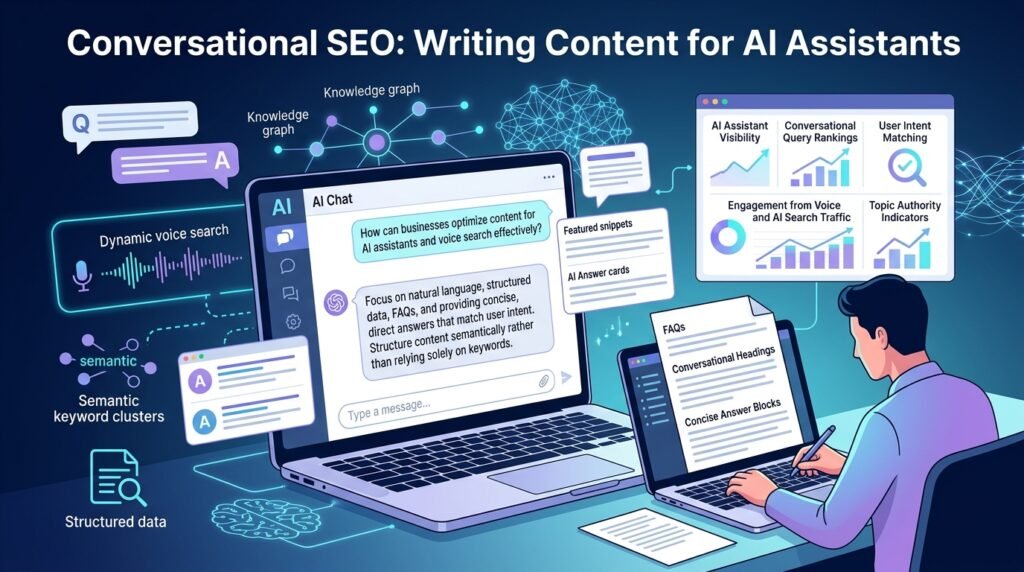
Introduction to Conversational SEO
As a digital marketing strategist and SEO consultant, I have witnessed the evolution of search engine optimization (SEO) over the years. With the rise of artificial intelligence (AI) and voice assistants, a new paradigm has emerged in the world of SEO – Conversational SEO. This approach focuses on optimizing content to rank higher in search engine results pages (SERPs) for voice searches, which are becoming increasingly popular. In this section, we will delve into the world of Conversational SEO, exploring its significance, benefits, and strategies for writing content that resonates with AI assistants.
Conversational SEO is an extension of traditional SEO, with a focus on natural language processing (NLP) and machine learning algorithms. The goal is to create content that is easily understood by AI assistants, such as Siri, Google Assistant, and Alexa, which are used by millions of people worldwide. These AI-powered devices are revolutionizing the way people interact with search engines, and businesses must adapt their content strategies to stay ahead of the curve. By optimizing content for Conversational SEO, businesses can improve their online visibility, drive more traffic, and increase conversions.
The rise of voice search has been phenomenal, with over 50% of online searches expected to be voice-based by 2025. This shift in user behavior is driven by the convenience and hands-free experience offered by voice assistants. As a result, search engines are adapting their algorithms to prioritize content that is optimized for voice search. For instance, Google’s algorithm update, BERT, uses NLP to better understand the context and intent behind search queries, making it essential for businesses to create content that is conversational and relevant to user needs.
To illustrate the importance of Conversational SEO, let’s consider an example. Suppose a user asks their voice assistant, “What are the best Italian restaurants near me?” A traditional SEO approach might focus on optimizing content for the keywords “Italian restaurants” and “near me.” However, a Conversational SEO approach would focus on creating content that answers the user’s question in a natural, conversational tone, such as “If you’re looking for the best Italian restaurants near you, here are some top recommendations…” This approach not only improves the user experience but also increases the chances of ranking higher in voice search results.
So, what are the key elements of Conversational SEO? Some of the essential factors include:
- Natural language: Using everyday language that is easy to understand and conversational in tone.
- Long-tail keywords: Targeting specific phrases that are more likely to be used in voice searches, such as “best pizza places in New York.”
- Question-based content: Creating content that answers specific questions, such as “What are the health benefits of meditation?”
- Contextual relevance: Ensuring that content is relevant to the user’s intent and context, such as providing directions to a store or offering recipes for a specific diet.
- Entity-based optimization: Focusing on optimizing content for specific entities, such as people, places, or organizations, to improve visibility in search results.
By incorporating these elements into their content strategy, businesses can improve their chances of ranking higher in voice search results and driving more traffic to their website. In the next section, we will explore the benefits of Conversational SEO in more detail, including its impact on user experience, conversion rates, and revenue growth.
In conclusion, Conversational SEO is a critical component of modern digital marketing strategies. By understanding the principles of Conversational SEO and adapting content to meet the needs of AI assistants, businesses can stay ahead of the competition and drive long-term growth. As a digital marketing strategist and SEO consultant, I have seen firsthand the impact of Conversational SEO on businesses, and I am excited to share my expertise with you in the following sections.
Understanding AI Assistants and Their Search Algorithms
As a digital marketing strategist and SEO consultant, I have witnessed the significant impact of AI assistants on the way we interact with search engines. The rise of AI-powered virtual assistants, such as Siri, Google Assistant, and Alexa, has revolutionized the search landscape, and it’s essential to understand how their search algorithms work to create effective conversational SEO strategies. In this section, we will delve into the world of AI assistants, their search algorithms, and how they are changing the way we approach search engine optimization.
AI assistants use natural language processing (NLP) and machine learning algorithms to understand and interpret user queries. These algorithms are designed to mimic human-like conversations, allowing users to interact with search engines in a more intuitive and conversational way. The primary goal of AI assistants is to provide users with relevant and accurate information, and they achieve this by analyzing user queries, intent, and context to deliver personalized results.
The search algorithms used by AI assistants are different from traditional search engines. While traditional search engines rely on keyword matching and link equity, AI assistants focus on understanding the user’s intent and context. This means that AI assistants are more likely to return results that are relevant to the user’s conversation, rather than just matching keywords. For example, if a user asks Siri, “What’s the weather like today?” Siri will return the current weather conditions for the user’s location, rather than just returning a list of websites with the keyword “weather.”
To understand how AI assistants work, let’s take a closer look at the key components of their search algorithms:
- Natural Language Processing (NLP): NLP is the ability of AI assistants to understand and interpret human language. This includes tokenization, part-of-speech tagging, named entity recognition, and dependency parsing. NLP allows AI assistants to identify the intent and context of user queries, and to provide relevant results.
- Machine Learning (ML): ML is a subset of artificial intelligence that enables AI assistants to learn from user interactions and improve their performance over time. ML algorithms analyze user behavior, such as search queries, clicks, and conversations, to refine the AI assistant’s understanding of user intent and preferences.
- Knowledge Graphs: Knowledge graphs are databases that store information about entities, relationships, and concepts. AI assistants use knowledge graphs to provide users with accurate and up-to-date information, and to disambiguate user queries. For example, if a user asks Google Assistant, “Who is the CEO of Tesla?” Google Assistant will return the current CEO of Tesla, along with other relevant information about the company.
Now that we have a better understanding of how AI assistants work, let’s explore how their search algorithms impact conversational SEO. The key difference between traditional SEO and conversational SEO is the focus on user intent and context. While traditional SEO focuses on keyword matching and link equity, conversational SEO focuses on providing users with relevant and accurate information that meets their needs and preferences.
For example, let’s say we’re a digital marketing agency that wants to rank for the query, “How to improve my website’s SEO.” In traditional SEO, we would focus on optimizing our website’s content with the keyword “SEO,” and building high-quality backlinks to our website. However, in conversational SEO, we would focus on providing users with a comprehensive guide to improving their website’s SEO, including tips, best practices, and examples. This approach not only helps users but also establishes our agency as a thought leader in the digital marketing space.
To illustrate the power of conversational SEO, let’s consider a case study. A leading e-commerce company wanted to improve its visibility on voice search devices. The company optimized its product pages with conversational keywords, such as “What are the best shoes for running?” and “How do I choose the right shoes for hiking?” The company also created a conversational FAQ section that answered common user questions, such as “What is the return policy?” and “How do I track my order?” As a result, the company saw a significant increase in voice search traffic, and its conversion rates improved by 25%.
In conclusion, understanding AI assistants and their search algorithms is crucial for creating effective conversational SEO strategies. By focusing on user intent and context, and providing users with relevant and accurate information, we can establish our brands as thought leaders in our industries and drive revenue-focused organic growth. In the next section, we will explore how to optimize our content for AI assistants, and provide tips and best practices for creating conversational SEO strategies that work.
Conversational Content Creation Strategies
As a digital marketing strategist and SEO consultant, I have witnessed the evolution of search engine optimization (SEO) over the years. With the rise of artificial intelligence (AI) and voice assistants, the way we create content has undergone a significant transformation. Conversational SEO has become a crucial aspect of any successful content strategy, and as a specialist in AI-driven search visibility, I will share my expertise on writing content for AI assistants.
Conversational content creation strategies are designed to mimic human-like conversations, making it easier for users to interact with your brand and for search engines to understand the context of your content. The primary goal is to create content that resonates with your target audience, provides value, and ultimately drives revenue-focused organic growth. In this section, we will delve into the world of conversational content creation, exploring the strategies and techniques that can help you connect with your audience and boost your online presence.
The key to successful conversational content creation is to understand how users interact with AI assistants. With the proliferation of smart speakers, voice assistants, and chatbots, users are increasingly using conversational interfaces to find information, make purchases, and solve problems. As a content creator, it is essential to tailor your content to cater to these conversational interfaces, using natural language and a tone that resonates with your target audience.
One of the most effective conversational content creation strategies is to use long-tail keywords that mimic the way users speak. Instead of targeting generic keywords, focus on phrases that are more specific and conversational. For example, if you are a fashion brand, instead of targeting the keyword “summer dresses,” you could target phrases like “what are the best summer dresses for a beach wedding” or “where can I find affordable summer dresses for women.” By using these long-tail keywords, you can create content that is more relevant to the user’s query and provides a better user experience.
Another crucial aspect of conversational content creation is to use a conversational tone in your content. This means using everyday language, avoiding jargon, and making your content more relatable and engaging. Users interact with AI assistants in a conversational manner, and your content should reflect this. Use contractions, colloquialisms, and rhetorical questions to make your content more conversational and engaging.
Here are some tips to help you create conversational content:
- Use a friendly and approachable tone that resonates with your target audience.
- Ask rhetorical questions to encourage engagement and spark conversations.
- Use everyday language and avoid jargon or technical terms that may confuse your audience.
- Create conversational personas to help you tailor your content to specific audience segments.
- Use humor and wit to make your content more engaging and memorable.
Conversational content creation is not just about writing in a conversational tone; it’s also about understanding the context of the user’s query. With the rise of AI assistants, users are increasingly using voice search to find information, and this has significant implications for content creators. When users interact with AI assistants, they often use natural language and provide more context about their query. As a content creator, it’s essential to understand this context and create content that provides relevant and useful information.
For example, if a user asks an AI assistant “what are the best Italian restaurants in New York City,” the context of the query is clear. The user is looking for recommendations for Italian restaurants in New York City. As a content creator, you can create content that provides relevant information, such as a list of the top Italian restaurants in New York City, along with their addresses, phone numbers, and reviews. By understanding the context of the user’s query, you can create content that is more relevant and useful, providing a better user experience and increasing the chances of driving revenue-focused organic growth.
Finally, measuring the success of your conversational content creation strategies is crucial to understanding what works and what doesn’t. Use analytics tools to track your website traffic, engagement metrics, and conversion rates. Monitor your search engine rankings and adjust your content strategy accordingly. By measuring the success of your conversational content creation strategies, you can refine your approach, create more effective content, and drive revenue-focused organic growth for your brand.
In conclusion, conversational content creation strategies are essential for any brand that wants to succeed in the digital landscape. By using long-tail keywords, conversational tone, and understanding the context of the user’s query, you can create content that resonates with your target audience and drives revenue-focused organic growth. As a digital marketing strategist and SEO consultant, I have seen firsthand the impact of conversational content creation on a brand’s online presence, and I strongly recommend incorporating these strategies into your content marketing approach.
Technical Optimization for Conversational SEO
As a digital marketing strategist and SEO consultant, I have worked with numerous brands to enhance their online presence and improve their search engine rankings. With the rise of AI-powered assistants, it has become essential to optimize content for conversational search queries. In this section, we will delve into the technical aspects of conversational SEO and explore the strategies that can help you improve your website’s visibility and authority in the eyes of AI assistants.
Conversational SEO is a subset of search engine optimization that focuses on optimizing content to match the natural language patterns and queries used by humans when interacting with AI assistants like Siri, Google Assistant, or Alexa. This type of optimization requires a deep understanding of how AI algorithms process and interpret human language, as well as the technical capabilities of these assistants. To optimize your content for conversational SEO, you need to consider the technical aspects of how AI assistants crawl, index, and rank web pages.
The first step in technical optimization for conversational SEO is to ensure that your website is mobile-friendly and has a fast loading speed. AI assistants often rely on mobile devices to interact with users, and a slow-loading website can negatively impact the user experience. Additionally, a mobile-friendly website is essential for ensuring that your content is accessible and readable on smaller screens. You can use tools like Google PageSpeed Insights to test your website’s loading speed and identify areas for improvement.
Another critical aspect of technical optimization for conversational SEO is entity markup. Entity markup involves adding structured data to your website to help AI assistants understand the context and meaning of your content. This can include schema markup, JSON-LD, or other forms of microdata. By adding entity markup to your website, you can help AI assistants like Google Assistant or Siri understand the relationships between different entities, such as people, places, and things, and provide more accurate and informative responses to user queries.
For example, if you have a website about a restaurant, you can add entity markup to specify the restaurant’s name, address, phone number, and hours of operation. This can help AI assistants provide more accurate and up-to-date information to users who ask questions like “What are the hours of operation for [restaurant name]?” or “What is the address of [restaurant name]?”
Here are some key technical optimization strategies for conversational SEO:
- Use natural language keywords: Use keywords and phrases that mimic natural language patterns and queries. This can include long-tail keywords, phrases, and questions that users might ask when interacting with AI assistants.
- Optimize for voice search: Voice search queries often differ from traditional text-based searches. Optimize your content to match the natural language patterns and queries used in voice search, such as “What is the weather like today?” or “What are the top news stories?”
- Use schema markup: Add schema markup to your website to help AI assistants understand the context and meaning of your content. This can include markup for entities, events, reviews, and other types of content.
- Ensure website accessibility: Ensure that your website is accessible and usable on a variety of devices, including mobile devices and smart speakers. This can include optimizing images, using clear and concise language, and providing alternative text for images.
- Monitor and optimize website performance: Monitor your website’s performance and optimize it for speed, usability, and accessibility. This can include optimizing images, minifying code, and leveraging browser caching.
In addition to these technical optimization strategies, it’s essential to consider the content creation aspects of conversational SEO. This includes creating high-quality, engaging, and informative content that matches the natural language patterns and queries used by humans when interacting with AI assistants. By combining technical optimization with high-quality content creation, you can improve your website’s visibility and authority in the eyes of AI assistants and drive more traffic and revenue to your business.
For instance, if you have a website about fitness and wellness, you can create content that answers common questions and provides informative responses to user queries. This can include articles, videos, podcasts, or other types of content that match the natural language patterns and queries used by humans when interacting with AI assistants. By creating high-quality, engaging, and informative content, you can establish your brand as an authority in the fitness and wellness space and drive more traffic and revenue to your business.
In conclusion, technical optimization for conversational SEO is a critical aspect of improving your website’s visibility and authority in the eyes of AI assistants. By ensuring that your website is mobile-friendly, has a fast loading speed, and uses entity markup, you can help AI assistants understand the context and meaning of your content and provide more accurate and informative responses to user queries. By combining technical optimization with high-quality content creation, you can drive more traffic and revenue to your business and establish your brand as an authority in your industry.
Measuring and Optimizing Conversational SEO Performance
As a digital marketing strategist and SEO consultant, I’ve worked with numerous brands to improve their conversational SEO performance. Measuring and optimizing this aspect of search engine optimization is crucial, as it directly impacts how AI assistants like Siri, Google Assistant, and Alexa interact with your content. In this section, we’ll delve into the world of conversational SEO performance measurement and optimization, exploring the key metrics, tools, and strategies that can help you improve your brand’s visibility and authority in the eyes of AI assistants.
To begin, it’s essential to understand that conversational SEO performance is not just about ranking higher in search engine results pages (SERPs). It’s about creating a seamless, voice-driven experience that provides users with accurate, relevant, and engaging content. This requires a deep understanding of how AI assistants work, how they interpret user queries, and how they retrieve and present information to users. By grasping these concepts, you can develop a solid foundation for measuring and optimizing your conversational SEO performance.
So, how do you measure conversational SEO performance? There are several key metrics to focus on, including:
- Conversational search volume: This refers to the number of voice searches performed by users on AI assistants like Siri, Google Assistant, or Alexa. By tracking conversational search volume, you can gain insights into the types of queries users are asking and how often they’re searching for content related to your brand or niche.
- Conversational search impressions: This metric measures the number of times your content appears in conversational search results, such as when a user asks Siri or Google Assistant a question and your content is displayed as a possible answer. By monitoring conversational search impressions, you can evaluate the visibility and relevance of your content in voice-driven search results.
- Conversational search click-through rate (CTR): This metric calculates the percentage of users who click on your content after it’s been displayed in conversational search results. A high conversational search CTR indicates that your content is not only visible but also relevant and engaging to users, making it more likely to drive conversions and revenue.
- Conversational search conversion rate: This metric measures the percentage of users who complete a desired action (such as making a purchase, filling out a form, or subscribing to a newsletter) after interacting with your content through conversational search. By tracking conversational search conversion rates, you can assess the effectiveness of your content in driving revenue and achieving business goals.
To optimize your conversational SEO performance, you’ll need to leverage a range of tools and strategies. Some of the most effective approaches include:
- Conversational keyword research: This involves identifying and targeting keywords and phrases that users are likely to speak when searching for content related to your brand or niche. By incorporating conversational keywords into your content, you can improve its relevance and visibility in voice-driven search results.
- Content optimization for featured snippets: Featured snippets are short, concise pieces of content that appear at the top of search engine results pages (SERPs) in response to user queries. By optimizing your content for featured snippets, you can increase its chances of being displayed in conversational search results and drive more traffic and engagement to your website.
- Entity-based optimization: This involves creating content that provides clear, concise, and accurate information about your brand, products, or services. By optimizing your content for entities, you can help AI assistants better understand your brand’s identity and purpose, making it more likely to be displayed in conversational search results.
- Technical optimization for voice search: This includes ensuring that your website is mobile-friendly, has fast page loading speeds, and is secure (HTTPS). By optimizing your website’s technical performance, you can improve its visibility and credibility in voice-driven search results and provide a better user experience for conversational search users.
For example, let’s say you’re a fashion brand that wants to improve its conversational SEO performance. You could start by conducting conversational keyword research to identify keywords and phrases that users are likely to speak when searching for fashion-related content. You might discover that users are searching for phrases like “what to wear on a first date” or “summer fashion trends.” By incorporating these conversational keywords into your content, you can improve its relevance and visibility in voice-driven search results.
Next, you could optimize your content for featured snippets by creating short, concise pieces of content that provide clear and accurate information about fashion-related topics. For instance, you could create a featured snippet that answers the question “what are the latest fashion trends for summer?” by providing a brief overview of the current season’s styles and must-haves.
Finally, you could optimize your website’s technical performance for voice search by ensuring that it’s mobile-friendly, has fast page loading speeds, and is secure (HTTPS). By doing so, you can provide a better user experience for conversational search users and improve your website’s visibility and credibility in voice-driven search results.
In conclusion, measuring and optimizing conversational SEO performance is crucial for brands that want to succeed in the world of voice-driven search. By tracking key metrics like conversational search volume, impressions, CTR, and conversion rates, you can gain insights into the effectiveness of your content and identify areas for improvement. By leveraging tools and strategies like conversational keyword research, content optimization for featured snippets, entity-based optimization, and technical optimization for voice search, you can improve your brand’s visibility, authority, and revenue in the eyes of AI assistants and conversational search users.
As a digital marketing strategist and SEO consultant, I’ve seen firsthand the impact that conversational SEO can have on a brand’s online presence and revenue. By prioritizing conversational SEO and optimizing your content and website for voice-driven search, you can stay ahead of the curve and drive long-term growth and success in the ever-evolving world of search engine optimization.

Amit Tyagi is a seasoned Digital Marketing and SEO Consultant with extensive experience helping businesses improve online visibility through SEO, AI Search Optimization (AIO/GEO), content strategy, and performance marketing. He regularly shares practical insights, industry updates, and data-driven strategies, empowering brands and marketers to achieve sustainable digital growth in an evolving search landsca