
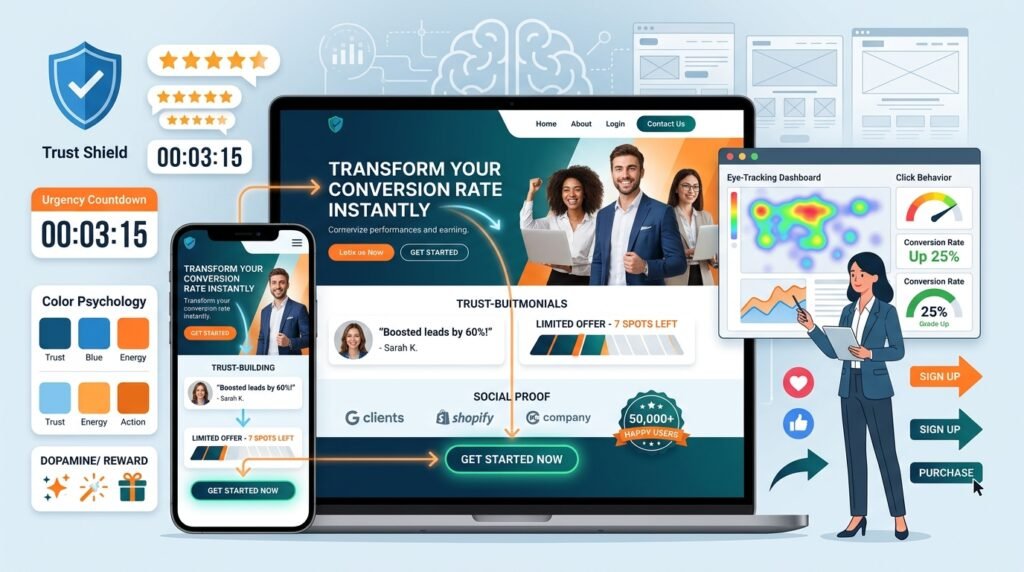
Introduction to Psychology-Based Landing Pages
As a digital marketing strategist and SEO consultant, I have worked with numerous brands to improve their online presence and drive revenue through organic growth. One crucial aspect of achieving this goal is creating effective landing pages that convert visitors into customers. Traditional landing pages often focus on showcasing products or services, but they may not necessarily consider the psychological factors that influence a visitor’s decision to take action. This is where psychology-based landing pages come into play, and in this section, we will delve into the world of psychology-driven design and its impact on conversion rates.
Psychology-based landing pages are designed to understand the underlying motivations, desires, and pain points of a target audience. By leveraging psychological principles, these landing pages aim to create an emotional connection with visitors, build trust, and ultimately drive conversions. As someone with over 15 years of experience in digital marketing, I can attest that incorporating psychology into landing page design can significantly improve conversion rates and revenue growth.
The concept of psychology-based landing pages is rooted in the understanding that human behavior is driven by both conscious and subconscious factors. When designing a landing page, it is essential to consider the cognitive biases, emotions, and motivations that influence a visitor’s decision-making process. By doing so, marketers can create landing pages that resonate with their target audience, address their concerns, and provide a sense of value and satisfaction.
For instance, a landing page that uses social proof, such as customer testimonials and reviews, can tap into the psychological principle of social influence. This principle states that people are more likely to adopt a behavior or make a purchase if they see others doing the same. By showcasing social proof, a landing page can create a sense of trust and credibility, making visitors more likely to convert.
Another example of a psychology-based landing page is one that uses scarcity tactics, such as limited-time offers or limited availability. This approach leverages the psychological principle of loss aversion, which states that people prefer to avoid losses rather than acquire gains. By creating a sense of urgency, a landing page can motivate visitors to take action, as they perceive the potential loss of missing out on an opportunity.
To create effective psychology-based landing pages, marketers must first understand their target audience’s psychological profile. This involves gathering data on their demographics, interests, behaviors, and pain points. With this information, marketers can design landing pages that speak directly to their audience’s needs, desires, and concerns.
Some key psychological principles to consider when designing landing pages include:
- Cognitive fluency: making it easy for visitors to understand and navigate the landing page
- Emotional connection: creating an emotional bond with visitors through storytelling, imagery, and messaging
- Social influence: using social proof, customer testimonials, and reviews to build trust and credibility
- Loss aversion: using scarcity tactics to create a sense of urgency and motivate visitors to take action
- Reciprocity: offering value, such as free resources or trials, to build trust and encourage conversions
By incorporating these psychological principles into landing page design, marketers can create a more engaging, persuasive, and effective user experience. In the next section, we will explore the importance of understanding the target audience’s psychological profile and how to use this information to design landing pages that convert visitors faster.
As a digital marketing strategist, I have seen firsthand the impact that psychology-based landing pages can have on conversion rates and revenue growth. By leveraging psychological principles, marketers can create landing pages that resonate with their target audience, build trust, and drive conversions. Whether you are a seasoned marketer or just starting out, understanding the psychology behind landing page design can help you create more effective marketing campaigns and achieve your business goals.
In conclusion, psychology-based landing pages offer a powerful way to improve conversion rates and drive revenue growth. By understanding the psychological principles that influence human behavior, marketers can design landing pages that create an emotional connection with visitors, build trust, and motivate them to take action. As we move forward in this digital age, it is essential to incorporate psychology into landing page design to stay ahead of the competition and achieve business success.
With the increasing importance of user experience and conversion rate optimization, psychology-based landing pages are becoming a crucial aspect of digital marketing strategies. As a marketer, it is essential to stay up-to-date with the latest trends and best practices in landing page design, and to continually test and optimize your landing pages to improve performance. By doing so, you can create landing pages that not only convert visitors faster but also provide a better user experience, build trust, and drive long-term revenue growth.
In my experience, the most effective psychology-based landing pages are those that strike a balance between cognitive fluency, emotional connection, and social influence. By making it easy for visitors to understand and navigate the landing page, creating an emotional bond with them, and using social proof to build trust and credibility, marketers can design landing pages that resonate with their target audience and drive conversions. Whether you are promoting a product, service, or cause, psychology-based landing pages offer a powerful way to achieve your marketing goals and drive business success.
Key Principles of Psychology That Influence Landing Page Design
As a digital marketing strategist, I have always been fascinated by the power of psychology in shaping the online user experience. When it comes to landing page design, understanding the key principles of psychology can make all the difference in converting visitors into customers. In this section, we will delve into the world of psychology and explore the key principles that influence landing page design, helping you create pages that resonate with your target audience and drive conversions.
Human behavior is complex, and what drives one person to take action may not have the same effect on another. However, by understanding the fundamental principles of psychology, you can create landing pages that tap into the subconscious mind of your visitors, increasing the likelihood of conversion. Let’s take a closer look at some of the key principles of psychology that influence landing page design.
One of the most important principles is social proof. People are more likely to trust and follow the actions of others, especially when they are uncertain or lack information. This is why customer testimonials, reviews, and ratings are essential elements of a landing page. By showcasing the experiences and opinions of others, you can build trust and credibility with your visitors, making them more likely to convert. For example, a landing page for a fitness program could feature before-and-after photos of successful customers, along with their testimonials and success stories.
Another key principle is scarcity. People are more likely to take action when they feel that there is a limited supply of a product or service. This is why creating a sense of urgency on your landing page can be an effective way to drive conversions. You can use tactics such as limited-time offers, countdown timers, or limited availability to create a sense of scarcity, motivating visitors to take action before it’s too late. For instance, a landing page for a limited-edition product could feature a countdown timer, reminding visitors that the offer is only available for a short period.
Authority is another important principle of psychology that influences landing page design. People are more likely to trust and follow the advice of experts and authorities in a particular field. This is why establishing your brand as an authority in your industry can be a powerful way to build trust and credibility with your visitors. You can use tactics such as showcasing your credentials, featuring expert endorsements, or highlighting your brand’s achievements to establish your authority and expertise.
In addition to these principles, anchoring is also a key concept in psychology that can influence landing page design. Anchoring refers to the tendency for people to rely too heavily on the first piece of information they receive when making a decision. This is why pricing strategies, such as offering a higher-priced option alongside a lower-priced option, can be effective in making the lower-priced option seem more reasonable and attractive. For example, a landing page for a software product could feature a premium version with a higher price point, alongside a basic version with a lower price point, making the basic version seem more affordable and attractive.
Furthermore, reciprocity is a fundamental principle of human behavior that can be leveraged in landing page design. People are more likely to return a favor or reciprocate a kindness when they feel that they have received something of value. This is why offering free resources, such as e-books, webinars, or trials, can be an effective way to build trust and establish a relationship with your visitors. By providing value upfront, you can create a sense of reciprocity, making visitors more likely to convert and become customers.
Other key principles of psychology that influence landing page design include:
- Likeability: People are more likely to trust and follow the advice of people they like and find relatable. This is why using friendly, approachable language and featuring images of happy, smiling people can be effective in creating a positive and welcoming atmosphere on your landing page.
- Commitment and consistency: People are more likely to follow through on a commitment when they have made a public declaration or investment. This is why asking visitors to fill out a form or make a commitment, such as signing up for a free trial, can be an effective way to drive conversions.
- Emotional connection: People are more likely to take action when they feel an emotional connection to a product or service. This is why using storytelling, imagery, and vivid language can be effective in creating an emotional connection with your visitors and driving conversions.
In conclusion, understanding the key principles of psychology that influence landing page design can help you create pages that resonate with your target audience and drive conversions. By incorporating elements such as social proof, scarcity, authority, anchoring, reciprocity, likeability, commitment and consistency, and emotional connection, you can tap into the subconscious mind of your visitors and increase the likelihood of conversion. Remember, the key to successful landing page design is to understand the psychological triggers that drive human behavior and use them to your advantage.
As a digital marketing strategist, I have seen firsthand the impact that psychology-based landing page design can have on conversion rates. By applying these principles to your landing page design, you can create pages that are more effective at driving conversions and achieving your business goals. Whether you are looking to increase sales, generate leads, or build brand awareness, understanding the key principles of psychology that influence landing page design can help you achieve your objectives and drive business success.
Designing Landing Pages with Psychology-Driven Elements
As a digital marketing strategist, I have always emphasized the importance of understanding human psychology when it comes to designing landing pages that convert visitors into customers. The key to creating effective landing pages lies in incorporating psychology-driven elements that resonate with your target audience and influence their decision-making process. In this section, we will delve into the world of psychology-based landing pages and explore the various elements that can be used to boost conversions and drive revenue growth.
When it comes to designing landing pages, most marketers focus on aesthetics, such as the color scheme, typography, and imagery. While these elements are crucial, they are only half the story. To truly create landing pages that convert, you need to understand the psychological triggers that drive human behavior and decision-making. This is where psychology-driven elements come into play. By incorporating these elements into your landing page design, you can create a persuasive and compelling experience that resonates with your target audience and ultimately drives conversions.
So, what are these psychology-driven elements, and how can you use them to design landing pages that convert visitors faster? Let’s take a look at some examples. One of the most effective psychology-driven elements is social proof. Social proof refers to the phenomenon where people follow the actions of others, especially when they are uncertain or lack information. By incorporating social proof into your landing page design, you can create a sense of trust and credibility with your target audience. This can be achieved through customer testimonials, reviews, and ratings.
For instance, let’s say you are designing a landing page for a new e-commerce website that sells outdoor gear. To incorporate social proof, you could include customer testimonials and reviews from satisfied customers who have purchased products from your website. This could be in the form of a quote, a photo, or even a video. By showcasing social proof, you can create a sense of trust and credibility with your target audience, which can help to increase conversions and drive revenue growth.
Another psychology-driven element is scarcity. Scarcity refers to the phenomenon where people place a higher value on things that are scarce or limited in availability. By incorporating scarcity into your landing page design, you can create a sense of urgency and encourage visitors to take action. This can be achieved through limited-time offers, countdown timers, or limited availability notifications.
For example, let’s say you are designing a landing page for a new software product that offers a free trial. To incorporate scarcity, you could include a countdown timer that shows the number of days or hours left before the free trial expires. This creates a sense of urgency and encourages visitors to sign up for the free trial before it’s too late. By incorporating scarcity into your landing page design, you can create a sense of urgency and encourage visitors to take action, which can help to increase conversions and drive revenue growth.
In addition to social proof and scarcity, another psychology-driven element is anchoring. Anchoring refers to the phenomenon where people rely too heavily on the first piece of information they receive when making a decision. By incorporating anchoring into your landing page design, you can create a reference point that influences the visitor’s perception of your product or service. This can be achieved through pricing strategies, such as offering a premium product or service at a higher price point, and then offering a more affordable option as a comparison.
For instance, let’s say you are designing a landing page for a new consulting service that offers three different pricing plans. To incorporate anchoring, you could list the most expensive plan first, followed by the mid-tier plan, and then the most affordable plan. This creates a reference point that influences the visitor’s perception of the pricing plans, making the mid-tier plan seem more reasonable and affordable by comparison. By incorporating anchoring into your landing page design, you can create a reference point that influences the visitor’s perception of your product or service, which can help to increase conversions and drive revenue growth.
Other psychology-driven elements that can be used to design landing pages that convert visitors faster include reciprocity, authority, and liking. Reciprocity refers to the phenomenon where people feel obligated to return a favor or reciprocate a kindness. By incorporating reciprocity into your landing page design, you can create a sense of obligation and encourage visitors to take action. This can be achieved through free trials, demos, or gifts.
Authority refers to the phenomenon where people follow the advice or guidance of experts or authorities. By incorporating authority into your landing page design, you can create a sense of trust and credibility with your target audience. This can be achieved through expert endorsements, certifications, or awards.
Liking refers to the phenomenon where people are more likely to say yes to someone they like or find appealing. By incorporating liking into your landing page design, you can create a sense of rapport and encourage visitors to take action. This can be achieved through friendly and approachable language, imagery, or tone.
Here are some key takeaways to keep in mind when designing landing pages with psychology-driven elements:
- Use social proof to create a sense of trust and credibility with your target audience.
- Incorporate scarcity to create a sense of urgency and encourage visitors to take action.
- Use anchoring to create a reference point that influences the visitor’s perception of your product or service.
- Incorporate reciprocity to create a sense of obligation and encourage visitors to take action.
- Establish authority to create a sense of trust and credibility with your target audience.
- Use liking to create a sense of rapport and encourage visitors to take action.
By incorporating these psychology-driven elements into your landing page design, you can create a persuasive and compelling experience that resonates with your target audience and drives conversions. Remember, the key to creating effective landing pages is to understand human psychology and incorporate elements that influence decision-making and behavior. By doing so, you can create landing pages that convert visitors faster and drive revenue growth for your business.
In conclusion, designing landing pages with psychology-driven elements is a powerful way to create a persuasive and compelling experience that drives conversions and revenue growth. By incorporating social proof, scarcity, anchoring, reciprocity, authority, and liking into your landing page design, you can create a sense of trust, credibility, and urgency that encourages visitors to take action. Whether you are a seasoned marketer or just starting out, understanding human psychology and incorporating psychology-driven elements into your landing page design can help you create landing pages that convert visitors faster and drive business results.
Implementing AI-Driven Strategies for Landing Page Optimization
As a digital marketing strategist and SEO consultant, I’ve had the privilege of working with numerous brands to enhance their online presence and drive conversions. One crucial aspect of this process is creating psychology-based landing pages that resonate with the target audience and encourage them to take action. In this section, we’ll delve into the world of AI-driven strategies for landing page optimization, exploring how these cutting-edge techniques can help you create high-performing landing pages that convert visitors faster.
The key to successful landing page optimization lies in understanding the psychological triggers that influence user behavior. By leveraging AI-driven strategies, you can gain valuable insights into your target audience’s preferences, behaviors, and pain points, enabling you to craft landing pages that speak directly to their needs. Artificial intelligence (AI) and machine learning (ML) algorithms can analyze vast amounts of data, identifying patterns and trends that inform the creation of optimized landing pages.
One of the primary benefits of AI-driven strategies for landing page optimization is the ability to personalize the user experience. By analyzing user data and behavior, AI algorithms can help you create tailored landing pages that cater to individual preferences, increasing the likelihood of conversion. For example, if you’re an e-commerce brand, you can use AI-driven strategies to create landing pages that showcase products based on a user’s browsing history, search queries, or purchase behavior. This level of personalization can significantly enhance the user experience, making visitors more likely to engage with your content and convert into customers.
Another significant advantage of AI-driven strategies is the ability to optimize landing pages for multiple variables. Traditional A/B testing methods can be time-consuming and limited in their scope, whereas AI-driven strategies can analyze multiple variables simultaneously, providing a more comprehensive understanding of what drives conversions. This enables you to identify the most critical elements of your landing page, such as headlines, calls-to-action, or images, and optimize them for maximum impact.
So, how can you implement AI-driven strategies for landing page optimization? Here are some key steps to consider:
- Conduct thorough user research: Use AI-powered tools to analyze user data, behavior, and preferences, gaining a deeper understanding of your target audience.
- Utilize AI-driven analytics platforms: Leverage platforms that use machine learning algorithms to analyze your website data, providing insights into user behavior, conversion rates, and landing page performance.
- Implement AI-powered A/B testing tools: Use tools that employ AI algorithms to analyze multiple variables and identify the most effective combinations of elements for your landing pages.
- Optimize for user experience: Use AI-driven insights to create landing pages that are tailored to your target audience’s needs, preferences, and behaviors.
- Continuously monitor and refine: Use AI-driven analytics to monitor your landing page performance, refining your strategy based on the insights and data you collect.
By following these steps and incorporating AI-driven strategies into your landing page optimization process, you can create psychology-based landing pages that resonate with your target audience and drive conversions. For instance, Netflix uses AI-driven strategies to personalize its landing pages, showcasing content recommendations based on user behavior and preferences. This approach has enabled Netflix to increase user engagement, reduce bounce rates, and drive conversions.
Another example is Amazon, which uses AI-powered analytics to optimize its landing pages for maximum impact. By analyzing user data and behavior, Amazon can identify the most critical elements of its landing pages, such as product recommendations, pricing, and calls-to-action, and optimize them for conversion. This approach has enabled Amazon to become one of the most successful e-commerce brands in the world, with a conversion rate that’s significantly higher than the industry average.
In conclusion, AI-driven strategies for landing page optimization offer a powerful way to create psychology-based landing pages that convert visitors faster. By leveraging AI and machine learning algorithms, you can gain valuable insights into your target audience’s preferences, behaviors, and pain points, enabling you to craft landing pages that speak directly to their needs. Whether you’re an e-commerce brand, a service provider, or a B2B company, AI-driven strategies can help you optimize your landing pages for maximum impact, driving conversions and revenue growth.
As you embark on your journey to create high-performing landing pages, remember that AI-driven strategies are not a replacement for human intuition and creativity. Rather, they’re a powerful tool that can augment your existing skills and expertise, enabling you to create landing pages that truly resonate with your target audience. By combining the power of AI with your own knowledge and experience, you can create landing pages that drive real results, converting visitors into customers and fueling the growth of your business.
Measuring and Optimizing the Performance of Psychology-Based Landing Pages
As a digital marketing strategist, I have worked with numerous brands to create psychology-based landing pages that convert visitors at a faster rate. However, creating these landing pages is only half the battle – the other half involves measuring and optimizing their performance to ensure they continue to drive results. In this section, we will explore the ways to measure and optimize the performance of psychology-based landing pages, and provide examples and explanations to illustrate the concepts.
Measuring the performance of a landing page involves tracking various metrics, such as conversion rates, bounce rates, and average time on page. These metrics provide insights into how visitors are interacting with the page, and what elements may be driving or hindering conversions. For example, a landing page with a high bounce rate may indicate that the page is not relevant to the visitor’s search query, or that the page is not providing the information the visitor is looking for. On the other hand, a landing page with a high conversion rate may indicate that the page is effectively communicating the value proposition and resonating with the target audience.
To measure the performance of a psychology-based landing page, you can use various tools, such as Google Analytics, heat maps, and A/B testing software. Google Analytics provides insights into metrics such as page views, unique visitors, and conversion rates, while heat maps provide a visual representation of how visitors are interacting with the page. A/B testing software allows you to test different versions of the page to determine which elements are driving the most conversions. For instance, you can use A/B testing software to test different headlines, calls-to-action, and images to see which ones resonate the most with your target audience.
Once you have collected data on the performance of your landing page, you can use that data to optimize the page for better performance. This may involve making changes to the page’s design, layout, and content to better align with the target audience’s needs and preferences. For example, if you find that visitors are dropping off at a particular point in the conversion process, you may need to simplify the process or provide more information to help visitors overcome their objections. On the other hand, if you find that visitors are converting at a high rate, you may need to optimize the page for higher conversions by adding more prominent calls-to-action or streamlining the conversion process.
Some other ways to optimize the performance of psychology-based landing pages include:
- Using social proof such as customer testimonials and reviews to build trust and credibility with visitors
- Creating a sense of urgency by using limited-time offers or scarcity tactics to encourage visitors to take action
- Using visual hierarchy to draw visitors’ attention to the most important elements on the page
- Providing clear and concise messaging that communicates the value proposition and resonates with the target audience
- Using storytelling techniques to create an emotional connection with visitors and make the brand more relatable
For example, let’s say you are creating a landing page for a fitness program, and you want to use social proof to build trust and credibility with visitors. You could include customer testimonials and reviews on the page, along with before-and-after photos and videos that showcase the program’s effectiveness. You could also use a sense of urgency by offering a limited-time discount or promotion to encourage visitors to sign up for the program. By using these tactics, you can create a psychology-based landing page that resonates with your target audience and drives conversions.
In addition to these tactics, you can also use artificial intelligence (AI) and machine learning (ML) to optimize the performance of your landing pages. For example, you can use AI-powered tools to analyze visitor behavior and personalize the page’s content and messaging to each individual visitor. You can also use ML algorithms to predict which visitors are most likely to convert and tailor the page’s messaging and offers accordingly. By using these technologies, you can create landing pages that are highly personalized and relevant to each visitor, and that drive conversions at a much higher rate.
Another important aspect of optimizing the performance of psychology-based landing pages is to continuously test and refine the page’s design, layout, and content. This involves using A/B testing and multivariate testing to determine which elements of the page are driving the most conversions, and making changes to the page accordingly. It also involves using visitor feedback and surveys to gather insights into what visitors like and dislike about the page, and making changes to address their concerns. By continuously testing and refining the page, you can ensure that it remains optimized for maximum conversions and continues to drive results over time.
In conclusion, measuring and optimizing the performance of psychology-based landing pages is crucial to driving conversions and achieving business goals. By using various tools and tactics, such as Google Analytics, heat maps, A/B testing software, social proof, scarcity tactics, and AI-powered personalization, you can create landing pages that resonate with your target audience and drive conversions at a higher rate. Remember to continuously test and refine the page’s design, layout, and content to ensure it remains optimized for maximum conversions, and use visitor feedback and surveys to gather insights into what visitors like and dislike about the page. By following these best practices, you can create psychology-based landing pages that convert visitors faster and drive business results.
As a digital marketing strategist, I have seen firsthand the impact that psychology-based landing pages can have on driving conversions and achieving business goals. By using the tactics and strategies outlined in this section, you can create landing pages that resonate with your target audience and drive results. Whether you are looking to increase sales, generate leads, or build brand awareness, psychology-based landing pages can help you achieve your goals and drive business success. So why not get started today and see the impact that psychology-based landing pages can have on your business?

Amit Tyagi is a seasoned Digital Marketing and SEO Consultant with extensive experience helping businesses improve online visibility through SEO, AI Search Optimization (AIO/GEO), content strategy, and performance marketing. He regularly shares practical insights, industry updates, and data-driven strategies, empowering brands and marketers to achieve sustainable digital growth in an evolving search landsca