
Introduction to Lead Magnets for Small Businesses
As a digital marketing strategist and SEO consultant, I, Amit Tyagi, have worked with numerous small businesses, helping them scale globally through advanced SEO frameworks, Generative Engine Optimization (GEO), and performance-driven digital strategies. In today’s competitive digital landscape, small businesses need to stay ahead of the curve when it comes to attracting and retaining customers. One effective way to do this is by using lead magnets. A lead magnet is a valuable resource or offer that is provided to potential customers in exchange for their contact information, such as an email address or phone number. The goal of a lead magnet is to capture the attention of potential customers and entice them to take action, ultimately converting them into paying customers.
In this section, we will explore the concept of lead magnets and their importance for small businesses. We will also discuss the benefits of using lead magnets and provide examples of effective lead magnet ideas that small businesses can use to attract and engage with their target audience. Whether you are a startup or an established small business, understanding how to create and use lead magnets can be a game-changer for your marketing strategy.
Lead magnets can take many forms, including e-books, webinars, templates, and free trials. The key is to create a resource that is relevant and valuable to your target audience, and that provides a clear solution to a problem or pain point they are experiencing. By providing value upfront, you can establish trust and credibility with potential customers, making them more likely to consider your business when they are ready to make a purchase.
For example, a fitness studio might create a lead magnet in the form of a free workout plan or nutrition guide. This resource provides value to potential customers by helping them achieve their fitness goals, and it also showcases the studio’s expertise and knowledge in the field. In exchange for the lead magnet, the studio might ask for the customer’s email address, which can then be used to follow up with them and offer additional services or promotions.
Another example of a lead magnet is a free consultation or assessment. This type of lead magnet provides value to potential customers by giving them personalized advice or guidance, and it also allows the business to showcase their expertise and build trust with the customer. For instance, a financial advisor might offer a free consultation to discuss a customer’s investment goals and provide recommendations for achieving them. In exchange for the consultation, the advisor might ask for the customer’s contact information, which can then be used to follow up with them and offer additional services.
The benefits of using lead magnets are numerous. For one, they allow businesses to capture the contact information of potential customers, which can then be used to follow up with them and offer additional services or promotions. Lead magnets also provide a way for businesses to showcase their expertise and knowledge, establishing themselves as authorities in their industry. Additionally, lead magnets can help businesses to build trust and credibility with potential customers, making them more likely to consider their business when they are ready to make a purchase.
Some of the key characteristics of effective lead magnets include relevance, value, and scarcity. A lead magnet should be relevant to the target audience and provide a clear solution to a problem or pain point they are experiencing. It should also provide value to the customer, whether that is in the form of entertainment, education, or utility. Finally, a lead magnet should be scarce, meaning that it is only available for a limited time or to a limited number of people. This scarcity can help to create a sense of urgency and encourage potential customers to take action.
By understanding the importance of lead magnets and how to create effective ones, small businesses can take their marketing strategy to the next level. In the next section, we will explore some specific lead magnet ideas that small businesses can use to attract and engage with their target audience. These ideas will include a range of resources and offers, from e-books and webinars to free trials and templates. Whether you are a startup or an established small business, these lead magnet ideas can help you to capture the attention of potential customers and convert them into paying customers.
Some examples of lead magnets that small businesses can use include:
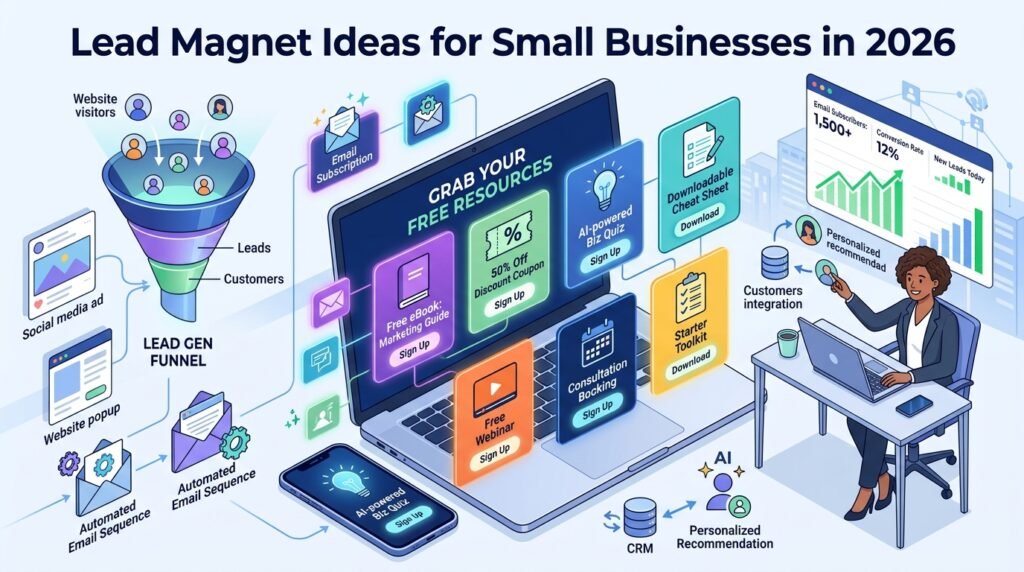
- A free e-book or guide that provides valuable information on a topic relevant to the business’s industry
- A webinar or online workshop that provides training or education on a topic relevant to the business’s industry
- A template or worksheet that provides a practical tool for customers to use in their daily lives
- A free trial or demo of a product or service, allowing customers to experience the benefits before committing to a purchase
- A discount or promotion that provides a limited-time incentive for customers to make a purchase
- A free consultation or assessment that provides personalized advice or guidance to customers
These are just a few examples of the many different types of lead magnets that small businesses can use to attract and engage with their target audience. The key is to create a resource that is relevant and valuable to the customer, and that provides a clear solution to a problem or pain point they are experiencing. By providing value upfront, small businesses can establish trust and credibility with potential customers, making them more likely to consider their business when they are ready to make a purchase.
In conclusion, lead magnets are a powerful tool that small businesses can use to attract and engage with their target audience. By creating a valuable resource or offer that provides a clear solution to a problem or pain point, businesses can capture the attention of potential customers and convert them into paying customers. Whether you are a startup or an established small business, understanding how to create and use lead magnets can be a game-changer for your marketing strategy. In the next section, we will explore some specific strategies for creating and using lead magnets, including how to promote them and follow up with potential customers.
Types of Lead Magnets for Small Businesses
As a digital marketing strategist and SEO consultant, I have witnessed the power of lead magnets in capturing the attention of potential customers and driving business growth. In today’s competitive market, small businesses need to be creative and strategic in their approach to lead generation. In this section, we will delve into the various types of lead magnets that small businesses can leverage to attract and engage their target audience.
A lead magnet is essentially a valuable resource or offer that is provided to potential customers in exchange for their contact information. The key to a successful lead magnet is to create something that resonates with your target audience and addresses their specific needs or pain points. By doing so, you can establish your business as a trusted authority in your industry and set the stage for future sales and marketing efforts.
There are numerous types of lead magnets that small businesses can use, and the most effective ones are often tailored to the specific needs and interests of their target audience. Some common examples of lead magnets include e-books, whitepapers, webinars, templates, and checklists. Let’s take a closer look at each of these options and explore how they can be used to drive lead generation and business growth.
E-books and Guides are popular lead magnets that provide in-depth information on a specific topic or industry. These resources are often lengthy and detailed, making them a valuable asset for potential customers who are looking for comprehensive guidance. For instance, a fitness studio might create an e-book on “10 Ways to Improve Your Physical Health” that includes tips on nutrition, exercise, and stress management. By providing this valuable resource, the fitness studio can establish itself as a trusted authority in the health and wellness space and attract potential customers who are interested in improving their physical health.
Whitepapers are another type of lead magnet that provides detailed and informative content on a specific topic or industry. These resources are often more technical and in-depth than e-books, making them a valuable asset for businesses and professionals who are looking for detailed analysis and insights. For example, a software company might create a whitepaper on “The Future of Artificial Intelligence in Business” that explores the latest trends and developments in AI technology. By providing this valuable resource, the software company can establish itself as a thought leader in the tech industry and attract potential customers who are interested in learning more about AI and its applications.
In addition to e-books and whitepapers, webinars are another effective lead magnet that small businesses can use to drive lead generation and engagement. Webinars provide a platform for businesses to showcase their expertise and provide valuable information to potential customers in real-time. For instance, a marketing agency might host a webinar on “The Power of Social Media Marketing” that provides tips and strategies for businesses looking to improve their social media presence. By hosting this webinar, the marketing agency can establish itself as a trusted authority in the marketing space and attract potential customers who are interested in learning more about social media marketing.
Other types of lead magnets that small businesses can use include templates and checklists. These resources provide a quick and easy way for potential customers to access valuable information and insights that can help them solve a specific problem or achieve a particular goal. For example, a business consulting firm might create a template on “How to Create a Business Plan” that provides a step-by-step guide for entrepreneurs and small business owners. By providing this valuable resource, the consulting firm can establish itself as a trusted authority in the business consulting space and attract potential customers who are looking for guidance on creating a business plan.
Ultimately, the key to creating an effective lead magnet is to understand the needs and interests of your target audience and provide a resource that resonates with them. By doing so, you can establish your business as a trusted authority in your industry and drive lead generation and business growth. Here are some additional examples of lead magnets that small businesses can use:
- Case studies: Provide detailed analysis and insights into a specific project or campaign that your business has worked on.
- Swipe files: Offer a collection of successful marketing campaigns or strategies that potential customers can use as inspiration for their own marketing efforts.
- Quizzes and assessments: Create a quiz or assessment that helps potential customers identify their strengths and weaknesses and provides recommendations for improvement.
- Free trials and demos: Offer a free trial or demo of your product or service to give potential customers a taste of what you have to offer.
- Exclusive discounts and promotions: Provide exclusive discounts and promotions to potential customers who opt-in to your lead magnet.
By providing value to potential customers through these types of lead magnets, small businesses can establish themselves as trusted authorities in their industry and drive lead generation and business growth. As a digital marketing strategist and SEO consultant, I have seen firsthand the impact that effective lead magnets can have on a business’s bottom line. By investing in lead magnets and providing value to potential customers, small businesses can set themselves up for long-term success and growth.
In conclusion, lead magnets are a powerful tool for small businesses looking to drive lead generation and business growth. By understanding the needs and interests of their target audience and providing a resource that resonates with them, small businesses can establish themselves as trusted authorities in their industry and attract potential customers who are interested in their products or services. Whether it’s an e-book, webinar, template, or checklist, the key to creating an effective lead magnet is to provide value and establish a connection with your target audience. As we move forward in 2026, it’s essential for small businesses to stay ahead of the curve and leverage the latest lead magnet strategies to drive growth and success.
Creating Effective Lead Magnets for Small Businesses
As a digital marketing strategist and SEO consultant, I have worked with numerous small businesses, helping them scale their online presence and drive revenue through advanced SEO frameworks and performance-driven digital strategies. One crucial aspect of any successful digital marketing campaign is the creation of effective lead magnets. In this section, we will explore the concept of lead magnets, their importance for small businesses, and provide actionable tips on how to create them.
A lead magnet is a free resource or incentive that businesses offer to potential customers in exchange for their contact information, typically an email address. The primary goal of a lead magnet is to attract and capture leads, hence the name. By providing value to potential customers upfront, businesses can establish trust, build credibility, and increase the chances of converting leads into paying customers. In today’s digital landscape, lead magnets have become an essential tool for small businesses to compete with larger corporations and establish a strong online presence.
So, what makes a lead magnet effective? An effective lead magnet should be relevant to the target audience, provide significant value, and be easily accessible. It should also be aligned with the business’s overall marketing strategy and goals. For instance, if a small business offers a free e-book on a topic related to their industry, the e-book should provide actionable tips, insights, and expertise that the target audience can apply to their own lives or businesses. By doing so, the business establishes itself as an authority in the industry and builds trust with potential customers.
There are several types of lead magnets that small businesses can use, depending on their target audience and marketing goals. Some popular examples include:
- E-books and guides: In-depth resources that provide valuable information on a specific topic, such as industry trends, best practices, or how-to guides.
- Webinars and online courses: Live or pre-recorded presentations that educate and engage the target audience on a specific topic, often with a Q&A session or interactive elements.
- Templates and worksheets: Practical resources that help the target audience achieve a specific goal or solve a problem, such as a budget template or a marketing plan worksheet.
- Checklists and cheat sheets: Concise and easily digestible resources that provide a list of tips, tricks, or best practices on a specific topic, such as a social media marketing checklist or a content creation cheat sheet.
- Free trials and demos: Hands-on experiences that allow the target audience to try out a product or service, such as a free trial of a software or a demo of a consulting service.
When creating a lead magnet, it’s essential to keep the target audience in mind and tailor the content to their needs and interests. For example, if the target audience is busy entrepreneurs, a concise and easily digestible resource such as a checklist or cheat sheet may be more effective than a lengthy e-book. On the other hand, if the target audience is professionals looking to advance their skills, a comprehensive online course or webinar may be more suitable.
Another critical aspect of creating effective lead magnets is to make them easily accessible and visible to the target audience. This can be achieved through various channels, such as:
- Website optimization: Placing a clear and prominent call-to-action (CTA) on the business’s website, such as a button or a form, to encourage visitors to download or access the lead magnet.
- Social media promotion: Sharing the lead magnet on social media platforms, such as Facebook, Twitter, or LinkedIn, to reach a broader audience and drive traffic to the website.
- Email marketing: Sending targeted email campaigns to the business’s existing email list, highlighting the benefits and value of the lead magnet and encouraging subscribers to share it with their networks.
- Content marketing: Creating blog posts, articles, or guest posts that mention the lead magnet and provide a link to access it, such as a blog post that summarizes the key takeaways from an e-book or webinar.
In conclusion, creating effective lead magnets is a crucial step in any small business’s digital marketing strategy. By providing value to potential customers upfront, businesses can establish trust, build credibility, and increase the chances of converting leads into paying customers. By understanding the target audience, tailoring the content to their needs, and making the lead magnet easily accessible, small businesses can create effective lead magnets that drive real results and contribute to their overall growth and success.
As a digital marketing strategist and SEO consultant, I have seen firsthand the impact that effective lead magnets can have on a small business’s online presence and revenue. By incorporating lead magnets into their marketing strategy, small businesses can stay ahead of the competition, drive more leads and sales, and achieve their long-term goals. Whether you’re a seasoned marketer or just starting out, I encourage you to explore the world of lead magnets and discover the benefits they can bring to your business.
Promoting and Distributing Lead Magnets for Maximum Visibility
As a digital marketing strategist, I have seen numerous small businesses struggle to promote and distribute their lead magnets effectively. This is often due to a lack of understanding about the various channels and tactics that can be used to maximize visibility and reach a wider audience. In this section, we will explore some of the most effective ways to promote and distribute lead magnets, and provide examples and explanations to help small businesses get started.
First and foremost, it is essential to have a clear understanding of your target audience and the channels they use to consume information. This will help you to tailor your promotion and distribution strategy to their preferences and behaviors. For example, if your target audience is active on social media, you may want to focus on promoting your lead magnet through Facebook, Twitter, and LinkedIn. On the other hand, if your target audience is more likely to engage with email marketing, you may want to focus on building an email list and promoting your lead magnet through regular newsletters and campaigns.
One of the most effective ways to promote and distribute lead magnets is through content marketing. This involves creating high-quality, relevant, and valuable content that resonates with your target audience and encourages them to download your lead magnet. For example, you could create a series of blog posts that provide valuable insights and information on a specific topic, and then offer a free eBook or whitepaper that provides even more in-depth information. You could also create a video series that provides tips and advice on a specific topic, and then offer a free consultation or assessment that provides even more personalized guidance.
Another effective way to promote and distribute lead magnets is through paid advertising. This involves using platforms like Google AdWords, Facebook Ads, and LinkedIn Ads to reach a wider audience and drive traffic to your website. For example, you could create a series of targeted ads that promote your lead magnet and drive traffic to a dedicated landing page. You could also use retargeting ads to reach users who have visited your website but have not yet downloaded your lead magnet.
In addition to content marketing and paid advertising, there are many other ways to promote and distribute lead magnets. Some of these include:
- Guest blogging: This involves writing guest posts for other websites and blogs in your industry, and including a link to your lead magnet in your author bio or within the content of the post.
- Influencer marketing: This involves partnering with influencers in your industry to promote your lead magnet to their followers.
- Webinars: This involves hosting webinars on topics related to your lead magnet, and offering the lead magnet as a free resource to attendees.
- Referral marketing: This involves encouraging your existing customers and subscribers to refer their friends and colleagues to your lead magnet.
- Partnerships: This involves partnering with other businesses in your industry to co-promote each other’s lead magnets.
Once you have promoted and distributed your lead magnet, it is essential to track and measure its performance. This will help you to understand which channels and tactics are working best, and make data-driven decisions about how to optimize and improve your promotion and distribution strategy. Some of the key metrics to track include:
- Downloads: The number of times your lead magnet is downloaded.
- Conversion rate: The percentage of users who download your lead magnet and then go on to become customers or subscribers.
- Cost per acquisition: The cost of acquiring each new customer or subscriber through your lead magnet.
- Return on investment: The revenue generated by your lead magnet compared to the cost of promoting and distributing it.
By tracking and measuring these metrics, you can gain a deeper understanding of the effectiveness of your lead magnet and make data-driven decisions about how to optimize and improve it. For example, you may find that your lead magnet is generating a high volume of downloads, but a low conversion rate. In this case, you may want to focus on optimizing your lead magnet and follow-up sequence to better nurture and qualify leads. On the other hand, you may find that your lead magnet is generating a high conversion rate, but a low volume of downloads. In this case, you may want to focus on promoting and distributing your lead magnet more widely, through channels like paid advertising and influencer marketing.
In conclusion, promoting and distributing lead magnets is a critical component of any digital marketing strategy. By using a combination of content marketing, paid advertising, and other tactics, you can maximize visibility and reach a wider audience. By tracking and measuring the performance of your lead magnet, you can gain a deeper understanding of its effectiveness and make data-driven decisions about how to optimize and improve it. As a digital marketing strategist, I have seen numerous small businesses achieve significant success through the use of lead magnets, and I am confident that with the right strategy and tactics, you can too.
Measuring the Success of Lead Magnets for Small Businesses
As a digital marketing strategist and SEO consultant, I have worked with numerous small businesses to help them scale their operations and increase revenue through effective lead magnet strategies. One of the most critical aspects of implementing a successful lead magnet campaign is measuring its success. In this section, we will delve into the importance of measuring the success of lead magnets for small businesses and explore the key metrics that should be tracked.
Measuring the success of lead magnets is crucial because it allows small businesses to evaluate the effectiveness of their marketing efforts and make data-driven decisions to optimize their strategies. By tracking the right metrics, small businesses can identify areas of improvement, refine their lead magnet offers, and ultimately drive more conversions and revenue. In this article, we will discuss the key performance indicators (KPIs) that small businesses should track to measure the success of their lead magnets, including conversion rates, lead quality, and return on investment (ROI).
Conversion Rates are a critical metric for measuring the success of lead magnets. Conversion rates refer to the percentage of website visitors who complete a desired action, such as filling out a form, downloading an e-book, or signing up for a free trial. A high conversion rate indicates that the lead magnet is effective in capturing the attention of the target audience and persuading them to take action. Small businesses can track conversion rates by using analytics tools such as Google Analytics or by implementing tracking codes on their website.
Another important metric for measuring the success of lead magnets is Lead Quality. Lead quality refers to the relevance and accuracy of the leads generated by the lead magnet. High-quality leads are those that are relevant to the business and have a high potential of converting into customers. Small businesses can evaluate lead quality by tracking metrics such as job title, company size, and industry. This information can be collected through forms and surveys, and can help small businesses refine their lead magnet offers to attract more relevant leads.
In addition to conversion rates and lead quality, small businesses should also track the Return on Investment (ROI) of their lead magnet campaigns. ROI refers to the revenue generated by the lead magnet campaign compared to the cost of implementing and maintaining it. A positive ROI indicates that the lead magnet campaign is profitable and should be continued or scaled up. Small businesses can track ROI by using analytics tools to monitor the revenue generated by the lead magnet campaign and comparing it to the costs incurred.
Some other key metrics that small businesses should track to measure the success of their lead magnets include:
- Email Open Rates: The percentage of email recipients who open the email containing the lead magnet offer.
- Click-Through Rates (CTRs): The percentage of email recipients who click on the link to access the lead magnet.
- Lead Magnet Download Rates: The percentage of website visitors who download the lead magnet.
- Social Media Engagement: The level of engagement generated by the lead magnet on social media platforms, such as likes, shares, and comments.
By tracking these metrics, small businesses can gain valuable insights into the effectiveness of their lead magnet campaigns and make data-driven decisions to optimize their strategies. For example, if the conversion rate of a lead magnet is low, the small business may need to refine the offer or improve the landing page to increase conversions. Similarly, if the lead quality is poor, the small business may need to adjust the targeting or messaging of the lead magnet campaign to attract more relevant leads.
To illustrate the importance of measuring the success of lead magnets, let’s consider an example. Suppose a small business offers a free e-book on digital marketing as a lead magnet. The e-book is promoted through social media and email marketing, and the small business tracks the conversion rate, lead quality, and ROI of the campaign. After analyzing the data, the small business discovers that the conversion rate is low, but the lead quality is high. This indicates that the e-book is attracting relevant leads, but the landing page or offer needs to be improved to increase conversions. The small business can then refine the landing page or offer to increase conversions and ultimately drive more revenue.
In conclusion, measuring the success of lead magnets is critical for small businesses to evaluate the effectiveness of their marketing efforts and make data-driven decisions to optimize their strategies. By tracking key metrics such as conversion rates, lead quality, and ROI, small businesses can gain valuable insights into the performance of their lead magnet campaigns and refine their strategies to drive more conversions and revenue. As a digital marketing strategist and SEO consultant, I recommend that small businesses prioritize measuring the success of their lead magnets and use the data to inform their marketing decisions.
By doing so, small businesses can create effective lead magnet campaigns that attract high-quality leads, drive conversions, and ultimately contribute to the growth and success of the business. In the next section, we will explore some proven lead magnet ideas that small businesses can use to attract and engage their target audience, and drive more conversions and revenue.

Amit Tyagi is a seasoned Digital Marketing and SEO Consultant with extensive experience helping businesses improve online visibility through SEO, AI Search Optimization (AIO/GEO), content strategy, and performance marketing. He regularly shares practical insights, industry updates, and data-driven strategies, empowering brands and marketers to achieve sustainable digital growth in an evolving search landsca