
Introduction to Webinar Funnels for Coaching Institutes
As a digital marketing strategist and SEO consultant, I have had the privilege of working with numerous coaching institutes, helping them scale their online presence and attract new students. One of the most effective strategies I’ve employed to achieve this is through the use of webinar funnels. In this section, we will delve into the world of webinar funnels, exploring what they are, how they work, and most importantly, how coaching institutes can leverage them to drive growth and revenue.
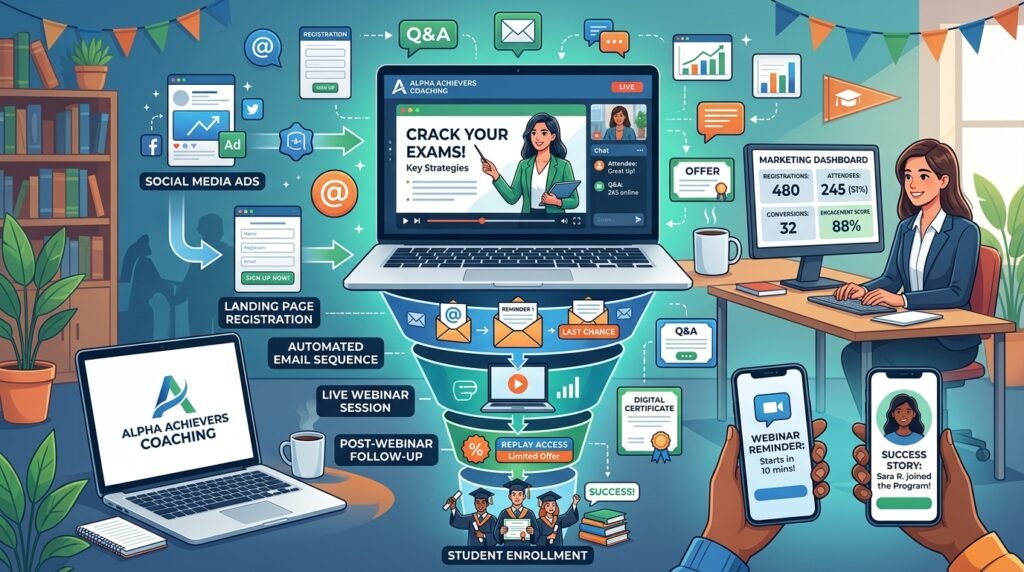
A webinar funnel is a series of strategic steps designed to guide potential students through a carefully crafted journey, from initial awareness to eventual enrollment. This journey is typically facilitated through a combination of email marketing, landing pages, and of course, webinars. The ultimate goal of a webinar funnel is to build trust, establish authority, and demonstrate value to potential students, making them more likely to enroll in a coaching institute’s programs.
For coaching institutes, webinar funnels offer a unique opportunity to showcase their expertise, build relationships with potential students, and differentiate themselves from competitors. By hosting webinars on topics relevant to their target audience, coaching institutes can demonstrate their authority and thought leadership in their respective fields. This, in turn, helps to establish trust and credibility, making potential students more likely to consider their programs.
So, how do webinar funnels work? The process typically begins with a coaching institute identifying a topic of interest to their target audience. They then create a landing page promoting the webinar, which is often accompanied by a series of email notifications reminding potential attendees to register. Once the webinar is held, attendees are typically presented with a call-to-action, such as a free consultation or a special offer, designed to encourage them to take the next step in the funnel.
One of the key benefits of webinar funnels is their ability to educate and nurture potential students. By providing valuable information and insights, coaching institutes can help attendees overcome common challenges and achieve their goals. This, in turn, helps to build trust and establish the coaching institute as a trusted authority in their field. For example, a coaching institute specializing in test preparation might host a webinar on “10 Tips for Scoring High on the SAT.” By providing actionable advice and strategies, the coaching institute can demonstrate its expertise and help attendees achieve their goals.
Another significant advantage of webinar funnels is their ability to generate leads and drive conversions. By requiring attendees to register for the webinar, coaching institutes can capture valuable contact information, including email addresses and phone numbers. This information can then be used to follow up with attendees, provide additional resources, and encourage them to enroll in a program. For instance, a coaching institute might offer a free consultation to attendees who register for their webinar. This consultation can provide an opportunity for the coaching institute to discuss the attendee’s goals and challenges, and present their programs as a solution.
To create an effective webinar funnel, coaching institutes should focus on several key elements. First, they must identify a topic that resonates with their target audience. This can be achieved through market research, social media listening, and analysis of industry trends. Next, they must create a compelling landing page that clearly communicates the value of the webinar and encourages attendees to register. The webinar itself should be engaging, informative, and provide actionable advice and strategies. Finally, coaching institutes must have a clear call-to-action, such as a free consultation or special offer, to encourage attendees to take the next step in the funnel.
Some examples of effective webinar funnels for coaching institutes include:
- Hosting a webinar on “Study Tips for Students” and offering a free consultation to attendees who register. This can provide an opportunity for the coaching institute to discuss the attendee’s goals and challenges, and present their programs as a solution.
- Creating a webinar series on “Test Preparation Strategies” and offering a discounted rate to attendees who enroll in a program within a certain timeframe. This can encourage attendees to take action and enroll in a program.
- Developing a webinar on “Career Development” and offering a free eBook or resource guide to attendees who register. This can provide additional value to attendees and help establish the coaching institute as a trusted authority in their field.
In conclusion, webinar funnels offer a powerful tool for coaching institutes to drive growth and revenue. By educating and nurturing potential students, generating leads and driving conversions, and establishing authority and thought leadership, coaching institutes can create effective webinar funnels that resonate with their target audience. As a digital marketing strategist and SEO consultant, I have seen firsthand the impact that webinar funnels can have on a coaching institute’s bottom line. By following the strategies and examples outlined in this section, coaching institutes can create their own effective webinar funnels and achieve their goals.
One of the most significant advantages of webinar funnels is their ability to be tracked and measured. By using analytics tools, coaching institutes can monitor attendance rates, engagement levels, and conversion rates, providing valuable insights into the effectiveness of their webinar funnel. This data can then be used to refine and optimize the funnel, making adjustments to the topic, landing page, and call-to-action to improve results. For example, a coaching institute might discover that a particular topic is generating a high attendance rate, but a low conversion rate. By analyzing this data, they can adjust their strategy, perhaps by changing the call-to-action or offering a different incentive to attendees.
Another key benefit of webinar funnels is their ability to be automated. By using marketing automation tools, coaching institutes can set up a series of automated emails and notifications, streamlining the process and reducing the workload. This can be particularly useful for coaching institutes with limited resources, as it allows them to focus on high-level strategy and planning, rather than manual labor. For instance, a coaching institute might set up an automated email sequence that sends a series of reminders and notifications to attendees in the lead-up to the webinar, followed by a follow-up email with a call-to-action after the webinar.
In addition to these benefits, webinar funnels can also help coaching institutes build relationships with potential students. By providing valuable information and insights, coaching institutes can establish trust and credibility, making potential students more likely to consider their programs. This can be particularly important in the coaching industry, where relationships and trust are key. For example, a coaching institute might host a webinar on “Overcoming Common Challenges in Test Preparation.” By providing actionable advice and strategies, the coaching institute can demonstrate its expertise and help attendees achieve their goals, building a relationship with them in the process.
As we can see, webinar funnels offer a powerful tool for coaching institutes to drive growth and revenue. By educating and nurturing potential students, generating leads and driving conversions, and establishing authority and thought leadership, coaching institutes can create effective webinar funnels that resonate with their target audience. Whether you’re a seasoned marketing professional or just starting out, I encourage you to explore the world of webinar funnels and discover the impact they can have on your coaching institute’s bottom line.
To get started with webinar funnels, coaching institutes should begin by identifying their target audience and the topics that resonate with them. They should then create a landing page that clearly communicates the value of the webinar and encourages attendees to register. The webinar itself should be engaging, informative, and provide actionable advice and strategies. Finally, coaching institutes should have a clear call-to-action, such as a free consultation or special offer, to encourage attendees to take the next step in the funnel.
By following these steps and leveraging the power of webinar funnels, coaching institutes can drive growth and revenue, establish themselves as thought leaders in their industry, and build relationships with potential students. As a digital marketing strategist and SEO consultant, I am excited to see the impact that webinar funnels can have on the coaching industry, and I look forward to helping coaching institutes achieve their goals through the effective use of webinar funnels.
In the next section, we will explore the topic of creating effective webinar content and how coaching institutes can use this content to drive engagement and conversions. We will discuss the importance of knowing your audience, creating engaging and informative content, and using storytelling techniques to connect with attendees. By the end of this section, coaching institutes will have a clear understanding of how to create effective webinar content that resonates with their target audience and drives results.
Understanding the Target Audience for Webinar Funnels
As a digital marketing strategist and SEO consultant, I have worked with numerous coaching institutes to help them scale their online presence and revenue. One of the most effective strategies I have employed is the use of webinar funnels. However, before we dive into the details of webinar funnels, it is essential to understand the target audience for these funnels. In this section, we will explore the importance of identifying and understanding the target audience for coaching institutes looking to leverage webinar funnels.
The target audience for coaching institutes typically consists of individuals seeking to acquire new skills or knowledge in a specific area. This could include students, professionals, or entrepreneurs looking to upskill or reskill. To effectively use webinar funnels, coaching institutes must have a deep understanding of their target audience, including their pain points, goals, and motivations. This information can be gathered through market research, surveys, and social media listening.
For instance, a coaching institute offering courses on digital marketing may identify its target audience as small business owners or marketing professionals looking to enhance their online presence. By understanding the specific needs and challenges of this audience, the coaching institute can create webinar content that resonates with them and addresses their pain points. This could include topics such as “How to Increase Website Traffic” or “The Ultimate Guide to Social Media Marketing.”
Coaching institutes can also use online tools and analytics to gain insights into their target audience. For example, Google Analytics can provide information on website traffic, engagement, and conversion rates, while social media analytics tools can offer insights into audience demographics, interests, and behaviors. By leveraging these tools, coaching institutes can refine their understanding of their target audience and create more effective webinar funnels.
Another critical aspect of understanding the target audience is to identify their buyer personas. A buyer persona is a semi-fictional representation of an ideal customer, including their characteristics, goals, and behaviors. Coaching institutes can create buyer personas by conducting customer interviews, surveys, and focus groups. By understanding their buyer personas, coaching institutes can tailor their webinar content, messaging, and marketing strategies to resonate with their target audience.
For example, a coaching institute may create a buyer persona for a small business owner named “Sarah.” Sarah is a 35-year-old entrepreneur who owns a boutique marketing firm. She is highly motivated to grow her business and is willing to invest in courses and training to enhance her skills. However, she is also time-strapped and prefers online courses that are flexible and self-paced. By understanding Sarah’s persona, the coaching institute can create webinar content that addresses her specific needs and pain points, such as “How to Grow Your Business with Limited Time and Resources.”
Ultimately, understanding the target audience is crucial for coaching institutes looking to leverage webinar funnels. By gathering insights into their audience’s needs, goals, and motivations, coaching institutes can create effective webinar content, messaging, and marketing strategies that resonate with their target audience and drive conversions. In the next section, we will explore how coaching institutes can use webinar funnels to attract and engage their target audience.
To further illustrate the importance of understanding the target audience, let’s consider the following examples:
- A coaching institute offering courses on public speaking may identify its target audience as professionals looking to enhance their communication skills. By understanding the specific needs and challenges of this audience, the coaching institute can create webinar content that addresses their pain points, such as “Overcoming Public Speaking Anxiety” or “Effective Presentation Techniques.”
- A coaching institute offering courses on entrepreneurship may identify its target audience as aspiring entrepreneurs looking to start their own businesses. By understanding the specific needs and challenges of this audience, the coaching institute can create webinar content that addresses their pain points, such as “How to Create a Business Plan” or “Securing Funding for Your Startup.”
- A coaching institute offering courses on personal development may identify its target audience as individuals looking to enhance their mental and emotional well-being. By understanding the specific needs and challenges of this audience, the coaching institute can create webinar content that addresses their pain points, such as “Mindfulness and Meditation Techniques” or “Building Self-Confidence and Self-Esteem.”
By understanding their target audience, coaching institutes can create webinar funnels that are tailored to their specific needs and pain points. This can include creating targeted messaging, selecting relevant topics, and using effective marketing strategies to attract and engage their target audience. In the next section, we will explore how coaching institutes can use webinar funnels to attract and engage their target audience.
In conclusion, understanding the target audience is a critical component of creating effective webinar funnels for coaching institutes. By gathering insights into their audience’s needs, goals, and motivations, coaching institutes can create webinar content, messaging, and marketing strategies that resonate with their target audience and drive conversions. By leveraging online tools and analytics, creating buyer personas, and understanding their target audience’s pain points, coaching institutes can create webinar funnels that attract and engage their target audience and drive business growth.
As a digital marketing strategist and SEO consultant, I have seen firsthand the impact that effective webinar funnels can have on coaching institutes. By understanding their target audience and creating webinar funnels that address their specific needs and pain points, coaching institutes can establish themselves as thought leaders in their industry, drive revenue growth, and achieve their business objectives. In the next section, we will explore how coaching institutes can use webinar funnels to establish themselves as thought leaders in their industry and drive business growth.
The use of webinar funnels can also help coaching institutes to build trust and credibility with their target audience. By providing valuable and relevant content, coaching institutes can establish themselves as experts in their field and build trust with their audience. This can lead to increased conversions, as audience members are more likely to invest in courses or training from a coaching institute that they trust and respect.
Additionally, webinar funnels can help coaching institutes to generate leads and drive revenue. By creating effective webinar content and marketing strategies, coaching institutes can attract and engage their target audience, driving conversions and revenue growth. This can be achieved through the use of targeted messaging, social media advertising, and email marketing campaigns.
In order to create effective webinar funnels, coaching institutes must have a deep understanding of their target audience and the topics that resonate with them. This can be achieved through market research, surveys, and social media listening. By understanding their target audience and creating webinar content that addresses their specific needs and pain points, coaching institutes can establish themselves as thought leaders in their industry and drive business growth.
Setting Up a Webinar Funnel for Coaching Institutes
As a digital marketing strategist, I have worked with numerous coaching institutes to help them scale their online presence and drive revenue growth. One effective strategy that has consistently delivered results is the use of webinar funnels. In this section, I will outline the steps involved in setting up a webinar funnel for coaching institutes, and provide examples and explanations to illustrate the process.
A webinar funnel is a series of targeted marketing efforts designed to guide potential customers through a structured sales process. The goal of a webinar funnel is to educate and engage potential customers, build trust and credibility, and ultimately convert them into paying clients. For coaching institutes, webinar funnels can be particularly effective in promoting their services, building their brand, and driving revenue growth.
The first step in setting up a webinar funnel is to identify the target audience. Coaching institutes should define their ideal customer profile, including demographics, interests, and pain points. This information can be used to create targeted marketing campaigns that resonate with the target audience and drive them to the webinar. For example, a coaching institute that specializes in exam preparation for students may target students who are preparing for competitive exams, and create marketing campaigns that highlight the benefits of their coaching services.
Once the target audience has been identified, the next step is to create a compelling webinar topic and title. The topic should be relevant to the target audience and address their pain points or interests. The title should be attention-grabbing and persuasive, and include keywords that are relevant to the topic. For example, a coaching institute that specializes in exam preparation may create a webinar titled “10 Tips to Crack the Competitive Exams: Strategies and Techniques for Success”.
The next step is to create a landing page for the webinar. The landing page should include a clear and concise description of the webinar, including the topic, date, time, and duration. It should also include a registration form that captures the contact information of potential attendees. The landing page should be optimized for search engines, with relevant keywords and meta tags that improve its visibility and ranking. For example, a coaching institute may create a landing page with the following elements:
- A headline that reads “Get Ready to Crack the Competitive Exams: Register for Our Free Webinar”
- A subheading that reads “Learn the strategies and techniques to succeed in the competitive exams, and get tips from our expert coaches”
- A registration form that captures the name, email, and phone number of potential attendees
- A call-to-action button that reads “Register Now” or “Save My Seat”
Once the landing page has been created, the next step is to promote the webinar through various marketing channels. Coaching institutes can use social media, email marketing, paid advertising, and content marketing to promote the webinar and drive registrations. For example, a coaching institute may create a social media campaign that includes:
- A series of tweets that promote the webinar and include relevant hashtags
- A Facebook post that includes a link to the landing page and a call-to-action button
- An email campaign that includes a series of emails that promote the webinar and provide updates and reminders
The next step is to deliver the webinar and provide value to the attendees. The webinar should be well-structured and include a clear and concise presentation, examples and case studies, and a question-and-answer session. The presenter should be knowledgeable and engaging, and provide tips and strategies that are relevant to the topic. For example, a coaching institute may deliver a webinar that includes:
- A presentation that covers the topic of exam preparation, including strategies and techniques for success
- Examples and case studies of students who have succeeded in the competitive exams, and the strategies they used
- A question-and-answer session that allows attendees to ask questions and get feedback from the presenter
After the webinar, the next step is to follow up with the attendees and provide additional value. Coaching institutes can send a series of emails that include additional resources and information, such as e-books, whitepapers, and videos. They can also include a call-to-action, such as a free consultation or a discounted coaching package. For example, a coaching institute may send a series of emails that include:
- A thank-you email that includes a link to a recording of the webinar and a call-to-action button
- An email that includes a free e-book on exam preparation, and a call-to-action button that promotes a coaching package
- An email that includes a testimonial from a satisfied client, and a call-to-action button that promotes a free consultation
In conclusion, setting up a webinar funnel for coaching institutes requires careful planning and execution. By identifying the target audience, creating a compelling webinar topic and title, creating a landing page, promoting the webinar, delivering the webinar, and following up with attendees, coaching institutes can create a effective webinar funnel that drives revenue growth and builds their brand. As a digital marketing strategist, I have seen firsthand the impact that webinar funnels can have on coaching institutes, and I highly recommend this strategy to any institute that wants to scale their online presence and drive revenue growth.
It’s also important to note that, as a coaching institute, you should track and measure the performance of your webinar funnel, and make adjustments as needed. This can include tracking the number of registrations, attendees, and conversions, and analyzing the data to identify areas for improvement. By continually optimizing and refining your webinar funnel, you can improve its effectiveness and drive even more revenue growth for your coaching institute.
Additionally, coaching institutes can use artificial intelligence and machine learning to personalize and optimize their webinar funnels. For example, they can use AI-powered chatbots to engage with potential attendees and provide personalized recommendations, or use machine learning algorithms to analyze data and predict the likelihood of conversion. By leveraging these technologies, coaching institutes can create even more effective webinar funnels that drive revenue growth and build their brand.
In terms of search engine optimization, coaching institutes should ensure that their webinar funnel is optimized for search engines, with relevant keywords and meta tags that improve its visibility and ranking. They should also use social media to promote their webinar and engage with potential attendees, and use email marketing to follow up with attendees and provide additional value. By using these strategies, coaching institutes can create a comprehensive marketing campaign that drives revenue growth and builds their brand.
Optimizing and Promoting Webinar Funnels for Maximum ROI
As a digital marketing strategist and SEO consultant, I have worked with numerous coaching institutes to help them scale their online presence and drive revenue through innovative digital strategies. One of the most effective ways to achieve this is by leveraging webinar funnels, which can be a game-changer for coaching institutes looking to expand their reach and generate leads. In this section, we will delve into the world of webinar funnels, exploring how coaching institutes can optimize and promote them for maximum return on investment (ROI).
A webinar funnel is a strategic marketing process that guides potential customers through a series of steps, from initial awareness to conversion. It typically begins with a webinar, which is a live or pre-recorded online presentation that provides value to the audience. The goal of the webinar is to educate and engage the audience, establishing the coaching institute as an authority in its niche. From there, the funnel can lead to various conversion points, such as signing up for a free consultation, purchasing a course or coaching package, or joining a community or membership site.
To optimize a webinar funnel for maximum ROI, coaching institutes need to focus on several key areas. First and foremost, they must define their target audience and create a webinar that resonates with their needs and interests. This involves conducting thorough market research, analyzing customer data, and crafting a compelling narrative that speaks directly to the audience. By doing so, coaching institutes can ensure that their webinar is well-attended and that the audience is receptive to their message.
Once the target audience is defined, coaching institutes can create a high-quality webinar that delivers significant value. This can be achieved by using engaging visuals, providing actionable tips and advice, and featuring expert speakers or guest presenters. The webinar should also be well-produced, with high-quality audio and video, to ensure that the audience has a positive viewing experience. Additionally, coaching institutes can use interactive elements, such as polls, quizzes, and Q&A sessions, to increase audience engagement and participation.
After the webinar, coaching institutes can follow up with attendees to nurture them through the funnel. This can be done through email marketing campaigns, which can provide additional resources, offer exclusive discounts or promotions, and encourage attendees to take the next step. Coaching institutes can also use retargeting ads to reach attendees who have not yet converted, serving them targeted ads on social media platforms or Google to remind them of the coaching institute’s services and encourage them to revisit the funnel.
Another crucial aspect of optimizing a webinar funnel is tracking and analyzing performance. Coaching institutes should use analytics tools to monitor attendance, engagement, and conversion rates, identifying areas for improvement and making data-driven decisions to optimize the funnel. This can involve A/B testing different webinar formats, email subject lines, or ad creatives to determine which ones resonate best with the audience. By continually refining and optimizing the funnel, coaching institutes can increase their ROI and achieve their marketing goals.
Some examples of successful webinar funnels include:
- Free trial webinars: Coaching institutes can offer free trial webinars that provide a taste of their coaching services, allowing attendees to experience the benefits firsthand and encouraging them to sign up for a paid program.
- Masterclass webinars: Coaching institutes can create masterclass webinars that provide in-depth training and education on a specific topic, positioning themselves as authorities in their niche and attracting high-quality leads.
- Q&A webinars: Coaching institutes can host Q&A webinars that allow attendees to ask questions and receive personalized advice, building trust and establishing a connection with potential customers.
- Launch webinars: Coaching institutes can use webinars to launch new products or services, generating buzz and excitement among their target audience and driving sales and revenue.
In terms of promoting webinar funnels, coaching institutes can use a variety of channels and tactics to reach their target audience. Some effective strategies include:
- Social media marketing: Coaching institutes can use social media platforms to promote their webinars, creating engaging ads and content that resonates with their audience and drives registrations.
- Email marketing: Coaching institutes can use email marketing campaigns to promote their webinars, sending targeted emails to their subscribers and encouraging them to attend.
- Influencer marketing: Coaching institutes can partner with influencers in their niche to promote their webinars, reaching new audiences and expanding their reach.
- Content marketing: Coaching institutes can create valuable content, such as blog posts, videos, or podcasts, that promotes their webinars and establishes their authority in their niche.
By optimizing and promoting webinar funnels effectively, coaching institutes can generate high-quality leads, drive revenue, and establish themselves as authorities in their niche. As a digital marketing strategist and SEO consultant, I have seen firsthand the impact that webinar funnels can have on a coaching institute’s bottom line, and I highly recommend that they consider incorporating this strategy into their marketing mix. With the right approach and execution, webinar funnels can be a powerful tool for driving growth and success in the coaching industry.
Measuring Success and Scaling Webinar Funnels for Coaching Institutes
As a digital marketing strategist, I have worked with numerous coaching institutes to help them leverage webinar funnels and maximize their online reach. In my previous discussions, I have highlighted the importance of creating engaging webinar content, utilizing effective marketing strategies, and optimizing webinar funnels for coaching institutes. In this section, I will delve into the crucial aspect of measuring success and scaling webinar funnels to ensure sustained growth and revenue generation for coaching institutes.
Measuring the success of webinar funnels is essential to understanding the effectiveness of the strategies implemented. Coaching institutes must track key performance indicators (KPIs) to evaluate the success of their webinar funnels. These KPIs may include conversion rates, attendance rates, engagement metrics, and revenue generation. By monitoring these KPIs, coaching institutes can identify areas of improvement and make data-driven decisions to optimize their webinar funnels.
For instance, a coaching institute may notice that their webinar funnel has a high conversion rate but low attendance rates. This could indicate that the marketing strategy is effective in convincing people to register for the webinar, but the follow-up strategy is not robust enough to ensure attendees actually join the webinar. By analyzing these metrics, the coaching institute can refine their marketing strategy, improve their follow-up process, and ultimately increase attendance rates.
To measure the success of webinar funnels, coaching institutes can utilize various tools and software. These may include Google Analytics to track website traffic and conversion rates, webinar software to monitor attendance and engagement metrics, and customer relationship management (CRM) systems to track lead generation and revenue generation. By leveraging these tools, coaching institutes can gain valuable insights into the performance of their webinar funnels and make informed decisions to optimize their strategies.
Once coaching institutes have measured the success of their webinar funnels, they can focus on scaling their strategies to achieve sustained growth and revenue generation. Scaling webinar funnels involves increasing the reach and impact of the webinar content, expanding the target audience, and enhancing the overall user experience. Coaching institutes can achieve this by repurposing webinar content into other formats, such as blog posts, social media posts, or email newsletters, to reach a broader audience.
For example, a coaching institute may create a webinar on a specific topic, such as time management techniques. After the webinar, they can repurpose the content into a series of blog posts, social media posts, or email newsletters, providing valuable insights and tips to a wider audience. This not only helps to establish the coaching institute as a thought leader in their industry but also attracts potential customers and drives revenue generation.
Another strategy for scaling webinar funnels is to leverage user-generated content. Coaching institutes can encourage attendees to share their experiences, feedback, or testimonials on social media, using a specific hashtag or tagging the coaching institute. This helps to create a community around the webinar, fosters engagement, and attracts new attendees to future webinars. By showcasing user-generated content, coaching institutes can also build trust and credibility with their target audience, ultimately driving revenue generation and growth.
Coaching institutes can also scale their webinar funnels by partnering with other organizations or influencers in their industry. This can help to expand their reach, increase their credibility, and attract new audiences. For instance, a coaching institute may partner with a complementary business to co-host a webinar, share resources, and reach a broader audience. By collaborating with other organizations or influencers, coaching institutes can create a win-win situation, driving growth and revenue generation for all parties involved.
In addition to these strategies, coaching institutes can also scale their webinar funnels by utilizing paid advertising channels. This may include Google Ads, Facebook Ads, or LinkedIn Ads, depending on the target audience and industry. By leveraging paid advertising channels, coaching institutes can increase their reach, drive traffic to their website, and attract new attendees to their webinars.
To illustrate this, a coaching institute may use Google Ads to target specific keywords related to their industry, such as “coaching services” or “online courses”. By creating targeted ads and landing pages, the coaching institute can drive traffic to their website, increase conversions, and ultimately drive revenue generation. By scaling their webinar funnels through paid advertising channels, coaching institutes can reach a broader audience, establish their brand, and achieve sustained growth and revenue generation.
Some of the key benefits of scaling webinar funnels for coaching institutes include:
- Increased reach and impact: By scaling their webinar funnels, coaching institutes can reach a broader audience, increase their online visibility, and establish their brand as a thought leader in their industry.
- Improved engagement and conversion rates: By leveraging user-generated content, partnering with other organizations, and utilizing paid advertising channels, coaching institutes can increase engagement and conversion rates, driving revenue generation and growth.
- Enhanced credibility and trust: By showcasing user-generated content, partnering with other organizations, and leveraging paid advertising channels, coaching institutes can build trust and credibility with their target audience, ultimately driving revenue generation and growth.
- Increased revenue generation: By scaling their webinar funnels, coaching institutes can drive revenue generation through increased attendance, conversions, and sales.
In conclusion, measuring success and scaling webinar funnels are critical components of a coaching institute’s digital marketing strategy. By tracking key performance indicators, leveraging various tools and software, and scaling their strategies, coaching institutes can achieve sustained growth and revenue generation. By repurposing webinar content, leveraging user-generated content, partnering with other organizations, and utilizing paid advertising channels, coaching institutes can increase their reach, engagement, and conversion rates, ultimately driving revenue generation and growth.
As a digital marketing strategist, I have worked with numerous coaching institutes to help them leverage webinar funnels and maximize their online reach. By implementing these strategies and measuring their success, coaching institutes can establish their brand, drive revenue generation, and achieve sustained growth in their industry. Whether you are a coaching institute looking to establish your brand or a seasoned player in the industry, leveraging webinar funnels and scaling your strategies can help you achieve your goals and drive success in the competitive online landscape.

Amit Tyagi is a seasoned Digital Marketing and SEO Consultant with extensive experience helping businesses improve online visibility through SEO, AI Search Optimization (AIO/GEO), content strategy, and performance marketing. He regularly shares practical insights, industry updates, and data-driven strategies, empowering brands and marketers to achieve sustainable digital growth in an evolving search landsca