
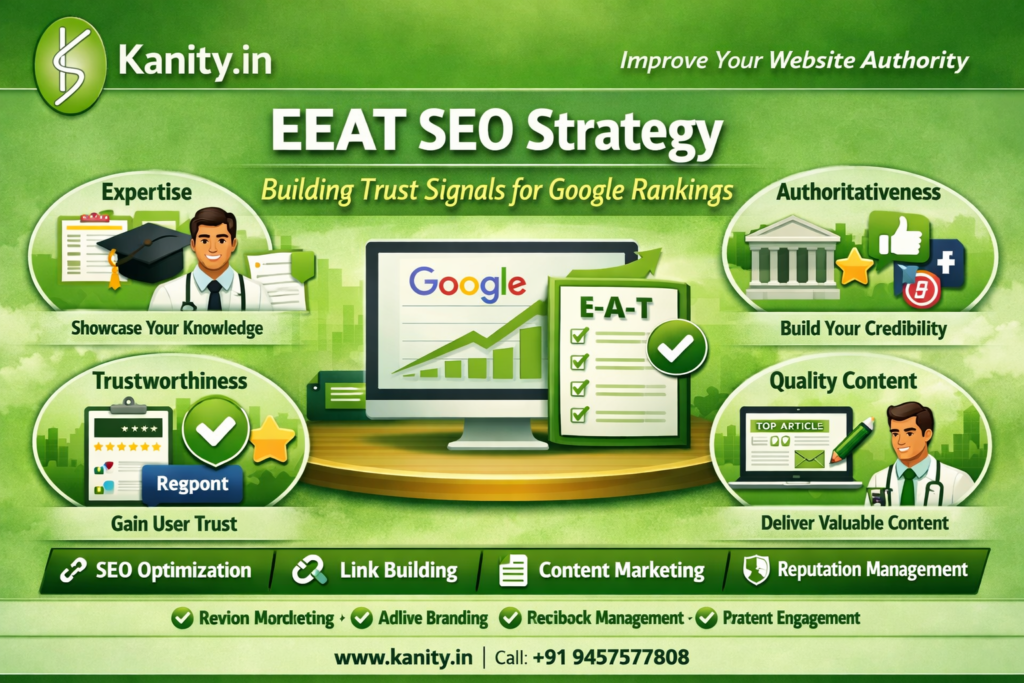
Introduction to EEAT SEO Strategy
As a digital marketing strategist and SEO consultant, I have witnessed the evolution of search engine optimization (SEO) over the years. With the ever-changing algorithms and increasing competition, it has become essential to adopt a more holistic approach to SEO. This is where the EEAT SEO strategy comes into play. EEAT stands for Expertise, Authoritativeness, Trustworthiness, and it is a framework developed by Google to evaluate the credibility and trustworthiness of a website. In this section, we will delve into the world of EEAT SEO strategy and explore how it can help you build trust signals for Google rankings.
The EEAT SEO strategy is based on the concept that a website’s credibility and trustworthiness are crucial factors in determining its search engine rankings. Google’s algorithms are designed to favor websites that demonstrate expertise, authoritativeness, and trustworthiness, as these are the sites that provide the most value to users. By incorporating the EEAT principles into your SEO strategy, you can increase your website’s visibility, drive more traffic, and ultimately, boost your online revenue.
The EEAT framework consists of four key components: Expertise, Authoritativeness, Trustworthiness, and an additional component that is often overlooked – user experience. Let’s break down each of these components and explore how they contribute to the overall EEAT SEO strategy.
Expertise refers to the knowledge and skills that a website demonstrates in its content and services. For instance, a medical website that provides accurate and up-to-date information on various health conditions and treatments demonstrates expertise in the medical field. Authoritativeness, on the other hand, refers to the reputation and credibility of a website. This can be established through high-quality backlinks, positive reviews, and mentions in reputable publications. Trustworthiness refers to the website’s ability to protect its users’ sensitive information and provide a secure browsing experience.
A great example of a website that demonstrates EEAT is the Mayo Clinic website. The Mayo Clinic is a renowned medical institution that provides accurate and trustworthy information on various health conditions and treatments. The website is written by experienced medical professionals, and the content is regularly updated to reflect the latest research and findings. The website also has a strong reputation and is widely cited in reputable publications, which establishes its authoritativeness. Additionally, the website has a robust security system in place to protect its users’ sensitive information, which demonstrates its trustworthiness.
Another example is the World Health Organization (WHO) website. The WHO website provides authoritative information on global health issues, and its content is written by experts in the field. The website is widely cited in reputable publications, and it has a strong reputation for providing accurate and trustworthy information. The website also has a robust security system in place to protect its users’ sensitive information, which demonstrates its trustworthiness.
Incorporating the EEAT SEO strategy into your digital marketing plan can have numerous benefits. Some of the benefits include:
- Increased visibility and search engine rankings
- Improved user experience and engagement
- Established credibility and trustworthiness
- Increased online revenue and conversions
- Improved brand reputation and authority
To implement the EEAT SEO strategy, you need to focus on creating high-quality content that demonstrates expertise, authoritativeness, and trustworthiness. This can be achieved by:
- Conducting thorough research and providing accurate information
- Establishing a strong reputation through high-quality backlinks and positive reviews
- Providing a secure browsing experience through robust security measures
- Regularly updating your content to reflect the latest research and findings
- Establishing a strong brand identity and voice
In conclusion, the EEAT SEO strategy is a powerful framework for building trust signals for Google rankings. By incorporating the principles of expertise, authoritativeness, trustworthiness, and user experience into your SEO strategy, you can increase your website’s visibility, drive more traffic, and ultimately, boost your online revenue. In the next section, we will explore the importance of expertise in the EEAT SEO strategy and provide tips and best practices for demonstrating expertise in your content and services.
Understanding EEAT Components for SEO
As a digital marketing strategist and SEO consultant, I have worked with numerous brands to improve their online visibility and drive revenue through organic growth. In recent years, Google’s algorithm has become increasingly sophisticated, and one of the key factors that have gained significant importance is the EEAT SEO strategy. EEAT stands for Expertise, Authoritativeness, and Trustworthiness, and it plays a crucial role in building trust signals for Google rankings. In this section, we will delve into the components of EEAT and explore how you can leverage them to improve your website’s credibility and search engine rankings.
The concept of EEAT was first introduced by Google in its Quality Rater Guidelines, which provide a framework for evaluating the quality of online content. The guidelines emphasize the importance of expertise, authoritativeness, and trustworthiness in determining the credibility of a website or content creator. By understanding and implementing the EEAT components, you can significantly improve your website’s visibility, drive more traffic, and increase conversions.
The first component of EEAT is Expertise, which refers to the knowledge and skills that a content creator or website possesses in a particular field or niche. To demonstrate expertise, you need to showcase your credentials, experience, and qualifications in your content. This can be achieved by creating high-quality, well-researched, and informative content that provides value to your audience. For example, if you are a healthcare professional, you can create content that provides insights into the latest medical research, treatments, and technologies. By doing so, you establish yourself as an expert in your field and build trust with your audience.
The second component of EEAT is Authoritativeness, which refers to the reputation and recognition that a content creator or website has established in a particular field or niche. To demonstrate authoritativeness, you need to showcase your credentials, awards, and recognition from reputable sources. For instance, if you are a thought leader in your industry, you can highlight your speaking engagements, publications, and media appearances on your website. This helps to establish your authority and credibility in your field, which can lead to increased trust and visibility.
The third component of EEAT is Trustworthiness, which refers to the trust that a content creator or website inspires in its audience. To demonstrate trustworthiness, you need to be transparent, honest, and accountable in your content and interactions with your audience. For example, if you are an e-commerce website, you can provide clear and concise product information, transparent shipping and return policies, and secure payment options. By doing so, you build trust with your audience and increase the likelihood of conversions and repeat business.
In addition to these components, Google also considers other factors when evaluating the EEAT of a website or content creator. These factors include:
- Content quality and accuracy: Google evaluates the quality and accuracy of your content to determine its credibility and trustworthiness.
- Source credibility: Google evaluates the credibility of your sources to determine the trustworthiness of your content.
- Website maintenance and updates: Google evaluates how well you maintain and update your website to determine its freshness and relevance.
- User experience and engagement: Google evaluates the user experience and engagement on your website to determine its credibility and trustworthiness.
By understanding and implementing the EEAT components, you can significantly improve your website’s credibility and trustworthiness, which can lead to increased visibility, traffic, and conversions. In the next section, we will explore how to build trust signals for Google rankings using the EEAT SEO strategy.
It’s also important to note that EEAT is not a one-time task, but rather an ongoing process that requires continuous effort and improvement. As your website and content evolve, you need to continuously demonstrate your expertise, authoritativeness, and trustworthiness to maintain and improve your Google rankings. This can be achieved by regularly updating your content, engaging with your audience, and staying up-to-date with the latest developments in your industry.
Furthermore, EEAT is not just limited to your website, but also extends to your social media presence and other online platforms. By establishing a strong and consistent brand voice across all your online platforms, you can build trust and credibility with your audience, which can lead to increased engagement and conversions. For example, if you are a thought leader in your industry, you can use social media to share your expertise, engage with your audience, and build your personal brand.
In conclusion, understanding the EEAT components is crucial for building trust signals for Google rankings. By demonstrating your expertise, authoritativeness, and trustworthiness, you can significantly improve your website’s credibility and visibility, drive more traffic, and increase conversions. In the next section, we will explore how to build trust signals for Google rankings using the EEAT SEO strategy, and provide examples and case studies of how this strategy has been successfully implemented by various brands and businesses.
Building Expertise Signals for EEAT SEO
As a digital marketing strategist and SEO consultant, I have worked with numerous brands to enhance their online presence and improve their search engine rankings. One crucial aspect of achieving this goal is building expertise signals, a vital component of the EEAT SEO strategy. In this section, we will delve into the importance of expertise signals and provide actionable tips on how to establish your brand as an authority in your industry.
EEAT, which stands for Expertise, Authoritativeness, and Trustworthiness, is a set of guidelines provided by Google to help webmasters and marketers create high-quality content that resonates with their target audience. By focusing on building expertise signals, you can demonstrate your brand’s knowledge and expertise in a particular niche, which can lead to improved search engine rankings and increased organic traffic.
So, how do you build expertise signals for EEAT SEO? The first step is to identify your area of expertise. This involves determining the specific topics and themes that your brand is knowledgeable about and can create valuable content around. For instance, if you are a fitness brand, your area of expertise might include topics such as workout routines, nutrition, and wellness. Once you have identified your area of expertise, you can start creating content that showcases your knowledge and expertise in that area.
Another crucial aspect of building expertise signals is to establish your brand as a thought leader. This involves creating high-quality, informative, and engaging content that provides value to your target audience. You can achieve this by publishing blog posts, articles, and guides that offer unique insights and perspectives on topics related to your industry. Additionally, you can participate in online communities and forums, where you can share your expertise and provide helpful advice to others.
Here are some examples of how you can build expertise signals for EEAT SEO:
- Create in-depth guides and tutorials that provide step-by-step instructions on how to accomplish a specific task or solve a particular problem.
- Conduct interviews with industry experts and thought leaders, and publish the transcripts on your website or social media channels.
- Develop and promote online courses, webinars, and workshops that teach others about your area of expertise.
- Participate in podcasts, where you can share your knowledge and expertise with a wider audience.
- Collaborate with other brands and influencers in your industry to create content and promote each other’s work.
By implementing these strategies, you can establish your brand as a trusted authority in your industry and build strong expertise signals for EEAT SEO. Remember, building expertise signals is an ongoing process that requires consistent effort and dedication. However, the rewards are well worth it, as it can lead to improved search engine rankings, increased organic traffic, and enhanced brand reputation.
It’s also important to note that building expertise signals is not just about creating content, but also about demonstrating your expertise through various channels. For example, you can speak at industry events, participate in panel discussions, and provide expert commentary to media outlets. By doing so, you can showcase your brand’s expertise and build trust with your target audience.
In addition to building expertise signals, it’s also crucial to measure and track your progress. This involves monitoring your website’s traffic, engagement, and search engine rankings to see how your expertise signals are impacting your online presence. You can use tools such as Google Analytics, SEMrush, and Ahrefs to track your progress and make data-driven decisions to improve your EEAT SEO strategy.
In conclusion, building expertise signals is a critical component of the EEAT SEO strategy. By identifying your area of expertise, establishing your brand as a thought leader, and demonstrating your expertise through various channels, you can establish your brand as a trusted authority in your industry. Remember to consistently create high-quality content, engage with your target audience, and measure and track your progress to ensure that your expertise signals are having a positive impact on your online presence.
As a digital marketing strategist and SEO consultant, I have seen firsthand the impact that building expertise signals can have on a brand’s online presence. By following the tips and strategies outlined in this section, you can enhance your brand’s expertise signals and improve your search engine rankings. Whether you are a seasoned marketer or just starting out, building expertise signals is an essential step in establishing your brand as a trusted authority in your industry.
By focusing on building expertise signals, you can differentiate your brand from your competitors and establish a strong online presence. This can lead to increased brand loyalty, improved customer engagement, and enhanced revenue growth. Additionally, by establishing your brand as a thought leader, you can attract high-quality backlinks, increase your website’s authority, and improve your search engine rankings.
In the next section, we will explore the importance of authoritativeness signals and provide actionable tips on how to establish your brand as a trusted authority in your industry. We will also discuss the role of trustworthiness signals and provide examples of how you can build trust with your target audience. By following the strategies outlined in this guide, you can enhance your brand’s EEAT SEO and improve your online presence.
Establishing Authoritativeness and Trustworthiness
As a digital marketing strategist and SEO consultant, I have witnessed the evolution of search engine optimization (SEO) over the years. With the increasing importance of trust and authority in Google’s ranking algorithms, it’s essential to focus on building trust signals that can help your website establish authoritativeness and trustworthiness. In this section, we will delve into the concept of EEAT SEO strategy, which stands for Expertise, Authoritativeness, and Trustworthiness, and explore ways to establish your website as a trusted authority in your niche.
The EEAT SEO strategy is not just a buzzword; it’s a framework that helps you create a solid foundation for your website’s credibility and reputation. By focusing on expertise, authoritativeness, and trustworthiness, you can increase your website’s visibility, drive more qualified leads, and ultimately boost your revenue. In this article, we will explore the importance of establishing authoritativeness and trustworthiness, and provide actionable tips on how to achieve it.
Establishing authoritativeness and trustworthiness is crucial for any website, regardless of its niche or industry. When users search for information online, they want to find credible sources that can provide them with accurate and reliable information. By establishing your website as an authority in your niche, you can increase user trust, drive more engagement, and ultimately improve your search engine rankings. So, how can you establish authoritativeness and trustworthiness? Let’s dive into some strategies that can help.
First and foremost, it’s essential to demonstrate your expertise in your niche. This can be achieved by creating high-quality, informative, and engaging content that showcases your knowledge and expertise. For example, if you’re a healthcare professional, you can create content that provides valuable insights into the latest medical research, trends, and breakthroughs. By doing so, you can establish yourself as an authority in your field and attract users who are looking for credible information.
Another way to establish authoritativeness is by showcasing your credentials and qualifications. This can include displaying your certificates, awards, and recognition on your website. For instance, if you’re a lawyer, you can display your law degree, certifications, and any notable cases you’ve won. By showcasing your credentials, you can increase user trust and demonstrate your expertise in your field.
In addition to demonstrating expertise, it’s also essential to build high-quality backlinks from authoritative sources. Backlinks are a crucial ranking factor, and they can help increase your website’s authority and trustworthiness. For example, if you’re a fashion brand, you can reach out to influential fashion bloggers or websites and ask them to link back to your website. By doing so, you can increase your website’s visibility, drive more traffic, and improve your search engine rankings.
Furthermore, it’s essential to prioritize user experience and provide a seamless, intuitive, and secure browsing experience. This can be achieved by optimizing your website’s design, layout, and navigation. For instance, you can use a responsive design that adapts to different screen sizes and devices, ensure that your website loads quickly, and provide a secure connection (HTTPS) to protect user data. By prioritizing user experience, you can increase user engagement, drive more conversions, and improve your search engine rankings.
Here are some additional strategies that can help establish authoritativeness and trustworthiness:
- Create a clear and concise about page that showcases your mission, values, and vision
- Display customer testimonials and reviews to demonstrate social proof
- Use trust badges and security certificates to increase user trust
- Provide accurate and up-to-date contact information, including a physical address, phone number, and email address
- Engage with users on social media and respond to their queries and concerns
By implementing these strategies, you can establish your website as a trusted authority in your niche and improve your search engine rankings. Remember, building trust and authority takes time, effort, and dedication. It’s essential to focus on providing value to your users, creating high-quality content, and prioritizing user experience. By doing so, you can increase user trust, drive more engagement, and ultimately boost your revenue.
In conclusion, establishing authoritativeness and trustworthiness is crucial for any website that wants to succeed in today’s competitive online landscape. By demonstrating expertise, showcasing credentials, building high-quality backlinks, prioritizing user experience, and implementing additional strategies, you can increase user trust, drive more engagement, and improve your search engine rankings. As a digital marketing strategist and SEO consultant, I have helped numerous brands establish their authority and trustworthiness, and I believe that with the right strategies and techniques, you can achieve the same results.
As you continue to build your website’s authority and trustworthiness, it’s essential to monitor your progress and adjust your strategies accordingly. This can be achieved by tracking your website’s analytics, monitoring user feedback, and staying up-to-date with the latest trends and best practices in SEO. By doing so, you can refine your strategies, improve your results, and ultimately achieve your online goals. In the next section, we will explore more advanced strategies for building trust signals and establishing your website as a trusted authority in your niche.
Implementing and Measuring EEAT SEO Strategy
As a digital marketing strategist and SEO consultant, I, Amit Tyagi, have seen firsthand the impact that a well-implemented EEAT SEO strategy can have on a brand’s online visibility and credibility. EEAT, which stands for Expertise, Authoritativeness, Trustworthiness, and is often also associated with Experience, is a framework developed by Google to evaluate the credibility and trustworthiness of a website. In this section, we will delve into the implementation and measurement of an EEAT SEO strategy, providing you with a comprehensive understanding of how to build trust signals that can improve your Google rankings.
The first step in implementing an EEAT SEO strategy is to establish your brand’s expertise in its respective industry. This can be achieved by creating high-quality, informative, and engaging content that showcases your brand’s knowledge and skills. For instance, if you are a healthcare provider, you can create content that provides valuable insights into the latest medical research, treatments, and technologies. By doing so, you can demonstrate your expertise and establish your brand as a trusted authority in the healthcare industry.
Another crucial aspect of an EEAT SEO strategy is authoritativeness. This refers to the reputation and recognition of your brand within its industry. To build authoritativeness, you need to obtain high-quality backlinks from reputable sources, such as news outlets, academic institutions, and industry leaders. For example, if you are a fashion brand, you can partner with influencers, bloggers, and stylists to showcase your products and build relationships with industry experts. By doing so, you can increase your brand’s visibility, credibility, and authoritativeness.
Trustworthiness is also a vital component of an EEAT SEO strategy. This refers to the level of trust that users have in your brand and its content. To build trustworthiness, you need to ensure that your website is secure, transparent, and provides a positive user experience. For instance, you can install an SSL certificate to secure your website, provide clear and concise information about your brand and its policies, and ensure that your website is easy to navigate and use. By doing so, you can increase user trust and loyalty, which can ultimately lead to improved Google rankings.
In addition to expertise, authoritativeness, and trustworthiness, experience is also an essential aspect of an EEAT SEO strategy. This refers to the level of experience that your brand has in its respective industry. To build experience, you need to demonstrate your brand’s history, credentials, and achievements. For example, if you are a software development company, you can create a portfolio that showcases your past projects, highlight your team’s expertise and qualifications, and provide case studies that demonstrate your brand’s success. By doing so, you can establish your brand as a seasoned and experienced player in the industry.
Once you have implemented your EEAT SEO strategy, it’s essential to measure its effectiveness. This can be done by tracking key performance indicators (KPIs) such as website traffic, engagement metrics, and conversion rates. For instance, you can use Google Analytics to track the number of visitors to your website, the time they spend on your site, and the pages they visit. You can also use social media analytics tools to track engagement metrics such as likes, shares, and comments. By monitoring these KPIs, you can gain insights into the effectiveness of your EEAT SEO strategy and make data-driven decisions to improve it.
Some of the tools that you can use to measure the effectiveness of your EEAT SEO strategy include:
- Google Search Console: This tool provides insights into your website’s search engine rankings, impressions, and clicks.
- Google Analytics: This tool provides insights into your website’s traffic, engagement metrics, and conversion rates.
- SEMrush: This tool provides insights into your website’s technical SEO, backlinks, and competitor analysis.
- Ahrefs: This tool provides insights into your website’s backlinks, content, and keyword analysis.
In addition to these tools, you can also use surveys and feedback forms to gather insights into your users’ experiences and perceptions of your brand. For instance, you can create a survey that asks users about their level of trust in your brand, their satisfaction with your products or services, and their likelihood of recommending your brand to others. By gathering this feedback, you can identify areas for improvement and make data-driven decisions to enhance your EEAT SEO strategy.
Finally, it’s essential to note that implementing and measuring an EEAT SEO strategy is an ongoing process that requires continuous monitoring, analysis, and improvement. As Google’s algorithms and user behaviors evolve, your EEAT SEO strategy must also adapt to these changes. By staying up-to-date with the latest best practices, trends, and technologies, you can ensure that your brand remains competitive and continues to build trust signals that can improve your Google rankings.
In conclusion, implementing and measuring an EEAT SEO strategy is a critical component of any digital marketing strategy. By establishing your brand’s expertise, authoritativeness, trustworthiness, and experience, you can build trust signals that can improve your Google rankings and drive more traffic, engagement, and conversions to your website. By using the tools and techniques outlined in this section, you can create a comprehensive EEAT SEO strategy that drives real results for your brand.

Amit Tyagi is a seasoned Digital Marketing and SEO Consultant with extensive experience helping businesses improve online visibility through SEO, AI Search Optimization (AIO/GEO), content strategy, and performance marketing. He regularly shares practical insights, industry updates, and data-driven strategies, empowering brands and marketers to achieve sustainable digital growth in an evolving search landsca