
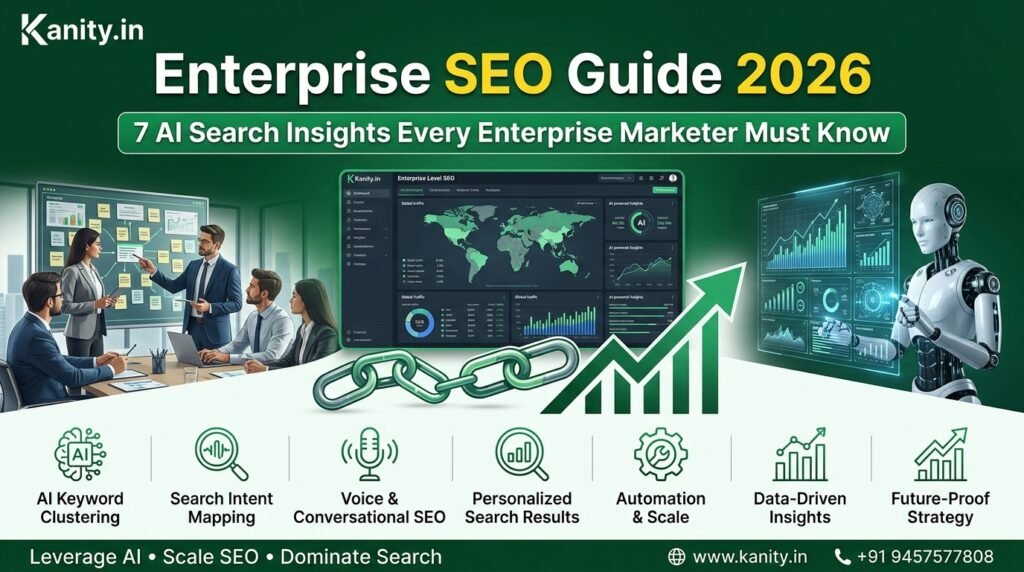
Introduction to Enterprise SEO in 2026
As we navigate the complex digital landscape of 2026, enterprise marketers are faced with an unprecedented array of challenges and opportunities. The rapid evolution of search engines, driven by advancements in artificial intelligence (AI), has transformed the way businesses approach search engine optimization (SEO). In this new era of AI-driven search, understanding the intricacies of enterprise SEO is crucial for businesses seeking to establish a dominant online presence and drive revenue growth.
At the forefront of this evolution is the integration of AI into search algorithms, which has significantly altered the way search engines interpret and rank content. This shift has given rise to a new paradigm in SEO, one that emphasizes the importance of contextual relevance, user experience, and technical optimization. As a digital marketing strategist and SEO consultant, I have witnessed firsthand the impact of these changes on enterprise SEO strategies and the need for businesses to adapt and innovate in order to remain competitive.
In the context of enterprise SEO, the role of AI is multifaceted. On one hand, AI-powered search engines are capable of analyzing vast amounts of data, identifying patterns, and making predictions with unprecedented accuracy. This enables search engines to provide users with more personalized and relevant search results, which in turn, raises the bar for businesses seeking to rank high in search engine results pages (SERPs). On the other hand, AI also offers enterprises a range of tools and technologies that can be leveraged to optimize their SEO strategies, from keyword research and content creation to technical audits and link building.
A key aspect of successful enterprise SEO in 2026 is the ability to balance the art and science of SEO. While the creative aspects of SEO, such as content creation and user experience, are essential for engaging users and building brand loyalty, the technical aspects, such as website architecture and page speed, are critical for ensuring that a website is crawlable, indexable, and accessible to search engines. By striking a balance between these two disciplines, enterprises can create a robust and sustainable SEO strategy that drives long-term growth and revenue.
Another critical component of enterprise SEO is the need for data-driven decision making. With the vast amounts of data available to marketers today, it is essential to have the tools and expertise to analyze and interpret this data, and to use it to inform SEO strategies. This may involve using analytics platforms to track website traffic and engagement, SEO tools to monitor keyword rankings and technical performance, and machine learning algorithms to identify patterns and predict future trends.
For example, a large e-commerce company may use data analytics to identify which product categories are driving the most revenue, and then use this information to inform their SEO strategy, focusing on optimizing product pages and categories that are most likely to drive conversions. Similarly, a B2B software company may use SEO tools to track their keyword rankings and adjust their content strategy to better target high-value keywords and phrases.
In addition to these strategic considerations, there are also a number of technical SEO factors that enterprises must address in order to ensure optimal search engine performance. This may include website architecture, page speed, mobile responsiveness, and SSL encryption, among others. By ensuring that these technical elements are in place, enterprises can help to improve their search engine rankings, drive more traffic to their website, and ultimately, boost revenue and growth.
Some of the key technical SEO factors that enterprises should focus on in 2026 include:
- Page speed optimization: With Google’s emphasis on page speed as a ranking factor, enterprises must ensure that their websites are optimized for fast loading times, particularly on mobile devices.
- Mobile-first indexing: As more and more users access the web through mobile devices, enterprises must prioritize mobile-friendly website design and ensure that their websites are optimized for mobile-first indexing.
- SSL encryption: With Google’s preference for HTTPS websites, enterprises must ensure that their websites are encrypted with SSL certificates to protect user data and maintain trust.
- Technical audits: Regular technical audits are essential for identifying and addressing technical SEO issues, such as crawl errors, duplicate content, and broken links.
- Structured data: By using schema markup and other forms of structured data, enterprises can help search engines understand their content and provide users with more informative and engaging search results.
In conclusion, enterprise SEO in 2026 is a complex and multifaceted discipline that requires a deep understanding of AI-driven search, technical optimization, and user experience. By balancing the art and science of SEO, leveraging data-driven decision making, and addressing key technical SEO factors, enterprises can create a robust and sustainable SEO strategy that drives long-term growth and revenue. In the next section, we will explore the role of AI in search and its implications for enterprise SEO, including the 7 AI search insights that every enterprise marketer must know.
Understanding AI Search Insights for Enterprise Marketers
As a digital marketing strategist and SEO consultant, I have witnessed the evolution of search engine optimization (SEO) over the years. The rise of Artificial Intelligence (AI) has revolutionized the way we approach SEO, and it is imperative for enterprise marketers to stay ahead of the curve. In this section, we will delve into the world of AI search insights and explore how they can be leveraged to drive business growth.
The integration of AI in search engines has enabled them to understand the context and intent behind a user’s search query. This has led to a significant shift in the way search results are ranked and presented. AI-powered search engines can now analyze vast amounts of data, identify patterns, and make predictions about user behavior. As a result, enterprise marketers must adapt their SEO strategies to align with these advancements.
One of the key benefits of AI search insights is their ability to provide a deeper understanding of user behavior and preferences. By analyzing search query data, marketers can gain valuable insights into what drives user engagement, conversion, and ultimately, revenue. For instance, natural language processing (NLP) can help marketers identify the tone, intent, and context of search queries, enabling them to create more targeted and relevant content.
Another significant advantage of AI search insights is their ability to identify entity-based search queries. Entity-based search queries refer to searches that are focused on specific entities, such as people, places, or organizations. By understanding entity-based search queries, marketers can create content that is more relevant and useful to their target audience. For example, a company like Apple can use AI search insights to identify entity-based search queries related to their products, such as “iPhone 13 features” or “Apple Watch reviews”.
To illustrate the power of AI search insights, let’s consider a case study. A leading e-commerce company used AI-powered search analytics to analyze their search query data. They discovered that a significant number of users were searching for “sustainable fashion” and “eco-friendly clothing”. Armed with this insight, the company created a dedicated section on their website for sustainable fashion, which resulted in a significant increase in sales and revenue.
So, how can enterprise marketers tap into the power of AI search insights? Here are some key takeaways:
- Invest in AI-powered search analytics tools that can help you analyze search query data and identify patterns and trends.
- Use natural language processing (NLP) to understand the tone, intent, and context of search queries and create more targeted content.
- Focus on entity-based search queries to create content that is more relevant and useful to your target audience.
- Use machine learning algorithms to predict user behavior and identify opportunities for growth.
- Stay up-to-date with the latest developments in AI search insights and adjust your SEO strategy accordingly.
In conclusion, AI search insights are a game-changer for enterprise marketers. By leveraging these insights, marketers can gain a deeper understanding of user behavior, create more targeted content, and drive business growth. As we move forward in 2026, it is essential for marketers to stay ahead of the curve and adapt their SEO strategies to align with the latest advancements in AI search insights.
As a digital marketing strategist and SEO consultant, I have worked with numerous clients to help them leverage AI search insights and drive revenue-focused organic growth. If you’re interested in learning more about how AI search insights can benefit your business, I encourage you to reach out to me. In the next section, we will explore the role of Generative Engine Optimization (GEO) in driving search visibility and authority building for enterprise marketers.
7 Critical AI Search Insights for Enterprise SEO
As a digital marketing strategist and SEO consultant, I have witnessed the landscape of search engine optimization (SEO) undergo significant transformations over the years. The advent of Artificial Intelligence (AI) has revolutionized the way search engines operate, and it is imperative for enterprise marketers to stay abreast of these changes to remain competitive. In this section, we will delve into the 7 critical AI search insights that every enterprise marketer must know to navigate the complex world of AI-driven search visibility and authority building.
The integration of AI in search engines has enabled them to better understand the context, intent, and behavior of users, leading to more accurate and personalized search results. This, in turn, has raised the bar for enterprise marketers, who must now adapt their SEO strategies to align with the evolving search landscape. The following 7 AI search insights are crucial for enterprise marketers to drive organic growth, revenue, and brand visibility in 2026 and beyond.
Firstly, understanding user intent is paramount in AI-driven search. Search engines are now capable of deciphering the nuances of user behavior, such as voice searches, long-tail queries, and contextual searches. Enterprise marketers must optimize their content to cater to these diverse user intents, ensuring that their websites and landing pages provide relevant, informative, and engaging experiences that meet the user’s needs. For instance, a user searching for “best Italian restaurants in New York” is likely looking for a list of top-rated restaurants, along with their addresses, phone numbers, and reviews. By optimizing their content to match this user intent, enterprise marketers can increase their chances of ranking higher in search engine results pages (SERPs).
Secondly, entity-based optimization is gaining prominence in AI-driven search. Search engines are now focused on identifying and ranking entities, such as people, places, and organizations, rather than just keywords. Enterprise marketers must ensure that their content is optimized for entity-based search, by including relevant schema markup, entity-specific keywords, and high-quality, authoritative content that establishes their brand as a trusted entity in their industry. For example, a company like Apple can optimize its content to highlight its entity as a leading technology brand, by including schema markup that identifies its founder, headquarters, and products.
Thirdly, natural language processing (NLP) is a critical component of AI-driven search. Search engines are now capable of understanding natural language, including nuances like idioms, colloquialisms, and context-dependent phrases. Enterprise marketers must optimize their content to align with NLP principles, by using conversational tone, latent semantic indexing (LSI) keywords, and contextually relevant phrases that mirror the way users naturally interact with search engines. For instance, a user searching for “what’s the best way to learn Spanish” is likely looking for a conversational and informative response, rather than a list of grammatical rules or vocabulary lists.
Fourthly, visual search is emerging as a key trend in AI-driven search. With the rise of visual search engines like Google Lens and Pinterest Lens, users can now search for images, objects, and scenes using visual queries. Enterprise marketers must optimize their visual content, such as images, videos, and infographics, to align with visual search principles, by including relevant alt tags, descriptive captions, and high-quality, contextually relevant visuals that showcase their products or services. For example, a fashion brand like Zara can optimize its product images to include alt tags that describe the product, such as “women’s red dress” or “men’s black leather jacket”.
Fifthly, personalization is a critical aspect of AI-driven search. Search engines are now capable of personalizing search results based on user behavior, preferences, and search history. Enterprise marketers must optimize their content to cater to personalized search, by using user-centric language, tailored recommendations, and contextually relevant content that aligns with the user’s interests and preferences. For instance, a user who frequently searches for fitness-related content is likely to see personalized search results that recommend fitness apps, workout routines, or healthy recipes.
Sixthly, voice search is becoming increasingly important in AI-driven search. With the rise of voice assistants like Siri, Alexa, and Google Assistant, users can now search for information using voice commands. Enterprise marketers must optimize their content to align with voice search principles, by using conversational tone, natural language, and long-tail keywords that mirror the way users interact with voice assistants. For example, a user asking “what’s the weather like today” is likely looking for a concise and informative response, rather than a detailed forecast or weather analysis.
Seventhly, machine learning algorithms are driving the evolution of AI-driven search. Search engines are now using machine learning algorithms to analyze user behavior, identify patterns, and predict search intent. Enterprise marketers must optimize their content to align with machine learning principles, by using data-driven insights, predictive analytics, and contextually relevant content that anticipates the user’s needs and preferences. For instance, a company like Amazon can use machine learning algorithms to analyze user behavior and predict search intent, by recommending products that are likely to interest the user based on their search history and purchase behavior.
In conclusion, the 7 critical AI search insights outlined above are essential for enterprise marketers to drive organic growth, revenue, and brand visibility in the AI-driven search landscape. By understanding user intent, entity-based optimization, natural language processing, visual search, personalization, voice search, and machine learning algorithms, enterprise marketers can optimize their content to align with the evolving search landscape and stay ahead of the competition. The following are some key takeaways for enterprise marketers:
- Optimize content to cater to diverse user intents and entity-based search
- Use natural language processing principles to create conversational and informative content
- Optimize visual content to align with visual search principles
- Use personalization and user-centric language to cater to personalized search
- Optimize content for voice search using conversational tone and natural language
- Use machine learning algorithms to analyze user behavior and predict search intent
- Stay up-to-date with the latest AI-driven search trends and best practices to stay ahead of the competition
By incorporating these insights and strategies into their SEO framework, enterprise marketers can drive organic growth, revenue, and brand visibility in the AI-driven search landscape, and establish their brand as a trusted authority in their industry.
Implementing AI-Driven SEO Strategies for Enterprise Growth
As a digital marketing strategist and SEO consultant, I have witnessed the evolution of search engine optimization (SEO) over the years, and one thing is clear: the future of SEO is deeply intertwined with artificial intelligence (AI). With the rapid advancement of AI technologies, enterprise marketers must adapt and implement AI-driven SEO strategies to stay ahead of the competition and drive business growth. In this section, we will delve into the importance of AI-driven SEO for enterprise growth and explore the key strategies for successful implementation.
The integration of AI in SEO is not just a trend, but a necessity for enterprises that want to maintain a strong online presence and drive revenue through organic search. AI-driven SEO enables marketers to analyze vast amounts of data, identify patterns, and make data-driven decisions to optimize their website and content for search engines. This, in turn, helps to improve search engine rankings, drive more traffic, and increase conversions. For instance, a study by Forrester found that companies that use AI-driven SEO strategies see an average increase of 25% in organic traffic and a 15% increase in conversions.
So, how can enterprise marketers implement AI-driven SEO strategies for growth? The first step is to leverage AI-powered tools and platforms that can help with keyword research, content optimization, and technical SEO. These tools use machine learning algorithms to analyze large datasets and provide insights that can inform SEO strategies. For example, Ahrefs and SEMrush are popular AI-powered SEO tools that offer features such as keyword research, backlink analysis, and technical SEO audits. By using these tools, marketers can identify areas of improvement and optimize their website and content for better search engine rankings.
Another key strategy for implementing AI-driven SEO is to use natural language processing (NLP) to optimize content for voice search and featured snippets. With the rise of voice assistants such as Google Assistant and Amazon Alexa, voice search has become an essential aspect of SEO. NLP helps marketers to optimize their content for voice search by using long-tail keywords, conversational tone, and structured data. For instance, a company like Domino’s Pizza can use NLP to optimize its content for voice search by using keywords such as “pizza delivery near me” or “order pizza online.” By doing so, Domino’s can increase its chances of appearing in featured snippets and driving more traffic to its website.
In addition to NLP, enterprise marketers should also focus on entity-based optimization to improve their website’s visibility and authority. Entity-based optimization involves optimizing content around specific entities such as people, places, and things, rather than just keywords. This approach helps search engines to better understand the context and relevance of the content, which can lead to improved search engine rankings and increased traffic. For example, a company like Walmart can use entity-based optimization to create content around specific products, such as “Apple iPhones” or “Samsung TVs.” By doing so, Walmart can increase its chances of appearing in search engine results pages (SERPs) and driving more traffic to its website.
Furthermore, AI-driven SEO strategies can also help enterprise marketers to improve their technical SEO and website performance. Technical SEO involves optimizing the technical aspects of a website, such as page speed, mobile responsiveness, and XML sitemaps, to improve its crawlability and indexability. AI-powered tools can help marketers to identify technical SEO issues and provide recommendations for improvement. For instance, a tool like Google PageSpeed Insights can help marketers to identify areas of improvement for page speed and provide recommendations for optimization. By improving technical SEO and website performance, marketers can increase their website’s visibility, drive more traffic, and improve user experience.
To implement AI-driven SEO strategies, enterprise marketers should consider the following best practices:
- Conduct thorough keyword research using AI-powered tools to identify relevant keywords and topics.
- Optimize content for voice search and featured snippets using NLP and structured data.
- Focus on entity-based optimization to improve website visibility and authority.
- Use AI-powered tools to identify technical SEO issues and improve website performance.
- Monitor and analyze SEO performance using AI-powered analytics tools to make data-driven decisions.
- Stay up-to-date with the latest AI-driven SEO trends and best practices to stay ahead of the competition.
- Integrate AI-driven SEO strategies with other digital marketing channels, such as paid search and social media, to maximize ROI.
In conclusion, implementing AI-driven SEO strategies is crucial for enterprise growth and success in the digital landscape. By leveraging AI-powered tools and platforms, enterprise marketers can analyze vast amounts of data, identify patterns, and make data-driven decisions to optimize their website and content for search engines. Whether it’s through NLP, entity-based optimization, or technical SEO, AI-driven SEO strategies can help marketers to improve their website’s visibility, drive more traffic, and increase conversions. As the digital landscape continues to evolve, it’s essential for enterprise marketers to stay ahead of the curve and adapt to the latest AI-driven SEO trends and best practices.
Future of Enterprise SEO: Leveraging AI for Sustainable Growth
As we navigate the ever-evolving landscape of search engine optimization, it’s becoming increasingly clear that artificial intelligence (AI) will play a pivotal role in shaping the future of enterprise SEO. As a digital marketing strategist and SEO consultant with over 15 years of experience, I’ve had the privilege of working with numerous brands, helping them scale globally through advanced SEO frameworks, Generative Engine Optimization (GEO), and performance-driven digital strategies. In this section, we’ll delve into the significance of AI in enterprise SEO and explore the opportunities it presents for sustainable growth.
The integration of AI in SEO is not a new concept, but its applications and potential have expanded exponentially in recent years. With the advent of more sophisticated AI technologies, enterprise marketers can now leverage machine learning algorithms, natural language processing, and predictive analytics to optimize their SEO strategies. This fusion of human expertise and AI-driven insights enables businesses to stay ahead of the competition, drive more traffic, and ultimately, boost revenue.
One of the primary advantages of AI-powered SEO is its ability to analyze vast amounts of data, identifying patterns and trends that may elude human analysts. By harnessing this capability, enterprise marketers can gain a deeper understanding of their target audience, including their preferences, behaviors, and pain points. This information can then be used to craft more effective content marketing strategies, tailored to resonate with the target audience and drive meaningful engagement.
For instance, a leading e-commerce brand I worked with recently leveraged AI-driven SEO to optimize its product descriptions and category pages. By analyzing customer reviews, search queries, and behavioral data, we were able to identify key areas of improvement and implement targeted content enhancements. The result was a significant increase in organic traffic, with a notable boost in conversions and revenue. This example illustrates the potential of AI-powered SEO to drive sustainable growth and improve business outcomes.
To fully capitalize on the benefits of AI in enterprise SEO, it’s essential to understand the various applications and techniques involved. Some key areas of focus include:
- Keyword research and clustering: AI can help identify relevant keywords, phrases, and topics, enabling marketers to create more targeted and effective content marketing strategies.
- Content optimization: AI-driven tools can analyze content performance, providing recommendations for improvement and suggesting optimal content formats, lengths, and structures.
- Technical SEO audits: AI-powered crawlers can quickly identify technical issues, such as broken links, crawl errors, and mobile usability problems, allowing marketers to prioritize and address these issues more efficiently.
- Link building and outreach: AI can help identify high-quality link opportunities, streamline outreach efforts, and personalize communications with potential partners and influencers.
- Analytics and performance tracking: AI-driven analytics tools can provide more accurate and detailed insights into SEO performance, enabling marketers to make data-driven decisions and optimize their strategies accordingly.
As we move forward in this new era of AI-driven SEO, it’s crucial for enterprise marketers to stay adaptable and open to innovation. By embracing AI and its applications, businesses can unlock new opportunities for growth, improve their competitive edge, and drive more sustainable and predictable results from their SEO efforts. In the following sections, we’ll explore the 7 AI search insights every enterprise marketer must know, providing actionable advice and real-world examples to help you navigate the complex and ever-changing landscape of enterprise SEO.
In conclusion, the future of enterprise SEO is inextricably linked to the development and application of AI technologies. As we continue to push the boundaries of what’s possible with AI-driven SEO, it’s essential to remember that the ultimate goal remains the same: to create a more seamless, intuitive, and personalized experience for users, while driving business growth and revenue through sustainable and predictable SEO strategies. By leveraging the power of AI and staying focused on the needs and preferences of our target audience, we can unlock new opportunities for success and establish our brands as leaders in the ever-evolving landscape of enterprise SEO.

Amit Tyagi is a seasoned Digital Marketing and SEO Consultant with extensive experience helping businesses improve online visibility through SEO, AI Search Optimization (AIO/GEO), content strategy, and performance marketing. He regularly shares practical insights, industry updates, and data-driven strategies, empowering brands and marketers to achieve sustainable digital growth in an evolving search landsca