
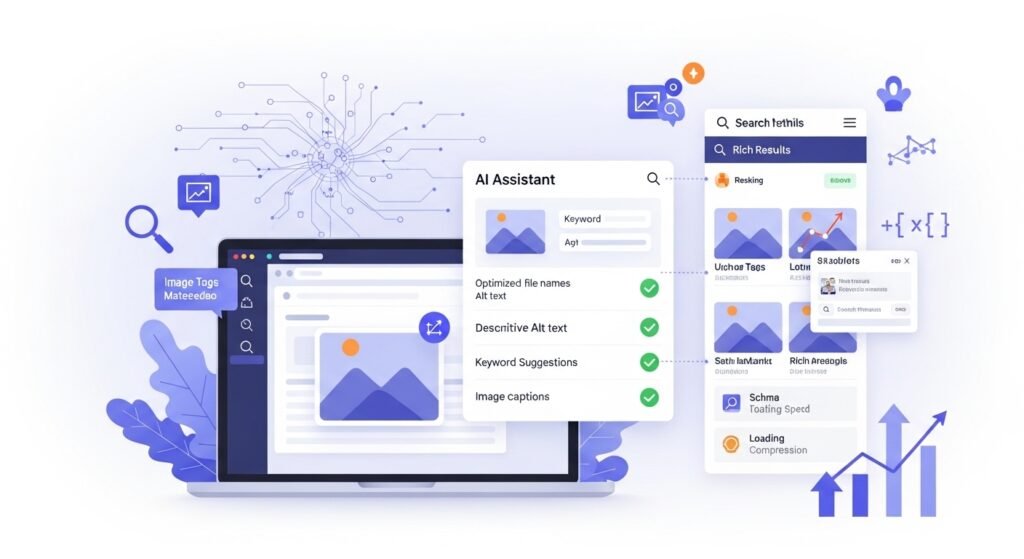
In today’s visually driven digital landscape, images are no longer just decorative elements—they are powerful traffic drivers. With the rise of visual search, Google Image results, and AI-powered search algorithms, optimizing images has become essential for small businesses aiming to increase online visibility. AI-powered Image SEO refers to the strategic use of artificial intelligence tools and optimization techniques to make website images discoverable, searchable, and rank-worthy on search engines. This goes beyond simply uploading a product photo. It involves optimizing file names, alt text, captions, structured data, image size, loading speed, and contextual relevance. AI tools now help generate keyword-rich alt descriptions, compress images without quality loss, tag objects automatically, and even predict which visuals perform best in search results.
For small businesses, this creates a major opportunity. Many competitors still ignore image SEO, focusing only on text-based optimization. However, platforms like Google Lens and visual search features increasingly allow users to search using images instead of keywords. A well-optimized product image can drive traffic from image searches, featured snippets, and even shopping results. AI tools simplify the process by suggesting optimized tags, analyzing competitor images, and ensuring better accessibility compliance.
Additionally, properly optimized visuals improve website speed and user experience—both critical ranking factors. When images load quickly and include descriptive metadata, search engines can better understand page context. This leads to improved rankings, higher engagement, and better conversion rates.
AI-powered Image SEO is not just a technical enhancement—it’s a competitive advantage. Small businesses that leverage AI tools for visual optimization can attract more organic traffic, improve accessibility, and maximize the value of every image they publish online.
What Is AI-Powered Image SEO?
AI-Powered Image SEO combines traditional image optimization techniques with artificial intelligence tools to improve search visibility.
It includes:
- Automated alt text generation
- Smart keyword tagging
- Image compression
- Object recognition
- Visual search optimization
- Performance analysis
AI makes image optimization faster, smarter, and more scalable.
Why Image SEO Matters More Than Ever
1️⃣ Rise of Visual Search
Users increasingly search using images via Google Lens and similar tools.
2️⃣ Higher Engagement
Pages with optimized images perform better in terms of dwell time and interaction.
3️⃣ Untapped Traffic Source
Google Images can drive significant organic traffic.
4️⃣ Improved Accessibility
Alt text improves usability for visually impaired users and strengthens SEO.
Core Elements of Image SEO
1. Optimized File Names
Instead of:
IMG_1234.jpg
Use:
red-leather-wallet-delhi.jpg
Descriptive file names help search engines understand context.
2. AI-Generated Alt Text
Alt text describes the image for search engines and accessibility tools.
Example:
“Red leather wallet with multiple card slots displayed on wooden table.”
AI tools can generate accurate, keyword-rich descriptions instantly.
3. Image Compression
Large images slow websites down.
AI compression tools reduce file size without losing quality, improving page speed and SEO ranking.
4. Structured Data Markup
Adding schema markup for products helps images appear in rich results and shopping listings.
5. Contextual Placement
Images should align with page content. Search engines evaluate surrounding text to determine relevance.
AI Tools That Help with Image SEO
- TinyPNG (AI compression)
- Canva AI background tools
- Adobe Sensei
- Cloudinary
- Google Vision AI
These tools automate tagging, resizing, and optimization processes.
Best Practices for Small Businesses
✔ Use descriptive file names
✔ Add unique alt text (avoid keyword stuffing)
✔ Compress images before uploading
✔ Use WebP format when possible
✔ Add image sitemap
✔ Optimize for mobile responsiveness
✔ Include captions where relevant
Consistency improves long-term performance.
Example Strategy for E-Commerce Store
Step 1: Rename product images with target keywords
Step 2: Use AI to generate optimized alt descriptions
Step 3: Compress images for faster loading
Step 4: Add product schema markup
Step 5: Track image traffic in Google Search Console
This can increase product discoverability significantly.
Common Mistakes to Avoid
❌ Uploading large uncompressed images
❌ Using duplicate alt text
❌ Ignoring mobile optimization
❌ Keyword stuffing in descriptions
❌ Forgetting image sitemaps
Image SEO requires balance and accuracy.
Measuring Image SEO Success
Track:
- Traffic from Google Images
- Page load speed
- Bounce rate
- Keyword ranking improvements
- Conversion rate from visual search
Monitoring performance helps refine strategy.
Long-Term Benefits
AI-powered Image SEO leads to:
- Higher organic traffic
- Better user experience
- Improved accessibility compliance
- Competitive search advantage
- Increased e-commerce sales
Images can become silent sales drivers when optimized properly.
Final Thoughts
In a digital ecosystem dominated by visual content, ignoring image SEO means missing valuable traffic opportunities. AI-powered tools now make it easier than ever for small businesses to optimize visuals strategically and efficiently.
By combining smart file naming, descriptive alt text, compression, structured data, and AI-driven insights, businesses can transform ordinary images into powerful SEO assets.
When every image is optimized with intention, your visuals don’t just decorate your website—they drive discovery, engagement, and revenue. 🚀📸