
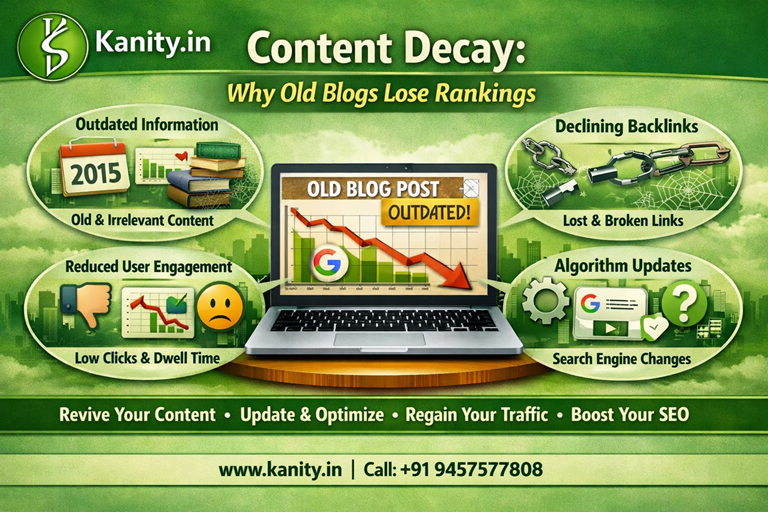
Introduction to Content Decay
As a digital marketing strategist and SEO consultant, I have witnessed numerous blogs and websites rise to prominence, only to falter and lose their rankings over time. This phenomenon is known as content decay, a natural process where old blogs and websites gradually decline in search engine rankings, ultimately affecting their online visibility and revenue. In this section, we will delve into the world of content decay, exploring its causes, effects, and implications for businesses and digital marketers.
Content decay is a common issue that affects websites and blogs of all sizes and niches. It is estimated that millions of blog posts are published every day, creating a highly competitive online landscape. As new content emerges, search engines like Google continually update their algorithms to prioritize the most relevant, fresh, and high-quality content. This means that older blogs and websites must constantly adapt and evolve to remain relevant and maintain their search engine rankings.
However, many businesses and digital marketers struggle to keep their content up-to-date, resulting in a decline in search engine rankings and online visibility. This can have severe consequences, including reduced website traffic, lower engagement, and decreased revenue. In fact, a study by HubSpot found that blogs that publish new content regularly experience a significant increase in website traffic, leads, and sales, while those that fail to update their content regularly suffer from a decline in these key performance indicators.
So, what causes content decay? There are several factors that contribute to this phenomenon, including outdated information, lack of updates, and poor search engine optimization (SEO). When a blog or website is first launched, it is often filled with fresh, relevant, and high-quality content that resonates with its target audience. However, over time, this content becomes outdated, and the website or blog fails to keep pace with the latest trends, technologies, and industry developments. This can lead to a decline in search engine rankings, as search engines prioritize content that is fresh, relevant, and up-to-date.
Another factor that contributes to content decay is the lack of updates. When a blog or website is not regularly updated with new content, search engines may view it as stagnant or abandoned, leading to a decline in search engine rankings. This is because search engines like Google prioritize websites and blogs that are regularly updated with fresh, high-quality content, as they are more likely to provide value to users. On the other hand, websites and blogs that are not regularly updated may be seen as less relevant, less authoritative, and less trustworthy, leading to a decline in search engine rankings and online visibility.
In addition to outdated information and lack of updates, poor SEO is another factor that contributes to content decay. Search engine optimization is the process of optimizing website or blog content to rank higher in search engine results pages (SERPs). This includes optimizing keywords, meta tags, titles, and descriptions, as well as building high-quality backlinks from authoritative sources. However, many businesses and digital marketers fail to optimize their content properly, leading to a decline in search engine rankings and online visibility.
For example, a blog post that is not optimized with relevant keywords may not appear in search engine results pages, even if it is high-quality and relevant to the target audience. Similarly, a website or blog that lacks high-quality backlinks from authoritative sources may be viewed as less trustworthy and less authoritative, leading to a decline in search engine rankings. By failing to optimize their content properly, businesses and digital marketers can inadvertently contribute to content decay, ultimately affecting their online visibility and revenue.
To illustrate the concept of content decay, let’s consider a few examples. Suppose we have a blog that was launched in 2010 and was initially very successful, attracting thousands of visitors every month. However, over time, the blog was not regularly updated, and the content became outdated. As a result, the blog’s search engine rankings declined, and it was eventually surpassed by newer, more relevant blogs. This is an example of content decay, where a once-successful blog or website declines in search engine rankings due to a lack of updates and outdated information.
Another example is a website that was optimized for search engines in 2015 but has not been updated since. The website’s content is still relevant, but it is not optimized for the latest search engine algorithms, leading to a decline in search engine rankings. This is an example of content decay, where a website or blog fails to keep pace with the latest trends, technologies, and industry developments, ultimately affecting its online visibility and revenue.
In conclusion, content decay is a natural process that affects websites and blogs of all sizes and niches. It is caused by a combination of factors, including outdated information, lack of updates, and poor SEO. To avoid content decay, businesses and digital marketers must regularly update their content, optimize it for search engines, and keep pace with the latest trends, technologies, and industry developments. By doing so, they can maintain their search engine rankings, increase their online visibility, and drive more traffic, leads, and sales to their website or blog.
Some of the key takeaways from this section include:
- Content decay is a natural process that affects websites and blogs of all sizes and niches.
- Outdated information, lack of updates, and poor SEO are the main causes of content decay.
- Regularly updating content, optimizing it for search engines, and keeping pace with the latest trends, technologies, and industry developments can help avoid content decay.
- Content decay can have severe consequences, including reduced website traffic, lower engagement, and decreased revenue.
- Businesses and digital marketers must prioritize content marketing and SEO to maintain their online visibility and drive more traffic, leads, and sales to their website or blog.
By understanding the causes and effects of content decay, businesses and digital marketers can take proactive steps to avoid it and maintain their online visibility. In the next section, we will explore the effects of content decay in more detail, including its impact on website traffic, engagement, and revenue.
Causes of Content Decay
As a digital marketing strategist and SEO consultant, I have witnessed numerous instances of content decay, where once high-ranking blogs and websites experience a significant decline in their search engine rankings over time. This phenomenon is not only frustrating for content creators but also detrimental to their online visibility and revenue. In this section, we will delve into the primary causes of content decay, exploring the factors that contribute to the decline of old blogs and websites.
Content decay is a natural process that occurs when a website or blog’s content becomes outdated, irrelevant, or less effective over time. This can happen due to various reasons, including changes in search engine algorithms, shifts in user behavior, and the emergence of new technologies. As a result, websites and blogs that were once ranking high in search engine results pages (SERPs) may find themselves struggling to maintain their positions, leading to a decline in organic traffic and revenue.
So, what are the primary causes of content decay? Let’s take a closer look at some of the key factors that contribute to this phenomenon:
- Outdated Content: One of the primary causes of content decay is outdated content. As time passes, the information and data presented in a blog post or article may become less relevant or inaccurate. This can happen due to changes in industry trends, new discoveries, or updates in best practices. For instance, a blog post about the latest SEO trends in 2015 may not be relevant today, as search engine algorithms and user behavior have evolved significantly since then.
- Lack of Updates and Maintenance: Another significant cause of content decay is the lack of updates and maintenance. Websites and blogs that are not regularly updated with fresh content, new information, and the latest developments in their respective industries are more likely to experience a decline in rankings. This is because search engines like Google prioritize websites that demonstrate a high level of activity, relevance, and authority.
- Changes in Search Engine Algorithms: Search engine algorithms are constantly evolving, with new updates and changes being introduced regularly. These changes can significantly impact a website’s or blog’s rankings, especially if the content is not optimized for the latest algorithmic requirements. For example, the introduction of Google’s BERT algorithm in 2019 emphasized the importance of natural language processing and context-based search results, rendering some older content less effective.
- Increased Competition: The internet is becoming increasingly crowded, with new websites, blogs, and content creators emerging every day. As a result, the competition for search engine rankings has become more fierce, making it challenging for older content to maintain its position. Newer content that is more relevant, engaging, and optimized for the latest search engine algorithms may outrank older content, leading to a decline in rankings.
- Technical Issues and Website Errors: Technical issues and website errors can also contribute to content decay. Problems such as broken links, slow page loading speeds, and mobile responsiveness issues can negatively impact a website’s or blog’s user experience, leading to higher bounce rates and lower search engine rankings. Furthermore, search engines like Google may penalize websites with technical issues, further exacerbating the decline in rankings.
In addition to these factors, other causes of content decay include shifts in user behavior, such as changes in search queries, device usage, and content consumption patterns. For instance, the rise of voice search has led to an increase in long-tail search queries, making it essential for content creators to optimize their content for these new search patterns. Similarly, the growing importance of video content and visual storytelling has made it necessary for websites and blogs to incorporate more multimedia elements into their content strategy.
To illustrate the impact of content decay, let’s consider a real-life example. Suppose we have a blog post about “The Top 10 SEO Trends for 2018.” At the time of its publication, the post was highly relevant and informative, attracting a significant amount of traffic and engagement. However, as time passed, the information presented in the post became less relevant, and the post’s rankings began to decline. Despite being a high-quality piece of content, the post’s lack of updates and maintenance, combined with changes in search engine algorithms and increased competition, led to a significant decline in its search engine rankings.
In conclusion, content decay is a complex phenomenon that can be caused by a variety of factors, including outdated content, lack of updates and maintenance, changes in search engine algorithms, increased competition, technical issues, and shifts in user behavior. By understanding these causes, content creators can take proactive steps to mitigate the effects of content decay, ensuring that their websites and blogs remain relevant, authoritative, and visible in search engine results pages. In the next section, we will explore strategies for preventing and reversing content decay, helping you to maintain your online visibility and drive revenue-focused organic growth.
Signs and Symptoms of Content Decay
As a digital marketing strategist and SEO consultant, I have worked with numerous brands that have experienced the negative impact of content decay on their online presence. Content decay refers to the gradual decline in rankings, traffic, and engagement that old blogs and content experience over time. This phenomenon can have severe consequences for businesses that rely heavily on organic search visibility, authority, and revenue growth. In this section, we will delve into the signs and symptoms of content decay, exploring the telltale indicators that your old blogs are losing their ranking and what you can do to prevent or reverse this trend.
One of the primary signs of content decay is a decline in organic traffic. When your old blogs start to lose their ranking, you may notice a significant drop in the number of visitors arriving at your website from search engines. This can be attributed to a variety of factors, including changes in search engine algorithms, increasing competition, or a lack of relevance and freshness in your content. For instance, if you have a blog post that was ranking well for a specific keyword, but has not been updated in several years, it may start to slip down the rankings as newer, more relevant content emerges.
Another symptom of content decay is a decrease in engagement metrics. As your old blogs lose their ranking, you may notice a decline in social shares, comments, and other engagement metrics. This can be a clear indication that your content is no longer resonating with your target audience, and that it’s time to refresh and update your content strategy. For example, if you have a blog post that was once a top performer in terms of engagement, but is now receiving fewer likes, shares, and comments, it may be a sign that the content is no longer relevant or useful to your audience.
In addition to these signs, there are several other indicators that your old blogs are experiencing content decay. Some of these include:
- Decrease in keyword rankings: If your old blogs are no longer ranking for their target keywords, it can be a sign that the content is no longer relevant or authoritative.
- Increase in bounce rates: If visitors are arriving at your website and immediately leaving, it can be a sign that your content is not meeting their needs or expectations.
- Decrease in conversion rates: If your old blogs are no longer generating leads, sales, or other desired conversions, it can be a sign that the content is no longer effective.
- Outdated information and statistics: If your old blogs contain outdated information, statistics, or research, it can make the content appear stale and untrustworthy.
To illustrate the concept of content decay, let’s consider an example. Suppose you have a blog post titled “The Top 10 SEO Trends for 2020.” When the post was first published, it received a lot of attention and ranked well for relevant keywords. However, as time passed, the post became outdated, and newer, more relevant content emerged. As a result, the post started to slip down the rankings, and the traffic and engagement metrics began to decline. This is a classic example of content decay, where the old blog post is no longer relevant or useful to the target audience.
In conclusion, content decay is a common phenomenon that can have severe consequences for businesses that rely on organic search visibility, authority, and revenue growth. By recognizing the signs and symptoms of content decay, including declines in organic traffic, engagement metrics, and keyword rankings, you can take proactive steps to prevent or reverse this trend. In the next section, we will explore the causes of content decay and what you can do to prevent it.
As a digital marketing strategist and SEO consultant, I have helped numerous brands to overcome content decay and achieve significant improvements in their online presence. By leveraging advanced SEO frameworks, Generative Engine Optimization (GEO), and performance-driven digital strategies, you can ensure that your old blogs continue to rank well and drive traffic, engagement, and revenue growth. Whether you’re a seasoned marketer or just starting out, it’s essential to stay ahead of the curve and adapt to the ever-changing landscape of search engine optimization.
By understanding the signs and symptoms of content decay, you can take the first step towards preventing or reversing this trend. Remember, content decay is not just a natural process, but also an opportunity to refresh and update your content strategy. By doing so, you can ensure that your old blogs continue to drive value for your business and achieve your marketing goals. In the next section, we will delve deeper into the causes of content decay and explore the strategies for preventing and reversing this trend.
Strategies to Combat Content Decay
As a digital marketing strategist and SEO consultant, I have witnessed numerous websites and blogs struggle with the issue of content decay. It is a common phenomenon where older blog posts and articles lose their ranking over time, resulting in decreased traffic and engagement. However, there are several strategies that can be employed to combat content decay and breathe new life into old blogs. In this section, we will explore some of the most effective methods to prevent content decay and maintain a strong online presence.
One of the primary reasons for content decay is the constant evolution of search engine algorithms. Search engines like Google are constantly updating their algorithms to provide users with the most relevant and up-to-date information. As a result, older content may no longer be considered relevant, leading to a decline in rankings. To combat this, it is essential to regularly review and update old blog posts to ensure they remain relevant and aligned with the latest search engine algorithms.
Another strategy to combat content decay is to focus on evergreen content. Evergreen content refers to content that remains relevant and valuable over time, regardless of changes in search engine algorithms or trends. Examples of evergreen content include tutorials, guides, and informative articles that provide timeless value to readers. By creating more evergreen content, you can reduce the risk of content decay and ensure that your old blogs continue to attract traffic and engagement.
In addition to creating evergreen content, it is also essential to optimize old blog posts for better search engine rankings. This can be achieved by conducting thorough keyword research and incorporating relevant keywords into the content. It is also crucial to ensure that the content is well-structured, easy to read, and provides value to the reader. By optimizing old blog posts, you can improve their visibility and increase their chances of ranking higher in search engine results.
Repurposing old content is another effective strategy to combat content decay. Repurposing involves taking old content and transforming it into a new format, such as turning a blog post into a video or infographic. This can help to breathe new life into old content and make it more engaging and shareable. For example, you can take an old blog post and create a video summary, or turn it into a podcast episode. By repurposing old content, you can reach a wider audience and increase the content’s lifespan.
Furthermore, internal linking is a powerful strategy to combat content decay. Internal linking involves linking to other relevant and useful articles on your website, helping to create a network of connected content. This can help to distribute link equity and ranking power across your website, increasing the visibility of old blog posts and reducing the risk of content decay. By creating a clear and organized linking structure, you can improve the user experience and help search engines understand the context and relevance of your content.
Another approach to combating content decay is to leverage user-generated content. User-generated content refers to content created by users, such as comments, reviews, and testimonials. By encouraging users to engage with your content and create their own content, you can add fresh perspectives and insights to old blog posts. This can help to keep the content relevant and up-to-date, reducing the risk of content decay. For example, you can create a comment section on your blog, allowing users to share their thoughts and opinions on the topic.
Content refresh is also an essential strategy to combat content decay. Content refresh involves reviewing and updating old content to ensure it remains relevant and accurate. This can include updating statistics, adding new examples, and incorporating the latest research and findings. By refreshing old content, you can ensure that it continues to provide value to readers and remains competitive in search engine rankings. For instance, you can review an old blog post and update it with the latest industry trends and best practices.
To implement these strategies, you can follow these steps:
- Conduct a content audit to identify old blog posts that are at risk of content decay
- Review and update old content to ensure it remains relevant and aligned with the latest search engine algorithms
- Create more evergreen content to reduce the risk of content decay
- Optimize old blog posts for better search engine rankings by incorporating relevant keywords and improving the content’s structure and readability
- Repurpose old content into new formats, such as videos or infographics, to breathe new life into it
- Implement internal linking to create a network of connected content and distribute link equity and ranking power across your website
- Leverage user-generated content to add fresh perspectives and insights to old blog posts
- Regularly review and update old content to ensure it remains relevant and accurate
By implementing these strategies, you can combat content decay and maintain a strong online presence. It is essential to remember that content decay is a natural process, and it requires ongoing effort and attention to prevent. By regularly reviewing and updating old content, creating more evergreen content, and leveraging user-generated content, you can reduce the risk of content decay and ensure that your old blogs continue to attract traffic and engagement.
In conclusion, content decay is a common issue that can affect any website or blog. However, by employing the right strategies, you can combat content decay and maintain a strong online presence. Whether it’s creating more evergreen content, optimizing old blog posts, or leveraging user-generated content, there are numerous ways to prevent content decay and ensure that your old blogs continue to thrive. As a digital marketing strategist and SEO consultant, I have seen firsthand the impact that content decay can have on a website’s traffic and engagement. By following the strategies outlined in this section, you can prevent content decay and maintain a competitive edge in the ever-evolving digital landscape.
It’s also important to note that content decay is not just about losing rankings, it’s also about losing the opportunity to engage with your audience and provide them with valuable information. By keeping your content fresh and up-to-date, you can build trust with your audience and establish your brand as an authority in your industry. This, in turn, can lead to increased conversions, sales, and revenue. Therefore, it’s essential to make content decay prevention a priority and to regularly review and update your old content to ensure it remains relevant and competitive.
Additionally, content decay can also be caused by technical issues, such as website errors, slow loading speeds, and poor mobile usability. These technical issues can prevent search engines from crawling and indexing your content, leading to a decline in rankings and traffic. To prevent this, it’s essential to regularly audit your website’s technical performance and address any issues that may be affecting your content’s visibility. This can include optimizing images, minifying code, and improving page loading speeds.
Finally, content decay prevention requires ongoing effort and attention. It’s not a one-time task, but rather an ongoing process that requires regular monitoring and maintenance. By staying on top of your content’s performance and making adjustments as needed, you can prevent content decay and maintain a strong online presence. This can include tracking your content’s rankings, engagement, and conversions, and making data-driven decisions to improve your content’s performance.
Best Practices for Preventing Content Decay
As a digital marketing strategist and SEO consultant, I have witnessed numerous blogs and websites struggle with content decay, leading to a significant decline in their search engine rankings. Content decay refers to the gradual loss of relevance, accuracy, and visibility of old blog posts over time, resulting in reduced organic traffic and revenue. However, by implementing the right strategies, you can prevent content decay and maintain the visibility and credibility of your old blog posts. In this section, we will explore the best practices for preventing content decay and discuss examples of how these strategies can be applied in real-world scenarios.
Preventing content decay requires a proactive approach, and it involves regularly reviewing, updating, and refining your old blog posts to ensure they remain relevant, accurate, and engaging. One of the most effective ways to prevent content decay is to conduct regular content audits. A content audit involves reviewing your old blog posts to identify areas that need improvement, such as outdated information, broken links, and poor-quality images. By conducting regular content audits, you can identify and address issues before they negatively impact your search engine rankings.
Another best practice for preventing content decay is to update your old blog posts with fresh and relevant content. This can involve adding new information, statistics, or examples to make your content more engaging and informative. For instance, if you have an old blog post about the benefits of social media marketing, you can update it with the latest social media trends, statistics, and best practices. By updating your old blog posts with fresh content, you can make them more relevant and appealing to your target audience, which can help to improve your search engine rankings and drive more organic traffic to your website.
In addition to updating your old blog posts, it is also essential to optimize them for SEO. This involves using relevant keywords, meta tags, and descriptions to help search engines understand the content and relevance of your blog posts. For example, if you have an old blog post about the importance of keyword research, you can optimize it by using relevant keywords, such as “keyword research tools” or “keyword research techniques.” By optimizing your old blog posts for SEO, you can improve their visibility and credibility, which can help to drive more organic traffic to your website and increase your search engine rankings.
Furthermore, preventing content decay also involves promoting your old blog posts through social media and other channels. This can involve sharing your old blog posts on social media platforms, such as Facebook, Twitter, and LinkedIn, and engaging with your target audience to encourage them to share your content with others. For instance, if you have an old blog post about the benefits of content marketing, you can share it on social media and ask your followers to share their experiences with content marketing. By promoting your old blog posts through social media and other channels, you can increase their visibility and credibility, which can help to drive more organic traffic to your website and improve your search engine rankings.
Some other best practices for preventing content decay include:
- Using internal linking to connect your old blog posts to other relevant and useful content on your website. This can help to improve the user experience and increase the credibility of your website.
- Using high-quality images and videos to make your old blog posts more engaging and informative. This can help to increase the average time on page and reduce bounce rates.
- Encouraging user-generated content, such as comments and reviews, to make your old blog posts more interactive and engaging. This can help to increase the credibility and trustworthiness of your website.
- Using analytics tools to track the performance of your old blog posts and identify areas for improvement. This can help you to refine your content strategy and improve the effectiveness of your old blog posts.
- Repurposing your old blog posts into other formats, such as videos, podcasts, and infographics, to make them more engaging and shareable. This can help to increase the reach and impact of your content.
For example, let’s say you have an old blog post about the benefits of email marketing. You can update it with fresh content, such as the latest email marketing trends and best practices, and optimize it for SEO by using relevant keywords and meta tags. You can also promote it through social media and other channels, and encourage user-generated content by asking your followers to share their experiences with email marketing. By implementing these strategies, you can prevent content decay and maintain the visibility and credibility of your old blog post.
In conclusion, preventing content decay requires a proactive approach that involves regularly reviewing, updating, and refining your old blog posts to ensure they remain relevant, accurate, and engaging. By implementing the best practices outlined above, you can prevent content decay and maintain the visibility and credibility of your old blog posts. This can help to drive more organic traffic to your website, improve your search engine rankings, and increase your online revenue. As a digital marketing strategist and SEO consultant, I highly recommend that you prioritize content decay prevention and make it an integral part of your content marketing strategy.
By doing so, you can ensure that your old blog posts continue to provide value to your target audience and contribute to the growth and success of your online business. Remember, content decay is a common issue that can affect any website or blog, but by being proactive and implementing the right strategies, you can prevent it and maintain the credibility and visibility of your online content. So, don’t let content decay negatively impact your search engine rankings and online revenue – take action today and start preventing content decay on your website or blog.

Amit Tyagi is a seasoned Digital Marketing and SEO Consultant with extensive experience helping businesses improve online visibility through SEO, AI Search Optimization (AIO/GEO), content strategy, and performance marketing. He regularly shares practical insights, industry updates, and data-driven strategies, empowering brands and marketers to achieve sustainable digital growth in an evolving search landsca