
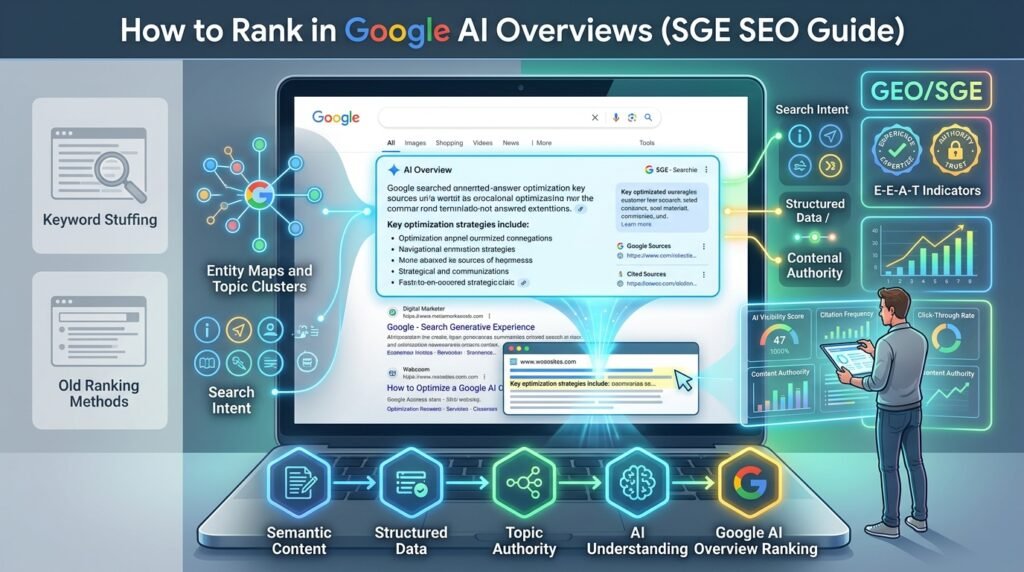
Introduction to Generative Engine Optimization (GEO)
As a digital marketing strategist and SEO consultant, I have witnessed the evolution of search engine optimization (SEO) over the past 15 years. From keyword stuffing to link building, the SEO landscape has undergone significant transformations. However, with the advent of artificial intelligence (AI) and machine learning (ML), the future of SEO is poised to take a dramatic turn. Enter Generative Engine Optimization (GEO), a revolutionary approach that promises to redefine the way we optimize our online presence. In this section, we will delve into the world of GEO, exploring its principles, benefits, and implications for businesses and marketers.
Traditionally, SEO has focused on optimizing websites for Google’s algorithm, with an emphasis on keyword research, on-page optimization, and link building. While these strategies have yielded results in the past, they are no longer sufficient in today’s AI-driven search landscape. Google’s algorithm has become increasingly sophisticated, incorporating ML and natural language processing (NLP) to better understand user intent and behavior. As a result, SEO strategies must adapt to keep pace with these advancements. This is where GEO comes into play, offering a more holistic and forward-thinking approach to search engine optimization.
GEO is an AI-driven framework that enables businesses to optimize their online presence beyond Google’s algorithm. By leveraging ML and NLP, GEO helps marketers understand user behavior, preferences, and intent, allowing them to create more personalized and relevant content. This, in turn, enhances the overall user experience, driving engagement, conversion, and revenue growth. Unlike traditional SEO, GEO is not limited to a single search engine or platform. Instead, it encompasses a broader range of channels, including social media, voice assistants, and other emerging platforms.
The core principles of GEO are rooted in AI-driven analytics, machine learning, and data science. By analyzing vast amounts of user data, GEO helps marketers identify patterns, trends, and insights that inform their content creation, distribution, and optimization strategies. This data-driven approach enables businesses to make more informed decisions, reducing the risk of guesswork and trial-and-error. Furthermore, GEO’s emphasis on personalization and user experience aligns with the evolving expectations of modern consumers, who demand more relevant, engaging, and interactive online experiences.
To illustrate the potential of GEO, consider the example of a fashion e-commerce brand. Using traditional SEO strategies, the brand might focus on optimizing its website for keywords like “women’s clothing” or “summer dresses.” While this approach may yield some results, it is limited in its ability to understand the nuances of user behavior and intent. In contrast, a GEO-driven approach would involve analyzing user data to identify specific preferences, such as fabric type, color palette, or style. This information would then be used to create personalized content, recommendations, and product suggestions, enhancing the overall user experience and driving conversion.
The benefits of GEO are multifaceted, offering businesses a range of advantages over traditional SEO strategies. Some of the key benefits include:
- Improved user experience: By creating personalized and relevant content, GEO enhances the overall user experience, driving engagement, conversion, and revenue growth.
- Increased efficiency: GEO’s AI-driven analytics and machine learning capabilities reduce the need for manual optimization, freeing up resources for more strategic and creative pursuits.
- Enhanced competitiveness: By leveraging GEO, businesses can gain a competitive edge in the market, differentiating themselves from competitors and establishing a strong online presence.
- Better ROI: GEO’s data-driven approach enables businesses to make more informed decisions, reducing the risk of guesswork and trial-and-error, and ultimately driving a better return on investment.
In conclusion, Generative Engine Optimization (GEO) represents a significant shift in the way we approach search engine optimization. By leveraging AI-driven analytics, machine learning, and data science, GEO offers a more holistic and forward-thinking approach to online presence optimization. As the search landscape continues to evolve, businesses must adapt to keep pace, embracing new strategies and technologies that drive growth, engagement, and revenue. In the next section, we will explore the principles and strategies of GEO in more detail, providing marketers and businesses with the insights and tools needed to succeed in this new era of search engine optimization.
Understanding the Limitations of Traditional SEO
As a digital marketing strategist and SEO consultant, I have witnessed the evolution of search engine optimization (SEO) over the past decade. Traditional SEO has been the cornerstone of online marketing, helping businesses improve their search engine rankings and drive organic traffic to their websites. However, with the rapid advancement of technology and the emergence of new search engines, traditional SEO is no longer sufficient to guarantee online success. In this section, we will delve into the limitations of traditional SEO and explore the need for a more advanced approach, such as Generative Engine Optimization (GEO).
Traditional SEO focuses primarily on optimizing website content, structure, and meta tags to rank higher in search engine results pages (SERPs) on Google. This approach has been effective in the past, but it has several limitations. For instance, traditional SEO is heavily reliant on keyword research and optimization, which can lead to keyword stuffing and a lack of contextual understanding. Moreover, traditional SEO often prioritizes short-term gains over long-term strategy, resulting in a narrow focus on individual keywords rather than a comprehensive approach to search visibility.
Another significant limitation of traditional SEO is its dependence on Google’s algorithms and guidelines. While Google is the most widely used search engine, it is not the only one. Other search engines, such as Bing, DuckDuckGo, and Yandex, have their own algorithms and ranking factors, which may not be compatible with traditional SEO strategies. Furthermore, the rise of alternative search engines and discovery platforms, such as voice assistants and social media, has created new opportunities for search visibility that traditional SEO may not be equipped to address.
For example, a business that relies solely on traditional SEO may optimize its website for Google’s algorithms, but neglect the opportunity to rank on Bing or DuckDuckGo. Similarly, a company that focuses exclusively on keyword optimization may miss out on the chance to appear in voice search results or social media feeds. This narrow focus can lead to a lack of diversity in search visibility and a limited online presence.
To illustrate this point, let’s consider a case study. Suppose we have an e-commerce company that sells outdoor gear and apparel. Using traditional SEO, the company may optimize its website for keywords like “hiking boots” or “camping equipment.” However, this approach may not account for the fact that many customers are now using voice assistants like Alexa or Google Assistant to search for products. By incorporating GEO strategies, such as optimizing for conversational keywords and entity-based search, the company can increase its visibility in voice search results and reach a wider audience.
The limitations of traditional SEO are further exacerbated by the increasing complexity of search algorithms and the rise of artificial intelligence (AI) in search. As search engines become more sophisticated, they are able to understand the context and intent behind search queries, rather than just relying on keyword matching. This shift towards more nuanced and contextual search requires a more advanced approach to SEO, one that takes into account the intricacies of language, entity recognition, and user behavior.
In light of these limitations, it is clear that traditional SEO is no longer sufficient to guarantee online success. Businesses need a more comprehensive and forward-thinking approach to search visibility, one that incorporates the latest advancements in AI, machine learning, and natural language processing. This is where Generative Engine Optimization (GEO) comes in – a new paradigm for SEO that focuses on creating a robust and sustainable online presence, rather than just optimizing for individual keywords or search engines.
Some of the key differences between traditional SEO and GEO include:
- A focus on entity-based search and knowledge graph optimization, rather than just keyword optimization
- An emphasis on conversational keywords and voice search optimization
- The use of AI and machine learning to analyze and optimize search visibility
- A more comprehensive approach to search visibility, incorporating multiple search engines and discovery platforms
- A focus on creating high-quality, engaging, and informative content that resonates with users, rather than just optimizing for search engines
By understanding the limitations of traditional SEO and embracing the principles of GEO, businesses can create a more robust and sustainable online presence, drive more qualified traffic to their websites, and ultimately achieve greater online success. In the next section, we will delve deeper into the principles and strategies of GEO, and explore how businesses can leverage this approach to stay ahead of the curve in the ever-evolving landscape of search engine optimization.
Key Principles and Components of Generative Engine Optimization (GEO)
As a digital marketing strategist and SEO consultant, I have had the privilege of working with numerous brands and helping them scale globally through advanced SEO frameworks and performance-driven digital strategies. In recent years, I have been exploring the concept of Generative Engine Optimization (GEO), which I firmly believe is the future of SEO beyond Google. In this section, we will delve into the key principles and components of GEO, and explore how it can help businesses stay ahead of the curve in the ever-evolving digital landscape.
Generative Engine Optimization (GEO) is a holistic approach to search engine optimization that goes beyond the traditional boundaries of SEO. It involves using artificial intelligence (AI) and machine learning (ML) algorithms to generate high-quality, engaging, and optimized content that resonates with users and search engines alike. The primary goal of GEO is to create a seamless and personalized user experience that drives conversions, revenue, and long-term growth.
The key principles of GEO are centered around the following components:
- Content Generation: This involves using AI-powered tools to generate high-quality, engaging, and optimized content that meets the needs of users and search engines. This can include blog posts, articles, product descriptions, and other types of content that are relevant to a business or brand.
- Entity-Based Optimization: This involves optimizing content around specific entities, such as people, places, and things, to create a more personalized and relevant user experience. This can include using schema markup, entity-based keywords, and other optimization techniques to help search engines understand the context and relevance of content.
- Intent-Based Optimization: This involves optimizing content around specific user intents, such as informational, navigational, or transactional intents, to create a more targeted and relevant user experience. This can include using intent-based keywords, optimizing content for specific user journeys, and creating personalized content recommendations.
- Technical Optimization: This involves optimizing the technical aspects of a website or application, such as page speed, mobile responsiveness, and crawlability, to create a seamless and efficient user experience. This can include using technical SEO tools, optimizing images and videos, and ensuring that website architecture is user-friendly and accessible.
These components work together to create a comprehensive GEO framework that drives search visibility, authority, and revenue-focused organic growth. By incorporating AI and ML algorithms into the content generation process, businesses can create high-quality, engaging, and optimized content that resonates with users and search engines alike. By optimizing content around specific entities and user intents, businesses can create a more personalized and relevant user experience that drives conversions and revenue. And by optimizing the technical aspects of a website or application, businesses can create a seamless and efficient user experience that supports long-term growth and success.
For example, let’s say a business wants to create a GEO strategy for its e-commerce website. The first step would be to use AI-powered tools to generate high-quality, engaging, and optimized product descriptions that meet the needs of users and search engines. The next step would be to optimize the product descriptions around specific entities, such as product names, brands, and categories, to create a more personalized and relevant user experience. The business could also use intent-based optimization to create personalized content recommendations that meet the specific needs and intents of users. Finally, the business could use technical optimization to ensure that the website is user-friendly, accessible, and optimized for page speed, mobile responsiveness, and crawlability.
Another example of GEO in action is the use of chatbots and virtual assistants to create a more personalized and interactive user experience. By using AI-powered chatbots and virtual assistants, businesses can create a more human-like interaction with users, provide personalized recommendations and support, and drive conversions and revenue. For instance, a business could use a chatbot to provide users with personalized product recommendations, answer frequently asked questions, and offer support and guidance throughout the user journey.
In addition to these examples, there are many other ways that GEO can be used to drive search visibility, authority, and revenue-focused organic growth. For instance, businesses can use GEO to create personalized content recommendations, optimize content for voice search, and create more interactive and immersive user experiences. By incorporating AI and ML algorithms into the content generation process, businesses can create high-quality, engaging, and optimized content that resonates with users and search engines alike. And by optimizing content around specific entities and user intents, businesses can create a more personalized and relevant user experience that drives conversions and revenue.
Overall, Generative Engine Optimization (GEO) is a powerful and holistic approach to search engine optimization that goes beyond the traditional boundaries of SEO. By incorporating AI and ML algorithms into the content generation process, optimizing content around specific entities and user intents, and optimizing the technical aspects of a website or application, businesses can create a seamless and personalized user experience that drives conversions, revenue, and long-term growth. As the digital landscape continues to evolve and become more complex, GEO is poised to play an increasingly important role in helping businesses stay ahead of the curve and achieve their online goals.
In the next section, we will explore the benefits and advantages of GEO, and examine how it can be used to drive search visibility, authority, and revenue-focused organic growth. We will also discuss the challenges and limitations of GEO, and provide guidance and recommendations for businesses that want to incorporate GEO into their digital marketing strategies. By the end of this section, readers will have a comprehensive understanding of GEO and how it can be used to drive business success in the digital age.
Implementing GEO Strategies for Enhanced Search Visibility
As a digital marketing strategist and SEO consultant, I have witnessed the evolution of search engine optimization (SEO) over the years. With the advent of artificial intelligence (AI) and machine learning (ML), the landscape of SEO is undergoing a significant transformation. The emergence of Generative Engine Optimization (GEO) is revolutionizing the way we approach search visibility, authority building, and revenue-focused organic growth. In this section, we will delve into the implementation of GEO strategies for enhanced search visibility, exploring the intricacies of this cutting-edge approach and its potential to propel businesses forward in the digital realm.
The primary objective of GEO is to optimize content for AI-driven search engines, which are rapidly gaining traction. These search engines utilize complex algorithms to generate human-like content, making it essential for businesses to adapt their SEO strategies to stay ahead of the curve. By implementing GEO strategies, companies can improve their search visibility, increase their online authority, and drive revenue through organic growth. To achieve this, it is crucial to understand the underlying principles of GEO and how to effectively integrate them into your digital marketing framework.
One of the key components of GEO is the use of natural language processing (NLP) and entity-based optimization. NLP enables search engines to comprehend the context and intent behind search queries, allowing them to provide more accurate and relevant results. Entity-based optimization, on the other hand, involves optimizing content around specific entities, such as people, places, and organizations, to establish a strong online presence. By incorporating these techniques into your GEO strategy, you can significantly enhance your search visibility and establish your brand as an authority in your industry.
Another critical aspect of GEO is the role of content quality and relevance. With the rise of AI-driven search engines, content must be of the highest quality, engaging, and relevant to the target audience. This requires a deep understanding of your audience’s needs, preferences, and pain points, as well as the ability to create content that resonates with them. By producing high-quality, entity-rich content, you can increase your chances of ranking higher in search engine results pages (SERPs) and driving more organic traffic to your website. For instance, a company like Patagonia has successfully implemented GEO strategies by creating high-quality, engaging content that resonates with their target audience, resulting in improved search visibility and increased online authority.
To implement GEO strategies effectively, it is essential to conduct thorough keyword research and technical audits. Keyword research involves identifying relevant keywords and phrases that your target audience uses to search for products or services like yours. Technical audits, on the other hand, involve analyzing your website’s technical infrastructure to ensure that it is optimized for search engines. By conducting these audits, you can identify areas for improvement and optimize your website to increase its visibility, credibility, and revenue potential. Some of the key tools used for keyword research and technical audits include Ahrefs, Semrush, and Moz, which provide valuable insights and recommendations for improvement.
In addition to keyword research and technical audits, it is crucial to focus on entity-based optimization and content quality. This involves creating high-quality, engaging content that is optimized around specific entities, such as people, places, and organizations. By doing so, you can establish a strong online presence, increase your search visibility, and drive more organic traffic to your website. Some of the key strategies for entity-based optimization include:
- Creating comprehensive, entity-rich content that provides value to your target audience
- Optimizing your website’s structure and architecture to facilitate easy crawling and indexing by search engines
- Using schema markup to provide search engines with additional context about your content and entities
- Building high-quality, relevant backlinks from authoritative sources to increase your online authority and credibility
- Utilizing social media platforms to promote your content, engage with your audience, and establish your brand as an authority in your industry
By implementing these strategies, you can significantly enhance your search visibility, increase your online authority, and drive revenue through organic growth. It is essential to note that GEO is a continuously evolving field, and staying up-to-date with the latest trends, technologies, and best practices is crucial for success. As a digital marketing strategist and SEO consultant, I recommend regularly monitoring your website’s performance, analyzing your competitors, and adjusting your GEO strategies accordingly to stay ahead of the curve.
In conclusion, implementing GEO strategies is essential for businesses seeking to enhance their search visibility, authority, and revenue in the digital landscape. By understanding the principles of GEO, incorporating NLP and entity-based optimization, and focusing on content quality and relevance, companies can significantly improve their online presence and drive organic growth. As the search engine landscape continues to evolve, it is crucial to stay adaptable, innovative, and committed to delivering high-quality, entity-rich content that resonates with your target audience. By doing so, you can establish your brand as a leader in your industry and achieve long-term success in the digital realm.
Future of SEO and the Role of Generative Engine Optimization (GEO)
As a digital marketing strategist and SEO consultant, I have witnessed the evolution of search engine optimization (SEO) over the years. From keyword stuffing to link building, the SEO landscape has undergone significant transformations. However, with the rise of artificial intelligence (AI) and machine learning (ML), the future of SEO is poised to take a dramatic turn. In this context, Generative Engine Optimization (GEO) is emerging as a game-changer, enabling brands to scale globally and dominate search engine result pages (SERPs) like never before.
Traditionally, SEO has focused on optimizing website content, structure, and links to rank higher on Google and other search engines. While this approach has yielded results, it has several limitations. For instance, Google’s algorithm updates have become increasingly complex, making it challenging for marketers to keep pace. Moreover, the rise of voice search, visual search, and other emerging technologies has created new challenges and opportunities for SEO professionals. This is where GEO comes into play, offering a more comprehensive and futuristic approach to search engine optimization.
GEO is an AI-driven framework that leverages machine learning algorithms to analyze, optimize, and generate content that resonates with search engines and users alike. By harnessing the power of natural language processing (NLP), entity recognition, and other AI-powered technologies, GEO enables brands to create high-quality, engaging, and personalized content that drives meaningful conversations and conversions. In essence, GEO is not just about optimizing for search engines; it’s about creating a seamless user experience that fosters brand loyalty and advocacy.
So, how does GEO work? At its core, GEO involves the use of advanced algorithms that analyze vast amounts of data, including search queries, user behavior, and content patterns. These algorithms identify gaps in the market, spot trends, and predict user intent, enabling brands to create targeted content that meets the needs of their audience. For example, a fashion brand using GEO might analyze search queries related to sustainable clothing, identify gaps in the market, and create content that showcases their eco-friendly products and practices. By doing so, the brand can establish itself as a thought leader in the sustainable fashion space, driving organic traffic, and revenue growth.
To illustrate the power of GEO, let’s consider a case study. Suppose a health and wellness brand wants to dominate the search results for keywords related to “plant-based nutrition.” Using GEO, the brand can analyze search queries, identify relevant entities, and generate high-quality content that addresses the needs and concerns of users. This might include blog posts, videos, podcasts, and social media content that provides valuable insights, tips, and advice on plant-based nutrition. By leveraging GEO, the brand can create a comprehensive content strategy that resonates with users, establishes thought leadership, and drives conversions.
The benefits of GEO are numerous. For one, it enables brands to create personalized content that speaks to the needs and preferences of their audience. By leveraging AI-powered algorithms, brands can analyze user behavior, identify patterns, and predict intent, creating a more seamless and intuitive user experience. Additionally, GEO helps brands to stay ahead of the competition, identifying gaps in the market, and capitalizing on emerging trends and opportunities. Perhaps most importantly, GEO drives revenue growth, enabling brands to maximize their return on investment (ROI) and achieve meaningful business outcomes.
So, what does the future hold for SEO and GEO? As AI and ML continue to evolve, we can expect to see even more sophisticated applications of GEO in the years to come. For instance, the rise of voice search and visual search will require brands to create more immersive and interactive content experiences that engage users and drive conversions. Moreover, the increasing importance of entity recognition and knowledge graph optimization will require brands to create more comprehensive and authoritative content that establishes their expertise and thought leadership.
To stay ahead of the curve, SEO professionals and digital marketers must develop a deeper understanding of GEO and its applications. This requires investing in AI-powered tools and technologies, developing new skills and competencies, and creating a culture of innovation and experimentation. By embracing GEO and its potential, brands can unlock new opportunities for growth, drive meaningful business outcomes, and establish themselves as leaders in their respective industries.
In conclusion, the future of SEO is closely tied to the evolution of Generative Engine Optimization (GEO). As AI and ML continue to shape the search landscape, brands must adapt and innovate to stay ahead of the competition. By leveraging GEO, brands can create personalized, engaging, and high-quality content that drives meaningful conversations and conversions. Whether you’re a seasoned SEO professional or just starting out, it’s essential to understand the power and potential of GEO, and to develop the skills and competencies needed to succeed in this new era of search engine optimization.
Some of the key takeaways from this discussion include:
- GEO is an AI-driven framework that leverages machine learning algorithms to analyze, optimize, and generate content that resonates with search engines and users alike.
- GEO enables brands to create high-quality, engaging, and personalized content that drives meaningful conversations and conversions.
- The benefits of GEO include personalized content, competitive advantage, and revenue growth.
- The future of SEO and GEO will be shaped by emerging technologies such as voice search, visual search, and entity recognition.
- SEO professionals and digital marketers must develop a deeper understanding of GEO and its applications to stay ahead of the curve.
By embracing GEO and its potential, brands can unlock new opportunities for growth, drive meaningful business outcomes, and establish themselves as leaders in their respective industries. As we look to the future, it’s essential to stay focused on the evolving needs of users, and to develop innovative solutions that meet their needs and exceed their expectations. With GEO, the possibilities are endless, and the future of SEO has never been brighter.
As a digital marketing strategist and SEO consultant, I am excited to see the impact that GEO will have on the industry in the years to come. With its ability to drive personalized content, competitive advantage, and revenue growth, GEO is poised to revolutionize the way we approach search engine optimization. Whether you’re a brand looking to establish yourself as a thought leader, or an SEO professional seeking to stay ahead of the curve, GEO is an essential tool in your arsenal. So, what are you waiting for? Join the GEO revolution today, and discover a new era of search engine optimization that is more powerful, more personalized, and more effective than ever before.

Amit Tyagi is a seasoned Digital Marketing and SEO Consultant with extensive experience helping businesses improve online visibility through SEO, AI Search Optimization (AIO/GEO), content strategy, and performance marketing. He regularly shares practical insights, industry updates, and data-driven strategies, empowering brands and marketers to achieve sustainable digital growth in an evolving search landsca