
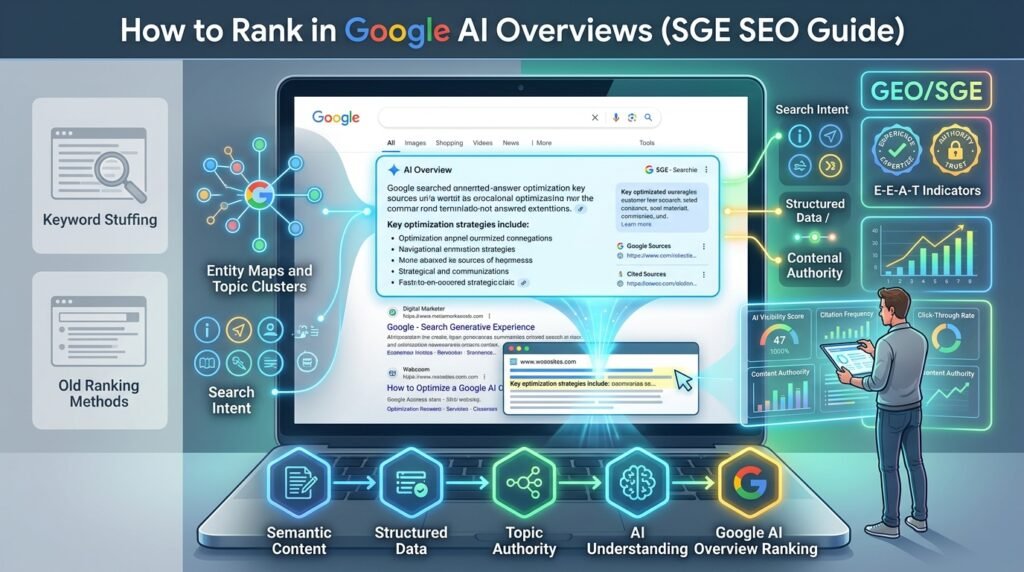
Introduction to Google AI Overviews and SGE SEO
As a digital marketing strategist and SEO consultant, I have witnessed the evolution of search engine optimization (SEO) over the years. With the advent of artificial intelligence (AI) and machine learning (ML), Google has transformed the way it processes and displays search results. One of the most significant developments in this regard is the introduction of Google AI Overviews, which has revolutionized the way we approach SEO. In this article, we will delve into the world of Google AI Overviews and SGE SEO, exploring the concepts, benefits, and strategies involved in ranking high in these AI-driven search results.
Google AI Overviews, also known as “summary” or “snippet” results, are concise summaries of content that appear at the top of search engine results pages (SERPs). These overviews are generated using AI and ML algorithms, which analyze the content of a webpage and extract the most relevant information to display in a concise and easily digestible format. The primary goal of Google AI Overviews is to provide users with quick and accurate answers to their search queries, without requiring them to click through to a website.
SGE SEO, on the other hand, refers to Search Engine Optimization strategies that are specifically designed to optimize content for Google AI Overviews. SGE SEO involves using advanced techniques and frameworks to create content that is not only relevant and high-quality but also optimized for AI-driven search results. The primary objective of SGE SEO is to increase the visibility and authority of a website by ranking high in Google AI Overviews, thereby driving more traffic and revenue.
To understand the significance of Google AI Overviews and SGE SEO, let’s consider an example. Suppose we are searching for “best Italian restaurants in New York City.” A traditional search result might display a list of websites with relevant content, requiring us to click through to each site to find the information we need. In contrast, a Google AI Overview might display a concise summary of the top-rated Italian restaurants in New York City, complete with ratings, reviews, and contact information. This not only saves time but also provides a more user-friendly experience.
The benefits of ranking high in Google AI Overviews are numerous. For one, it increases the visibility and credibility of a website, as users are more likely to trust content that appears at the top of search results. Additionally, Google AI Overviews can drive significant traffic to a website, as users are more likely to click through to a site that appears in the overview. Moreover, ranking high in Google AI Overviews can also improve the authority and trustworthiness of a website, as it is seen as a trusted source of information by Google.
So, how can you optimize your content for Google AI Overviews and SGE SEO? Here are some key strategies to consider:
- Conduct thorough keyword research: Identify relevant keywords and phrases that your target audience is searching for, and incorporate them into your content in a natural and organic way.
- Create high-quality, concise content: Use clear and concise language to convey complex information, and focus on providing value to the user.
- Optimize for entity-based search: Use entity-based optimization techniques, such as schema markup and entity-based keywords, to help Google understand the context and relevance of your content.
- Use AI-driven content generation tools: Leverage AI-driven content generation tools to create high-quality, optimized content that is tailored to specific search queries and user needs.
- Focus on user experience: Prioritize user experience and provide value to the user, as this is a key ranking factor in Google AI Overviews.
In conclusion, Google AI Overviews and SGE SEO are revolutionizing the way we approach search engine optimization. By understanding the concepts and strategies involved in ranking high in these AI-driven search results, businesses and marketers can increase their online visibility, drive more traffic and revenue, and establish themselves as authorities in their industry. In the next section, we will delve deeper into the world of SGE SEO, exploring advanced techniques and frameworks for optimizing content for Google AI Overviews.
As a digital marketing strategist and SEO consultant, I have worked with numerous clients to help them optimize their content for Google AI Overviews and SGE SEO. From e-commerce websites to blogs and news sites, the benefits of ranking high in Google AI Overviews are numerous and well-documented. By following the strategies outlined above and staying up-to-date with the latest developments in SGE SEO, businesses and marketers can stay ahead of the curve and achieve long-term success in the ever-evolving world of search engine optimization.
In the world of SEO, it’s essential to stay adaptable and responsive to changes in the search landscape. With the rise of Google AI Overviews and SGE SEO, businesses and marketers must be prepared to evolve their strategies and tactics to stay competitive. By prioritizing user experience, creating high-quality content, and leveraging AI-driven optimization techniques, businesses and marketers can increase their online visibility, drive more traffic and revenue, and establish themselves as authorities in their industry. Whether you’re a seasoned SEO professional or just starting out, the world of Google AI Overviews and SGE SEO offers a wealth of opportunities for growth, innovation, and success.
Understanding Google’s AI-Driven Algorithm and SGE
As a digital marketing strategist and SEO consultant, I have had the privilege of working with numerous brands to help them scale globally through advanced SEO frameworks and performance-driven digital strategies. In recent years, Google has made significant advancements in its algorithm, incorporating artificial intelligence (AI) to improve search results and provide users with more accurate and relevant information. This shift has led to the development of the Google AI algorithm, which plays a crucial role in determining search engine rankings. In this section, we will delve into the world of Google’s AI-driven algorithm and the concept of Search Genome Engineering (SGE), exploring how they impact search visibility and what strategies can be employed to optimize for these advancements.
The Google AI algorithm, also known as the “Google Brain,” utilizes machine learning and natural language processing to analyze and understand search queries, web pages, and user behavior. This sophisticated system enables Google to provide more personalized and relevant search results, taking into account factors such as user location, search history, and device usage. The AI-driven algorithm is constantly learning and improving, allowing it to better comprehend the nuances of language and the context of search queries.
Search Genome Engineering (SGE) is a concept that refers to the process of optimizing and engineering a website’s content, structure, and overall online presence to align with the Google AI algorithm’s understanding of the web. SGE involves analyzing and mapping the “genetic code” of a website, identifying areas of strength and weakness, and making targeted improvements to enhance search visibility and drive organic growth. By applying SGE principles, brands can increase their online authority, drive more targeted traffic, and ultimately boost revenue.
To illustrate the importance of SGE, consider a scenario where a user searches for “best Italian restaurants in New York City.” The Google AI algorithm will analyze the search query, taking into account factors such as the user’s location, search history, and device usage. The algorithm will then retrieve a list of relevant web pages, including restaurant websites, review sites, and blogs. However, the algorithm will also consider the “genetic code” of each website, including factors such as content quality, relevance, and user experience. By applying SGE principles, an Italian restaurant in New York City can optimize its website to rank higher in search results, driving more targeted traffic and increasing revenue.
Some key factors to consider when applying SGE principles include:
- Content quality and relevance: High-quality, relevant, and engaging content is essential for ranking in Google’s AI-driven algorithm. Brands should focus on creating content that provides value to users and addresses their specific needs and pain points.
- Technical optimization: Technical optimization, including factors such as page speed, mobile responsiveness, and SSL encryption, is critical for improving search visibility and user experience.
- Entity-based optimization: Entity-based optimization involves optimizing a website’s content and structure to align with the Google AI algorithm’s understanding of entities, including people, places, and things. This can be achieved through the use of schema markup, entity-based keywords, and high-quality, relevant content.
- User experience and behavior: User experience and behavior play a critical role in determining search rankings. Brands should focus on creating a positive user experience, including factors such as navigation, usability, and engagement.
By understanding the Google AI algorithm and applying SGE principles, brands can improve their search visibility, drive more targeted traffic, and increase revenue. However, it’s essential to note that SGE is a complex and ongoing process, requiring continuous monitoring, analysis, and optimization. As the Google AI algorithm continues to evolve, brands must stay ahead of the curve, adapting their strategies to align with the latest advancements and best practices.
In the next section, we will explore the concept of Generative Engine Optimization (GEO) and its role in driving organic growth and revenue. We will also discuss the importance of entity-based optimization, technical optimization, and user experience, providing actionable tips and strategies for brands to improve their search visibility and online authority.
Keyword Research and Optimization for Google AI Overviews
As a digital marketing strategist and SEO consultant, I have worked with numerous brands to help them scale globally through advanced SEO frameworks and performance-driven digital strategies. One crucial aspect of search engine optimization (SEO) is keyword research and optimization, which plays a vital role in ranking in Google AI overviews. In this section, we will delve into the world of keyword research and optimization, exploring the best practices and strategies to help you improve your website’s visibility in Google AI overviews.
Keyword research is the foundation of any successful SEO campaign. It involves identifying the most relevant and high-traffic keywords and phrases that your target audience uses to search for products or services like yours. When it comes to Google AI overviews, keyword research becomes even more critical. Google’s AI-powered algorithm uses natural language processing (NLP) to understand the context and intent behind a search query, making it essential to use keywords that are not only relevant but also contextual.
To conduct effective keyword research for Google AI overviews, you need to use a combination of tools and techniques. Some of the most popular keyword research tools include Google Keyword Planner, Ahrefs, SEMrush, and Moz Keyword Explorer. These tools provide valuable insights into search volume, competition, and suggested bid prices for your target keywords. Additionally, you can use techniques like brainstorming, customer surveys, and social media listening to identify keywords that are relevant to your business and target audience.
Once you have identified your target keywords, the next step is to optimize your website’s content and meta tags to improve your chances of ranking in Google AI overviews. This involves using your target keywords strategically throughout your website’s content, including the page title, meta description, headings, and body copy. However, it’s essential to use keywords naturally and avoid keyword stuffing, as this can lead to penalties from Google.
Here are some tips for optimizing your website’s content and meta tags for Google AI overviews:
- Use your target keywords in the page title, but make sure it’s descriptive, attention-grabbing, and under 60 characters.
- Write a compelling and informative meta description that includes your target keywords and is under 160 characters.
- Use header tags (H1, H2, H3, etc.) to structure your content and highlight your target keywords.
- Use your target keywords throughout the body copy, but aim for a keyword density of 1-2% to avoid keyword stuffing.
- Use latent semantic indexing (LSI) keywords to provide context and support your target keywords.
For example, let’s say you’re a fashion e-commerce brand, and your target keyword is “summer dresses.” You can optimize your website’s content and meta tags as follows:
Page Title: Summer Dresses – Shop Latest Fashion Trends
Meta Description: Discover the latest summer dresses at our online store. Shop from a wide range of fashion trends and get ready for the season.
Headings:
Introduction to Summer Dresses
Types of Summer Dresses
How to Style Summer Dresses
Body Copy: Summer dresses are a must-have for any fashion-conscious woman. Our collection of summer dresses includes a wide range of styles, from flowy sundresses to bodycon mini dresses. Whether you’re looking for a casual day dress or a dressy evening gown, we’ve got you covered. Shop our latest fashion trends and get ready for the summer season.
In addition to optimizing your website’s content and meta tags, you also need to focus on creating high-quality, engaging, and informative content that provides value to your target audience. Google’s AI-powered algorithm uses machine learning to evaluate the quality and relevance of your content, making it essential to use a content strategy that focuses on user experience and satisfaction.
Some tips for creating high-quality content for Google AI overviews include:
- Use a conversational tone that resonates with your target audience.
- Provide valuable insights, tips, and advice that educate and inform your target audience.
- Use visuals, such as images, videos, and infographics, to break up the content and make it more engaging.
- Optimize your content for voice search by using natural language and long-tail keywords.
- Use internal and external linking to provide context and support your content.
For example, let’s say you’re a health and wellness brand, and you want to create content around the topic of “fitness tips for beginners.” You can create a blog post that includes the following elements:
A conversational tone that resonates with beginners.
Valuable insights and tips that educate and inform beginners.
Visuals, such as images and videos, to demonstrate exercises and provide motivation.
Optimization for voice search by using natural language and long-tail keywords.
Internal and external linking to provide context and support the content.
By following these tips and strategies, you can improve your chances of ranking in Google AI overviews and increasing your website’s visibility, traffic, and revenue. Remember, keyword research and optimization are ongoing processes that require continuous monitoring and improvement. Stay up-to-date with the latest trends and best practices, and be prepared to adapt your strategy as Google’s algorithm continues to evolve.
In conclusion, keyword research and optimization are critical components of any successful SEO campaign, especially when it comes to Google AI overviews. By using the right tools and techniques, optimizing your website’s content and meta tags, and creating high-quality, engaging, and informative content, you can improve your website’s visibility, traffic, and revenue. As a digital marketing strategist and SEO consultant, I recommend that you focus on creating a comprehensive SEO strategy that includes keyword research, on-page optimization, technical SEO, link building, and content marketing. By doing so, you can stay ahead of the competition and achieve your digital marketing goals.
As Amit Tyagi, I have worked with numerous brands to help them scale globally through advanced SEO frameworks and performance-driven digital strategies. If you’re looking to improve your website’s visibility in Google AI overviews, I recommend that you start by conducting keyword research and optimizing your website’s content and meta tags. Additionally, focus on creating high-quality, engaging, and informative content that provides value to your target audience. By following these tips and strategies, you can improve your chances of ranking in Google AI overviews and achieving your digital marketing goals.
Content Creation and Optimization Strategies for SGE SEO
As a digital marketing strategist and SEO consultant, I have witnessed the evolution of search engine optimization and its increasing reliance on artificial intelligence. With the introduction of Google AI Overviews, also known as Search Generative Experience (SGE), the landscape of SEO has undergone a significant transformation. In this section, we will delve into the content creation and optimization strategies that can help you rank in Google AI Overviews and improve your website’s visibility in the SGE era.
To begin with, it’s essential to understand that SGE is not just a simple algorithm update, but a fundamental shift in how Google processes and presents search results. The AI-driven model uses natural language processing and machine learning to generate concise, informative, and engaging overviews of search results. This means that your content needs to be optimized not just for keywords, but for relevance, accuracy, and user experience.
So, what are the key content creation and optimization strategies for SGE SEO? Let’s break them down into the following categories:
- High-quality, engaging content: Your content should be well-researched, informative, and engaging. It should provide value to the user and answer their search query in a concise and accurate manner. Use a conversational tone and include relevant examples, anecdotes, and data to support your claims.
- Keyword research and optimization: While keyword research is still essential, it’s no longer just about targeting specific keywords. You need to understand the context, intent, and entities associated with your target keywords. Use tools like Google Keyword Planner, Ahrefs, or SEMrush to identify relevant keywords and phrases, and optimize your content accordingly.
- Entity-based optimization: Google’s AI model is designed to understand entities and their relationships. Use entity-based optimization techniques like mentioning relevant entities, using schema markup, and creating content that showcases your expertise and authority in a particular niche.
- Content format and structure: The format and structure of your content are crucial in SGE SEO. Use a clear, concise, and scannable format, with headings, subheadings, and bullet points. This will help Google’s AI model to understand the hierarchy and context of your content.
- Visual content and multimedia: Visual content like images, videos, and infographics can help to break up the text and provide an engaging user experience. Use high-quality, relevant images and optimize them with descriptive alt tags and captions.
Another critical aspect of SGE SEO is content freshness and relevance. Google’s AI model is designed to prioritize content that is up-to-date, relevant, and accurate. Regularly update your content to reflect changes in your industry, and use techniques like newsjacking and trending topics to increase your content’s relevance and visibility.
In addition to these strategies, it’s essential to optimize your website’s technical SEO. This includes ensuring that your website is mobile-friendly, has a fast page speed, and is secure (HTTPS). Use tools like Google PageSpeed Insights, GTmetrix, or Pingdom to identify technical SEO issues and optimize your website accordingly.
Finally, tracking and measuring your SGE SEO performance is crucial to understanding the effectiveness of your content creation and optimization strategies. Use tools like Google Analytics, Google Search Console, or Ahrefs to track your website’s traffic, engagement, and conversion rates. Monitor your keyword rankings, and adjust your strategies accordingly to improve your website’s visibility and performance in Google AI Overviews.
For example, let’s say you’re a fashion brand, and you want to rank for the keyword “summer dresses.” You could create a comprehensive guide to summer dresses, including sections on the latest trends, styling tips, and product recommendations. You could also optimize your product pages with relevant keywords, high-quality images, and customer reviews. By using these strategies, you can increase your website’s visibility and drive more traffic and sales.
In conclusion, ranking in Google AI Overviews requires a deep understanding of SGE SEO principles and a strategic approach to content creation and optimization. By focusing on high-quality, engaging content, keyword research and optimization, entity-based optimization, content format and structure, visual content and multimedia, content freshness and relevance, technical SEO, and tracking and measuring your performance, you can improve your website’s visibility and drive more traffic and revenue. As a digital marketing strategist and SEO consultant, I can help you develop a customized SGE SEO strategy that drives real results for your business.
To further illustrate the importance of SGE SEO, let’s consider the following example. Suppose you’re a healthcare provider, and you want to rank for the keyword “symptoms of diabetes.” You could create a comprehensive guide to diabetes symptoms, including sections on the causes, risk factors, and treatment options. You could also optimize your website with relevant keywords, meta tags, and structured data to help Google’s AI model understand the context and relevance of your content. By doing so, you can increase your website’s visibility and provide valuable information to users who are searching for symptoms of diabetes.
In addition to these examples, it’s essential to note that SGE SEO is a continuously evolving field, and what works today may not work tomorrow. As a digital marketing strategist and SEO consultant, I stay up-to-date with the latest developments and best practices in SGE SEO, and I can help you navigate the complexities of this rapidly changing landscape. Whether you’re a small business or a large enterprise, I can help you develop a customized SGE SEO strategy that drives real results and helps you achieve your online marketing goals.
Measuring and Optimizing SGE SEO Performance for Google AI Overviews
As a digital marketing strategist and SEO consultant, I have worked with numerous brands to help them scale globally through advanced SEO frameworks, Generative Engine Optimization (GEO), and performance-driven digital strategies. One of the key areas of focus for SEO professionals is measuring and optimizing SGE SEO performance for Google AI Overviews. In this section, we will delve into the importance of measuring and optimizing SGE SEO performance, and provide actionable tips and strategies for improving your website’s visibility in Google AI Overviews.
Google AI Overviews, also known as Google’s Summary or Overview, is a feature that provides users with a brief summary of a webpage’s content. This feature is powered by Google’s artificial intelligence (AI) algorithms, which analyze the content of a webpage and extract the most relevant and useful information. The goal of SGE SEO is to optimize your website’s content and structure to rank higher in Google AI Overviews, thereby increasing your website’s visibility and driving more traffic to your site.
To measure and optimize SGE SEO performance, you need to understand the key performance indicators (KPIs) that are relevant to Google AI Overviews. Some of the key KPIs to track include:
- Overview Impressions: This refers to the number of times your website’s overview is displayed in Google search results.
- Overview Click-Through Rate (CTR): This refers to the percentage of users who click on your website’s overview after seeing it in search results.
- Overview Conversion Rate: This refers to the percentage of users who complete a desired action (such as filling out a form or making a purchase) after clicking on your website’s overview.
By tracking these KPIs, you can gain insights into how your website is performing in Google AI Overviews and identify areas for improvement. For example, if your overview impressions are high but your CTR is low, it may indicate that your overview is not compelling or relevant enough to users. On the other hand, if your CTR is high but your conversion rate is low, it may indicate that your website’s content or user experience is not meeting the needs of users.
To optimize your SGE SEO performance, you need to focus on creating high-quality, relevant, and useful content that meets the needs of users. This includes:
- Conducting keyword research to identify relevant and high-traffic keywords
- Creating well-structured and easy-to-read content that provides value to users
- Optimizing your website’s meta tags, titles, and descriptions to accurately reflect your content
- Using header tags, bullet points, and other formatting elements to make your content more scannable and readable
- Internal and external linking to provide users with additional resources and information
For example, let’s say you are a fitness website that provides workout routines and nutrition advice. To optimize your SGE SEO performance, you could create high-quality content that provides users with useful and relevant information, such as a blog post on “10 Ways to Improve Your Running Performance.” You could also optimize your meta tags, titles, and descriptions to accurately reflect the content of your webpage, such as “Running Tips | Improve Your Running Performance | Fitness Advice.” By doing so, you can increase the visibility of your website in Google AI Overviews and drive more traffic to your site.
In addition to creating high-quality content, you also need to ensure that your website is technically sound and provides a good user experience. This includes:
- Ensuring that your website is mobile-friendly and responsive
- Optimizing your website’s page speed and loading times
- Using SSL encryption to secure your website and protect user data
- Providing a clear and easy-to-use navigation and information architecture
By focusing on these technical aspects, you can improve the overall user experience of your website and increase the likelihood of ranking higher in Google AI Overviews. For example, if your website is slow to load or difficult to navigate, users may be less likely to engage with your content or complete a desired action. On the other hand, if your website is fast, secure, and easy to use, users are more likely to have a positive experience and return to your site in the future.
Another important aspect of SGE SEO is to leverage the power of artificial intelligence (AI) and machine learning (ML) algorithms to optimize your content and improve your rankings. This includes:
- Using natural language processing (NLP) to analyze and optimize your content
- Utilizing machine learning algorithms to predict and optimize user behavior
- Integrating AI-powered tools and platforms to automate and streamline your SEO efforts
By leveraging AI and ML algorithms, you can gain a competitive edge in the search engine results pages (SERPs) and improve your SGE SEO performance. For example, you could use NLP to analyze and optimize your content for specific keywords and phrases, or use machine learning algorithms to predict and optimize user behavior on your website.
In conclusion, measuring and optimizing SGE SEO performance for Google AI Overviews requires a deep understanding of the key performance indicators and technical aspects that drive search engine rankings. By creating high-quality content, optimizing your website’s technical aspects, and leveraging the power of AI and ML algorithms, you can improve your website’s visibility and drive more traffic to your site. As a digital marketing strategist and SEO consultant, I have helped numerous brands achieve success in Google AI Overviews, and I am confident that by following these tips and strategies, you can achieve success as well.
As you continue to optimize and refine your SGE SEO strategy, it’s essential to stay up-to-date with the latest developments and trends in the field. This includes staying informed about changes to Google’s algorithms and features, as well as emerging trends and technologies that can impact your SEO efforts. By doing so, you can stay ahead of the competition and achieve long-term success in the ever-evolving landscape of search engine optimization.
Additionally, it’s crucial to remember that SGE SEO is a continuous process that requires ongoing effort and optimization. It’s not a one-time task, but rather an ongoing process that requires monitoring, analysis, and refinement. By committing to this process and staying focused on your goals, you can achieve significant improvements in your website’s visibility and drive more traffic and revenue to your site.
Finally, it’s essential to note that SGE SEO is not just about optimizing for Google AI Overviews, but also about providing value to your users. By creating high-quality content and providing a positive user experience, you can build trust and loyalty with your audience, which can lead to long-term success and growth. As a digital marketing strategist and SEO consultant, I always emphasize the importance of prioritizing user experience and value in SEO efforts, and I believe that this approach is essential for achieving success in Google AI Overviews and beyond.

Amit Tyagi is a seasoned Digital Marketing and SEO Consultant with extensive experience helping businesses improve online visibility through SEO, AI Search Optimization (AIO/GEO), content strategy, and performance marketing. He regularly shares practical insights, industry updates, and data-driven strategies, empowering brands and marketers to achieve sustainable digital growth in an evolving search landsca