
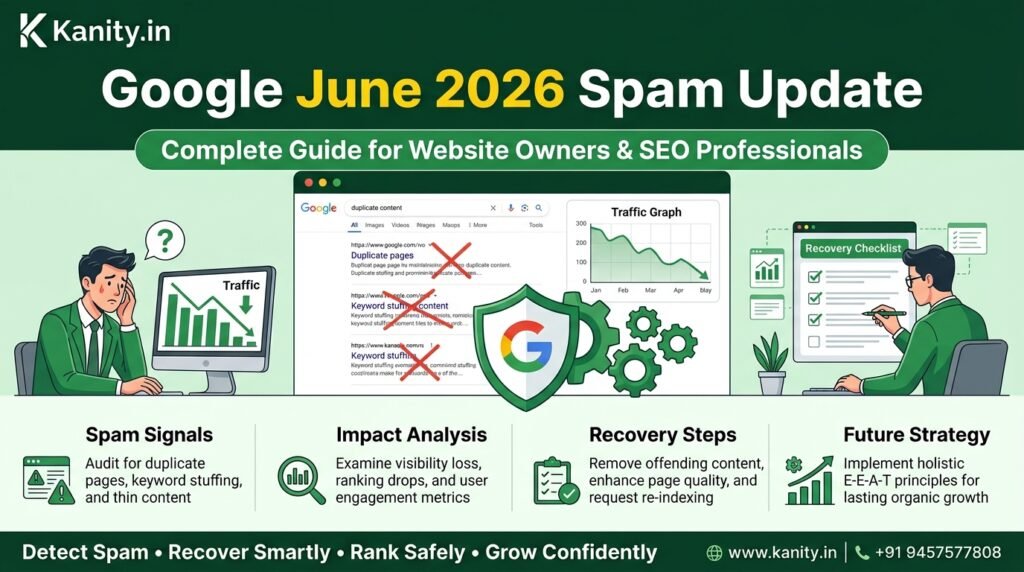
Introduction to the Google June 2026 Spam Update
The digital landscape is constantly evolving, and as a digital marketing strategist and SEO consultant, I have witnessed numerous updates that have shaped the way we approach search engine optimization. The latest development in this realm is the Google June 2026 Spam Update, a significant algorithmic change aimed at combating spam and improving the overall quality of search results. In this comprehensive guide, we will delve into the intricacies of this update, exploring its implications for website owners and SEO professionals alike.
Google’s primary objective has always been to provide users with the most relevant and accurate information possible. To achieve this, the search engine giant continually refines its algorithm to stay one step ahead of spammy tactics and low-quality content. The June 2026 Spam Update is a testament to this commitment, as it introduces new mechanisms to identify and penalize websites that engage in manipulative practices. As someone with over 15 years of experience in the field, I can attest that staying abreast of these updates is crucial for maintaining a strong online presence.
So, what exactly does the Google June 2026 Spam Update entail? In essence, this update is designed to target websites that exploit loopholes in the algorithm, using tactics such as keyword stuffing, link schemes, and cloaking. These practices not only undermine the user experience but also create an unfair advantage for websites that prioritize manipulation over quality content. By introducing more sophisticated spam detection mechanisms, Google aims to level the playing field and reward websites that focus on creating value-driven content and meaningful user experiences.
To understand the implications of this update, it is essential to examine the types of spam that Google is targeting. These include, but are not limited to:
- Keyword stuffing: The practice of artificially inflating keyword density to manipulate search rankings.
- Link schemes: The use of artificial links to manipulate PageRank and improve search visibility.
- Cloaking: The presentation of different content to users and search engines to deceive and manipulate rankings.
- Thin content: The creation of low-quality, shallow content that provides little value to users.
- Scraped content: The duplication of content from other sources without adding any significant value or insights.
These spammy tactics can have severe consequences for websites, including penalties, reduced search visibility, and even complete removal from search indexes. As a digital marketing strategist, I have seen numerous cases where websites have been affected by such practices, resulting in significant losses in terms of traffic, revenue, and brand reputation.
The Google June 2026 Spam Update serves as a reminder that SEO is not just about manipulating algorithms, but about creating high-quality content that resonates with users and provides genuine value. By focusing on user-centric approaches and adhering to best practices, website owners and SEO professionals can not only avoid penalties but also improve their online presence and drive sustainable growth. In the following sections, we will explore the update’s implications in more detail, discussing strategies for compliance, common pitfalls to avoid, and the role of AI-driven search visibility in the post-update landscape.
As we navigate the complexities of the Google June 2026 Spam Update, it is essential to recognize that SEO is a constantly evolving field. What works today may not work tomorrow, and it is crucial to stay informed about the latest developments and best practices. By doing so, we can ensure that our online presence remains strong, our content remains relevant, and our users continue to receive the best possible experience. In the next section, we will delve into the update’s key takeaways and what they mean for website owners and SEO professionals.
Understanding the Impact of the Google June 2026 Spam Update
The Google June 2026 Spam Update has sent shockwaves across the digital marketing landscape, leaving website owners and SEO professionals scrambling to understand its implications. As a digital marketing strategist and SEO consultant, I, Amit Tyagi, have been at the forefront of analyzing this update and its potential impact on online businesses. In this section, we will delve into the details of the update, its effects on search engine rankings, and what it means for website owners and SEO professionals.
First and foremost, it is essential to recognize that Google’s primary objective is to provide users with high-quality, relevant, and trustworthy search results. To achieve this, the search engine giant continually refines its algorithms to combat spam and low-quality content. The June 2026 Spam Update is the latest iteration of this effort, aimed at further enhancing the quality and credibility of search results.
The update focuses on identifying and penalizing websites that engage in manipulative practices, such as keyword stuffing, link schemes, and thin content. These tactics are designed to deceive search engines into ranking a website higher than it deserves, rather than providing genuine value to users. By targeting these practices, the update aims to promote a more transparent and user-centric search environment.
So, what does this update mean for website owners and SEO professionals? In the short term, it may lead to significant fluctuations in search engine rankings, particularly for websites that have relied on manipulative tactics. Ranking drops can be expected for websites that have engaged in spammy practices, while ranking increases can be anticipated for websites that have focused on creating high-quality, user-centric content.
For instance, let’s consider a website that has been using keyword stuffing to rank for a specific keyword. Prior to the update, this website may have been ranking on the first page of search results, despite providing little value to users. However, with the June 2026 Spam Update, this website is likely to experience a significant ranking drop, as Google’s algorithm becomes more adept at recognizing and penalizing such manipulative practices.
On the other hand, a website that has focused on creating high-quality, user-centric content is likely to benefit from the update. For example, a website that provides in-depth, well-researched, and engaging content on a specific topic may see its rankings increase, as Google’s algorithm recognizes its value and relevance to users.
To better understand the impact of the update, let’s examine some key factors that Google considers when evaluating a website’s quality and credibility:
- Content quality: Is the content well-researched, engaging, and informative? Does it provide genuine value to users?
- Link equity: Are the website’s backlinks from reputable, high-quality sources? Or are they from low-quality, spammy sources?
- Technical optimization: Is the website technically sound, with fast loading speeds, mobile-friendliness, and secure browsing (HTTPS)?
- User experience: Does the website provide a positive user experience, with easy navigation, clear calls-to-action, and minimal bounce rates?
By focusing on these factors, website owners and SEO professionals can ensure that their websites are well-positioned to benefit from the Google June 2026 Spam Update. In the next section, we will explore strategies for optimizing your website and improving its search engine rankings in the post-update landscape.
In conclusion, the Google June 2026 Spam Update is a significant development in the world of search engine optimization. By understanding its implications and focusing on creating high-quality, user-centric content, website owners and SEO professionals can navigate this update and improve their online visibility. As a digital marketing strategist and SEO consultant, I recommend that website owners and SEO professionals take a proactive approach to optimizing their websites, rather than relying on manipulative tactics that may ultimately harm their online presence.
Key Factors and Signals in the Google June 2026 Spam Update
The Google June 2026 Spam Update is a significant algorithmic change aimed at improving the overall quality of search results by reducing spam and low-quality content. As a digital marketing strategist and SEO consultant, I have been closely monitoring the impact of this update on various websites and SEO campaigns. In this section, we will delve into the key factors and signals that are driving this update, and what website owners and SEO professionals can do to adapt and thrive in this new landscape.
Google’s algorithm is constantly evolving, and the June 2026 Spam Update is no exception. This update is focused on identifying and penalizing websites that engage in spammy tactics, such as keyword stuffing, link schemes, and thin content. At the same time, it rewards websites that provide high-quality, relevant, and user-centric content. To understand the key factors and signals in this update, it’s essential to examine the underlying components that drive Google’s algorithm.
One of the primary signals in the Google June 2026 Spam Update is content quality. Google is now more than ever focused on rewarding websites that provide well-researched, engaging, and informative content that adds value to users. This means that website owners and SEO professionals must prioritize content creation that is both relevant and comprehensive. For instance, a website that provides a detailed and well-structured guide on a specific topic is more likely to rank higher than a website with thin or poorly written content.
Another crucial factor in the Google June 2026 Spam Update is link equity. Google has always placed a strong emphasis on links as a ranking signal, and this update is no exception. However, the focus is now on high-quality links from authoritative sources, rather than low-quality links from spammy websites. This means that website owners and SEO professionals must focus on building relationships with other reputable websites and earning links through high-quality content and outreach efforts. For example, a website that has earned links from reputable sources such as Forbes, Entrepreneur, or other industry-leading publications is more likely to be seen as authoritative and trustworthy by Google.
In addition to content quality and link equity, technical SEO is also a critical component of the Google June 2026 Spam Update. Google is now more than ever focused on rewarding websites that provide a seamless and efficient user experience. This includes factors such as page speed, mobile responsiveness, and SSL encryption. Website owners and SEO professionals must ensure that their websites are technically sound and provide a smooth user experience to avoid penalties and improve rankings. For instance, a website that loads quickly, is mobile-friendly, and has an SSL certificate is more likely to rank higher than a website that is slow, unresponsive, and lacks proper security measures.
To adapt to the Google June 2026 Spam Update, website owners and SEO professionals can take several steps. Here are some key takeaways:
- Focus on high-quality content creation: Prioritize content that is well-researched, engaging, and informative, and adds value to users.
- Build high-quality links: Focus on earning links from authoritative sources through high-quality content and outreach efforts.
- Optimize for technical SEO: Ensure that your website is technically sound, provides a seamless user experience, and is optimized for page speed, mobile responsiveness, and SSL encryption.
- Monitor and adjust: Continuously monitor your website’s performance and adjust your SEO strategy as needed to stay ahead of the competition.
- Stay up-to-date with the latest best practices: Stay informed about the latest SEO trends, best practices, and algorithmic updates to ensure that your website remains competitive and compliant with Google’s guidelines.
By understanding the key factors and signals in the Google June 2026 Spam Update, website owners and SEO professionals can take proactive steps to improve their website’s visibility, authority, and revenue. It’s essential to remember that SEO is a long-term strategy that requires ongoing effort, patience, and dedication. By prioritizing high-quality content, building high-quality links, optimizing for technical SEO, and staying up-to-date with the latest best practices, website owners and SEO professionals can thrive in this new landscape and achieve their online goals.
In conclusion, the Google June 2026 Spam Update is a significant algorithmic change that requires website owners and SEO professionals to adapt and evolve their SEO strategies. By understanding the key factors and signals driving this update, and taking proactive steps to improve content quality, link equity, and technical SEO, website owners and SEO professionals can improve their website’s visibility, authority, and revenue. As a digital marketing strategist and SEO consultant, I will continue to monitor the impact of this update and provide guidance and insights to help website owners and SEO professionals navigate this new landscape and achieve their online goals.
Strategies for Website Owners to Mitigate Risks and Leverage Opportunities
As a website owner, it is essential to stay up-to-date with the latest Google algorithm updates to ensure your online presence remains strong and competitive. The Google June 2026 Spam Update is no exception, and it is crucial to understand the implications of this update and how to mitigate potential risks. In this section, we will delve into the strategies that website owners can employ to not only minimize the impact of this update but also leverage the opportunities it presents.
The Google June 2026 Spam Update is designed to target and penalize websites that engage in spammy and manipulative practices, such as keyword stuffing, link schemes, and thin content. As a website owner, it is vital to ensure that your website is compliant with Google’s guidelines and best practices to avoid any potential penalties. One of the most effective ways to do this is to conduct a thorough website audit to identify and address any potential issues.
A website audit involves reviewing your website’s content, structure, and technical aspects to ensure that it meets Google’s standards. This includes checking for duplicate or thin content, broken links, and optimizing your website’s meta tags and titles. By conducting a website audit, you can identify and fix any potential issues that could be harming your website’s visibility and credibility.
Another strategy that website owners can employ is to focus on creating high-quality, user-centric content. This involves creating content that is informative, engaging, and relevant to your target audience. By creating high-quality content, you can increase your website’s authority and credibility, which can help to improve your search engine rankings and drive more traffic to your website. For example, if you are a fashion e-commerce website, you could create content around the latest fashion trends, styling tips, and product reviews. This type of content can help to attract and engage your target audience, increasing the chances of conversion and driving revenue.
In addition to creating high-quality content, website owners can also leverage the power of internal linking to improve their website’s structure and user experience. Internal linking involves linking to other relevant pages on your website to help users navigate and find the information they are looking for. This can also help to improve your website’s crawlability and indexability, making it easier for search engines to understand your website’s structure and content. For instance, if you have a blog post on summer fashion trends, you could link to other relevant pages on your website, such as a category page for summer clothing or a product page for a specific summer dress.
Furthermore, website owners can also use the Google June 2026 Spam Update as an opportunity to improve their website’s technical SEO. This involves optimizing your website’s technical aspects, such as page speed, mobile responsiveness, and SSL encryption, to improve your website’s user experience and search engine rankings. For example, you could use tools like Google PageSpeed Insights to identify areas for improvement and optimize your website’s images, scripts, and stylesheets to improve page load times. You could also ensure that your website is mobile-friendly by using responsive design and testing your website on different devices and browsers.
To mitigate risks and leverage opportunities, website owners can also focus on building high-quality backlinks from authoritative sources. This involves creating content that is linkable and shareable, such as infographics, videos, and podcasts, and reaching out to other websites and influencers in your niche to collaborate and build relationships. For instance, if you are a health and wellness website, you could create an infographic on the benefits of meditation and reach out to other health and wellness websites to share it and link back to your website. You could also participate in guest blogging and create high-quality, informative content for other websites in your niche, including a link back to your website in your author bio or within the content.
It is also essential for website owners to stay up-to-date with the latest Google algorithm updates and best practices. This involves following industry leaders and SEO experts, attending webinars and conferences, and participating in online communities and forums. By staying informed, you can stay ahead of the competition and ensure that your website remains compliant with Google’s guidelines and best practices. For example, you could follow SEO experts like Amit Tyagi on social media and attend webinars and conferences to learn about the latest trends and best practices in SEO.
In conclusion, the Google June 2026 Spam Update presents both risks and opportunities for website owners. By conducting a website audit, creating high-quality content, leveraging internal linking, improving technical SEO, building high-quality backlinks, and staying up-to-date with the latest best practices, website owners can mitigate potential risks and leverage the opportunities presented by this update. By following these strategies, you can improve your website’s visibility, credibility, and authority, driving more traffic and revenue to your website.
Some of the key takeaways for website owners include:
- Conducting a thorough website audit to identify and address potential issues
- Creating high-quality, user-centric content that is informative, engaging, and relevant to your target audience
- Leveraging internal linking to improve your website’s structure and user experience
- Improving technical SEO to optimize your website’s page speed, mobile responsiveness, and SSL encryption
- Building high-quality backlinks from authoritative sources to improve your website’s authority and credibility
- Staying up-to-date with the latest Google algorithm updates and best practices to stay ahead of the competition
By following these strategies and staying informed, website owners can ensure that their website remains competitive and visible in the search engine results pages (SERPs), driving more traffic and revenue to their website. As Amit Tyagi would recommend, it is essential to stay focused on creating high-quality content and improving your website’s technical SEO to leverage the opportunities presented by the Google June 2026 Spam Update.
Future-Proofing SEO Strategies Beyond the June 2026 Spam Update
As a seasoned digital marketing strategist and SEO consultant, I have witnessed numerous updates to Google’s algorithm, each designed to refine the search engine’s ability to deliver high-quality, relevant results to users. The June 2026 Spam Update is no exception, aiming to combat spam and low-quality content that can detract from the user experience. In this context, it is essential for website owners and SEO professionals to adapt and future-proof their SEO strategies to not only comply with the latest update but also to thrive in the evolving digital landscape.
The key to future-proofing SEO strategies lies in understanding the underlying principles that guide Google’s updates. At the core of these principles is the quest for high-quality, user-centric content that adds value to the online community. By focusing on quality over quantity, website owners can begin to build a solid foundation for their SEO efforts. This involves creating comprehensive, well-researched, and engaging content that addresses the needs and questions of the target audience.
Moreover, authority building is another critical aspect of future-proofing SEO strategies. Establishing a website as an authoritative source within its niche involves more than just creating high-quality content. It requires a multifaceted approach that includes building high-quality backlinks, leveraging social media platforms to increase visibility, and fostering a community around the brand. By doing so, website owners can signal to Google that their site is a trusted and reliable source of information, thereby improving its visibility in search results.
Another important consideration is technical SEO. Ensuring that a website is technically sound can significantly impact its performance in search results. This includes optimizing page speed, mobile responsiveness, and XML sitemaps, among other factors. A technically sound website not only improves the user experience but also facilitates easier crawling and indexing by search engines, leading to better visibility and ranking.
In addition to these foundational elements, Generative Engine Optimization (GEO) is emerging as a key strategy for future-proofing SEO efforts. GEO involves leveraging advanced technologies like AI and machine learning to optimize content and improve search visibility. By integrating GEO into their SEO frameworks, website owners can stay ahead of the curve and capitalize on the latest advancements in search technology.
For instance, a website owner in the healthcare industry could leverage GEO to create personalized content recommendations for users based on their search history and preferences. This not only enhances the user experience but also increases the relevance and value of the content, making it more likely to rank higher in search results.
Furthermore, performance-driven digital strategies play a crucial role in future-proofing SEO efforts. By focusing on metrics that matter, such as conversion rates, revenue, and return on investment (ROI), website owners can ensure that their SEO strategies are aligned with their business objectives. This involves tracking key performance indicators (KPIs), analyzing data, and making data-driven decisions to optimize and refine SEO efforts.
To illustrate this, consider a website owner who operates an e-commerce platform. By tracking KPIs such as average order value, cart abandonment rate, and customer retention rate, they can identify areas for improvement and optimize their SEO strategies accordingly. For example, they may discover that certain product pages have high bounce rates and low conversion rates, indicating a need to refine the content and user experience on those pages.
In conclusion, future-proofing SEO strategies beyond the June 2026 Spam Update requires a holistic approach that encompasses quality content, authority building, technical SEO, GEO, and performance-driven digital strategies. By understanding the underlying principles that guide Google’s updates and adapting to the evolving digital landscape, website owners and SEO professionals can not only comply with the latest update but also achieve long-term success and growth in the online space.
Some key takeaways for website owners and SEO professionals include:
- Focus on creating high-quality, user-centric content that adds value to the online community.
- Build authority by establishing a website as a trusted and reliable source of information within its niche.
- Ensure technical SEO best practices are in place to facilitate easier crawling and indexing by search engines.
- Leverage GEO to capitalize on the latest advancements in search technology and improve search visibility.
- Track key performance indicators and make data-driven decisions to optimize and refine SEO efforts.
By implementing these strategies and staying up-to-date with the latest developments in the SEO landscape, website owners and SEO professionals can future-proof their SEO efforts and achieve long-term success in the ever-evolving world of search.

Amit Tyagi is a seasoned Digital Marketing and SEO Consultant with extensive experience helping businesses improve online visibility through SEO, AI Search Optimization (AIO/GEO), content strategy, and performance marketing. He regularly shares practical insights, industry updates, and data-driven strategies, empowering brands and marketers to achieve sustainable digital growth in an evolving search landsca