
Introduction to Search Intent SEO
As a digital marketing strategist and SEO consultant, I have worked with numerous brands and businesses, helping them scale globally through advanced SEO frameworks and performance-driven digital strategies. With over 15 years of experience in the field, I have come to realize that one of the most critical aspects of Search Engine Optimization (SEO) is often overlooked, even by seasoned professionals: Search Intent SEO. In this section, we will delve into the world of Search Intent SEO, exploring its importance, and why most blogs fail to rank due to their inability to understand and cater to the search intent of their target audience.
Search Intent SEO refers to the practice of optimizing your website’s content to match the intent behind a user’s search query. It’s about understanding what the user is looking for, and providing them with relevant, high-quality content that satisfies their needs. This approach is crucial in today’s digital landscape, where users are becoming increasingly savvy, and search engines are evolving to prioritize user experience and relevance. By focusing on Search Intent SEO, you can increase your website’s visibility, drive more targeted traffic, and ultimately, boost your online revenue.
The concept of Search Intent SEO is not new, but its significance has grown exponentially in recent years, thanks to the rise of voice search, AI-powered search engines, and the increasing use of natural language processing (NLP) in search queries. As users become more comfortable with searching online, they are using more conversational language, and search engines are adapting to provide more accurate and relevant results. This shift has created a new challenge for SEO professionals, who must now prioritize understanding the intent behind a search query, rather than just focusing on keyword optimization.
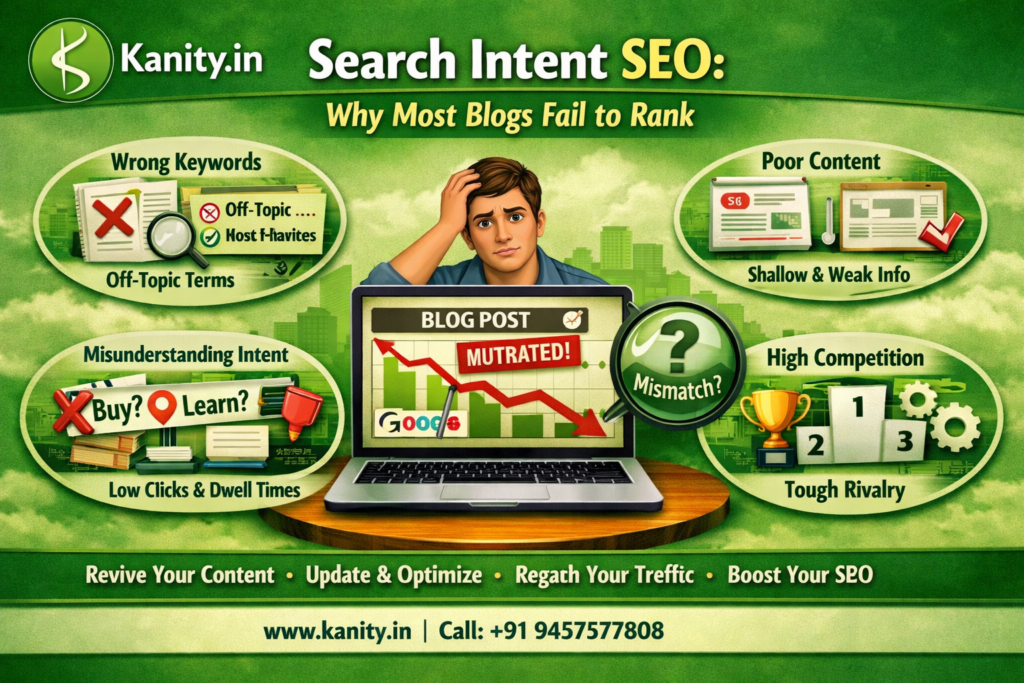
So, why do most blogs fail to rank, despite their best efforts? The answer lies in their inability to understand and cater to the search intent of their target audience. Many blogs focus solely on keyword optimization, without considering the underlying intent behind the search query. They may use tools like Google Keyword Planner or Ahrefs to identify relevant keywords, but they fail to analyze the intent behind those keywords. As a result, they create content that may be optimized for search engines, but fails to provide value to the user. This approach not only hurts the user experience but also leads to poor search engine rankings, as search engines prioritize content that is relevant, informative, and engaging.
For example, let’s consider a blog that wants to rank for the keyword “best coffee makers.” A traditional SEO approach would focus on optimizing the content with the keyword, without considering the intent behind the search query. However, a Search Intent SEO approach would analyze the intent behind the query, and identify that the user is likely looking for a list of top-rated coffee makers, along with their features, prices, and reviews. By understanding this intent, the blog can create content that provides a comprehensive guide to the best coffee makers, including their pros and cons, and helping the user make an informed decision. This approach not only increases the chances of ranking higher in search engines but also provides value to the user, establishing the blog as an authority in the niche.
To illustrate this concept further, let’s consider the following examples of search intent:
- Informational intent: The user is looking for information on a specific topic, such as “what is the best way to lose weight.” In this case, the content should provide informative and educational value, helping the user understand the topic and make an informed decision.
- Navigational intent: The user is looking for a specific website or webpage, such as “Facebook login.” In this case, the content should provide a clear and direct path to the desired destination, helping the user navigate to the desired page.
- Transactional intent: The user is looking to make a purchase or complete a transaction, such as “buy iPhone 13.” In this case, the content should provide a clear and seamless path to completion, helping the user make a purchase or complete the desired action.
By understanding these different types of search intent, you can create content that caters to the needs of your target audience, providing them with relevant, informative, and engaging content that satisfies their search intent. This approach not only increases your chances of ranking higher in search engines but also establishes your brand as an authority in the niche, driving more targeted traffic and boosting your online revenue.
In conclusion, Search Intent SEO is a critical aspect of modern SEO, and its importance cannot be overstated. By understanding the intent behind a search query, and creating content that caters to the needs of your target audience, you can increase your website’s visibility, drive more targeted traffic, and ultimately, boost your online revenue. In the next section, we will explore the different types of search intent in more detail, providing you with a deeper understanding of how to analyze and cater to the search intent of your target audience.
Understanding Search Intent Types
As a digital marketing strategist and SEO consultant, I have worked with numerous brands and blogs, helping them scale globally through advanced SEO frameworks and performance-driven digital strategies. One crucial aspect of search engine optimization (SEO) that I have found to be often overlooked is search intent. Understanding search intent types is essential to creating content that resonates with your target audience and ranks well on search engines. In this section, we will delve into the different types of search intent, their characteristics, and how to optimize your content to match each intent type.
Search intent refers to the reason behind a user’s search query. It is the purpose or goal that the user hopes to achieve by searching for a particular keyword or phrase. There are four primary types of search intent: informational, navigational, transactional, and commercial. Each type of search intent requires a unique approach to content creation and optimization.
Let’s explore each type of search intent in more detail, along with examples and explanations to help you better understand how to optimize your content for each intent type.
Informational Intent is the most common type of search intent. Users with informational intent are seeking information or answers to their questions. They may be researching a topic, looking for definitions, or trying to learn something new. Examples of informational intent searches include “what is SEO,” “how to start a blog,” or “benefits of meditation.” To optimize for informational intent, your content should be informative, engaging, and provide valuable insights or answers to the user’s question.
For instance, if you are writing a blog post about the benefits of meditation, you should provide detailed information on the topic, including statistics, research findings, and personal anecdotes. Your content should be well-structured, easy to read, and optimized with relevant keywords. By providing high-quality, informative content, you can establish your authority and expertise in the subject matter, increasing the chances of ranking well on search engines.
Navigational Intent occurs when users are searching for a specific website, brand, or entity. They may be looking for a particular company’s website, a social media platform, or a online store. Examples of navigational intent searches include “Facebook login,” “Amazon,” or “YouTube.” To optimize for navigational intent, your content should be focused on providing a clear and direct path to the user’s desired destination.
For example, if you are creating a website for a company, you should ensure that your website is easily accessible and navigable. Your website should have a clear and concise homepage, with easy-to-use menus and navigation bars. You should also optimize your website for relevant keywords, such as your company name, to help users find your website quickly and easily.
Transactional Intent is when users are searching for a product or service to purchase. They may be looking for a specific product, comparing prices, or reading reviews. Examples of transactional intent searches include “buy iPhone,” “best laptops under $1000,” or “book a hotel in New York.” To optimize for transactional intent, your content should be focused on providing a clear and compelling call-to-action, along with relevant product information and reviews.
For instance, if you are creating an e-commerce website, you should ensure that your product pages are optimized with relevant keywords, high-quality product images, and detailed product descriptions. You should also provide clear and easy-to-use calls-to-action, such as “buy now” or “add to cart,” to help users complete their purchase quickly and easily.
Commercial Intent is similar to transactional intent, but it is more focused on researching a product or service before making a purchase. Users with commercial intent may be comparing different products, reading reviews, or looking for recommendations. Examples of commercial intent searches include “best SEO tools,” “top web hosting services,” or “comparison of laptops.” To optimize for commercial intent, your content should be focused on providing valuable insights, comparisons, and recommendations to help users make an informed decision.
For example, if you are creating a blog post comparing different SEO tools, you should provide a detailed and unbiased comparison of each tool, including their features, pricing, and pros and cons. You should also provide recommendations and insights based on your expertise and experience, to help users make an informed decision and choose the best tool for their needs.
To optimize your content for each type of search intent, you should consider the following strategies:
- Conduct thorough keyword research to understand the search intent behind each keyword and phrase
- Create high-quality, engaging, and informative content that provides value to your target audience
- Use relevant keywords and phrases in your content, but avoid keyword stuffing and ensure that your content reads naturally
- Optimize your content with meta tags, titles, and descriptions to help search engines understand the context and purpose of your content
- Use internal and external linking to provide additional context and resources to your users, and to help search engines understand the structure and hierarchy of your website
- Monitor and analyze your website’s performance using tools like Google Analytics, to understand how users are interacting with your content and identify areas for improvement
By understanding the different types of search intent and optimizing your content accordingly, you can increase the chances of ranking well on search engines and providing value to your target audience. Remember, search intent is a crucial aspect of SEO, and it should be considered throughout the content creation and optimization process.
In conclusion, understanding search intent types is essential to creating content that resonates with your target audience and ranks well on search engines. By recognizing the different types of search intent and optimizing your content to match each intent type, you can establish your authority and expertise in your subject matter, increase your online visibility, and drive more traffic and revenue to your website. As a digital marketing strategist and SEO consultant, I have seen firsthand the impact that search intent can have on a website’s performance, and I highly recommend that you prioritize search intent in your SEO strategy.
Common Mistakes in Search Intent SEO
As a digital marketing strategist and SEO consultant, I have worked with numerous brands and blogs, helping them improve their search visibility and drive organic growth. However, I have noticed that many blogs fail to rank well in search engines, despite their best efforts. One of the primary reasons for this is the lack of understanding and implementation of search intent SEO. In this section, we will delve into the common mistakes that blogs make when it comes to search intent SEO, and provide examples and explanations to help you avoid these pitfalls.
Search intent SEO is a crucial aspect of search engine optimization, as it helps you understand the motivations and goals of your target audience. By understanding what your audience is searching for, you can create content that meets their needs and provides value to them. However, many blogs fail to grasp the concept of search intent, and as a result, their content falls flat. Let’s take a look at some of the common mistakes that blogs make when it comes to search intent SEO.
Not Understanding the Types of Search Intent
There are four main types of search intent: informational, navigational, transactional, and commercial. Informational search intent is when a user is searching for information on a particular topic, such as “what is the best way to lose weight.” Navigational search intent is when a user is searching for a specific website or webpage, such as “Facebook login.” Transactional search intent is when a user is searching for a product or service to buy, such as “buy iPhone 13.” Commercial search intent is when a user is searching for a product or service, but is not yet ready to buy, such as “best smartphones 2022.”
Many blogs fail to understand the different types of search intent and create content that does not meet the needs of their target audience. For example, if a user is searching for “how to start a blog,” they are likely looking for informational content, such as a step-by-step guide or a tutorial. However, if a blog provides a sales pitch or a promotional article, it will not meet the user’s needs and will likely result in a high bounce rate.
Not Conducting Keyword Research
Keyword research is a critical component of search intent SEO. By conducting keyword research, you can identify the keywords and phrases that your target audience is using to search for content like yours. However, many blogs fail to conduct thorough keyword research and end up targeting the wrong keywords. For example, if a blog is targeting the keyword “fitness,” they may end up competing with large brands and websites, such as Nike and Adidas. Instead, they could target long-tail keywords, such as “fitness for beginners” or “home workout routines,” which are less competitive and more targeted to their audience.
Not Creating Content That Meets the User’s Needs
Once you have identified the search intent and conducted keyword research, you need to create content that meets the user’s needs. This means creating content that is informative, engaging, and provides value to the user. However, many blogs fail to create content that meets the user’s needs and instead focus on promotional or sales-oriented content. For example, if a user is searching for “how to improve their writing skills,” they are likely looking for a tutorial or a guide that provides tips and advice. However, if a blog provides a sales pitch for a writing course or a promotional article, it will not meet the user’s needs and will likely result in a high bounce rate.
Not Optimizing Content for User Experience
User experience is a critical factor in search intent SEO. By optimizing your content for user experience, you can improve the engagement and conversion rates of your website. However, many blogs fail to optimize their content for user experience and instead focus on keyword stuffing and other SEO tactics. For example, if a blog has a slow loading speed or a poor mobile responsiveness, it will likely result in a high bounce rate and a poor user experience. On the other hand, if a blog has a fast loading speed, a clean design, and a user-friendly interface, it will likely result in a better user experience and higher engagement rates.
Some common mistakes that blogs make when it comes to optimizing content for user experience include:
- Not using header tags and subheadings to break up content
- Not using images and videos to enhance the user experience
- Not using internal and external linking to provide additional resources and information
- Not using a clear and concise writing style to communicate with the user
- Not using a responsive design to ensure that the website is accessible on all devices
By avoiding these common mistakes and creating content that meets the user’s needs, you can improve your search intent SEO and drive more traffic and conversions to your website. In the next section, we will delve into the best practices for search intent SEO and provide tips and strategies for creating content that meets the user’s needs and provides value to them.
In conclusion, search intent SEO is a critical aspect of search engine optimization, and many blogs fail to grasp the concept and implement it effectively. By understanding the types of search intent, conducting keyword research, creating content that meets the user’s needs, and optimizing content for user experience, you can improve your search intent SEO and drive more traffic and conversions to your website. Remember, the key to successful search intent SEO is to focus on the user and provide value to them, rather than just trying to rank for a particular keyword or phrase.
Advanced Search Intent Optimization Techniques
As a digital marketing strategist and SEO consultant, I have worked with numerous brands and blogs, helping them scale their online presence and drive revenue through advanced SEO frameworks. One crucial aspect of search engine optimization that is often overlooked is search intent optimization. Understanding the intent behind a user’s search query is vital to creating content that resonates with your target audience and ranks higher in search engine results pages (SERPs). In this section, we will delve into the world of advanced search intent optimization techniques, exploring the strategies and tactics that can help your blog stand out from the competition and drive meaningful results.
Search intent refers to the reason behind a user’s search query. It is the motivation or goal that drives them to search for something online. There are four primary types of search intent: informational, navigational, transactional, and commercial. Informational search intent is driven by a desire to learn or understand something, while navigational search intent is focused on finding a specific website or webpage. Transactional search intent is centered around making a purchase or taking a specific action, and commercial search intent is a mix of transactional and informational intent, where users are researching products or services with the intention of making a purchase in the future.
To optimize your content for search intent, you need to understand the nuances of each type and create content that aligns with the user’s goals. For example, if you are writing a blog post about “best SEO tools,” your content should cater to users with informational search intent, providing them with a comprehensive overview of the top SEO tools available, their features, and benefits. On the other hand, if you are creating a product page for an SEO tool, your content should be optimized for transactional search intent, highlighting the tool’s features, pricing, and testimonials to encourage users to make a purchase.
One advanced search intent optimization technique is to use long-tail keywords that are specific to a particular type of search intent. Long-tail keywords are phrases that have lower search volumes, but are also less competitive and more targeted to a specific search intent. For instance, instead of targeting the keyword “SEO tools,” you could target long-tail keywords like “best SEO tools for small businesses” or “SEO tools for keyword research.” These keywords have lower search volumes, but they are more specific to a particular type of search intent, making it easier to create content that resonates with your target audience.
Another technique is to use latent semantic indexing (LSI) keywords that are related to the primary keyword. LSI keywords are phrases that are semantically related to the primary keyword, and they can help search engines understand the context and intent of your content. For example, if you are writing a blog post about “SEO optimization,” some LSI keywords could be “search engine ranking,” “keyword research,” or “content marketing.” These keywords can help you create a more comprehensive and authoritative piece of content that covers all aspects of SEO optimization.
In addition to using long-tail and LSI keywords, you can also optimize your content for search intent by using structured data markup. Structured data markup is a way to provide search engines with additional context about your content, such as reviews, ratings, or prices. This can help search engines understand the intent behind your content and display it in a more prominent and relevant way in the SERPs. For instance, if you are creating a product page, you can use structured data markup to highlight the product’s price, reviews, and ratings, making it more visible and attractive to users with transactional search intent.
To further optimize your content for search intent, you can also use user experience (UX) signals that indicate how users interact with your content. UX signals can include metrics such as bounce rate, time on page, and conversion rate, which can help you understand how users are engaging with your content and whether it is meeting their needs. For example, if you notice that users are bouncing off your page quickly, it may indicate that your content is not relevant to their search intent, and you may need to revise your content to better align with their goals.
Some other advanced search intent optimization techniques include:
- Using entity-based optimization to create content that is centered around a specific entity, such as a person, place, or thing.
- Creating content clusters that are related to a specific topic or theme, and that can help search engines understand the context and intent of your content.
- Using natural language processing (NLP) techniques to analyze and understand the language and intent behind search queries.
- Optimizing your content for voice search by using natural language and long-tail keywords that are more conversational in nature.
By using these advanced search intent optimization techniques, you can create content that resonates with your target audience, drives meaningful results, and helps your blog stand out from the competition. Remember, search intent optimization is not just about targeting the right keywords, but also about understanding the nuances of user behavior and creating content that meets their needs and goals. As a digital marketing strategist and SEO consultant, I have seen firsthand the impact that search intent optimization can have on a blog’s visibility, authority, and revenue, and I highly recommend that you prioritize this aspect of SEO in your content marketing strategy.
Measuring and Improving Search Intent SEO Performance
As a digital marketing strategist and SEO consultant, I have worked with numerous brands and blogs, and one common issue that I have observed is the lack of understanding of search intent SEO. Many blogs fail to rank on search engines because they do not properly comprehend the intent behind their target audience’s searches. In this section, we will delve into the importance of measuring and improving search intent SEO performance, and provide actionable tips on how to achieve this.
Search intent SEO is a crucial aspect of search engine optimization, as it enables you to create content that resonates with your target audience and addresses their specific needs. When you understand the intent behind a search query, you can tailor your content to provide the most relevant and useful information, thereby increasing the chances of ranking higher on search engines. However, measuring and improving search intent SEO performance can be a daunting task, especially for those who are new to the world of SEO.
To start with, it is essential to understand the different types of search intent. There are four primary types of search intent: informational, navigational, transactional, and commercial. Informational search intent refers to searches where the user is looking for information on a particular topic. For example, if someone searches for “what is the best way to lose weight,” they are likely looking for informational content that provides tips and advice on weight loss. On the other hand, navigational search intent refers to searches where the user is trying to navigate to a specific website or webpage. For instance, if someone searches for “Facebook login,” they are likely trying to access their Facebook account.
Transactional search intent refers to searches where the user is looking to make a purchase or complete a transaction. For example, if someone searches for “buy iPhone 13,” they are likely looking to purchase the latest iPhone model. Finally, commercial search intent refers to searches where the user is looking for a product or service, but is not necessarily ready to make a purchase. For instance, if someone searches for “best SEO tools,” they are likely looking for information on different SEO tools, but may not be ready to buy one yet.
Once you understand the different types of search intent, you can start measuring your search intent SEO performance. One way to do this is by analyzing your website’s traffic and engagement metrics. You can use tools like Google Analytics to track your website’s traffic, bounce rate, and conversion rate. By analyzing these metrics, you can determine which types of content are resonating with your target audience and which ones are not. For example, if you notice that your informational content is driving a lot of traffic, but your transactional content is not converting well, you may need to adjust your content strategy to better align with your target audience’s search intent.
Another way to measure search intent SEO performance is by tracking your keyword rankings. You can use tools like Ahrefs or SEMrush to track your keyword rankings and monitor your progress over time. By tracking your keyword rankings, you can determine which keywords are driving the most traffic to your website and which ones are not. You can then use this information to adjust your content strategy and optimize your content for the most relevant keywords.
In addition to measuring search intent SEO performance, it is also essential to improve it. One way to do this is by creating high-quality, relevant content that addresses the specific needs of your target audience. You can use techniques like keyword research and topic modeling to create content that is optimized for the most relevant keywords and topics. For example, if you are a fitness blogger, you can create content that addresses the specific needs of people who are looking to lose weight or build muscle.
Another way to improve search intent SEO performance is by optimizing your website’s user experience. You can use techniques like page speed optimization, mobile-friendliness, and internal linking to improve your website’s user experience and increase engagement. For instance, if your website takes too long to load, you may lose visitors and decrease your chances of ranking higher on search engines. On the other hand, if your website is mobile-friendly and has a clear navigation structure, you can increase engagement and improve your search intent SEO performance.
Here are some additional tips to improve search intent SEO performance:
- Conduct thorough keyword research to identify the most relevant keywords and topics for your target audience.
- Create high-quality, relevant content that addresses the specific needs of your target audience.
- Optimize your website’s user experience by improving page speed, mobile-friendliness, and internal linking.
- Use techniques like topic modeling and entity-based optimization to create content that is optimized for the most relevant keywords and topics.
- Track your keyword rankings and monitor your progress over time to adjust your content strategy and optimize your content for the most relevant keywords.
- Use tools like Google Analytics and Ahrefs to track your website’s traffic and engagement metrics and determine which types of content are resonating with your target audience.
In conclusion, measuring and improving search intent SEO performance is crucial for any blog or website that wants to rank higher on search engines. By understanding the different types of search intent and measuring your search intent SEO performance, you can create high-quality, relevant content that addresses the specific needs of your target audience. Additionally, by optimizing your website’s user experience and tracking your keyword rankings, you can improve your search intent SEO performance and increase your chances of ranking higher on search engines. As a digital marketing strategist and SEO consultant, I have seen firsthand the impact that search intent SEO can have on a website’s traffic and revenue, and I highly recommend that all bloggers and website owners prioritize search intent SEO in their digital marketing strategy.
By following the tips outlined in this section, you can improve your search intent SEO performance and increase your chances of ranking higher on search engines. Remember, search intent SEO is a complex and ongoing process that requires continuous monitoring and optimization. However, with the right strategy and tools, you can create a robust search intent SEO framework that drives traffic, engagement, and revenue for your website. As you continue to optimize your search intent SEO performance, keep in mind that it is essential to stay up-to-date with the latest trends and best practices in SEO, and to continuously monitor and adjust your strategy to ensure that you are always providing the most relevant and useful content to your target audience.

Amit Tyagi is a seasoned Digital Marketing and SEO Consultant with extensive experience helping businesses improve online visibility through SEO, AI Search Optimization (AIO/GEO), content strategy, and performance marketing. He regularly shares practical insights, industry updates, and data-driven strategies, empowering brands and marketers to achieve sustainable digital growth in an evolving search landsca