
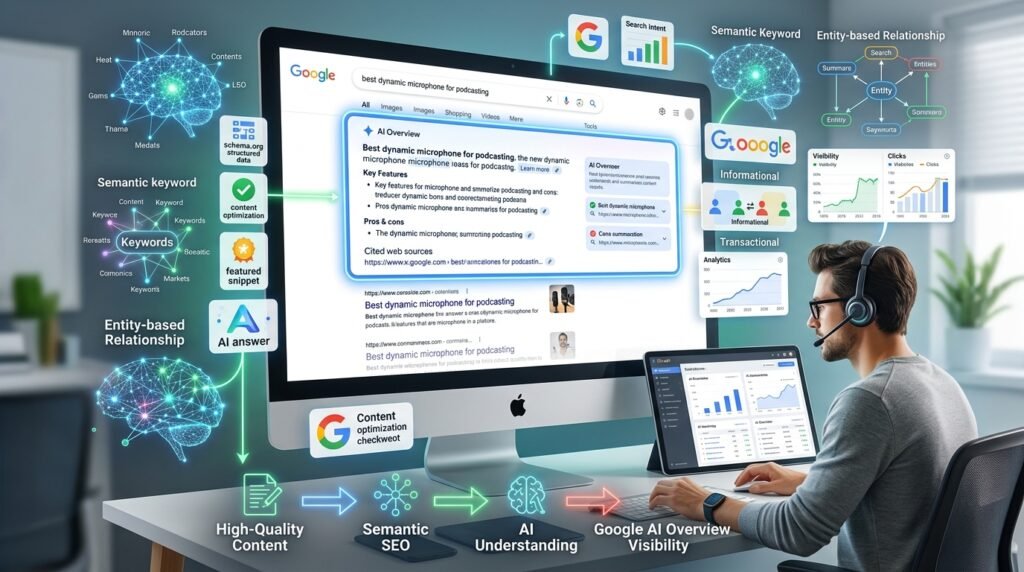
Introduction to Google AI Overview SEO
As a digital marketing strategist and SEO consultant, I have had the privilege of witnessing the evolution of search engine optimization (SEO) over the years. With the integration of Artificial Intelligence (AI) in Google’s algorithm, the landscape of SEO has undergone a significant transformation. In this section, we will delve into the world of Google AI Overview SEO, exploring its intricacies, benefits, and implications for businesses and digital marketers.
The term “Google AI Overview SEO” refers to the practice of optimizing website content and structure to rank higher in search engine results pages (SERPs) using AI-driven techniques and strategies. This approach leverages the capabilities of machine learning algorithms to analyze and understand user behavior, search patterns, and content relevance, enabling businesses to improve their online visibility, credibility, and revenue.
Google’s AI-powered algorithm, known as RankBrain, uses natural language processing (NLP) and machine learning to analyze search queries, identify relevant content, and rank web pages accordingly. This has led to a shift in the way SEO is approached, with a greater emphasis on creating high-quality, engaging, and informative content that resonates with users.
One of the key benefits of Google AI Overview SEO is its ability to provide personalized search results, taking into account the user’s search history, location, and device. This means that businesses can tailor their content and marketing strategies to specific audience segments, increasing the likelihood of conversion and revenue growth. For instance, a company that sells outdoor gear can use AI-driven SEO to target users who have searched for related keywords, such as “hiking boots” or “camping equipment,” and provide them with relevant product recommendations and content.
Another significant advantage of Google AI Overview SEO is its capacity to analyze and understand the context of search queries, enabling businesses to create content that addresses specific user needs and pain points. This can be achieved through the use of long-tail keywords, which are more specific phrases that have lower search volumes but are also less competitive. For example, a company that offers yoga classes can use long-tail keywords like “yoga classes for beginners” or “yoga classes near me” to attract users who are looking for specific types of classes.
To illustrate the effectiveness of Google AI Overview SEO, let’s consider the example of a company that sells eco-friendly products. By using AI-driven SEO techniques, such as entity-based optimization and semantic search, the company can create content that highlights the benefits of its products, such as “sustainable living” and “reducing carbon footprint.” This can help the company rank higher in search results for related keywords and attract users who are interested in eco-friendly products.
Some of the key strategies used in Google AI Overview SEO include:
- Entity-based optimization: This involves creating content that is centered around specific entities, such as people, places, and things, to help search engines understand the context and relevance of the content.
- Semantic search: This involves using natural language processing and machine learning algorithms to analyze search queries and identify relevant content, taking into account the meaning and context of the search terms.
- Latent semantic indexing: This involves using mathematical techniques to analyze the relationship between words and phrases in a document, and to identify the most relevant and authoritative content.
- Generative Engine Optimization (GEO): This involves using AI-powered tools to generate high-quality, engaging, and informative content that resonates with users and improves search engine rankings.
These strategies can be used in conjunction with traditional SEO techniques, such as keyword research and link building, to create a comprehensive and effective SEO strategy. By leveraging the power of AI and machine learning, businesses can improve their online visibility, credibility, and revenue, and stay ahead of the competition in an increasingly complex and dynamic digital landscape.
As a digital marketing strategist and SEO consultant, I have worked with numerous businesses to develop and implement AI-driven SEO strategies that drive real results. From improving search engine rankings and increasing website traffic, to enhancing brand credibility and revenue growth, the benefits of Google AI Overview SEO are numerous and significant. In the next section, we will explore the key concepts and techniques used in Google AI Overview SEO, and provide practical tips and examples for businesses and digital marketers looking to leverage the power of AI in their SEO efforts.
In conclusion, Google AI Overview SEO is a powerful and evolving field that offers numerous benefits and opportunities for businesses and digital marketers. By understanding the intricacies of AI-driven SEO and leveraging the latest techniques and strategies, businesses can improve their online visibility, credibility, and revenue, and stay ahead of the competition in an increasingly complex and dynamic digital landscape. Whether you are a seasoned digital marketer or just starting out, I encourage you to explore the world of Google AI Overview SEO and discover the many ways in which it can help you achieve your online goals and objectives.
With the rapid evolution of AI and machine learning, it’s essential to stay up-to-date with the latest developments and advancements in Google AI Overview SEO. As a digital marketing strategist and SEO consultant, I am committed to providing businesses and digital marketers with the latest insights, trends, and best practices in AI-driven SEO, and to helping them navigate the complex and ever-changing landscape of search engine optimization.
In the next section, we will delve deeper into the world of Google AI Overview SEO, exploring the key concepts, techniques, and strategies used in this field, and providing practical tips and examples for businesses and digital marketers looking to leverage the power of AI in their SEO efforts. So, let’s get started on this journey into the world of Google AI Overview SEO, and discover the many ways in which it can help you achieve your online goals and objectives.
As we move forward in this section, we will be exploring the following topics in more detail:
- The role of entity-based optimization in Google AI Overview SEO, and how it can be used to improve search engine rankings and online visibility.
- The importance of semantic search in understanding user intent and behavior, and how it can be used to create more effective SEO strategies.
- The benefits of Generative Engine Optimization (GEO) in creating high-quality, engaging, and informative content that resonates with users and improves search engine rankings.
- The impact of AI-driven SEO tools on the SEO landscape, and how they can be used to streamline and optimize SEO efforts.
By the end of this section, you will have a deeper understanding of the key concepts, techniques, and strategies used in Google AI Overview SEO, and will be equipped with the knowledge and skills needed to develop and implement effective AI-driven SEO strategies that drive real results.
Understanding Google’s AI-Powered Algorithm
As a digital marketing strategist and SEO consultant, I, Amit Tyagi, have had the privilege of witnessing the evolution of Google’s algorithm over the past 15 years. The latest development in this journey is the integration of Artificial Intelligence (AI) into the algorithm, which has significantly impacted the way search results are ranked and displayed. In this section, we will delve into the intricacies of Google’s AI-powered algorithm and explore its implications for search engine optimization (SEO).
The incorporation of AI into Google’s algorithm is a natural progression, given the vast amounts of data that the search engine processes every day. With over 40,000 search queries per second, Google’s algorithm needs to be intelligent and intuitive to provide users with the most relevant and accurate results. This is where AI comes into play, enabling the algorithm to learn from user behavior, adapt to new patterns, and improve its performance over time.
The AI-powered algorithm is based on a deep learning framework, which allows it to analyze complex data sets and identify relationships between different variables. This framework is comprised of multiple layers, each of which performs a specific function, such as data processing, feature extraction, and decision-making. The output of each layer is fed into the next layer, enabling the algorithm to refine its predictions and improve its accuracy.
One of the key benefits of Google’s AI-powered algorithm is its ability to understand natural language. This is achieved through the use of natural language processing (NLP) techniques, which enable the algorithm to analyze and interpret the nuances of human language. NLP allows the algorithm to identify the context and intent behind a search query, enabling it to provide more accurate and relevant results. For example, if a user searches for “best restaurants in New York,” the algorithm can use NLP to identify the location and intent behind the query, providing results that are tailored to the user’s needs.
Another significant advantage of the AI-powered algorithm is its ability to adapt to new patterns and trends. The algorithm can analyze large datasets and identify relationships between different variables, enabling it to predict user behavior and adjust its results accordingly. For instance, if a new trend emerges in the fashion industry, the algorithm can analyze social media data, search queries, and other online activity to identify the most relevant and popular topics, and adjust its results to reflect this new information.
The implications of Google’s AI-powered algorithm for SEO are significant. With the algorithm’s increased emphasis on natural language and user intent, SEO strategies need to evolve to keep pace. This means that SEO consultants and digital marketers need to focus on creating high-quality, user-centric content that addresses the needs and concerns of their target audience. Here are some key takeaways for SEO in the age of AI:
- Focus on user experience: The AI-powered algorithm is designed to provide users with the most relevant and accurate results. To rank higher in search engine results pages (SERPs), SEO consultants need to focus on creating a seamless user experience, with fast loading times, easy navigation, and high-quality content.
- Use natural language: The algorithm’s emphasis on NLP means that SEO consultants need to use natural language in their content, rather than relying on keyword stuffing and other outdated techniques. This includes using long-tail keywords and latent semantic indexing (LSI) to create content that is more nuanced and contextual.
- Optimize for voice search: The rise of voice search has significant implications for SEO, as users are increasingly using voice assistants like Siri, Google Assistant, and Alexa to search for information online. SEO consultants need to optimize their content for voice search, using natural language and long-tail keywords to improve their visibility in voice search results.
- Use data and analytics: The AI-powered algorithm is data-driven, and SEO consultants need to use data and analytics to inform their strategies. This includes using tools like Google Analytics and Search Console to track user behavior, identify trends, and refine their SEO strategies.
In conclusion, Google’s AI-powered algorithm represents a significant shift in the way search results are ranked and displayed. As a digital marketing strategist and SEO consultant, it is essential to understand the implications of this shift and adapt SEO strategies to keep pace. By focusing on user experience, using natural language, optimizing for voice search, and using data and analytics, SEO consultants can improve their visibility in search engine results pages and drive more traffic to their websites.
As we move forward in the age of AI, it is essential to stay up-to-date with the latest developments in Google’s algorithm and adjust our SEO strategies accordingly. This includes staying informed about the latest trends and best practices in SEO, attending industry conferences and workshops, and participating in online forums and discussions. By doing so, we can ensure that our SEO strategies remain effective and continue to drive results in an ever-changing landscape.
Furthermore, the integration of AI into Google’s algorithm also raises important questions about the future of SEO and the role of AI in digital marketing. As AI continues to evolve and improve, we can expect to see even more significant changes in the way search results are ranked and displayed. This may include the use of machine learning and deep learning techniques to analyze user behavior and personalize search results, as well as the integration of computer vision and natural language generation to create more immersive and engaging search experiences.
Ultimately, the key to success in the age of AI is to stay adaptable and agile, and to be willing to evolve and adjust our SEO strategies as the algorithm continues to change. By doing so, we can ensure that our websites remain visible and relevant, and that we continue to drive traffic and revenue in an ever-changing landscape. As a digital marketing strategist and SEO consultant, I am excited to see the opportunities and challenges that the future of AI-powered search will bring, and I look forward to helping my clients navigate this complex and rapidly evolving landscape.
Optimizing for Google AI with Generative Engine Optimization (GEO)
As a digital marketing strategist and SEO consultant, I have witnessed firsthand the significant impact that Google AI has had on the search landscape. With the rapid evolution of artificial intelligence and machine learning, it is essential for brands to adapt their SEO strategies to stay ahead of the curve. One approach that has gained significant attention in recent years is Generative Engine Optimization (GEO), a methodology that focuses on optimizing content for Google’s AI-powered algorithms. In this section, we will delve into the world of GEO and explore how it can help brands improve their search visibility and authority.
Google’s AI-powered algorithms are designed to understand the context and intent behind a user’s search query, providing more accurate and relevant results. However, this also means that traditional SEO techniques may no longer be effective, as the algorithms are now capable of detecting and penalizing manipulative tactics. This is where GEO comes in – by focusing on creating high-quality, user-centric content that is optimized for Google’s AI algorithms, brands can improve their search rankings and drive more traffic to their website.
So, how does GEO work? The process involves a deep understanding of Google’s AI algorithms and how they evaluate content. This includes factors such as natural language processing, entity recognition, and semantic search. By optimizing content for these factors, brands can increase their chances of ranking higher in search results and driving more traffic to their website. For example, a brand that sells outdoor gear may use GEO to optimize their content for search queries such as “best hiking boots for trails” or “waterproof jackets for camping”. By using natural language processing and entity recognition, the brand can create content that is more relevant and useful to users, increasing their chances of ranking higher in search results.
One of the key benefits of GEO is its ability to help brands build authority and establish trust with their target audience. By creating high-quality, user-centric content that is optimized for Google’s AI algorithms, brands can demonstrate their expertise and thought leadership in their industry. This can lead to increased brand visibility, improved search rankings, and higher conversion rates. For instance, a brand that specializes in health and wellness may use GEO to create content that is optimized for search queries such as “benefits of meditation” or “importance of nutrition”. By providing valuable and informative content, the brand can establish itself as a trusted authority in the health and wellness space, driving more traffic and sales to their website.
Another important aspect of GEO is its focus on user experience and content relevance. Google’s AI algorithms are designed to evaluate the user experience of a website, taking into account factors such as page speed, mobile responsiveness, and content quality. By optimizing for these factors, brands can improve their search rankings and drive more traffic to their website. For example, a brand that sells e-commerce products may use GEO to optimize their website for mobile responsiveness, ensuring that users can easily navigate and purchase products on their mobile devices. This can lead to increased conversion rates, improved user engagement, and higher search rankings.
To implement GEO effectively, brands need to have a deep understanding of their target audience and the search queries they use. This involves conducting keyword research and competitor analysis to identify gaps in the market and opportunities for growth. Brands can then use this information to create high-quality, user-centric content that is optimized for Google’s AI algorithms. For instance, a brand that specializes in financial services may use keyword research to identify search queries such as “best investment strategies” or “how to save for retirement”. By creating content that is optimized for these search queries, the brand can drive more traffic to their website and establish itself as a trusted authority in the financial services space.
Some of the key strategies for implementing GEO include:
- Content optimization: This involves optimizing content for Google’s AI algorithms, taking into account factors such as natural language processing, entity recognition, and semantic search.
- Keyword research: This involves conducting keyword research to identify gaps in the market and opportunities for growth, and using this information to create high-quality, user-centric content.
- Competitor analysis: This involves analyzing competitors to identify their strengths and weaknesses, and using this information to create content that is more relevant and useful to users.
- Technical optimization: This involves optimizing the technical aspects of a website, such as page speed and mobile responsiveness, to improve the user experience and drive more traffic to the website.
- Link building: This involves building high-quality backlinks from authoritative sources to increase the authority and trust of a website, and drive more traffic to the website.
By implementing these strategies, brands can improve their search visibility, establish trust with their target audience, and drive more traffic to their website. GEO is a powerful approach that can help brands stay ahead of the curve in the rapidly evolving search landscape, and it is an essential component of any digital marketing strategy. As a digital marketing strategist and SEO consultant, I have seen firsthand the impact that GEO can have on a brand’s search visibility and authority, and I highly recommend it to any brand looking to improve their online presence.
In conclusion, GEO is a powerful approach that can help brands optimize their content for Google’s AI-powered algorithms and improve their search visibility and authority. By focusing on creating high-quality, user-centric content that is optimized for Google’s AI algorithms, brands can establish themselves as trusted authorities in their industry, drive more traffic to their website, and increase their conversion rates. Whether you are a seasoned digital marketer or just starting out, GEO is an essential component of any digital marketing strategy, and it is an approach that I highly recommend.
Advanced SEO Strategies for Google AI-Driven Search
As a digital marketing strategist and SEO consultant, I have witnessed the evolution of search engines and their algorithms over the years. With the integration of Artificial Intelligence (AI) in Google’s search engine, the landscape of Search Engine Optimization (SEO) has undergone a significant transformation. Google AI-driven search has become more sophisticated, and businesses need to adapt their SEO strategies to stay ahead of the competition. In this section, we will explore the advanced SEO strategies that can help you optimize your website for Google AI-driven search and improve your online visibility.
The primary goal of Google AI-driven search is to provide users with the most relevant and accurate results. To achieve this, Google uses machine learning algorithms that analyze a vast amount of data, including user behavior, search queries, and website content. These algorithms can understand the context and intent behind a search query, allowing Google to deliver more personalized and relevant results. As a result, businesses need to focus on creating high-quality, user-centric content that addresses the needs and concerns of their target audience.
One of the key strategies for optimizing your website for Google AI-driven search is to use natural language processing (NLP) techniques. NLP is a subset of AI that deals with the interaction between computers and humans in natural language. By using NLP techniques, you can create content that is more conversational and engaging, making it easier for users to find and understand. For example, instead of using keyword-stuffed titles and meta descriptions, you can use more descriptive and attention-grabbing headlines that accurately reflect the content of your webpage.
Another important strategy is to focus on entity-based optimization. Entities refer to people, places, things, and concepts that are mentioned in your content. By optimizing your content around specific entities, you can help Google understand the context and relevance of your webpage. For instance, if you are a fashion brand, you can create content that mentions specific designers, fashion trends, or styles, making it easier for users to find your webpage when searching for related topics.
In addition to NLP and entity-based optimization, it is essential to use structured data to provide search engines with more information about your webpage. Structured data, also known as schema markup, is a way to annotate your HTML code with specific tags that describe the content of your webpage. By using structured data, you can help Google understand the context and relevance of your webpage, making it more likely to appear in search results. For example, you can use schema markup to indicate that a webpage is a review, a recipe, or an event, providing users with more information and making your webpage more discoverable.
Furthermore, technical SEO plays a crucial role in optimizing your website for Google AI-driven search. Technical SEO refers to the process of optimizing your website’s infrastructure and architecture to improve its crawlability, indexability, and overall performance. This includes optimizing your website’s loading speed, mobile responsiveness, and internal linking structure. By ensuring that your website is technically sound, you can help Google’s algorithms crawl and index your webpage more efficiently, making it more likely to appear in search results.
To implement these advanced SEO strategies, you need to have a deep understanding of your target audience and their search behavior. You can use tools like Google Analytics and Google Search Console to analyze your website’s traffic and search data, providing you with valuable insights into your audience’s needs and preferences. Additionally, you can use tools like Ahrefs and SEMrush to analyze your competitors’ websites and identify gaps in the market that you can capitalize on.
Here are some key takeaways to keep in mind when optimizing your website for Google AI-driven search:
- Focus on creating high-quality, user-centric content that addresses the needs and concerns of your target audience.
- Use natural language processing (NLP) techniques to create more conversational and engaging content.
- Optimize your content around specific entities to help Google understand the context and relevance of your webpage.
- Use structured data to provide search engines with more information about your webpage.
- Ensure that your website is technically sound by optimizing its infrastructure and architecture.
- Use tools like Google Analytics and Google Search Console to analyze your website’s traffic and search data.
- Stay up-to-date with the latest developments in Google AI-driven search and adjust your SEO strategies accordingly.
By following these advanced SEO strategies, you can improve your website’s visibility and ranking in Google AI-driven search results. Remember, SEO is a constantly evolving field, and it is essential to stay ahead of the curve by adapting to the latest developments and trends. As a digital marketing strategist and SEO consultant, I can help you develop and implement a customized SEO strategy that meets your business needs and goals.
In conclusion, optimizing your website for Google AI-driven search requires a deep understanding of the latest SEO strategies and techniques. By focusing on user-centric content, NLP, entity-based optimization, structured data, and technical SEO, you can improve your website’s visibility and ranking in search results. Remember to stay up-to-date with the latest developments in Google AI-driven search and adjust your SEO strategies accordingly. With the right approach and expertise, you can stay ahead of the competition and drive more traffic and revenue to your website.
Measuring Success and Future-Proofing SEO Strategies with Google AI
As a digital marketing strategist and SEO consultant, I have seen the landscape of search engine optimization evolve significantly over the years. With the advent of Google AI, the game has changed dramatically, and it is imperative for businesses to adapt and future-proof their SEO strategies. In this section, we will delve into the world of Google AI and explore how it can be leveraged to measure success and drive organic growth.
Google AI, also known as Google’s artificial intelligence system, is a complex network of algorithms and machine learning models that power the search engine’s core functions. From understanding natural language to recognizing patterns in user behavior, Google AI is the backbone of the search engine’s ability to deliver relevant and personalized results. As such, it is crucial for businesses to understand how Google AI works and how it can be harnessed to improve their online visibility and authority.
One of the primary ways to measure success in Google AI-driven SEO is by tracking key performance indicators (KPIs) such as organic traffic, engagement metrics, and conversion rates. By analyzing these metrics, businesses can gain valuable insights into how their content is performing and make data-driven decisions to optimize their strategies. For instance, if a business notices a significant increase in organic traffic after implementing a new content marketing strategy, it may indicate that the strategy is effective and should be scaled up.
Another critical aspect of future-proofing SEO strategies with Google AI is to focus on creating high-quality, user-centric content that resonates with the target audience. Google AI is designed to understand the nuances of human language and behavior, and it can detect when content is shallow, irrelevant, or overly optimized for search engines. By creating content that is informative, engaging, and tailored to the needs of the target audience, businesses can increase their chances of ranking higher in search engine results pages (SERPs) and driving more organic traffic to their websites.
Some examples of user-centric content that can perform well in Google AI-driven SEO include:
- Blog posts that provide in-depth analysis and insights on industry topics
- Infographics that visualize complex data and trends
- Videos that offer tutorials, product demonstrations, or thought leadership perspectives
- Podcasts that feature interviews with industry experts or thought leaders
- E-books and whitepapers that provide comprehensive guides to solving specific problems or achieving particular goals
In addition to creating high-quality content, businesses should also focus on building a strong online authority by establishing a robust presence on social media, review sites, and other relevant platforms. Google AI takes into account a wide range of signals when evaluating a business’s online authority, including its social media engagement, review ratings, and mentions in reputable publications. By building a strong online presence and engaging with the target audience, businesses can increase their visibility, credibility, and trustworthiness, which can ultimately drive more organic traffic and revenue.
Furthermore, businesses should stay up-to-date with the latest developments in Google AI and adjust their SEO strategies accordingly. For instance, Google’s recent introduction of the BERT algorithm, which is designed to better understand natural language and context, has significant implications for businesses that rely on keyword-based SEO strategies. By staying ahead of the curve and adapting to changes in Google AI, businesses can avoid being left behind and ensure that their SEO strategies remain effective and future-proof.
Some best practices for future-proofing SEO strategies with Google AI include:
- Conducting thorough keyword research to identify relevant and high-traffic search terms
- Creating content that is optimized for voice search and natural language queries
- Building high-quality backlinks from authoritative sources to increase online authority
- Optimizing website structure and user experience to improve engagement metrics and conversion rates
- Staying up-to-date with the latest developments in Google AI and adjusting SEO strategies accordingly
In conclusion, measuring success and future-proofing SEO strategies with Google AI requires a deep understanding of how the search engine’s artificial intelligence system works and how it can be leveraged to drive organic growth. By tracking key performance indicators, creating high-quality user-centric content, building a strong online authority, and staying ahead of the curve with the latest developments in Google AI, businesses can increase their online visibility, credibility, and revenue, and stay ahead of the competition in an increasingly complex and dynamic digital landscape.
As a digital marketing strategist and SEO consultant, I have worked with numerous businesses to help them scale globally through advanced SEO frameworks, Generative Engine Optimization (GEO), and performance-driven digital strategies. By leveraging the power of Google AI and staying focused on user-centric content and online authority, businesses can achieve remarkable results and drive long-term growth and success. Whether you are a small business or a large enterprise, it is essential to prioritize Google AI-driven SEO and make it a core component of your digital marketing strategy.
By doing so, you can unlock the full potential of your online presence, drive more organic traffic and revenue, and establish your business as a leader in your industry. With the right approach and expertise, you can harness the power of Google AI to achieve remarkable results and stay ahead of the competition in an increasingly complex and dynamic digital landscape. As we move forward in this rapidly evolving landscape, it is crucial to stay focused on the future and prioritize strategies that drive long-term growth and success.

Amit Tyagi is a seasoned Digital Marketing and SEO Consultant with extensive experience helping businesses improve online visibility through SEO, AI Search Optimization (AIO/GEO), content strategy, and performance marketing. He regularly shares practical insights, industry updates, and data-driven strategies, empowering brands and marketers to achieve sustainable digital growth in an evolving search landsca