
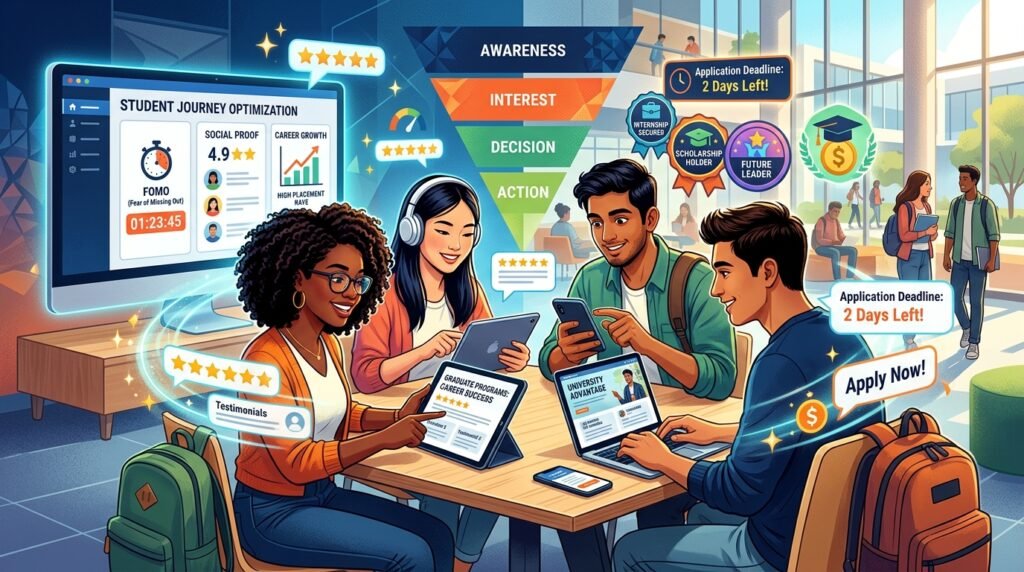
Introduction to Student Psychology in Digital Marketing
As a digital marketing strategist, I have come to realize that understanding the psychology of our target audience is crucial for crafting effective marketing campaigns. In the context of student psychology in digital marketing, this understanding becomes even more critical. Students, as a demographic, are known for their tech-savviness, short attention spans, and constant exposure to information. To effectively reach and engage with students, digital marketers must delve into the intricacies of student psychology and develop strategies that resonate with their unique needs, preferences, and behaviors.
With over 15 years of experience in the field, I have had the opportunity to work with numerous educational institutions, brands, and organizations that cater to students. Through my work, I have gained valuable insights into the psychological factors that drive student behavior, decision-making, and ultimately, conversion. In this section, we will explore the concept of student psychology in digital marketing, its significance, and the key psychological factors that influence student behavior online.
The concept of student psychology in digital marketing is rooted in the idea that students, as a distinct demographic, exhibit unique psychological characteristics that set them apart from other age groups. These characteristics are shaped by their stage of life, social environment, and the challenges they face as students. By understanding these psychological factors, digital marketers can develop targeted strategies that speak to students’ needs, concerns, and motivations, thereby increasing the likelihood of conversion.
So, what are the key psychological factors that influence student behavior online? Self-expression, social identity, and the desire for autonomy are just a few of the factors that play a significant role in shaping student behavior. Students, particularly those in the Gen Z and Millennial age groups, are known for their strong desire for self-expression and individuality. They use social media platforms, blogs, and other online channels to express themselves, showcase their personalities, and connect with like-minded individuals.
Another critical factor is social proof. Students, like many other demographic groups, are heavily influenced by social proof, which refers to the tendency to adopt behaviors or attitudes based on the actions of others. In the context of digital marketing, social proof can take many forms, including customer testimonials, reviews, ratings, and user-generated content. By incorporating social proof into their marketing campaigns, brands can build trust, credibility, and social validation, all of which are essential for converting students into customers.
In addition to self-expression, social identity, and social proof, emotional connections also play a significant role in student psychology. Students, particularly those who are pursuing higher education, often experience a range of emotions, including anxiety, stress, and uncertainty. By creating emotional connections with students, brands can establish a deep sense of empathy, understanding, and rapport, which can ultimately drive conversion.
For instance, a brand that offers educational resources, such as online courses, tutorials, or study guides, can create an emotional connection with students by acknowledging their struggles, offering support, and providing solutions to their problems. By doing so, the brand can establish itself as a trusted authority, a supportive partner, and a valuable resource, all of which can contribute to increased conversion rates.
To illustrate this point further, let’s consider an example. Suppose a company that offers online tutoring services wants to reach out to students who are struggling with math. Instead of simply promoting their services, the company could create a series of videos, blog posts, or social media posts that acknowledge the challenges of learning math, offer words of encouragement, and provide tips and strategies for overcoming common obstacles. By doing so, the company can create an emotional connection with students, establish trust, and position itself as a supportive partner in the learning process.
Furthermore, personalization is another critical factor in student psychology. Students, like many other demographic groups, are more likely to engage with content, offers, or services that are tailored to their individual needs, interests, and preferences. By using data analytics, machine learning algorithms, and other technologies, brands can create personalized experiences that speak to students’ unique needs, thereby increasing the likelihood of conversion.
For example, a brand that offers educational products, such as textbooks, e-books, or online courses, can use data analytics to create personalized recommendations based on students’ browsing history, search queries, or purchase behavior. By doing so, the brand can increase the relevance, value, and appeal of its offerings, which can ultimately drive conversion.
In addition to personalization, gamification is another strategy that can be used to engage students and drive conversion. Gamification refers to the use of game design elements, such as points, badges, leaderboards, or challenges, to encourage engagement, participation, or desired behaviors. By incorporating gamification into their marketing campaigns, brands can create interactive, immersive, and enjoyable experiences that resonate with students’ love of games, competition, and social interaction.
For instance, a brand that offers educational resources, such as online courses or tutorials, can create a gamified experience by offering rewards, recognition, or incentives for completing courses, achieving milestones, or demonstrating mastery of specific skills. By doing so, the brand can increase engagement, motivation, and participation, all of which can contribute to increased conversion rates.
In conclusion, understanding student psychology is critical for developing effective digital marketing campaigns that resonate with students’ unique needs, preferences, and behaviors. By incorporating strategies such as self-expression, social proof, emotional connections, personalization, and gamification into their marketing campaigns, brands can increase the likelihood of conversion, drive revenue growth, and establish a strong presence in the education sector.
Some of the key takeaways from this section include:
- Understanding student psychology is crucial for developing effective digital marketing campaigns that resonate with students’ unique needs, preferences, and behaviors.
- Self-expression, social identity, and the desire for autonomy are key psychological factors that influence student behavior online.
- Social proof, emotional connections, personalization, and gamification are critical strategies for engaging students and driving conversion.
- Brands can create personalized experiences, offer rewards and recognition, and use data analytics to increase the relevance, value, and appeal of their offerings.
- By incorporating these strategies into their marketing campaigns, brands can increase the likelihood of conversion, drive revenue growth, and establish a strong presence in the education sector.
As we move forward, it’s essential to recognize that student psychology is a complex, dynamic, and ever-evolving field that requires ongoing research, analysis, and adaptation. By staying up-to-date with the latest trends, technologies, and insights, digital marketers can develop targeted strategies that speak to students’ unique needs, concerns, and motivations, thereby driving conversion, revenue growth, and long-term success.
Key Principles of Student Psychology
As a digital marketing strategist, understanding the key principles of student psychology is crucial in developing effective marketing strategies that resonate with students. Student psychology refers to the study of how students think, feel, and behave, which is essential in creating marketing campaigns that convert. In this section, we will delve into the key principles of student psychology and explore how they can be applied in digital marketing to drive conversions.
Students, particularly those in higher education, are a unique demographic with distinct characteristics, motivations, and pain points. They are constantly bombarded with information, and their attention span is shorter than ever. To capture their attention and drive conversions, marketers must understand the underlying psychological principles that drive student behavior. By leveraging these principles, marketers can create targeted campaigns that speak to students’ needs, desires, and motivations, ultimately leading to increased conversions and revenue.
One of the key principles of student psychology is the concept of self-efficacy. Self-efficacy refers to an individual’s belief in their ability to succeed in a particular task or situation. Students with high self-efficacy are more likely to take risks, set challenging goals, and persist in the face of obstacles. Marketers can tap into this principle by creating campaigns that empower students to take control of their academic and professional lives. For example, a marketing campaign for an online course platform could focus on the idea of “unlocking your potential” or “achieving your goals,” resonating with students who are motivated to succeed.
Another important principle is social influence. Students are often influenced by their peers, social media, and online communities. Marketers can leverage social influence by incorporating user-generated content, customer testimonials, and social proof into their campaigns. For instance, a marketing campaign for a student accommodation provider could feature reviews and ratings from current residents, highlighting the benefits of living in a supportive community. By tapping into social influence, marketers can create a sense of belonging and credibility, which can drive conversions and increase brand loyalty.
The principle of cognitive fluency is also essential in student psychology. Cognitive fluency refers to the ease with which students can process and understand information. Marketers can apply this principle by creating simple, intuitive, and easy-to-navigate websites, landing pages, and marketing materials. For example, a marketing campaign for a student loan provider could feature a simple, step-by-step application process, reducing cognitive load and making it easier for students to apply for a loan. By reducing friction and making information more accessible, marketers can increase conversions and improve the overall user experience.
In addition to these principles, emotional appeal is also a critical factor in student psychology. Students are often driven by emotions, such as the desire for independence, freedom, and self-expression. Marketers can tap into these emotions by creating campaigns that resonate with students on an emotional level. For instance, a marketing campaign for a study abroad program could focus on the idea of “exploring new horizons” or “discovering your passion,” appealing to students’ sense of adventure and curiosity. By creating an emotional connection with students, marketers can build brand loyalty and drive conversions.
Furthermore, the principle of scarcity can also be effective in student psychology. Scarcity refers to the idea that limited resources or opportunities can create a sense of urgency and motivation. Marketers can apply this principle by creating limited-time offers, exclusive promotions, or limited availability of products or services. For example, a marketing campaign for a popular student event could create a sense of scarcity by offering limited tickets or exclusive access to a VIP experience. By creating a sense of scarcity, marketers can drive conversions and increase revenue.
The following are some key principles of student psychology that marketers should consider when developing their digital marketing strategies:
- Self-efficacy: Empower students to take control of their academic and professional lives
- Social influence: Leverage user-generated content, customer testimonials, and social proof to create a sense of belonging and credibility
- Cognitive fluency: Create simple, intuitive, and easy-to-navigate websites, landing pages, and marketing materials
- Emotional appeal: Tap into students’ emotions, such as the desire for independence, freedom, and self-expression
- Scarcity: Create limited-time offers, exclusive promotions, or limited availability of products or services to drive conversions and increase revenue
By understanding and applying these key principles of student psychology, marketers can develop targeted campaigns that resonate with students and drive conversions. It is essential to remember that students are a unique demographic with distinct characteristics, motivations, and pain points, and marketers must tailor their strategies to meet these needs. By doing so, marketers can increase brand loyalty, drive revenue, and ultimately achieve their marketing goals.
In conclusion, student psychology plays a critical role in digital marketing, and marketers must understand the key principles that drive student behavior. By leveraging self-efficacy, social influence, cognitive fluency, emotional appeal, and scarcity, marketers can create targeted campaigns that speak to students’ needs, desires, and motivations, ultimately leading to increased conversions and revenue. As a digital marketing strategist, it is essential to stay up-to-date with the latest trends and research in student psychology to develop effective marketing strategies that drive results.
Applying Student Psychology to Digital Marketing Strategies
As a digital marketing strategist, I have always been fascinated by the concept of applying student psychology to digital marketing strategies. The way students learn, absorb, and process information can provide valuable insights into how consumers interact with digital content. In this section, we will delve into the world of student psychology and explore how its principles can be applied to create effective digital marketing strategies that drive conversions.
Student psychology is a field of study that focuses on the cognitive, emotional, and social factors that influence learning and academic achievement. By understanding how students think, feel, and behave, educators can design more effective learning experiences that cater to the diverse needs of their students. Similarly, in digital marketing, understanding the psychological factors that drive consumer behavior can help marketers create more effective campaigns that resonate with their target audience.
One of the key principles of student psychology is the concept of cognitive load. Cognitive load refers to the amount of mental effort required to process information. When students are presented with too much information, their cognitive load increases, and they may become overwhelmed, leading to a decrease in learning outcomes. In digital marketing, cognitive load can be applied to the design of landing pages, ads, and other digital content. By minimizing cognitive load, marketers can create a more seamless and intuitive user experience that guides consumers through the conversion funnel.
For example, a study by HubSpot found that landing pages with fewer form fields have higher conversion rates. This is because fewer form fields reduce cognitive load, making it easier for consumers to fill out the form and complete the desired action. By applying the principle of cognitive load, marketers can simplify their digital content, reduce friction, and increase conversions.
Another important principle of student psychology is the concept of emotional connection. Emotions play a powerful role in learning, as they can enhance motivation, engagement, and memory. In digital marketing, emotional connection can be leveraged to create a deeper connection with consumers. By using storytelling, imagery, and other emotional triggers, marketers can create a sense of empathy and shared values that resonates with their target audience.
For instance, a campaign by Coca-Cola used emotional storytelling to connect with its audience. The campaign, called “Share a Coke,” featured personalized bottles with popular names, encouraging consumers to share a Coke with friends and family. The campaign created a sense of emotional connection, as consumers felt seen and valued by the brand. By applying the principle of emotional connection, marketers can create a more personal and humanized brand experience that drives loyalty and advocacy.
In addition to cognitive load and emotional connection, social influence is another key principle of student psychology that can be applied to digital marketing. Social influence refers to the way in which the thoughts, feelings, and behaviors of others influence our own. In digital marketing, social influence can be leveraged through social proof, customer testimonials, and user-generated content. By showcasing the experiences and opinions of others, marketers can create a sense of social validation that builds trust and credibility with their target audience.
For example, a study by BigCommerce found that customer reviews can increase conversions by up to 18%. This is because customer reviews provide social proof, giving consumers confidence in their purchasing decisions. By applying the principle of social influence, marketers can tap into the power of social validation, reducing anxiety and increasing conversions.
Furthermore, gamification is another principle of student psychology that can be applied to digital marketing. Gamification refers to the use of game design elements and mechanics to engage and motivate learners. In digital marketing, gamification can be used to create interactive and immersive experiences that drive engagement and conversions. By using rewards, challenges, and leaderboards, marketers can create a sense of friendly competition and achievement that motivates consumers to take action.
For instance, a campaign by Dominos used gamification to increase engagement and drive sales. The campaign, called “Papa John’s Pizza Challenge,” encouraged consumers to order pizzas and complete challenges to win rewards and badges. The campaign created a sense of fun and competition, increasing engagement and driving sales. By applying the principle of gamification, marketers can create a more interactive and immersive brand experience that drives loyalty and advocacy.
In conclusion, applying student psychology to digital marketing strategies can be a powerful way to drive conversions and create a more effective brand experience. By understanding the principles of cognitive load, emotional connection, social influence, and gamification, marketers can create digital content that resonates with their target audience and drives results. Whether it’s simplifying landing pages, using emotional storytelling, or leveraging social proof, the principles of student psychology can be applied in a variety of ways to create a more effective digital marketing strategy.
Some key takeaways from this section include:
- Minimizing cognitive load can simplify the user experience and increase conversions
- Emotional connection can be leveraged to create a deeper connection with consumers
- Social influence can be used to build trust and credibility with the target audience
- Gamification can create interactive and immersive experiences that drive engagement and conversions
By applying these principles, marketers can create a more effective digital marketing strategy that drives results and resonates with their target audience. In the next section, we will explore how to apply these principles in practice, using real-world examples and case studies to illustrate the power of student psychology in digital marketing.
Measuring and Optimizing Student Psychology-Influenced Campaigns
As a digital marketing strategist, I have worked with numerous educational institutions and brands that cater to students, and I can attest that understanding student psychology is crucial in creating effective digital marketing campaigns. In this section, we will delve into the importance of measuring and optimizing student psychology-influenced campaigns, and provide actionable tips on how to do so.
When it comes to digital marketing, understanding the target audience is essential. In the case of students, their psychology plays a significant role in determining their behavior and decision-making processes. By understanding what motivates and influences students, marketers can create campaigns that resonate with them and drive conversions. However, measuring and optimizing these campaigns can be a daunting task, especially with the ever-changing digital landscape.
To effectively measure and optimize student psychology-influenced campaigns, marketers need to consider several factors, including the students’ needs, preferences, and pain points. For instance, students are often driven by a desire to learn and achieve their academic goals, and they are more likely to engage with content that is relevant, informative, and engaging. Marketers can use this knowledge to create campaigns that speak directly to these needs and preferences, such as offering study tips, resources, and support.
Another important factor to consider is the role of social proof in student psychology. Students are often influenced by their peers and are more likely to engage with content that has been endorsed or recommended by others. Marketers can leverage this by incorporating social proof elements into their campaigns, such as customer testimonials, reviews, and ratings. For example, a university can showcase testimonials from current students or alumni, highlighting their positive experiences and achievements.
In addition to understanding student psychology, marketers also need to consider the digital channels and platforms that students use. Students are active on social media, and they use platforms like Instagram, TikTok, and YouTube to discover new content, connect with others, and stay informed. Marketers can use these platforms to reach students and create campaigns that are tailored to their preferences and behaviors. For instance, a brand can create a series of Instagram stories that showcase student life, academic tips, and campus events, using relevant hashtags and tagging relevant influencers.
To measure the effectiveness of student psychology-influenced campaigns, marketers can use a range of metrics, including engagement rates, conversion rates, and return on investment (ROI). For example, a university can track the number of applications received from a specific campaign, or a brand can monitor the number of sales generated from a particular promotion. By analyzing these metrics, marketers can identify what works and what doesn’t, and make data-driven decisions to optimize their campaigns.
Some of the key performance indicators (KPIs) that marketers can use to measure the effectiveness of student psychology-influenced campaigns include:
- Engagement rates: This includes metrics such as likes, comments, shares, and clicks, which indicate how students are interacting with the campaign content.
- Conversion rates: This includes metrics such as lead generation, sales, and applications, which indicate how many students are taking the desired action.
- Return on investment (ROI): This includes metrics such as revenue generated, cost per acquisition, and customer lifetime value, which indicate the financial return on investment.
- Customer satisfaction: This includes metrics such as surveys, feedback forms, and net promoter score, which indicate how satisfied students are with the campaign and the brand.
By tracking these KPIs, marketers can gain valuable insights into the effectiveness of their campaigns and make informed decisions to optimize and improve them. For example, if a campaign is generating a high engagement rate but a low conversion rate, marketers may need to adjust the call-to-action or the landing page to better align with the students’ needs and preferences.
In addition to measuring and optimizing campaigns, marketers can also use student psychology to create more effective and engaging content. For instance, marketers can use storytelling techniques to create emotional connections with students, or use gamification elements to make the content more interactive and fun. Marketers can also use personalization to tailor the content to individual students’ interests and preferences, using data and analytics to create targeted and relevant messaging.
Some examples of student psychology-influenced content include:
- Blog posts that offer study tips and resources, such as time management advice or exam preparation strategies.
- Social media campaigns that showcase student life and campus events, such as Instagram stories or Facebook live streams.
- Email newsletters that provide exclusive offers and promotions, such as discounts or free trials.
- Video content that showcases academic programs and courses, such as testimonials or faculty interviews.
By understanding student psychology and using data-driven insights to inform their marketing strategies, marketers can create campaigns that resonate with students and drive conversions. Whether it’s through social media, email marketing, or content marketing, marketers can use student psychology to create a competitive edge and achieve their marketing goals.
In conclusion, measuring and optimizing student psychology-influenced campaigns is crucial in digital marketing. By understanding student psychology, tracking key performance indicators, and using data-driven insights to inform marketing strategies, marketers can create effective and engaging campaigns that drive conversions and achieve marketing goals. As a digital marketing strategist, I recommend that marketers prioritize student psychology and use it to create campaigns that speak directly to the needs and preferences of their target audience.
Future Directions and Best Practices in Student Psychology-Driven Digital Marketing
As we navigate the ever-evolving landscape of digital marketing, it’s essential to consider the role of student psychology in driving conversions and revenue growth. In this section, we’ll delve into the future directions and best practices of student psychology-driven digital marketing, exploring the strategies and techniques that can help marketers and educators alike better understand and engage with their target audience.
With the rise of digital technologies, the way students interact with educational institutions and online platforms has undergone a significant transformation. The traditional classroom model is no longer the only means of learning, and students are now more likely to engage with online resources, social media, and other digital channels to access information and educational content. As a result, digital marketers must adapt their strategies to accommodate the changing behaviors and preferences of students, taking into account the psychological factors that influence their decision-making processes.
One key area of focus in student psychology-driven digital marketing is the concept of personalization. By leveraging data and analytics, marketers can create tailored experiences that cater to individual students’ needs, interests, and learning styles. For instance, a university website can use cookies to track a visitor’s browsing history and serve relevant course recommendations or academic programs based on their search queries and engagement patterns. This personalized approach not only enhances the user experience but also increases the likelihood of conversions, such as inquiries, applications, or enrollments.
Another crucial aspect of student psychology-driven digital marketing is social proof. Students are often influenced by the opinions and experiences of their peers, and marketers can capitalize on this phenomenon by incorporating social proof elements into their campaigns. Examples include showcasing testimonials from current students or alumni, highlighting user-generated content on social media, or leveraging influencer partnerships to promote educational programs or services. By demonstrating social proof, marketers can build trust and credibility with their target audience, ultimately driving more conversions and revenue.
In addition to personalization and social proof, storytelling is a powerful technique in student psychology-driven digital marketing. By crafting compelling narratives that resonate with students’ emotions, values, and aspirations, marketers can create a deeper connection with their audience and differentiate their brand from competitors. For example, a university can develop a series of video testimonials featuring students who have overcome obstacles or achieved remarkable successes, highlighting the institution’s support services, academic programs, or research opportunities. Storytelling can also be used to convey the mission, vision, and values of an educational institution, fostering a sense of community and shared purpose among students, faculty, and staff.
To implement these strategies effectively, marketers must stay up-to-date with the latest trends and best practices in student psychology-driven digital marketing. Some of the key future directions in this field include:
- Artificial intelligence (AI) and machine learning (ML): By leveraging AI and ML algorithms, marketers can analyze vast amounts of data, identify patterns, and predict student behavior, enabling more targeted and effective marketing campaigns.
- Virtual and augmented reality (VR/AR): Immersive technologies like VR/AR can revolutionize the way students interact with educational content, providing interactive, experiential learning experiences that simulate real-world environments and scenarios.
- Mobile-first design: With the majority of students accessing online content through mobile devices, marketers must prioritize mobile-first design, ensuring that their websites, landing pages, and marketing materials are optimized for smaller screens and touch-based interfaces.
- Sustainability and social responsibility: As students become increasingly conscious of environmental and social issues, marketers must incorporate sustainability and social responsibility into their campaigns, highlighting the eco-friendly practices, community engagement, and philanthropic initiatives of educational institutions.
By embracing these future directions and best practices, marketers can develop more effective student psychology-driven digital marketing strategies, driving conversions, revenue growth, and long-term success for educational institutions. As Amit Tyagi, a seasoned digital marketing strategist and SEO consultant, I can attest to the importance of understanding student psychology in digital marketing, having worked with numerous educational institutions and brands to develop targeted, data-driven campaigns that resonate with their target audience.
In conclusion, the future of student psychology-driven digital marketing holds much promise, with emerging technologies, trends, and best practices offering new opportunities for marketers to engage with students, drive conversions, and foster long-term relationships. By prioritizing personalization, social proof, storytelling, and other key strategies, marketers can create compelling, effective campaigns that resonate with students’ needs, interests, and values, ultimately driving revenue growth and success for educational institutions.

Amit Tyagi is a seasoned Digital Marketing and SEO Consultant with extensive experience helping businesses improve online visibility through SEO, AI Search Optimization (AIO/GEO), content strategy, and performance marketing. He regularly shares practical insights, industry updates, and data-driven strategies, empowering brands and marketers to achieve sustainable digital growth in an evolving search landsca