
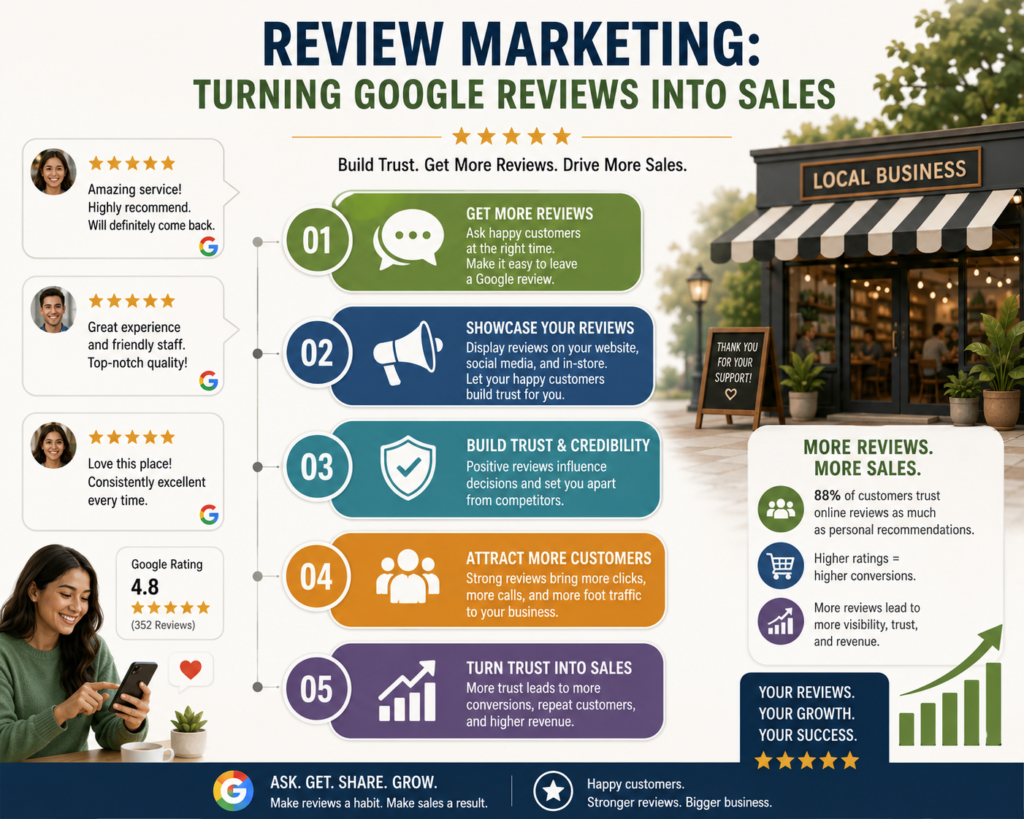
Introduction to Review Marketing
As a digital marketing strategist and SEO consultant, I have witnessed the significance of review marketing in transforming the way businesses interact with their customers and ultimately drive sales. In today’s digital age, online reviews have become a crucial aspect of a company’s reputation and credibility. With the rise of Google as the primary search engine, Google reviews have emerged as a vital component of review marketing. In this section, we will delve into the world of review marketing, exploring its concept, importance, and the role of Google reviews in turning them into sales.
Review marketing refers to the process of encouraging and managing customer reviews to build a positive reputation, increase brand visibility, and ultimately drive sales. It involves a strategic approach to collecting, showcasing, and responding to customer feedback, which can be in the form of reviews, ratings, or testimonials. By leveraging review marketing, businesses can create a competitive advantage, differentiate themselves from competitors, and establish trust with potential customers.
The importance of review marketing cannot be overstated. According to a recent study, 85% of customers trust online reviews as much as personal recommendations. This statistic highlights the significance of review marketing in influencing customer purchasing decisions. Moreover, review marketing can also impact a company’s search engine rankings, with Google taking into account review signals as a ranking factor. This means that businesses with a high number of positive reviews are more likely to appear in the top search engine results, increasing their visibility and driving more traffic to their website.
Google reviews, in particular, play a critical role in review marketing. As the most widely used search engine, Google’s review platform provides businesses with an opportunity to showcase their reputation and credibility. Google reviews are displayed prominently in search engine results pages (SERPs), allowing potential customers to quickly assess a company’s reputation and make informed decisions. Furthermore, Google reviews can also be used to improve local search engine rankings, making it essential for businesses with a physical location to focus on building a strong review profile.
To illustrate the importance of Google reviews, let’s consider an example. Suppose we have two businesses, Business A and Business B, both operating in the same industry and location. Business A has an average rating of 4.5 stars with 50 reviews, while Business B has an average rating of 3.5 stars with 10 reviews. When a potential customer searches for a business in that location, Google is more likely to display Business A’s listing due to its higher rating and larger number of reviews. This increased visibility can lead to more website traffic, phone calls, and ultimately, sales.
In addition to their impact on search engine rankings, Google reviews can also provide valuable insights into customer behavior and preferences. By analyzing review data, businesses can identify areas for improvement, such as customer service or product quality, and make data-driven decisions to address these issues. This can lead to increased customer satisfaction, loyalty, and retention, all of which are critical components of a successful business strategy.
In the next section, we will explore the strategies and techniques for collecting and managing Google reviews, as well as the best practices for responding to customer feedback. By understanding the intricacies of review marketing and Google reviews, businesses can unlock the full potential of this powerful marketing channel and drive more sales, revenue, and growth.
Some of the key benefits of review marketing include:
- Increased brand visibility and credibility
- Improved search engine rankings
- Enhanced customer trust and loyalty
- Valuable insights into customer behavior and preferences
- Competitive advantage and differentiation
- Increased website traffic and sales
By incorporating review marketing into their overall marketing strategy, businesses can experience these benefits firsthand and achieve long-term success in today’s competitive digital landscape. As we will discuss in the following sections, review marketing is a complex and multifaceted discipline that requires a deep understanding of customer behavior, search engine algorithms, and marketing principles. However, with the right approach and strategies, businesses can harness the power of review marketing and turn Google reviews into sales.
Understanding Google Reviews and Their Role in Sales
As a digital marketing strategist and SEO consultant, I have seen firsthand the impact that Google reviews can have on a business’s bottom line. Google reviews are a crucial aspect of a company’s online presence, and they play a significant role in influencing potential customers’ purchasing decisions. In this section, we will delve into the world of Google reviews, exploring their importance, how they can be leveraged to drive sales, and the strategies that businesses can use to maximize their impact.
Google reviews are a key component of a business’s online reputation, and they can have a profound effect on a company’s ability to attract new customers. Positive reviews can increase trust and credibility, making potential customers more likely to choose a business over its competitors. On the other hand, negative reviews can have the opposite effect, driving away potential customers and harming a business’s reputation. According to a study, 85% of consumers trust online reviews as much as personal recommendations, highlighting the importance of Google reviews in the decision-making process.
So, how do Google reviews contribute to sales? The answer lies in the way that they influence consumer behavior. When a potential customer searches for a business or product online, they are often presented with a list of search results that include Google reviews. High-quality, positive reviews can increase the visibility of a business in search results, making it more likely that a potential customer will click on the business’s website or visit its physical location. Additionally, Google reviews can provide valuable social proof, giving potential customers the confidence to make a purchase.
For example, let’s say that a customer is searching for a restaurant in a new city. They type “best restaurants in New York” into Google, and the search results include a list of restaurants with their corresponding Google reviews. The customer is more likely to choose a restaurant with a high overall rating and a large number of positive reviews, as this provides them with confidence that the restaurant is reliable and serves high-quality food. In this way, Google reviews can drive sales by increasing the visibility of a business and providing social proof that influences consumer behavior.
There are several strategies that businesses can use to maximize the impact of Google reviews on sales. One of the most effective strategies is to encourage customers to leave reviews. This can be done by providing excellent customer service, offering incentives for customers to leave reviews, and making it easy for customers to leave reviews by including links to the business’s Google review page on its website and social media channels. Businesses can also use review management software to streamline the process of requesting and managing reviews, making it easier to encourage customers to leave feedback.
Another strategy that businesses can use to maximize the impact of Google reviews is to respond to all reviews, both positive and negative. Responding to reviews shows that a business values its customers’ feedback and is committed to providing excellent customer service. This can help to increase trust and credibility, making potential customers more likely to choose the business over its competitors. When responding to negative reviews, businesses should remain calm and professional, and provide a solution to the customer’s problem. This can help to turn a negative review into a positive one, and can even increase customer loyalty.
Here are some additional strategies that businesses can use to maximize the impact of Google reviews on sales:
- Monitor reviews regularly: Businesses should monitor their Google reviews regularly, responding to all reviews and addressing any customer complaints or concerns.
- Use reviews to improve products and services: Businesses can use Google reviews to identify areas for improvement, making changes to products and services to increase customer satisfaction and drive sales.
- Share reviews on social media: Businesses can share their Google reviews on social media, increasing their visibility and providing social proof that influences consumer behavior.
- Include reviews in marketing materials: Businesses can include their Google reviews in marketing materials, such as brochures and websites, to provide social proof and increase credibility.
- Use reviews to build trust and credibility: Businesses can use their Google reviews to build trust and credibility with potential customers, increasing the likelihood that they will choose the business over its competitors.
In conclusion, Google reviews play a critical role in driving sales and revenue for businesses. By understanding the importance of Google reviews and using strategies to maximize their impact, businesses can increase their online visibility, build trust and credibility, and drive sales. As a digital marketing strategist and SEO consultant, I have seen firsthand the impact that Google reviews can have on a business’s bottom line, and I recommend that all businesses prioritize Google reviews as part of their overall digital marketing strategy.
By leveraging the power of Google reviews, businesses can increase their online presence, drive sales, and stay ahead of the competition. Whether you are a small business or a large corporation, Google reviews are an essential component of your digital marketing strategy, and they should not be overlooked. By following the strategies outlined in this section, businesses can maximize the impact of Google reviews and drive sales, revenue, and growth.
Strategies for Turning Google Reviews into Sales
As a digital marketing strategist and SEO consultant, I have seen firsthand the impact that Google reviews can have on a business’s bottom line. Positive reviews can increase trust and credibility with potential customers, while negative reviews can drive them away. However, simply having a high number of positive reviews is not enough – businesses must also have a strategy in place to turn those reviews into sales. In this section, we will explore some strategies for doing just that.
One of the most effective ways to turn Google reviews into sales is to embed reviews on your website. By doing so, you can showcase your positive reviews to potential customers and increase the chances of them making a purchase. For example, if you are an e-commerce business, you could embed reviews on your product pages to give customers an idea of what others think of the product. You could also use a review widget to display your overall rating and the number of reviews you have received.
Another strategy is to use reviews in your marketing materials. This could include using quotes from positive reviews in your ads, social media posts, or email marketing campaigns. By doing so, you can add social proof to your marketing efforts and increase the chances of converting potential customers. For instance, if you are a restaurant, you could use a quote from a positive review in your ad copy to entice people to come and try your food.
In addition to embedding reviews on your website and using them in your marketing materials, you should also respond to all reviews, both positive and negative. Responding to reviews shows that you value your customers’ feedback and care about their experience with your business. It also gives you an opportunity to address any issues that may have arisen and show potential customers that you are committed to providing a high level of service. For example, if a customer leaves a negative review, you could respond by apologizing for the issue and offering a solution, such as a refund or a complimentary service.
It is also important to encourage customers to leave reviews. This could include sending follow-up emails after a purchase or service, or offering incentives for customers who leave reviews. For instance, you could offer a discount on a customer’s next purchase if they leave a review. You could also add a link to your Google review page on your website or social media profiles to make it easy for customers to leave reviews.
Furthermore, businesses should monitor their online reputation and keep track of what customers are saying about them online. This includes not just Google reviews, but also reviews on other platforms such as Yelp, Facebook, and TripAdvisor. By monitoring your online reputation, you can stay on top of any issues that may arise and address them quickly, before they have a chance to damage your reputation. For example, if you notice that a customer has left a negative review on Yelp, you could respond to the review and offer a solution, such as a complimentary service or a refund.
In order to turn Google reviews into sales, businesses must also have a clear and compelling value proposition. This means that they must be able to clearly communicate the value that they offer to customers and differentiate themselves from their competitors. For instance, if you are a law firm, your value proposition might be that you offer personalized and affordable legal services. You could communicate this value proposition through your website, social media, and marketing materials, and use reviews to reinforce it.
Additionally, businesses should use reviews to identify areas for improvement. By analyzing customer reviews, businesses can identify patterns and trends that can help them to improve their products or services. For example, if multiple customers are complaining about the same issue, such as long wait times or poor customer service, the business can use this feedback to make changes and improve the customer experience. This not only helps to increase customer satisfaction, but also helps to increase the chances of customers leaving positive reviews and recommending the business to others.
Some other strategies for turning Google reviews into sales include:
- Using reviews to create social proof: By showcasing customer reviews and testimonials, businesses can create social proof and increase the chances of converting potential customers.
- Creating a review funnel: Businesses can create a review funnel by encouraging customers to leave reviews at each stage of the customer journey, from initial contact to post-purchase follow-up.
- Using reviews to improve local SEO: Google reviews are an important factor in local SEO, and businesses can improve their local search rankings by encouraging customers to leave reviews and responding to all reviews, both positive and negative.
- Using reviews to create user-generated content: Businesses can use customer reviews to create user-generated content, such as testimonials, case studies, and success stories, which can be used to promote the business and attract new customers.
- Using reviews to measure customer satisfaction: By analyzing customer reviews, businesses can measure customer satisfaction and identify areas for improvement, which can help to increase customer loyalty and retention.
In conclusion, turning Google reviews into sales requires a strategic approach that includes embedding reviews on your website, using reviews in your marketing materials, responding to all reviews, encouraging customers to leave reviews, monitoring your online reputation, having a clear and compelling value proposition, using reviews to identify areas for improvement, and using reviews to create social proof, improve local SEO, create user-generated content, and measure customer satisfaction. By implementing these strategies, businesses can increase the chances of converting potential customers and driving sales.
Measuring the Effectiveness of Review Marketing Campaigns
As a digital marketing strategist, I have worked with numerous businesses to help them leverage the power of review marketing to drive sales and revenue growth. One of the most critical aspects of review marketing is measuring its effectiveness. In this section, we will delve into the importance of measuring review marketing campaigns and explore the key performance indicators (KPIs) that businesses should track to evaluate the success of their review marketing efforts.
Measuring the effectiveness of review marketing campaigns is crucial for several reasons. Firstly, it helps businesses understand the impact of their review marketing efforts on their bottom line. By tracking the right KPIs, businesses can determine whether their review marketing campaigns are generating a positive return on investment (ROI) and identify areas for improvement. Secondly, measuring review marketing effectiveness enables businesses to refine their strategies and optimize their campaigns for better results. By analyzing the data and insights gathered from their review marketing campaigns, businesses can make data-driven decisions to enhance their online reputation, improve customer satisfaction, and increase sales.
To measure the effectiveness of review marketing campaigns, businesses should track a range of KPIs that provide insights into the performance of their campaigns. Some of the key KPIs to track include:
- Review volume and velocity: The number of reviews received over a certain period and the rate at which they are being published. This KPI helps businesses understand the overall impact of their review marketing efforts and identify trends and patterns in their review data.
- Review sentiment and rating: The overall sentiment and rating of the reviews received, including the number of positive, negative, and neutral reviews. This KPI provides insights into the quality of the reviews and the overall customer satisfaction with the business.
- Review response rate and time: The percentage of reviews responded to by the business and the average time taken to respond. This KPI helps businesses understand their customer service and support capabilities and identify areas for improvement.
- Conversion rate and revenue growth: The number of sales or conversions generated from review marketing campaigns and the resulting revenue growth. This KPI provides insights into the direct impact of review marketing on the business’s bottom line.
For example, let’s consider a business that runs a review marketing campaign to increase the number of reviews on its Google My Business listing. The business tracks the review volume and velocity over a period of six months and observes a significant increase in the number of reviews received. The business also tracks the review sentiment and rating and finds that the overall rating has improved from 4.2 to 4.5 stars. Additionally, the business monitors the review response rate and time and ensures that all reviews are responded to within 24 hours. By tracking these KPIs, the business can determine the effectiveness of its review marketing campaign and make data-driven decisions to further optimize its strategy.
In addition to tracking these KPIs, businesses should also use tools and software to measure the effectiveness of their review marketing campaigns. Some popular tools include Google Analytics, SEMrush, and Hootsuite Insights. These tools provide businesses with detailed insights into their review marketing performance and enable them to track KPIs such as review volume, sentiment, and conversion rate. By leveraging these tools, businesses can gain a deeper understanding of their review marketing campaigns and make informed decisions to drive sales and revenue growth.
Another important aspect of measuring review marketing effectiveness is setting clear goals and objectives. Businesses should define specific, measurable, achievable, relevant, and time-bound (SMART) goals for their review marketing campaigns, such as increasing the number of reviews by 20% within the next three months or improving the overall rating by 0.5 stars within the next six months. By setting clear goals and objectives, businesses can focus their review marketing efforts and ensure that their campaigns are aligned with their overall business strategy.
Finally, businesses should regularly review and analyze their review marketing data to identify trends, patterns, and insights that can inform their strategy. By regularly reviewing their data, businesses can identify areas for improvement, optimize their campaigns, and make data-driven decisions to drive sales and revenue growth. For instance, a business may analyze its review data and find that customers are consistently praising its customer service but criticizing its product quality. The business can then use this insight to refine its product development strategy and improve its overall customer satisfaction.
In conclusion, measuring the effectiveness of review marketing campaigns is crucial for businesses to understand the impact of their review marketing efforts on their bottom line. By tracking key KPIs, using tools and software, setting clear goals and objectives, and regularly reviewing and analyzing data, businesses can evaluate the success of their review marketing campaigns and make informed decisions to drive sales and revenue growth. As a digital marketing strategist, I have seen firsthand the impact that effective review marketing can have on a business’s online reputation and bottom line. By leveraging the power of review marketing and measuring its effectiveness, businesses can stay ahead of the competition and achieve their growth objectives.
Advanced Review Marketing Tactics for Scalable Growth
As a digital marketing strategist and SEO consultant, I have witnessed firsthand the transformative power of review marketing in driving scalable growth for businesses. In today’s digital landscape, online reviews have become a crucial factor in determining a company’s credibility, trustworthiness, and ultimately, its bottom line. In this section, we will delve into advanced review marketing tactics that can help businesses turn Google reviews into sales, and explore the strategies that have yielded remarkable results for my clients.
Review marketing is a multifaceted discipline that encompasses a range of activities, from encouraging customers to leave reviews to leveraging those reviews to drive conversions. To create a robust review marketing strategy, businesses must first understand the importance of online reviews in the customer journey. According to a recent study, 85% of consumers trust online reviews as much as personal recommendations, while 73% of consumers are more likely to trust a business with positive reviews. These statistics underscore the significance of review marketing in building trust, credibility, and authority in the eyes of potential customers.
To develop an advanced review marketing strategy, businesses must focus on the following key areas: review generation, review management, and review amplification. Review generation involves encouraging satisfied customers to leave reviews on platforms like Google My Business, Yelp, or Facebook. This can be achieved through a range of tactics, including email campaigns, in-store promotions, and loyalty programs. Review management, on the other hand, entails monitoring and responding to reviews in a timely and professional manner. This not only helps to build trust with customers but also provides valuable feedback that can inform business decisions.
Review amplification is the process of leveraging reviews to drive conversions and sales. This can be achieved through a range of strategies, including showcasing reviews on the business website, using reviews in marketing campaigns, and incorporating reviews into sales funnels. By amplifying reviews, businesses can create a powerful feedback loop that drives trust, credibility, and ultimately, revenue growth. For instance, a business can use a review widget on its website to showcase customer testimonials, or use review snippets in its Google Ads campaigns to increase click-through rates and conversions.
One of the most effective ways to amplify reviews is through the use of review-rich snippets. Review-rich snippets are a type of schema markup that allows businesses to showcase reviews in their Google search results. By adding review-rich snippets to their website, businesses can increase their visibility in search results, drive more clicks, and ultimately, more conversions. For example, a business like Amazon can use review-rich snippets to showcase customer reviews for a particular product, making it more likely that users will click on the result and make a purchase.
Another advanced review marketing tactic is to use review-based content marketing. This involves creating content that is centered around customer reviews, such as case studies, testimonials, or user-generated content campaigns. By showcasing customer reviews in a creative and compelling way, businesses can build trust and credibility with potential customers, while also driving conversions and sales. For instance, a business like HubSpot can create a case study that showcases the success of one of its customers, using reviews and testimonials to demonstrate the effectiveness of its product or service.
In addition to these tactics, businesses can also use review analytics to track the performance of their review marketing efforts. Review analytics involves monitoring key metrics such as review volume, review sentiment, and review response rates. By analyzing these metrics, businesses can identify areas for improvement, optimize their review marketing strategy, and ultimately, drive more sales and revenue. For example, a business can use review analytics to track the number of reviews it receives each month, and adjust its review generation strategy accordingly.
Some of the key review analytics metrics that businesses should track include:
- Review volume: The number of reviews received by a business over a given period.
- Review sentiment: The overall tone or sentiment of reviews, whether positive, negative, or neutral.
- Review response rate: The percentage of reviews that are responded to by a business.
- Review rating: The average rating given by customers in their reviews.
- Review conversion rate: The percentage of customers who make a purchase or take a desired action after reading reviews.
By tracking these metrics and using advanced review marketing tactics, businesses can create a robust review marketing strategy that drives trust, credibility, and revenue growth. As a digital marketing strategist and SEO consultant, I have seen firsthand the impact that review marketing can have on a business’s bottom line. By leveraging the power of online reviews, businesses can create a competitive advantage that drives long-term success and scalability.
In conclusion, advanced review marketing tactics are essential for businesses that want to turn Google reviews into sales. By focusing on review generation, review management, and review amplification, businesses can create a robust review marketing strategy that drives trust, credibility, and revenue growth. Whether through review-rich snippets, review-based content marketing, or review analytics, there are many ways that businesses can leverage the power of online reviews to drive scalable growth and success. As the digital landscape continues to evolve, it is likely that review marketing will become an even more important discipline for businesses that want to stay ahead of the competition and drive long-term success.

Amit Tyagi is a seasoned Digital Marketing and SEO Consultant with extensive experience helping businesses improve online visibility through SEO, AI Search Optimization (AIO/GEO), content strategy, and performance marketing. He regularly shares practical insights, industry updates, and data-driven strategies, empowering brands and marketers to achieve sustainable digital growth in an evolving search landsca