
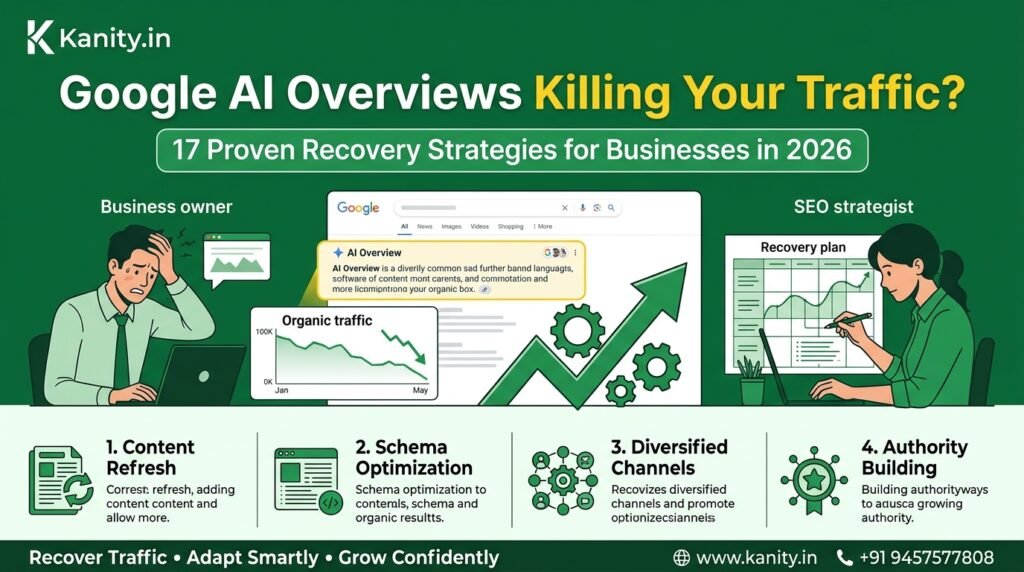
Introduction to Google AI Overviews and Their Impact on Traffic
As a digital marketing strategist and SEO consultant, I have witnessed the profound impact of Google’s AI-driven features on search engine results pages (SERPs). One such feature that has been gaining significant attention in recent times is Google AI Overviews. In this section, we will delve into the world of Google AI Overviews, exploring what they are, how they work, and most importantly, how they can affect your website’s traffic. As someone who has spent over 15 years helping brands scale globally through advanced SEO frameworks, I will share my expertise on this critical topic, providing you with actionable insights and proven strategies to recover from the potential negative effects of Google AI Overviews on your website’s traffic.
Google AI Overviews are snippets of information that appear at the top of search engine results pages, providing users with a brief summary of a particular topic or entity. These overviews are generated using artificial intelligence and machine learning algorithms, which analyze vast amounts of data from across the web to provide users with relevant and accurate information. While Google AI Overviews can be incredibly useful for users, they can also have a significant impact on website traffic, particularly for businesses that rely heavily on search engine optimization (SEO) to drive visibility and revenue.
The impact of Google AI Overviews on traffic can be multifaceted. On one hand, they can provide users with a quick and easy way to access information, reducing the need to click on individual websites. This can lead to a decrease in website traffic, as users may not feel the need to visit a website to access the information they need. On the other hand, Google AI Overviews can also drive traffic to websites that are featured in the overview, particularly if the overview provides a positive and accurate representation of the website’s content. However, for businesses that are not featured in the overview, the impact can be significant, leading to a decline in website traffic and revenue.
For example, let’s say you are a business that specializes in providing information on health and wellness. If a user searches for a particular topic related to health and wellness, Google may display an AI Overview that provides a summary of the topic, along with links to relevant websites. If your website is not featured in the overview, you may experience a decline in traffic, as users may not feel the need to visit your website to access the information they need. This can be particularly challenging for businesses that rely heavily on SEO to drive traffic and revenue, as they may struggle to adapt to the changing landscape of search engine results pages.
To illustrate this point further, consider the following scenario. Suppose you are a business that has spent years optimizing your website for a particular keyword, only to find that Google has introduced an AI Overview that provides a summary of the topic. If your website is not featured in the overview, you may experience a significant decline in traffic, as users may not feel the need to visit your website to access the information they need. This can be a challenging situation for businesses, particularly those that have invested heavily in SEO and content creation.
In the next section, we will explore the impact of Google AI Overviews on traffic in more detail, providing you with a deeper understanding of the challenges and opportunities that these features present. We will also discuss the importance of adapting to the changing landscape of search engine results pages, and provide you with proven strategies for recovering from the potential negative effects of Google AI Overviews on your website’s traffic. But first, let’s take a closer look at how Google AI Overviews work, and what factors contribute to their appearance on search engine results pages.
Google AI Overviews are generated using a complex algorithm that takes into account a wide range of factors, including the relevance and accuracy of the information, the authority and trustworthiness of the source, and the user’s search history and preferences. The algorithm uses natural language processing (NLP) and machine learning techniques to analyze the content of web pages, identify patterns and relationships, and generate a summary of the topic or entity. The overview is then displayed at the top of the search engine results page, providing users with a quick and easy way to access the information they need.
The factors that contribute to the appearance of Google AI Overviews on search engine results pages are complex and multifaceted. Some of the key factors include the relevance and accuracy of the information, the authority and trustworthiness of the source, and the user’s search history and preferences. Additionally, Google’s algorithm takes into account the quality and relevance of the content, the presence of keywords and phrases, and the overall user experience of the website. By understanding these factors, businesses can take steps to optimize their website and content for Google AI Overviews, increasing their chances of being featured in the overview and driving traffic to their website.
For instance, businesses can focus on creating high-quality, relevant, and accurate content that provides value to users. They can also optimize their website and content for keywords and phrases, using techniques such as keyword research and optimization, content marketing, and link building. Additionally, businesses can focus on building their authority and trustworthiness, by creating high-quality content, engaging with users, and building relationships with other websites and influencers in their industry. By taking these steps, businesses can increase their chances of being featured in Google AI Overviews, and driving traffic to their website.
In conclusion, Google AI Overviews are a powerful feature that can have a significant impact on website traffic. While they can provide users with a quick and easy way to access information, they can also lead to a decline in traffic for businesses that are not featured in the overview. By understanding how Google AI Overviews work, and the factors that contribute to their appearance on search engine results pages, businesses can take steps to optimize their website and content, increasing their chances of being featured in the overview and driving traffic to their website. In the next section, we will explore the impact of Google AI Overviews on traffic in more detail, providing you with a deeper understanding of the challenges and opportunities that these features present.
Some of the key takeaways from this section include the importance of understanding how Google AI Overviews work, and the factors that contribute to their appearance on search engine results pages. Businesses should focus on creating high-quality, relevant, and accurate content that provides value to users, and optimize their website and content for keywords and phrases. Additionally, businesses should focus on building their authority and trustworthiness, by creating high-quality content, engaging with users, and building relationships with other websites and influencers in their industry. By taking these steps, businesses can increase their chances of being featured in Google AI Overviews, and driving traffic to their website.
Here are some additional tips for businesses looking to optimize their website and content for Google AI Overviews:
- Create high-quality, relevant, and accurate content that provides value to users
- Optimize your website and content for keywords and phrases, using techniques such as keyword research and optimization, content marketing, and link building
- Focus on building your authority and trustworthiness, by creating high-quality content, engaging with users, and building relationships with other websites and influencers in your industry
- Use natural language processing (NLP) and machine learning techniques to analyze the content of web pages, identify patterns and relationships, and generate a summary of the topic or entity
- Provide users with a quick and easy way to access information, by using features such as featured snippets, knowledge panels, and entity-based search results
By following these tips, businesses can increase their chances of being featured in Google AI Overviews, and driving traffic to their website. In the next section, we will explore the impact of Google AI Overviews on traffic in more detail, providing you with a deeper understanding of the challenges and opportunities that these features present.
Assessing the Damage: Understanding the Impact of Google AI Overviews on Your Business
As a digital marketing strategist and SEO consultant, I have seen firsthand the devastating impact that Google AI Overviews can have on a business’s online presence. With the increasing reliance on artificial intelligence to generate search results, many businesses are finding that their traffic is plummeting, and their revenue is suffering as a result. But before we can develop a plan to recover from this damage, it’s essential to understand the root of the problem and assess the extent of the harm that has been done.
Google AI Overviews, also known as Google’s AI-powered featured snippets, are designed to provide users with concise and accurate answers to their search queries. While this may seem like a useful tool for searchers, it can be a nightmare for businesses that rely on search engine optimization (SEO) to drive traffic to their websites. When Google’s AI algorithm determines that a particular webpage is the most relevant and authoritative source of information on a given topic, it will often display a summary of that page’s content at the top of the search engine results page (SERP), eliminating the need for users to click through to the actual webpage.
This can have a significant impact on a business’s traffic and revenue, as users are no longer being directed to the company’s website. Instead, they are being provided with a brief summary of the information they are looking for, and they are often satisfied with this summary, eliminating the need for further research. This can be particularly damaging for businesses that rely on advertising revenue, as a decline in traffic can result in a significant decrease in ad impressions and clicks.
For example, let’s say that a company specializing in outdoor gear and equipment has a webpage that provides information on the best hiking trails in a particular region. If Google’s AI algorithm determines that this webpage is the most relevant and authoritative source of information on this topic, it may display a summary of the page’s content at the top of the SERP, including a list of the top hiking trails and a brief description of each. While this may seem like a useful tool for searchers, it can be devastating for the company, as users are no longer being directed to its website, and the company is losing out on potential advertising revenue.
To assess the damage that Google AI Overviews are having on your business, it’s essential to monitor your website’s traffic and revenue closely. You can use tools such as Google Analytics to track changes in your website’s traffic and revenue over time, and to identify any correlations between these changes and the implementation of Google AI Overviews. You should also keep a close eye on your search engine rankings, as a decline in rankings can often be a sign that Google’s AI algorithm is favoring other sources of information over your website.
In addition to monitoring your website’s traffic and revenue, it’s also essential to conduct a thorough analysis of your website’s content and SEO strategy. This can help you to identify any weaknesses or areas for improvement that may be contributing to the decline in traffic and revenue. For example, you may find that your website’s content is not optimized for the keywords and phrases that your target audience is using to search for information, or that your website’s meta tags and descriptions are not accurately reflecting the content of your webpages.
Some common signs that Google AI Overviews are killing your traffic include:
- A significant decline in website traffic and revenue over a short period
- A decrease in search engine rankings for target keywords and phrases
- An increase in bounce rates and a decline in time on site, as users are being provided with the information they need directly on the SERP
- A decline in ad impressions and clicks, as users are no longer being directed to your website
- A decrease in conversions and sales, as users are not being given the opportunity to engage with your website and its content
By monitoring your website’s traffic and revenue, conducting a thorough analysis of your website’s content and SEO strategy, and identifying any correlations between changes in your website’s performance and the implementation of Google AI Overviews, you can gain a better understanding of the impact that these overviews are having on your business. This will provide you with the insights you need to develop an effective plan to recover from this damage and restore your website’s traffic and revenue to their former levels.
As a digital marketing strategist and SEO consultant, I have worked with numerous businesses to help them recover from the impact of Google AI Overviews. In the next section, we will explore some proven strategies that businesses can use to recover from this damage and restore their online presence. From optimizing website content for Generative Engine Optimization (GEO) to building high-quality backlinks and leveraging the power of artificial intelligence, we will provide you with the insights and expertise you need to succeed in a rapidly changing digital landscape.
Strategic Recovery: 17 Proven Strategies to Combat Google AI Overviews
As a digital marketing strategist and SEO consultant, I have witnessed firsthand the impact of Google AI overviews on businesses. With the increasing use of artificial intelligence in search engine algorithms, it’s becoming more challenging for companies to maintain their online visibility and drive traffic to their websites. However, there are proven strategies that can help businesses recover from the effects of Google AI overviews and thrive in this new landscape.
In this section, we will explore 17 strategic recovery strategies that can help businesses combat the negative impact of Google AI overviews and improve their online presence. These strategies are designed to be actionable, effective, and tailored to the unique needs of businesses operating in the digital age.
Before we dive into the strategies, it’s essential to understand how Google AI overviews work and how they can affect your business. Google AI overviews are a type of featured snippet that provides users with a brief summary of a topic or question. These overviews are generated using artificial intelligence and are designed to provide users with a quick and accurate answer to their search query. While Google AI overviews can be helpful for users, they can also have a negative impact on businesses that rely on search engine traffic to drive sales and revenue.
For example, let’s say you own an e-commerce business that sells outdoor gear and equipment. You have a well-optimized website with high-quality content and a strong online presence. However, when a user searches for “best hiking boots,” Google AI overviews may display a featured snippet that provides a brief summary of the top-rated hiking boots, along with a list of features and prices. This can be detrimental to your business, as users may not need to click on your website to get the information they need, resulting in lost traffic and revenue.
To combat this, you need to develop a strategic recovery plan that takes into account the impact of Google AI overviews on your business. Here are 17 proven strategies that can help:
- Optimize your content for featured snippets: One of the most effective ways to combat Google AI overviews is to optimize your content for featured snippets. This involves creating high-quality, informative content that provides value to users and is optimized for specific keywords and phrases.
- Use header tags and structured data: Header tags and structured data can help search engines understand the context and structure of your content, making it more likely to be displayed as a featured snippet.
- Focus on long-tail keywords: Long-tail keywords are more specific phrases that have lower search volumes, but are also less competitive. Focusing on long-tail keywords can help you rank higher in search engine results pages (SERPs) and increase your chances of being displayed as a featured snippet.
- Create high-quality, engaging content: High-quality, engaging content is essential for attracting and retaining users. Focus on creating content that provides value to users and is optimized for specific keywords and phrases.
- Use internal linking and anchor text: Internal linking and anchor text can help search engines understand the structure and context of your content, making it more likely to be displayed as a featured snippet.
- Optimize your website for user experience: A well-designed, user-friendly website is essential for attracting and retaining users. Focus on creating a website that provides a seamless user experience and is optimized for specific keywords and phrases.
- Use social media to drive traffic: Social media can be a powerful tool for driving traffic to your website. Focus on creating high-quality, engaging content that provides value to users and is optimized for specific keywords and phrases.
- Build high-quality backlinks: High-quality backlinks can help increase your website’s authority and ranking in search engine results pages (SERPs). Focus on building backlinks from reputable sources that are relevant to your business.
- Monitor and adjust your SEO strategy: Monitoring and adjusting your SEO strategy is essential for staying ahead of the competition. Focus on tracking your website’s performance and adjusting your strategy accordingly.
- Use Google Analytics to track your website’s performance: Google Analytics can provide valuable insights into your website’s performance and help you identify areas for improvement. Focus on tracking your website’s traffic, engagement, and conversion rates.
- Optimize your website for mobile devices: With the majority of users accessing the internet through mobile devices, it’s essential to optimize your website for mobile devices. Focus on creating a website that provides a seamless user experience across all devices.
- Use schema markup to provide context: Schema markup can help search engines understand the context and structure of your content, making it more likely to be displayed as a featured snippet.
- Focus on building a strong brand identity: A strong brand identity is essential for attracting and retaining users. Focus on creating a brand identity that reflects your business’s values and mission.
- Use influencer marketing to reach new audiences: Influencer marketing can be a powerful tool for reaching new audiences and driving traffic to your website. Focus on partnering with influencers who are relevant to your business and have a strong following.
- Create high-quality, engaging videos: High-quality, engaging videos can be a powerful tool for attracting and retaining users. Focus on creating videos that provide value to users and are optimized for specific keywords and phrases.
- Use podcasting to reach new audiences: Podcasting can be a powerful tool for reaching new audiences and driving traffic to your website. Focus on creating high-quality, engaging podcasts that provide value to users and are optimized for specific keywords and phrases.
- Optimize your website for voice search: With the increasing use of voice search, it’s essential to optimize your website for voice search. Focus on creating content that is optimized for natural language and is relevant to your business.
- Use AI-powered tools to improve your SEO strategy: AI-powered tools can help you improve your SEO strategy and stay ahead of the competition. Focus on using tools that provide valuable insights into your website’s performance and help you identify areas for improvement.
By implementing these 17 proven strategies, you can help your business recover from the effects of Google AI overviews and improve your online presence. Remember to stay focused on providing value to users and optimizing your content for specific keywords and phrases. With the right strategy and a commitment to excellence, you can thrive in the digital age and drive long-term growth and success for your business.
In conclusion, Google AI overviews can have a significant impact on businesses, but with the right strategies, you can combat their negative effects and improve your online presence. By optimizing your content for featured snippets, using header tags and structured data, focusing on long-tail keywords, and creating high-quality, engaging content, you can increase your chances of being displayed as a featured snippet and driving traffic to your website. Additionally, by using social media to drive traffic, building high-quality backlinks, and monitoring and adjusting your SEO strategy, you can stay ahead of the competition and drive long-term growth and success for your business.
Technical SEO Adjustments for AI Overview Mitigation
As a seasoned digital marketing strategist and SEO consultant, I, Amit Tyagi, have witnessed firsthand the impact of Google AI overviews on website traffic. The introduction of AI-driven search results has significantly altered the way businesses approach search engine optimization (SEO). In this section, we will delve into the technical SEO adjustments that can help mitigate the effects of Google AI overviews and recover lost traffic. With over 15 years of experience in the field, I have developed a comprehensive understanding of the strategies that work best for businesses looking to scale globally through advanced SEO frameworks.
To begin with, it is essential to understand how Google AI overviews work. These overviews are generated using artificial intelligence and machine learning algorithms that analyze the content of a webpage and provide users with a concise summary. While this feature is designed to enhance user experience, it can also lead to a decline in website traffic if not addressed properly. To combat this, businesses must focus on making technical SEO adjustments that improve their website’s visibility and credibility.
One of the most critical technical SEO adjustments is optimizing website structure and architecture. A well-organized website with clear navigation and categorization can help search engines understand the content and context of the webpage. This, in turn, can improve the website’s chances of being featured in Google AI overviews. For instance, a website with a clear hierarchy of categories and subcategories can help search engines identify the most relevant and authoritative content. Additionally, using breadcrumb navigation can also enhance the user experience and provide search engines with a clear understanding of the website’s structure.
Another essential technical SEO adjustment is improving page speed and mobile responsiveness. With the increasing use of mobile devices, it is crucial to ensure that the website is optimized for mobile users. A slow-loading website can lead to a higher bounce rate, which can negatively impact search engine rankings. Conversely, a fast and mobile-responsive website can improve user experience, increase engagement, and ultimately drive more traffic to the website. For example, a website that loads in under 3 seconds can experience a significant increase in conversions and revenue.
Furthermore, technical SEO audits are vital in identifying and addressing technical issues that may be hindering the website’s performance. These audits can help identify issues such as broken links, duplicate content, and poor meta tags, which can negatively impact search engine rankings. By addressing these issues, businesses can improve their website’s visibility, credibility, and overall search engine rankings. A thorough technical SEO audit can also help identify opportunities for improvement, such as optimizing images, leveraging schema markup, and enhancing internal linking.
In addition to these adjustments, content optimization is also crucial in mitigating the effects of Google AI overviews. This involves creating high-quality, engaging, and informative content that provides value to users. By doing so, businesses can increase their chances of being featured in Google AI overviews and drive more traffic to their website. For instance, a website that creates comprehensive and well-researched content can establish itself as an authority in its industry, leading to increased trust and credibility with search engines.
Some of the key content optimization strategies include:
- Conducting thorough keyword research to identify relevant and high-traffic keywords
- Creating high-quality and engaging content that provides value to users
- Optimizing meta tags, titles, and descriptions to improve click-through rates
- Leveraging internal linking to enhance user experience and improve website navigation
- Using schema markup to provide search engines with additional context and information
By implementing these content optimization strategies, businesses can improve their website’s visibility, credibility, and overall search engine rankings.
Another critical technical SEO adjustment is building high-quality backlinks. Backlinks are a crucial ranking factor, and building high-quality backlinks from authoritative sources can significantly improve a website’s credibility and visibility. This can be achieved by creating high-quality content, leveraging guest blogging opportunities, and engaging in outreach and PR activities. For example, a website that secures a backlink from a reputable source such as Forbes or Harvard Business Review can experience a significant increase in authority and trust with search engines.
In conclusion, technical SEO adjustments are crucial in mitigating the effects of Google AI overviews and recovering lost traffic. By optimizing website structure and architecture, improving page speed and mobile responsiveness, conducting technical SEO audits, optimizing content, and building high-quality backlinks, businesses can improve their website’s visibility, credibility, and overall search engine rankings. As a digital marketing strategist and SEO consultant, I have seen firsthand the impact of these technical SEO adjustments on businesses looking to scale globally through advanced SEO frameworks. By implementing these strategies, businesses can stay ahead of the competition and drive more traffic to their website in 2026 and beyond.
Measuring Success and Future-Proofing Your SEO Strategy
As a digital marketing strategist and SEO consultant, I have worked with numerous businesses that have struggled to adapt to the ever-changing landscape of search engine optimization. With the rise of Google AI overviews, many companies have seen a significant decline in their website traffic, leaving them scrambling to recover and stay ahead of the competition. In this section, we will explore the importance of measuring success and future-proofing your SEO strategy to ensure long-term growth and visibility.
To begin with, it is essential to understand that measuring success in SEO is not just about tracking website traffic or keyword rankings. While these metrics are important, they only tell part of the story. A comprehensive SEO strategy should also take into account other key performance indicators (KPIs) such as conversion rates, bounce rates, and average session duration. By analyzing these metrics, businesses can gain a deeper understanding of how their website is performing and make data-driven decisions to improve their online presence.
One of the most effective ways to measure success in SEO is by using tools such as Google Analytics. This powerful platform provides businesses with a wealth of information about their website traffic, including the number of visitors, page views, and bounce rates. By setting up goals and events in Google Analytics, companies can track conversions and other important actions that occur on their website, such as form submissions or phone calls. For example, a business that sells products online might set up a goal to track the number of completed purchases, while a service-based company might set up an event to track the number of phone calls generated from their website.
In addition to measuring success, it is also crucial to future-proof your SEO strategy to ensure that your business stays ahead of the curve. This involves staying up-to-date with the latest trends and algorithm updates, as well as continually optimizing and refining your website and content to improve search engine rankings. One way to do this is by incorporating artificial intelligence (AI) and machine learning (ML) into your SEO strategy. By leveraging these technologies, businesses can analyze large amounts of data and make predictions about future trends and patterns, allowing them to stay ahead of the competition and drive more traffic to their website.
Another key aspect of future-proofing your SEO strategy is to focus on high-quality, user-centric content. With the rise of Google AI overviews, search engines are becoming increasingly adept at understanding the context and intent behind search queries. As a result, businesses that focus on creating high-quality, relevant, and engaging content that meets the needs of their target audience are more likely to succeed in the long term. This can involve creating a range of content types, such as blog posts, videos, and infographics, as well as optimizing existing content to better match the needs and preferences of search engine users.
Some other strategies for future-proofing your SEO strategy include:
- Technical optimization: Ensuring that your website is technically sound and optimized for search engines, including factors such as page speed, mobile responsiveness, and XML sitemaps.
- Local SEO: Optimizing your website and online presence for local search queries, including factors such as Google My Business listings and local citations.
- Link building: Building high-quality backlinks from authoritative sources to improve your website’s authority and ranking potential.
- Content marketing: Creating and promoting high-quality, relevant, and engaging content to attract and retain a clearly defined audience.
- Analytics and tracking: Continually monitoring and analyzing your website’s performance using tools such as Google Analytics, and making data-driven decisions to improve your online presence.
By incorporating these strategies into your SEO plan, businesses can ensure that they are well-positioned for long-term success and can adapt to the ever-changing landscape of search engine optimization. Whether you are just starting out or looking to refine your existing SEO strategy, the key is to stay focused on creating high-quality, user-centric content and continually optimizing and refining your approach to drive more traffic and revenue to your website.
For example, let’s consider a business that operates in the e-commerce space. By focusing on creating high-quality product descriptions, optimizing their website for mobile devices, and building high-quality backlinks from authoritative sources, they can improve their search engine rankings and drive more traffic to their website. Additionally, by using tools such as Google Analytics to track their website’s performance and make data-driven decisions, they can continually refine and improve their SEO strategy to stay ahead of the competition.
In conclusion, measuring success and future-proofing your SEO strategy are critical components of any successful digital marketing plan. By understanding the importance of tracking key performance indicators, incorporating AI and ML into your strategy, and focusing on high-quality, user-centric content, businesses can drive more traffic and revenue to their website and stay ahead of the competition. Whether you are a seasoned digital marketing professional or just starting out, the key is to stay focused on creating high-quality content and continually optimizing and refining your approach to achieve long-term success in the ever-changing landscape of search engine optimization.

Amit Tyagi is a seasoned Digital Marketing and SEO Consultant with extensive experience helping businesses improve online visibility through SEO, AI Search Optimization (AIO/GEO), content strategy, and performance marketing. He regularly shares practical insights, industry updates, and data-driven strategies, empowering brands and marketers to achieve sustainable digital growth in an evolving search landsca